AI to Assist with Quality Inspection of Carbon Composites
The ability to detect hidden flaws by interpreting surface variations in carbon mouldings has so far been the preserve of highly skilled professionals, but now AI can greatly help in the process
A new method of checking for defects has been developed by Zetamotion and uses a combination of artificial intelligence (AI) and semantic learning (a method of acquiring knowledge by deeply understanding the meaning of information) to detect problems.
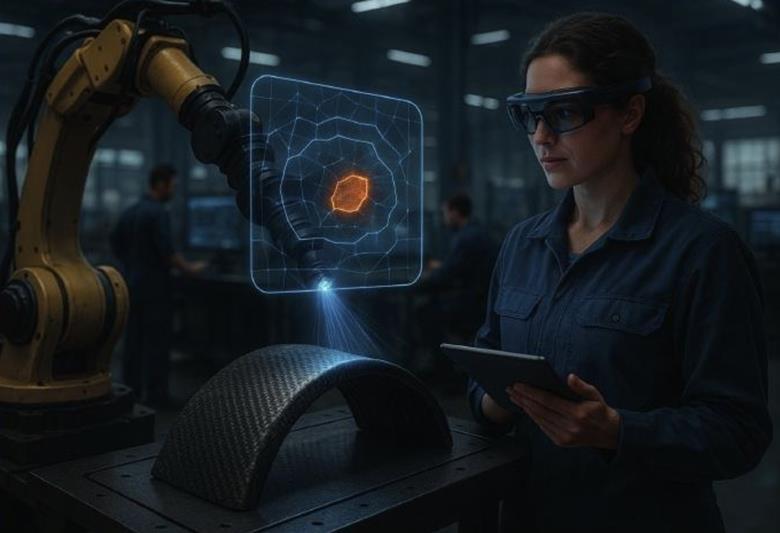
“Composites are the materials of the future,” writes Dr Wilhelm Klein, CEO of Zetamotion, in the latest JEC magazine. “They are lightweight, strong and capable of performance that metals can only dream of. Yet, ironically, when it comes to inspecting these cutting-edge materials, many manufacturers are still relying on one of the oldest tools in the factory – human eyesight.”
Klein is referring to the teams of people who carefully check the components coming off a production line to ensure they meet the right criteria, and this method is time-consuming work. Unlike metal, which will show defects as scratches, blemishes of dents, defects in composites can hide in the weave, or sit in a wrinkle. Whilst there have been attempts to automate this inspection, they have been thwarted by the system’s inability to distinguish a flaw from a character. However, the speed and accuracy of AI and its ability to learn to recognise patterns, is making a big difference.

“The next wave of inspection tech is not about rules and templates, “Klein explains “It’s about understanding. Today’s best systems do not just detect anomalies, they learn what a ‘normal’ part should look like, even if that part is never exactly the same twice. This is the space where artificial intelligence, computer vision and composites meet on an equal footing. At the forefront is a platform called Spectron, developed by Zetamotion. Instead of drowning users in data labelling or demanding massive defect libraries, Spectron creates its own curated synthetic training data from a single scan.”
This is known as semantic learning, which is a deeper understanding of the part, and the defects it may exhibit. Just as with a skilled human inspector, the AI can distinguish between acceptable variation and a genuine defect. Not only that, but the system can also build up a level of expertise based on accumulated experience.
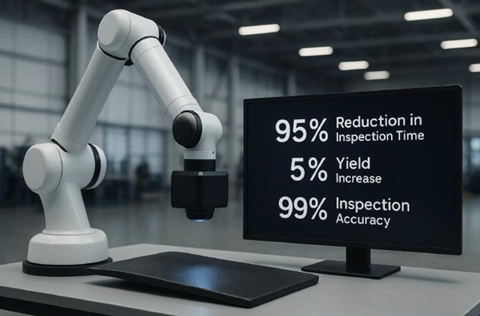
“Suddenly, you are not just checking parts, you are collecting insight,” Kelin enthuses. “Where do defects cluster? When do they tend to occur? Is there a pattern tied to curing conditions or fibre placement? You start to see the process from the inside out.”
Klein is keen to point out that this process is not about replacing human inspectors, it’s about freeing them up to focus on process improvement, root-cause analysis and doing the kind of skilled work that machines still can’t replicate.
“It’s about time that our inspection methods caught up with our materials,” he concludes. “In the coming years, we will likely look back and wonder how we ever managed composites without intelligent support. After all, what good is building the future if we are still checking it by hand?”