Autonomous Electric Harbor Vessels Trialed in Southampton
By Jake Kavanagh
RAD Propulsion and Williams Shipping have been testing a project for the autonomous transport of construction materials across a busy port.
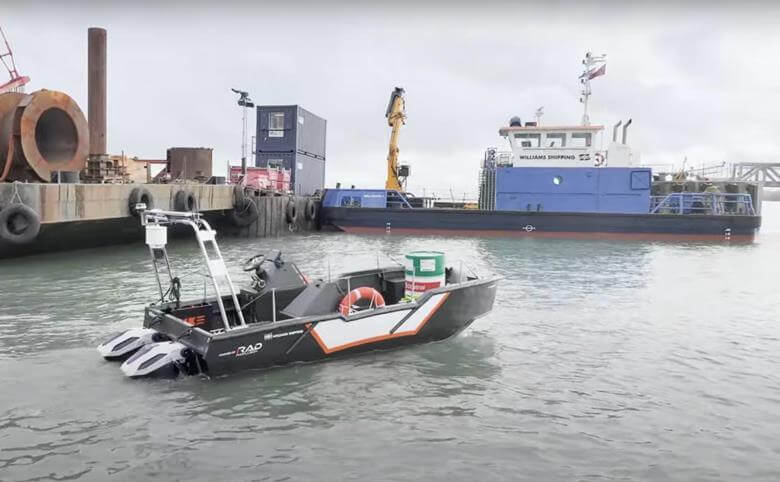
Southampton on the UK’s central south coast is a major shipping and yachting centre, and two local companies have been working together to realize the zero-emission and fully automated harbor support craft. There are some useful applications for the leisure sector, such as boats moored or anchored offshore being able to summon a robotic watertaxi 24/7, have fuel or provisions delivered, or even order a takeaway. (Quieter and more accurate than a drone drop.)
RAD Propulsion is a specialist in electric marine propulsion, and Williams Shipping is a fifth-generation family-owned marine services provider. With a construction project taking place on the opposite side of Southampton Water, the busy main approach to the port, the two companies decided to see if a robotic electric vessel would be feasible to deliver building supplies.
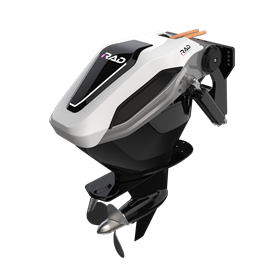
The project would have three main advantages. The first would be the zero-emission propulsion, provided by RAD’s twin 40kW motors, which would help to reduce the ports overall greenhouse gas emissions. The second would be the near silent operation, so if the vessel was manned the crew would be able to hold a conversation at normal levels, and the third was the possibility of remote or autonomous operation. RAD Propulsion, which was founded by engineers who previously worked in the field of unmanned submersible vessels, has a proprietary autonomous package for use with its motors. These are being trialed for advanced remote piloting, greatly reducing the crew workloads, especially during night shifts, and thus operational costs.
“This operation perfectly exemplifies our vision of revolutionising marine propulsion through intelligent, connected, and sustainable solutions,” said Dan Hook, CEO of RAD Propulsion. “Working with Williams Shipping has allowed us to demonstrate the real-world application of our electric propulsion technology while supporting the local maritime community. Southampton is becoming a hub for marine innovation, and collaborations like this prove that local companies can lead the charge toward a more sustainable maritime future.”