Boats Are Like Golf Clubs, Part 1
A Boat for Every Purpose
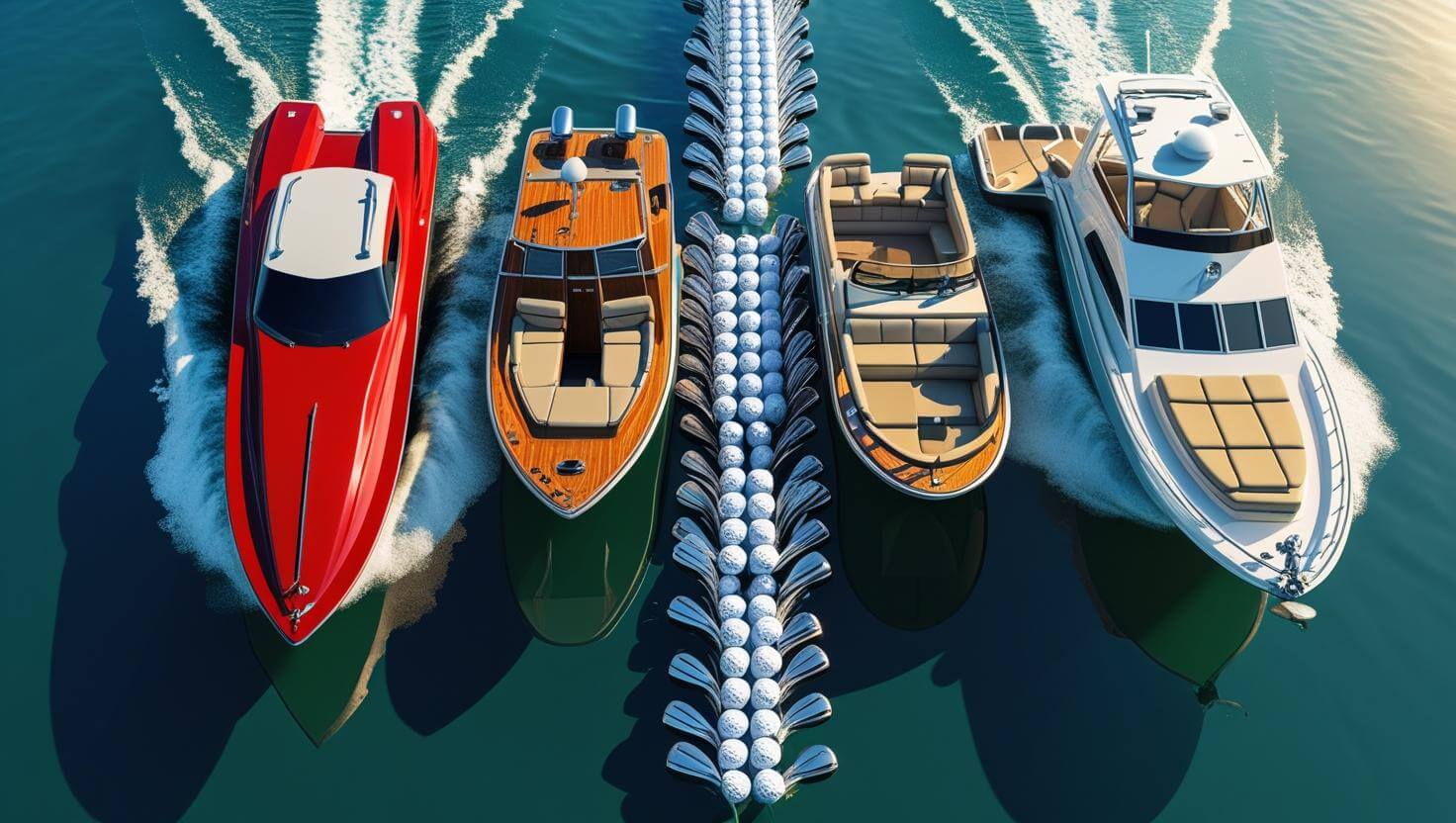
Larry Dunn, President of Royal Denship USA is a wise man (sometimes, he’s a wise guy but that’s another story). Larry has been around boats and boatsman long enough to have a collection of great sea stories and is prone to glibly utter boating truths without even knowing he has said something profound. During a conversation concerning different boats that we would like to own, came forth: “Boats are like golf clubs – different boats are needed for different purposes.” And so, just as you would not attempt a long golf drive with a putter, you also would not attempt to cross the ocean in an express cruiser or tie up at Shooters with a trawler.
Soon after Larry said this, I scribbled down a note for my Spectator file. He was absolutely right! The way I see it, I would like to have – no I need – no fewer than 11 boats and yet, here I am with only two (not including my dinghy). It is much the same story with cars but cars are an easier (and cheaper) proposition to own and maintain than boats. Cars really do not demand much maintenance when lightly used and, safely tucked inside a garage, deteriorate very little if any. I must admit I presently own seven cars – each acquired for a different reason and purpose. The same principle can be applied to houses and even wives (unless you are lucky enough to have a multitalented, all-purpose wife like I do). But I digress. As I said, I need 11 boats for eleven different reasons:
Deck Boat
If the truth be known, a deck boat is the ideal pleasure craft for people who live on the water in Florida. I need a deck boat because I need a boat that is instantly ready to use – a boat I can jump aboard, press a button to launch, start the engine and be off in a matter of minutes. I would say that 98% of all Florida cruising is day cruising. People with cruisers or blow boats or motor yachts that are docked behind their house almost never use them. A deck boat is fast, roomy and can go virtually anywhere in protected waters.
As I have written before, the most used area of any vessel is the flyingbridge and that’s why the deck boat makes so much sense because it is, essentially, a floating flybridge – a platform with a flyingbridge atop it. No need for galleys, sleeping cabins, saloons or any of that nonsense (although a head is a necessity). I would have a deck boat behind my house today if manufacturers would make a decent one my way. Inboard/outboard drives seem to last a matter of months in salt water between rebuilds. Any time you put aluminum housings, gears, clutches and lube oil reservoirs under water you are asking for big trouble.
I want a 20-foot deck boat with twin water jets. Water jets have virtually one moving part (the rotating shaft and impeller). Just for the hell of it, since the boat is already a “flattop,” I’d add an angled, overhanging runway on one side (just like the Nimitz) so I could launch and land radio-controlled model airplanes.
Express Cruiser
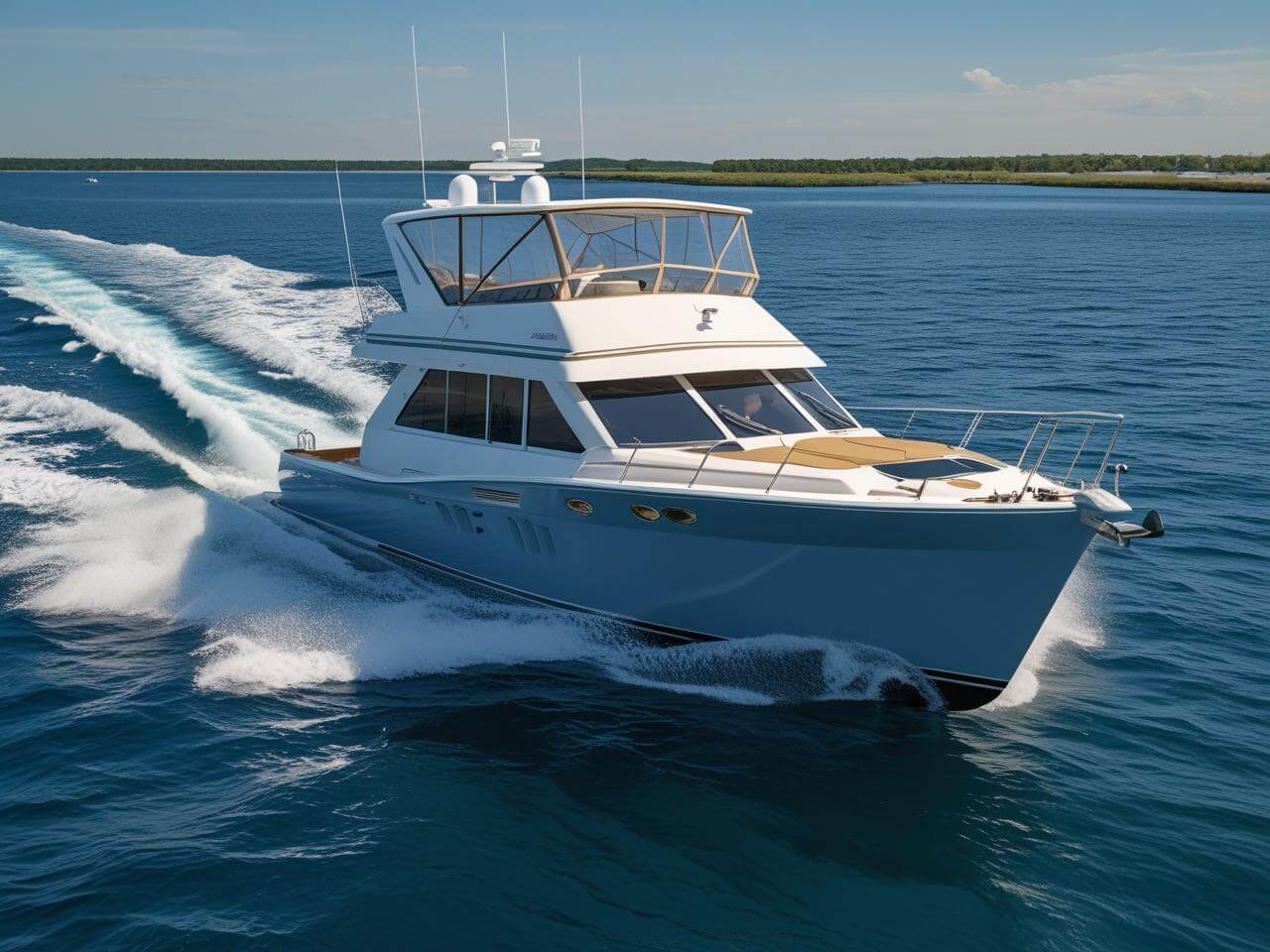
Everyone needs at least one express cruiser. An “express cruiser” does not connote a type or style of boat. Rather, it is simply a fast cruiser – one that can run from harbor to harbor at a speed of at least 20-knots and provide all amenities needed for living aboard upon arrival. My Mikelson 43 is an ideal express cruiser. She is fast, roomy and extremely comfortable to live aboard for extended periods of time.
Sportsfisherman
Well, this one is a no brainier. I need a sportsfisherman for obvious reasons. No, I don’t fish much and, in fact, I think fishing is a rather boring pastime. I need a sportsfisherman to cruise up and down the waterways showing off all my sportsfishing stuff in a craft so fearsome looking we wouldn’t even have to angle for fish. The fish will simply die of fear when they see us. I need a 60-footer with 80-foot stayed outriggers and a superstructure brisling with antenna like the combat information center of a destroyer. I need four $15,000 gold plated fishing chairs in the cockpit and a pair of 1800 hp engines in the engineroom for top speeds of 55-knots. Then I need a tuna tower on top of the flyingbridge and two more tuna towers atop that.
Trawler Yacht
I need a trawler yacht because, should I be hit by the urge to cruise across the Atlantic, I can do so knowing that my stout, burly vessel can encounter virtually anything and survive. There is something very satisfying and relaxing about plodding along 10-knots day in and day out through fair weather and foul until one’s destination is reached. Besides, all that heavy-duty ship type hardware is cool.
My trawler will be about 80-feet with draft of 8-feet and many tons of ballast in the keel. She will have a reversed, North Sea trawler type stem and high, flared bow. She will have enough range to cover 5,000 miles at 10-knots and be powered by twin, super simple engines such as a pair of slow turning Gardners. She will have a heavy, solid fiberglass or steel hull with a cored fiberglass superstructure and the exterior will be painted with a broom (but the interior will be finished to fine yacht standards).
Macho Speedboat
I must have a macho speedboat so I can utilize my never used gold chains and chest/back toupees that I keep in the bedroom drawer. Also because going very fast in a seaway is a lot of fun. Consequently, my macho boat will be 50-feet long with a transom deadrise of 75 degrees for an extremely soft ride. There will be no candy ass, pansy graphics adorning this boat. She will be finished in flat black paint that looks like suede with gloss black trim. She will be powered by four Lamborghini V12 engines because of the great sound they make and manipulating four throttles (like a 747 pilot) is cool. While these engines may not be long lived, they make wonderful cocktail tables after they blow up.
Fast Day Boat
This would be a boat to fast cruise to the Bahamas for lunch and return the same day. Some call these boats “picnic cruisers” which, to me, is a rather silly name because we all know cruising is no picnic – its hard work. For one to have a true picnic boat, one needs a big expansive deck (with artificial turf) large enough to lay out a big blanket for people to sit on. I will be ordering mine with a big wicker basket and the optional fire ant package to make things truly realistic.
Next month in our annual screw bung special issue, I’ll describe the other five boats I need. Don’t miss it. In the meantime, I think I’ll add a few finger floats to my dock. Just in case I hit the lottery.
(Reprinted with permission of Regina Fexas.)
If you would like to read more of Tom's pearls of wisdom, tune in next Friday -- "Fexas Friday."
Better yet, why not get a full dose of infectious Fexas whenever you need it -- and buy one of the volumes below. Better yet, why not buy all of them -- we call them the "Fexas Five." They will provide many evenings of fun reading (better than Netflix), and you'll make the widow Regina very happy knowing that Tom will live on with you the way most of us remember him.
Order 1, 2 or "The Fexas Five" --

To find the "Fexas Five" on Amazon, click here...
Tom Fexas (1941-2006) was one of the most influential yacht designers of the last quarter of the 20th century. With the narrow Wall Street commuters that were built in the 1920s and '30s always on the back of his mind, he wanted to design boats that were at once fast, comfortable, seaworthy and economical to operate. Over the years, he and his firm designed over 1,000 yachts for some of the most prestigious boat builders in the world, including Choey Lee, Palmer Johnson, Grand Banks, Mikelson Yachts, Burger, Abeking & Rasmussen and many others.
Even though toward the end of his career he only designed megayachts and superyachts, including the remarkably influential PJ "Time" in 1987, he is best remembered for his first major vessel in 1978 -- Midnight Lace -- which became a series of 44-52-footers. They were light, narrow, and fast with relatively small engines. He was also influential in the boating community because of the monthly column he wrote for Power and Motoryacht, which began in its very first issue in January 1985.