Boats Are Like Golf Clubs, Part 2
More Boats I Really Need
Last month, we explored the reasons why different boats (like different golf clubs) are needed for different purposes. I figured I needed a minimum of 11 vessels. The list continues this month.
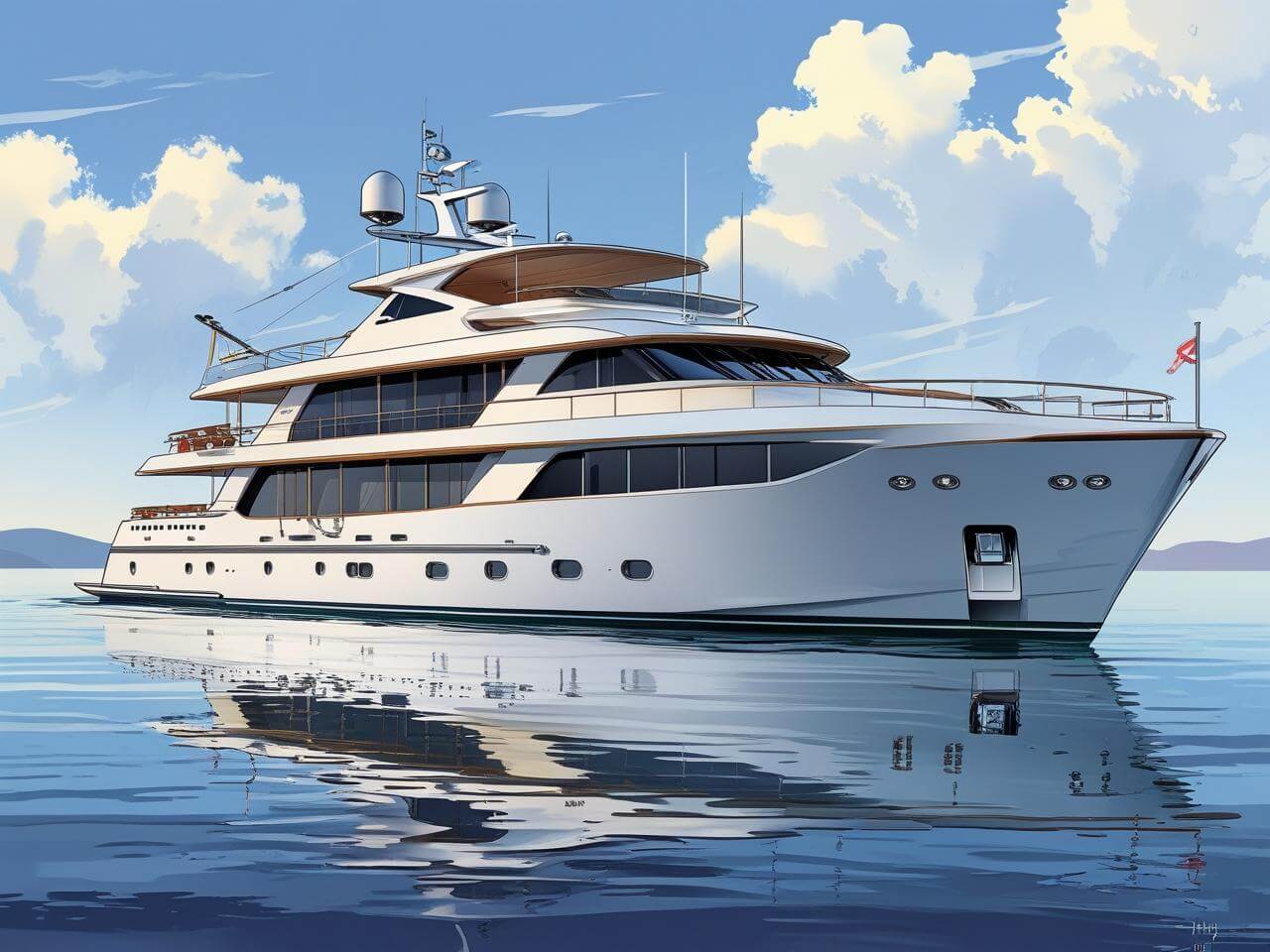
Large Motor Yacht
Of course, I need a large motor yacht – something that can be Med moored “stern to” at the quay at Portofino between all the other large motoryachts and be big enough that it will not make me feel insignificant. I could eat or bask on the aft deck and people would walk by and point to me speculating on just how wealthy I am and from where I stole the money.
The problem is, large yachts require a large crew intruding on my privacy and always causing problems. Therefore, my “large motor yacht” will be something that can easily be handled by two people. She will be 60-feet long with a beam of 40’ and six decks high. Then, when Med moored, the stern area of my boat will appear bigger than all the others and yet the vessel could easily be handled by my wife and myself.
50’s Chris-Craft
I must have a classic wooden powerboat like the kind I grew up on it because fiberglass boats are too damned perfect. I miss the chores associated with old wooden powerboats: varnishing acres of bright work, replacing rotted wood in the hull and superstructure, and, crawling around the bilges with a sponge trying to trace leaks. There is nothing smarter on the water than a well-maintained wooden cruiser – say a 1954 53-foot Chris-Craft Constellation.
By the way, Chris-Craft has come out with a nice, new line of boats, which are supposed to be “retro boats” but in my opinion did not retro far enough. They went back to the 60’s when most all boats looked alike. They should have gone back to the time when Chris-Crafts stood alone with their outstanding styling: beautiful raked bows with bull nosed stem heads, varnished strip mahogany or teak main decks, varnished mahogany cabin sides, custom chrome on bronze deck fittings liberally sprinkled throughout the boat, softly rounded superstructures and the most beautiful transoms – raked and radiused to perfection with two large exhaust pipes which produced an exhaust sound at idle unlike any other boat. I need a boat that makes those exhaust sounds. And I really miss using Calahans chiltered varnish.
Day Sailer
Don’t laugh. I want a day sailer in my boat inventory just so I don’t forget how the other 1/16 lives. I need to know what it feels like to be waked (“waked” is a verb invented by a zephyr boater). I need to know firsthand how it feels to be out sailing on a hot day sweating in my miserable little unprotected cockpit when a powerboat comes by and the owner dumps a tray of ice overboard just as he passes me.
I need to know how it feels to be whacked in the head by a swinging boom and to walk around on perpetually tilted decks with salt water running down my butt. And, besides, only a sailboat entitles me to speak the “sailing lingo.” I could sit at a yacht club bar and confidently proclaim things like: “yeah, I was beating into a nor’easter when mais’il parted at the dew so I had to climb the rattlins’ because the sheet got jammed in the topping lift.”
Owning a sailboat also would allow me to wear some salty clothes. You know, the sailing uniform – beat up, salt encrusted topsiders, ratty, dirty Tyrolean shorts and a torn, salt encrusted T-shirt, which proclaims something cool like “Folk Boats Forever.” Obtaining these clothes is not a problem because I understand there are places you can buy weathered sailing clothes brand new so you do not have to go through all the trouble of actually sailing to get your clothes salty looking. Oh yeah! It also allows me to have a scraggily, out of control beard inhabited by various denizens of the insect world feeding on morsels of meals encrusted in the rat’s nest over the last five years. Finally, owning a sailboat qualifies me to be tight a fisted bastard when it comes to spending money.
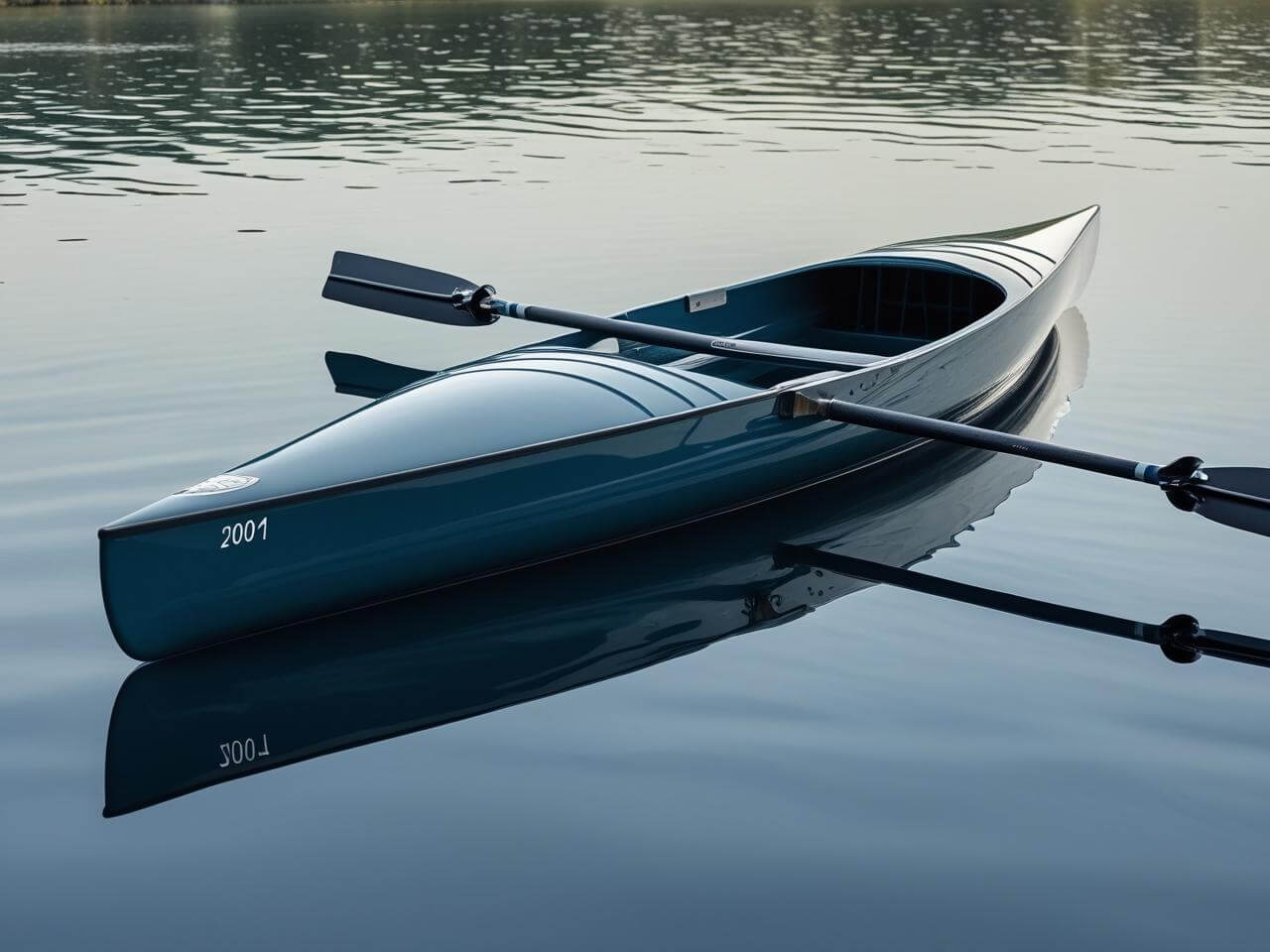
Rowing Shell
I need (and presently own) a rowing shell because it allows me to combine my love of boating with exercise. While the fact is you can get the same exercise in a plain old rowboat, plain old rowboats do not have the sex appeal of towing machines with all the neat stuff: foot stirrups, a sliding seat, outriggers, long spoon bladed carbon fiber oars and a splinter hull capable of probably twice the speed of a rowboat. The only downside of recreational rowing is that people ashore or aboard other boats simply cannot resist yelling “stroke, stroke, and stroke” as you quietly slide by them. Be prepared to ignore them or holler back some clever phrase like: “screw you buddy and the mule you rode in on.”
Commuter Boat From the 1920’s/1930’s
I love Commuter boats and I would have to have one in my fleet. Commuters are just about the coolest boats ever produced on this planet. True commuter boats were built to ferry their wealthy owners from estates on Long Island down to Wall Street and back. Speed was what counted most so the boats were light and extremely narrow, power was high (for the day) and accommodations were minimal. Of course, these wealthy owners did not get the big bucks from sitting on their butts. They were very competitive people so, naturally, racing to and from work was common with the fastest boats held in very high esteem.
Owners would continually build new vessels to beat their neighbors to Wall Street. A few of these boats still exist so the dream of owning one is not completely hopeless. Boats like “Jem,” “Pam,” “Aphrodite,” and “Ragtime” remain but their numbers are dwindling fast. I need one of these boats about 70-feet long with a beam of 11-feet powered by twin 800hp diesels so I can blow modern vessels of the same size with four times the damned horse power while pulling a tight little wake behind me.
Yes, these are the essential boats in my maritime golf bag. Of course, having all these boats is no good if they are kept outside exposed to the elements so I will need a huge boat house for the lot and unlimited time and money to maintain the fleet. In fact, my ideal life would be to have nothing to do but to fool with the boats listed above. Which brings me to the classic boat conundrum: “when you have the time, you don’t have the money and when you have the money, you don’t have the time.” A sad state of affairs indeed.
(Reprinted with permission of Regina Fexas.)
If you would like to read more of Tom's pearls of wisdom, tune in next Friday -- "Fexas Friday."
Better yet, why not get a full dose of infectious Fexas whenever you need it -- and buy one of the volumes below. Better yet, why not buy all of them -- we call them the "Fexas Five." They will provide many evenings of fun reading (better than Netflix), and you'll make the widow Regina very happy knowing that Tom will live on with you the way most of us remember him.
Order 1, 2 or "The Fexas Five" --

To find the "Fexas Five" on Amazon, click here...
Tom Fexas (1941-2006) was one of the most influential yacht designers of the last quarter of the 20th century. With the narrow Wall Street commuters that were built in the 1920s and '30s always on the back of his mind, he wanted to design boats that were at once fast, comfortable, seaworthy and economical to operate. Over the years, he and his firm designed over 1,000 yachts for some of the most prestigious boat builders in the world, including Choey Lee, Palmer Johnson, Grand Banks, Mikelson Yachts, Burger, Abeking & Rasmussen and many others.
Even though toward the end of his career he only designed megayachts and superyachts, including the remarkably influential PJ "Time" in 1987, he is best remembered for his first major vessel in 1978 -- Midnight Lace -- which became a series of 44-52-footers. They were light, narrow, and fast with relatively small engines. He was also influential in the boating community because of the monthly column he wrote for Power and Motoryacht, which began in its very first issue in January 1985.