Brunswick CEO Says Freedom Boat Club Fills a Critical Gap
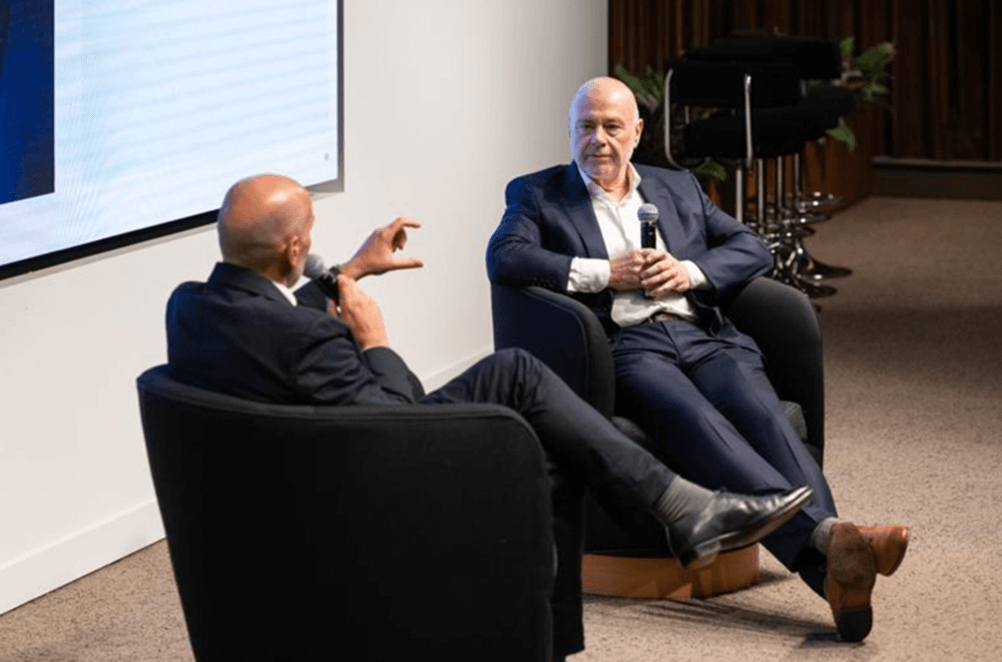
Brunswick CEO Dave Foulkes attended the inaugural IBI Summit, held in partnership with Carlsquare, in London recently. Below is an edited transcript of his fireside chat with IBI Editor Ed Slack.
Does the marine industry need to step outside its comfort zone more often? We tend to rely heavily on boat shows—are we maybe too focused on selling to the same audience?
Yes, absolutely. Our biggest long-term challenge isn’t regulation or interest rates—it’s relevance. The average age of a boat buyer is late 40s to 50s. Freedom Boat Club members are mid-40s.
We have to reach new audiences, and they aren’t necessarily attending traditional boat shows.
We need to go where people are—physically and digitally. Whether it’s through CES, digital marketing, or urban activations, we have to make boating visible and accessible to younger and more diverse demographics.
It’s tough though. We’ve been trying to reach those younger age groups, but it’s sticky. Why can’t we crack that 30-something segment?
It’s a real challenge. With Freedom Boat Club, we’ve started to see a more diverse profile, including younger professionals and people who’ve aged out of ownership but still want to enjoy boating.
It’s especially popular in large metro areas where boat ownership isn’t practical. Freedom offers a hassle-free experience—no storage, no maintenance—which is very appealing.
It’s also more inclusive: about 35% of Freedom members are women, and 15–20% are from ethnically diverse backgrounds. That’s a significant shift from traditional boat ownership, where 85% of registered owners in the US are men.
That brings us to collaboration. Should the industry work more collectively to promote boating, not just brands?
Yes. Boats aren’t part of everyday life for most people—they’re not like cars or planes. For many, boating seems intimidating or exclusive. So we need a united, industry-wide effort to break down those barriers and make the lifestyle more relatable.
How does the Freedom Boat Club model fit into your broader ecosystem and profitability strategy?
Freedom Boat Club fills a critical gap in our business model—it’s not just about running a boat club, but making the entire ecosystem work.
The challenge lies in either acquiring boats profitably or disposing of them efficiently. If that ecosystem isn’t in place, any profit made within the club can be lost through depreciation or resale losses in the pre-owned market. We’ve been focused on building the necessary operational “muscles” to ensure the entire system is sustainable and profitable.
Internally, it seems like a virtuous cycle, but does this model impact external sales or innovation? Are there trade-offs?
Not really. Every boat placed into Freedom Boat Club earns significantly more over its life than if it were sold outright.
On average, each boat supports about $60,000 in annual membership revenue and remains in service for two to three years. That equates to $100,000–$150,000 in lifetime revenue per boat before it’s sold into the pre-owned market.
So, while some assume we’d prefer to sell boats instead of putting them into Freedom, the margins from Freedom are actually stronger. Operating margins for Freedom Boat Club are in the mid-teens—healthy for a business like ours.
Do members often convert into boat buyers, or is there a clear separation?
We conducted diligence when we acquired Freedom to understand potential cannibalization of boat sales. Only about 5% of members were seriously considering buying a new boat.
Some might have considered a pre-owned boat, but that’s not our focus. Most Freedom members are new to boating and are drawn in by the accessibility and ease of the club model.
Unlike purchasing a boat, a Freedom membership avoids inflationary pressures and interest rates—it’s more affordable and predictable.
Do you think we—as an industry—need to be shouting louder about the positives of what we do?
Yes, definitely. We need to better communicate the incredible joy and benefits of being on the water. Even with all the entertainment options people have today, nothing quite matches the experience of boating. That said, only a relatively small portion of the population gets to enjoy it regularly.
In the US, about 140 million people get on the water each year, out of a population of 330 million—that’s significant. But turning those casual experiences into long-term relationships with boating is where we still have work to do.