Choosing the Right Boat for the American Great Loop

The American Great Loop is a popular and challenging cruising route that takes boaters through inland rivers, the Great Lakes, the Intracoastal Waterway, and other waterways around the eastern and Midwestern portions of North America.
Total distance is a minimum of 5,250 miles, but depending on which route choices and which side trips you do, it can be extended to include thousands more miles. Most Loopers report their Great Loop trip to be in the 6,000-mile range.

Traditionally, Loopers spend about a year on the route, traveling the northern part during the warm summer months, the inland rivers in fall, winter in Florida and the following spring traveling up the east coast back to their initial port of call. (Loopers generally go south on the inland rivers to take advantage of current flow.)
Choosing the right boat for the Great Loop involves considering several factors to ensure comfort, safety, and practicality throughout the journey.
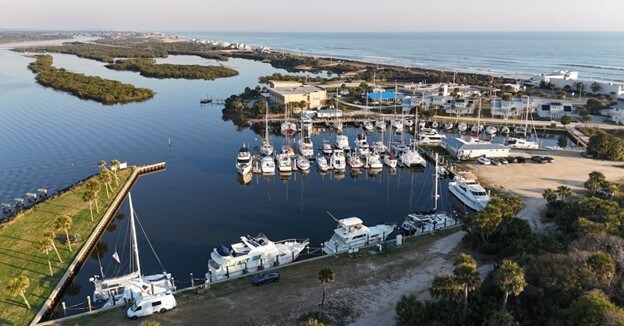
Here’s a guide on the types and sizes of boats that are generally suitable for completing the Great Loop:
Boat Types for Great Loopers
Trawlers
• Description: Trawlers are a popular choice for the Great Loop due to their fuel efficiency, stability, and spacious living quarters. Many U.S. recreational trawlers have a raised pilothouse or flying bridge.
Features:
• Displacement Hulls: Trawlers typically have a full displacement hull and moderate single-diesel power, allowing for comfortable cruising at slower speeds and good fuel economy.
• Semi-Displacement Hulls are common in twin engine trawlers, which can cover greater distances in shorter time, though at the cost of more fuel.
• A popular feature is a "Portuguese bridge", which consists of a walkway behind the foredeck, in front and to the sides of the pilothouse windows, separated from the foredeck by a (generally) waist-high bulwark.
• Size: Generally between 30 and 50 feet.

Motor Yachts
• Description: Motor yachts often offer more luxurious accommodations and entertainment areas and are capable of cruising long distances comfortably. The hulls are designed for on-plane operation. Some motoryachts are catamaran or twin hull designs, adding a broader beam for a given LOA.
• Features: They usually have larger cabins and amenities, making them suitable for extended cruising. Larger twin diesel engines make them capable of speeds over 20 knots, useful in getting to a harbor ahead of bad weather.
• Size: Typically between 40 and 60 feet.

Boat Size and Specifications
Length:
• Recommended Size: Boats in the range of 30 to 50 feet are typically ideal for the Great Loop. This size provides a good balance between comfort, maneuverability, and ease of handling through various waterways.
• Considerations: Make sure the boat can fit through locks and under bridges, which may have height and width restrictions.
Draft:
• Recommended Draft: A draft of 5 feet or less is generally suitable. Shallower drafts are advantageous for navigating areas with varying water depths.
• Considerations: Check the depth of the waterways you’ll be traveling through, as some areas may have limited draft clearance.
Air Draft:
• Necessary Clearance: The air draft, that is the distance from the surface of the water to the highest point on the boat, can’t be more than 19’6” due to an unavoidable fixed bridge located at mile 300.6 on the Illinois River. The boat must be able to clear that bridge. Some taller boats are able to get under 19.6’ by lowering antenna, radar arches, etc.
• Water Levels: Note that water levels rise and fall in canals and rivers with the seasons. It’s best to have some air draft leeway to be sure you can fit under the lowest structures.

Low Speed Handling Assets: IPS drives, outboard or sterndrive engines with joysticks and bow thrusters are all advantages in docking. Single engine inboards are difficult to handle around the docks without lots of experience.
Fuel Capacity:
• Recommended Capacity: Adequate fuel capacity is important for longer stretches between fuel stops. Reportedly the farthest distance without a fuel stop is between Kimmswick, Missouri on the Upper Mississippi River and Paducah, KY. This is a distance of about 200 miles. A range of 300 to 500 miles is better, allowing plenty of reserve for side trips.
• Considerations: Ensure you have a reliable way to refuel in remote areas or have a plan for fuel stops.
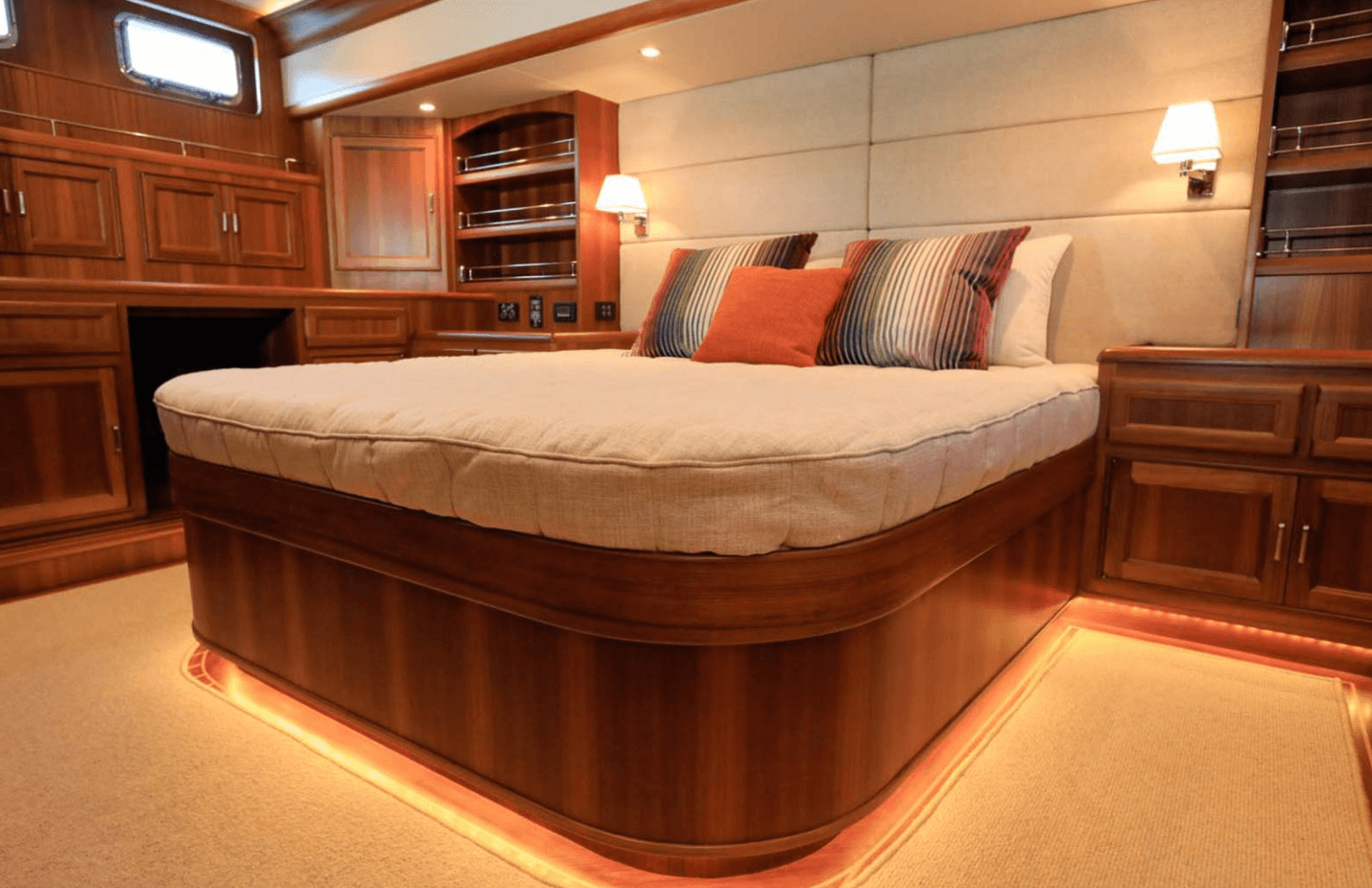
Living Space:
• Living Quarters: Since the Great Loop is a long journey, having comfortable living quarters, including a well-equipped galley, comfortable berths, and adequate headroom is important.
• Amenities: Look for boats with amenities that suit your preferences, such as air conditioning, heating, and entertainment options.
• Laundry Facilities: A washer and dryer are a must for longterm life aboard. The stacked variety often fits where side-by-sides will not.
Navigation and Safety Equipment:
• Navigation: Ensure the boat is equipped with reliable navigation and communication equipment, including GPS, charts, radar, and VHF radio.
• Safety: Safety equipment such as life jackets, flares, fire extinguishers, and first aid kits are essential, and required by the Coast Guard and state boating agencies. EPIRB’s and PLB’s are also highly recommended for open water crossings.
Additional Considerations:
• Operator Experience: Choose a boat that you are comfortable handling and have plenty of experience with, as the Great Loop presents varied and sometimes challenging conditions. You will be docking at an unknown marina or harbor nearly every night, so low speed handling expertise is a must.
Inspection and Preparation:
• Pre-Trip Inspection: Conduct a thorough inspection of the boat and have it prepared and maintained before starting the journey. Regular maintenance during the trip is also crucial, as are some basic spare parts—talk to your mechanic for replacements you might want to carry along.
Conclusion

A boat between 30 and 50 feet in length, with a draft of 3 to 5 feet, and equipped for long-distance cruising is typically well-suited for the American Great Loop. Just don’t forget that air draft problem-- 19’6”—if you intend to make the traditional route.
Proper planning and preparation will help ensure a successful and enjoyable Great Loop adventure, whether you take a full year to make the journey or do it piecemeal over a number of years. To learn more, contact the America’s Great Loop Cruisers Association at https://www.greatloop.org.