Coast Guard Accepts ABYC Navigation Light Standard for LED Lighting
A win for industry-led standards as ABYC C-5 replaces decades-old UL 1104.
ANNAPOLIS, Md.– The American Boat & Yacht Council (ABYC) announced that the U.S. Coast Guard (USCG) has officially accepted ABYC C-5, Construction and Testing of Electric Navigation Lights, as an equivalent to UL 1104, according to Policy Letter 01-25.
This acceptance gives manufacturers and boat builders a modern way to meet compliance, especially for vessels over 65 feet (19.8 meters) in length.
LED Running Lights Standardized
Basically, it accepts and standardizes the LED running lights that virtually all boat manufacturers now use as part of their standard build.
LED’s are brighter, far tougher, waterproof and far longer-lived than incandescent bulbs, making them ideal for marine applications—boat builders have been quick to change over nearly 100% to this technology.
An added advantage is that they use less current, thus create less drain on boat batteries when left on with the engine shut down.

“ABYC C-5 is a technology-forward standard that reflects how navigation lights are built today,” said Craig Scholten, ABYC vice president of standards and compliance. “This is what success looks like when industry and regulators work together.”
Vessels over 65 feet must use navigation lights that meet UL 1104 or another standard specified by the Commandant. The Coast Guard’s acceptance of ABYC C-5 fulfills this requirement with a current, relevant standard.
The current edition of UL 1104 was produced in 1998.
Since then, the technology used in navigation lights has dramatically changed.
UL 1104 was not devised to address light-emitting diode (LED) navigation lights, and various tests it requires are not applicable to LED technology. Additionally, LED lights present different failure modes that are not addressed in UL 1104 testing.
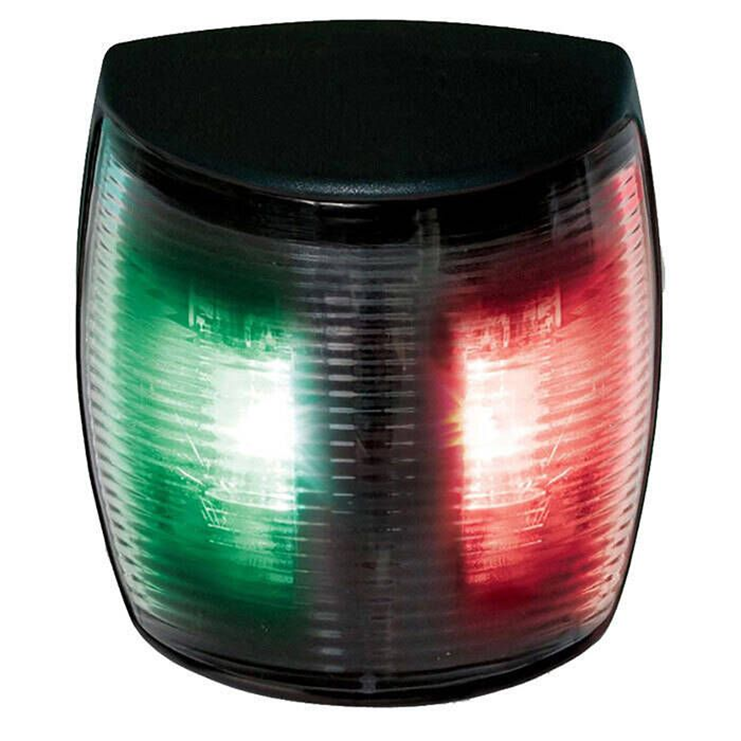
ABYC C-5 addresses this gap with updated testing requirements and international alignment.
It applies to vessels of all sizes and includes standards for both incandescent and LED navigation lights—covering visibility, color, service life, electromagnetic compatibility, materials, and labeling. The C-5 standard aligns with ISO 19009 Electric navigation lights — Performance of LED lights.
Per the rule, where Titles 33 and 46 of the Code of Federal Regulations (CFR) require navigation lights to be certified, a USCG-accepted independent laboratory may be authorized under approval series 111.075 to certify navigation lights as meeting ABYC C-5.
For more information or to access the standard, visit www.abycinc.org or contact [email protected].
Summary: What Manufacturers Should Know
- UL 1104 is outdated and no longer maintained. It does not reflect LED technology or modern performance needs.
- ABYC C-5 is now officially accepted by the U.S. Coast Guard for compliance with navigation light regulations.
- ABYC C-5 applies to all vessel sizes, not just those under 65 feet.
- Covers both incandescent and LED lights, including requirements for:
-Luminous Intensity and Range of Visibility
-Chromaticity Area Requirements
-Degradation Caused by Service Life Conditions
-Materials and Construction
-Testing Requirements including Electromagnetic Compatibility
-Marking
-Owner’s Manual and Collateral Literature
- Aligns with ISO 19009 for international consistency.
- Most new lights already meet C-5, offering a wide range of compliant options.
- Lights can be certified through Coast Guard–accepted labs listed in CGMIX.
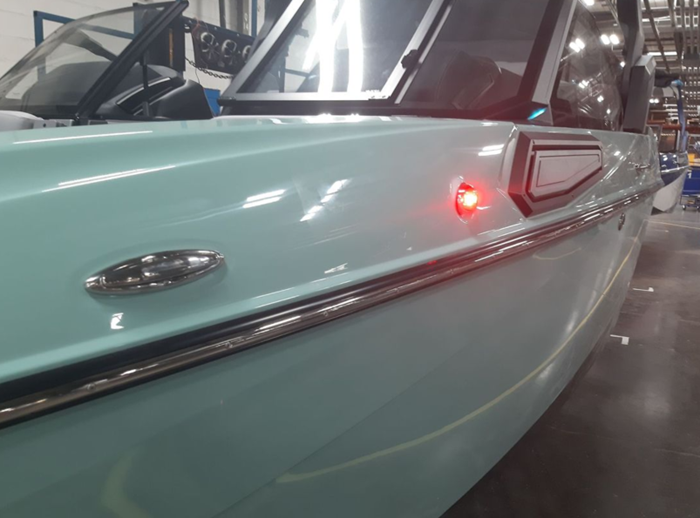
**In simpler terms, ABYC C-5 helps ensure that boat navigation lights are:
- Bright enough to be seen at the required distances.
- The correct colors to avoid confusion on the water.
- Durable and reliable, even in harsh marine environments.
- Safe and don't interfere with other boat electronics.
- Easily identifiable with proper labeling.
- Built to a standard that is recognized and accepted by boating authorities.
Since 1954, the nonprofit American Boat & Yacht Council has developed safety standards for boat design, construction, equipage, repair and maintenance. As the essential global source of marine industry technical information, ABYC supports its members with safety standards, credentialing, education, training and technical tools to help make boating safer.