Designing Fast Powerboats: Key Speed Principles
The propaganda for this session states that, and I quote, “noted designers will talk about their work “on the edge.”” Well, I must admit, I used to be a lot closer to the edge than I am now. I was on the edge 10 or 12 years ago but it seems the boat market has come around somewhat to my way of thinking. I have remained in place while the edge has moved. Nevertheless, I’ll give you some of my thoughts on boat designs in general and specifically what I feel can be done to distance one company from the amorphous rest. What I propose here is not radical but more of a quiet revolution.
Our discussion will center on hull form, construction techniques, propulsion systems, joinerwork, equipage and exterior styling.
I. HULL FORM
Most production boats and, for that matter, most custom boats blindly follow the same basic hard chine hull form no matter at what speed they are designed to cruise. I’d venture to say that 85% of all powerboat hulls in existence today over 45 feet are the wrong form for the cruising speeds these hulls are locked into by their weight and power limitations. Planing hulls were developed to bodily lift out of the water, supporting some of the weight dynamically, thus decreasing displacement and increasing speed. This, however, will not occur unless a certain speed threshold has been exceeded. That speed threshold is generally accepted to be around a speed/length ratio of 4:1. This means that a hard chined vessel with a 36’ waterline length would have to travel at a speed above 24 knots to take advantage of its hull form. Likewise, a 49’ waterline length must be travelling at 28 knots, a 64’ waterline length at 32 knots, an 81’ waterline length at 36 knots and a 100’ waterline length at 40 knots.
As you can see, as length increases, hard chine hulls become less practical because they simply can’t attain the speed necessary to be efficient. There are many 36’ waterline length vessels that cruise well above 24 knots and benefit from a chine hull. Moving up in size, however, there are not many 64’ waterline length vessels that cruise over 32 knots and precious few 100’ waterline vessels that cruise above 40 knots. The simple fact is that below these threshold speeds, hard chines cause drag and eddies. You’ve heard the expression “You shouldn’t mess with Mother Nature.” Yes, nature knows best and this is borne out by the fact I’ve come across precious few ducks with hard chines because their “hulls” were designed to slip through the water with minimum expenditure of energy.
On the other hand, there are some conditions when ducks do, in fact, plane. Observe one coming in for a water landing. They extend their “landing gear” -- flat, webbed feet and do, indeed, plane on these flat plates which, in effect, have hard corners allowing water to break clean around them. Mother Nature is a smart lady. It’s not difficult to determine whether a hull is planing or not -- at speed simply look over the side. If you can look down and see the chine exposed full length you’re planing. If not, you’ve got the wrong hull for the job.
My interest in semi-displacement (we call them “penetrating”) hull forms started when I was a mate on a 63’ Consolidated Commuter built in the late ‘20’s. It was 1955. This nearly 30-year-old boat powered by her original 300 horsepower Speedway six-cylinder engines regularly, to my amazement, humiliated brand new boats on runs up and down Long Island Sound. We would blow away new triple screw Chris Crafts, Matthews, and even the highly touted Huckins of the day. She was named “Go Go” and would do an honest 26 knots.
Performance like this really opened my eyes to the old commuter hull forms and spurred a lifelong study of these craft. In 1976 we developed our parent penetrating hull form to be used on the 44’ Midnight Lace. The fine, rounded entry, the built down keel, the rounded chine aft and the hard step above the waterline carried full length. The purpose of the step is to provide a sprayrail forward and increase stability as the vessel rolls. It also allows us to work in some pretty tumblehome in the topsides aft. The prototype 44’ Midnight Lace in cruising condition ran at an effortless 26+ knots powered by a pair of 175 shaft horsepower diesel engines.
This hull was purpose designed for an effortless, efficient cruising speed of around 20 knots. Twenty-five knots is the outer edge of the semi-displacement envelope at this length. Had she been hard chined, she would have run stronger than 26 knots wide open, however, at 20 or 21 knots, she would have been considerably less efficient. That’s the key: To design the hull for the cruising speed the vessel will be run at for 99% of her life.
The use of hull forms like this could dramatically reduce the size of engines being installed in vessels, thereby reducing weight, fuel consumption and cost. Increasing weight on a vessel produces a vicious circle; more weight, more structure, more fuel required, more weight, bigger engines, more fuel, more weight, bigger engines, etc. Doing the opposite -- decreasing weight produces a friendly circle; less weight, smaller engines, less fuel carried, lighter structure. A practical example of this approach can be seen on one of our production designs, the Mikelson 48’/50’. Powered by twin 425 horsepower Cats, she attains over 31 m.p.h. and consumes about 30 g.p.h. at 20 knots cruise.
An added advantage of this hull form is that the lack of a hard chine forward allows a much, much smoother ride in a seaway. When a chine hull is at planing attitude in a seaway, the flatter midships areas below the chine are first introduced to the oncoming waves. These flatter sections forward tend to pocket wave impact thereby producing dreaded pounding. A properly designed penetrating hull at speed is an inspiring sight.
II. CONSTRUCTION
Now we move onto construction techniques. What will be discussed here is fiberglass, however, the principles are the same for any material. Here again, many builders are locked into a similar mind-set: “Heavy is strong.” Well, heavy is strong. But there are two ways to achieve strength: Strength by weight and strength by engineering. In these days of space age cores, resins and reinforcements, we see too many solid laminates, too many plywood cores, too many solid timber beams and too high a resin to glass ratio.
Light hulls don’t have to be expensive, in fact, a light weight, cored panel can contain one-quarter the weight of fiberglass reinforcement found in a solid panel that does the same job. True, applying core does take time and a bit more skill but, with practice, a cored panel can be built for about the same cost as a solid panel -- oftentimes less. Over the years, we have had literally hundreds of foam core hulls constructed throughout the world with minimal problems. Many of the boats were done in third world countries like Brazil and Taiwan. Following a simple installation procedure, anybody with basic boatbuilding knowledge can do a proper cored laminate.
Although we’ve done many, many boats with cored bottoms and integral tanks, I would suggest that boat builders trying to “lighten up” might start by coring everything but the bottom and use “drop in” tanks. Then, as the builder becomes more comfortable with the procedure, he can start adding more core and experiment with integral tanks. Integral tanks save weight and interior space while strengthening the bottom at the same time. Oftentimes, the basic tank already exists formed by the bottom, stringers and bulkheads. All that’s required to make it a tank is a top.
III. PROPULSION
An important ingredient in this quiet revolution is the propulsion system. From a builder’s standpoint, a shaft, strut and propeller is a simple clean, installation and we believe that for the majority of production boats, this is the way to go. By following the principles outlined in our discussion of hull form and construction, as mentioned previously, the builder can install much smaller engines than would normally be installed. The result: Less weight, less money spent, smaller fuel tanks, lighter structure, more space for accommodations.
IV. JOINERWORK
Joinerwork can make up to 10 to 15% of a vessel’s overall weight. Building exotic, lightweight joinerwork is extremely expensive, both in man hours and cost of materials. We have found, however, that we can approach the weight of exotic construction simply by using solid ¼” plywood to fabricate joinery rather than commonly used ½” plywood. Quarter inch plywood, stiffened from behind as necessary with one-by-one strips is more than adequate for most joinery applications. Quarter inch plywood weighs 3/4 #/ft2.
Commercially available lightweight panels, ½” thick with Balsa core and fiberglass skins weigh almost one pound per square foot. Doors can be fabricated of solid frames with cane, woven wood strips or solid ¼” ply inserts, however, if flush doors are desired, they must be cored for stiffness and light weight. Here, commercially available, cored panels can be used or, alternately, the builder can make his own by adhering thin plywood skins to cheap foam core with a simple press.
V. EQUIPAGE
Hand in hand with all this goes simplicity of equipage. Most production and custom boats built today are grossly over equipped. Think about how boats were equipped 40 and 50 years ago. Without the gadgets now considered mandatory for modern cruisers, these boats provided many happy hours afloat to their owners. That’s what boats are for aren’t they: Happy hours afloat? What’s changed? The sea and climate have remained the same all these years so why have boats changed so much?
Owners have to realize that every additional system added to a boat represents major expenses in initial purchase and upkeep over the life of the vessel in addition to adding weight and occupying valuable space. Many, many new boats are bought with generators and air conditioning systems that are rarely, if ever, used -- nor are they needed. Granted, most marina hopping boats in the South need air conditioning for comfortable sleeping and living aboard, but how often do you need air conditioning when you are away from the dock? If air conditioning is wanted, fine: Install simple self-contained units as required but leave out the generator. Most times a generator is only used for cooking away from the dock and there are certainly alternate methods of cooking including excellent propane gas and CNG systems.
A great amount of thought must be given to the installation of a new systems such as generators, air conditioners, stabilizers, watermakers, power steering, electronic engine controls, bow and stern thrusters, trim tabs, power davits, windlasses and the like. Each one of these components represents a complete, separate, complex new system added to the vessel, requiring not only the initial outlay to purchase and install the gear, but a continuing, never ending maintenance commitment for the life of the boat as well as permanent performance degradation due to extra weight.
VI. STYLING
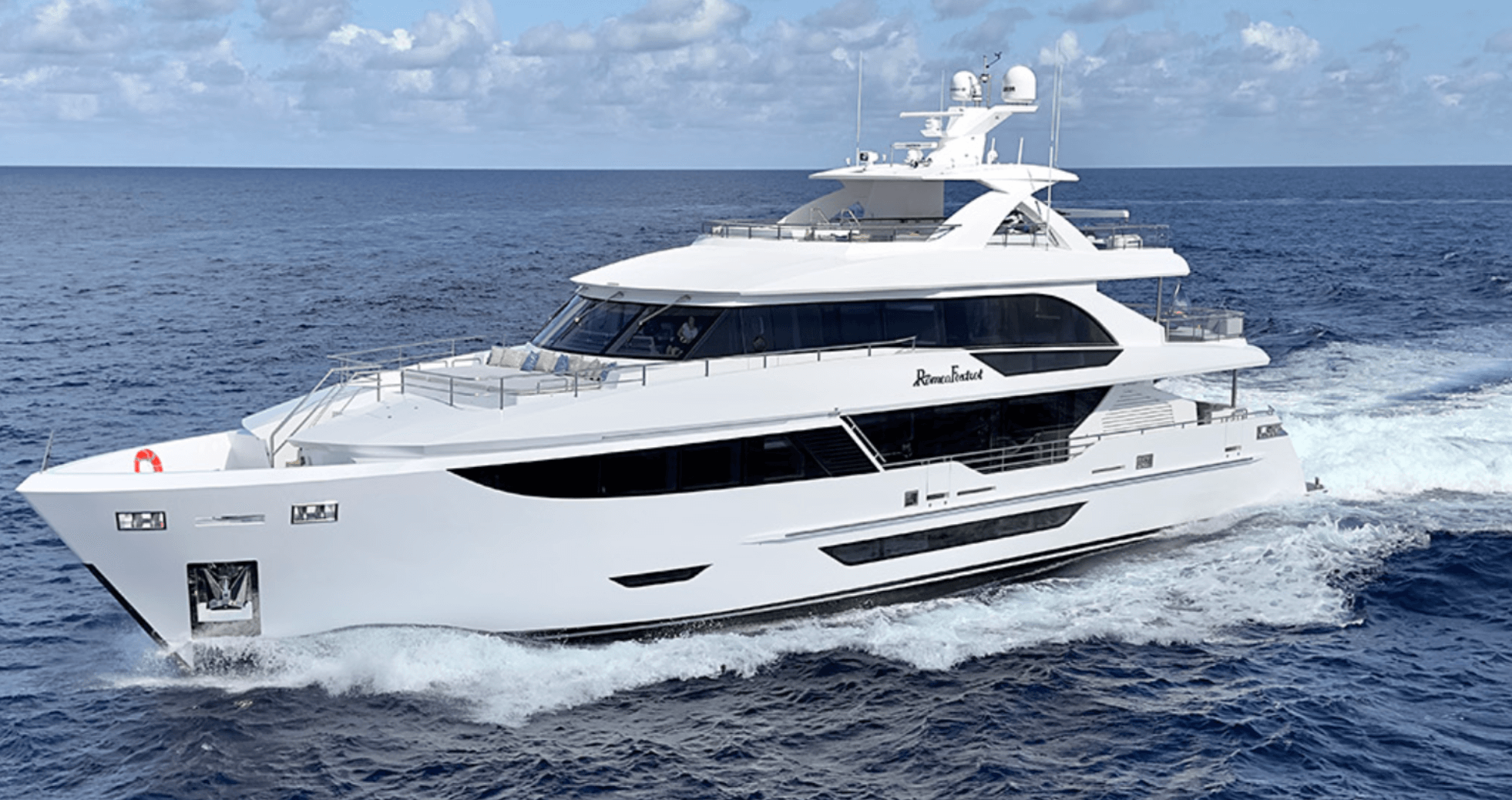
Finally, we get to styling -- a subject near and dear to my heart. The styling of most boats mimics the auto industry but lags it by five to ten years. Trendy styling on the water usually does not endure. Tailfin bedecked motoryachts that look like floating ‘57 Plymouths can be the rage one year but look sadly dated the next. Presently, we are in what I call the “blobbist period” of yacht styling.
A few years ago, boat builders and stylists realized that corners need not be hard when using fiberglass. First small radii appeared. Every year the radii got larger and larger until now boats are approaching the look of a well-used soap bar with blacked out windows and a radar arch on top. Some of these boats are interesting but, 85% of them are bland, uninspiring and boring. Round merely for the sake of being round. Boats and yachts should have personality and character. Tradition plays a big part in boating and tradition should not be ignored when styling boats. Looking at our soap boat pictured I can tell you that most boats will look like this in five years.
The obvious question is: Where do we go from there? The answer is backwards. Call them retroboats. Call them classical designs. Call them what you wish, but I predict that character and traditionalism will make a strong return in boat and yacht styling in the next 10 years. Our office has done both radical and classical designs but I dare say that boats like the Midnight Lace evoke far more attention from the general boating public than does a floating cream puff.
VII. CONCLUSION
In conclusion, the marine industry is in for some tough times: Wacko, unwashed environmentalists are attacking us on all fronts with little regard for the facts: Fuel consumption, conspicuous consumption, pollution from exhaust emissions, pollution from construction emissions, degradation of the marine environment, are all topics these people love to attack!
Regulations are bound to tighten. Taxes are bound to increase. If we are lucky enough to repeal the luxury tax, we will surely see increased fuel taxes and increased income taxes cutting into buyer’s boat money. It behooves us to reduce the cost and complication of boats and yachts. Easily driven, light weight vessels requiring minimal power address all these ecological topics and if designed and styled with some common sense and flair will produce vessels that truly standout from the crowd
(Reprinted with permission of Regina Fexas.)
If you would like to read more of Tom's pearls of wisdom, tune in next Friday -- "Fexas Friday."
Better yet, why not get a full dose of infectious Fexas whenever you need it -- and buy one of the volumes below. Better yet, why not buy all of them -- we call them the "Fexas Five." They will provide many evenings of fun reading (better than Netflix), and you'll make the widow Regina very happy knowing that Tom will live on with you the way most of us remember him.
Order 1, 2 or "The Fexas Five" --

To find the "Fexas Five" on Amazon, click here...
Tom Fexas (1941-2006) was one of the most influential yacht designers of the last quarter of the 20th century. With the narrow Wall Street commuters that were built in the 1920s and '30s always on the back of his mind, he wanted to design boats that were at once fast, comfortable, seaworthy and economical to operate. Over the years, he and his firm designed over 1,000 yachts for some of the most prestigious boat builders in the world, including Choey Lee, Palmer Johnson, Grand Banks, Mikelson Yachts, Burger, Abeking & Rasmussen and many others.
Even though toward the end of his career he only designed megayachts and superyachts, including the remarkably influential PJ "Time" in 1987, he is best remembered for his first major vessel in 1978 -- Midnight Lace -- which became a series of 44-52-footers. They were light, narrow, and fast with relatively small engines. He was also influential in the boating community because of the monthly column he wrote for Power and Motoryacht, which began in its very first issue in January 1985.