A Dramatic Rescue Off the Texas Coast Highlights Vital Boating Safety Lessons
The Rescue that Became a Lesson
The vast, blue expanse of the Gulf of Mexico can be a place of immense beauty and tranquility. But for even the most experienced boater, it can turn treacherous in an instant. A recent incident off the coast of Sargent, Texas, serves as a powerful reminder of this truth, and more importantly, a testament to how preparedness, clear thinking, and the swift action of the U.S. Coast Guard can turn a potential tragedy into a successful rescue story.
On the afternoon of September 13th, Coast Guard watchstanders received an urgent report: a 17-foot pleasure craft had capsized, leaving two adults and one adolescent stranded. While the circumstances that led to the vessel's capsizing are not detailed in the report, the actions taken by the boaters and the Coast Guard afterward provide a textbook example of how to respond when a day on the water goes wrong.
The watchstanders at Sector Houston-Galveston wasted no time. An urgent marine information broadcast was issued, and a rescue team was immediately deployed, including an Air Station Houston MH-65 helicopter crew and a 29-foot Response Boat–Small crew from Station Freeport. This rapid, coordinated response is a hallmark of the Coast Guard's commitment to maritime safety, but it's only half of the story. The other half belongs to the three people on the water.
When the rescue crews arrived on the scene, they found the boaters sitting on top of their capsized vessel. This single, simple action is arguably the most critical safety lesson of the entire incident: Stay with the boat.
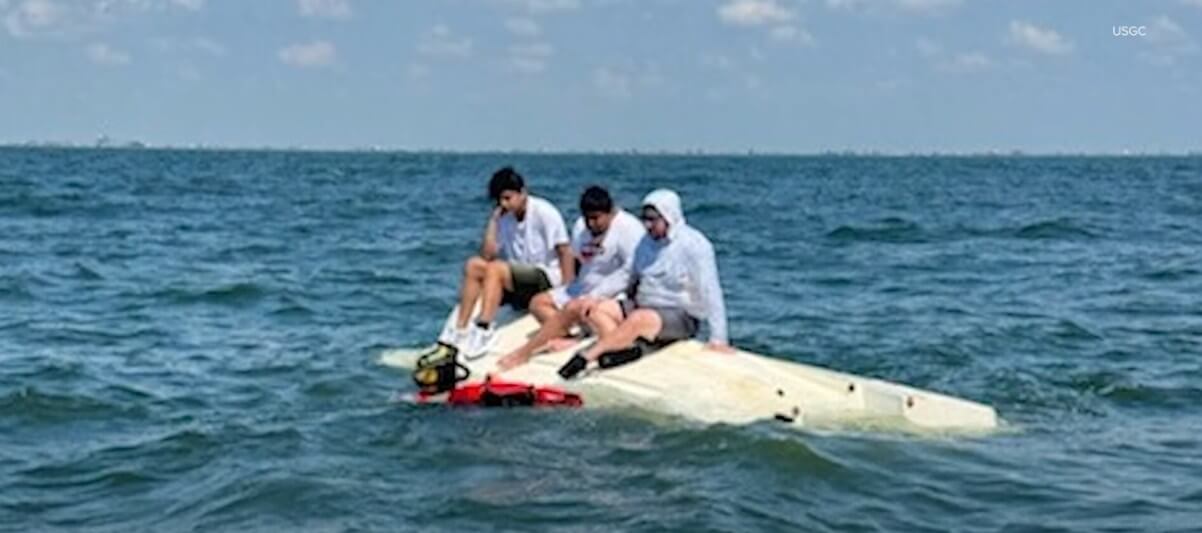
The natural human instinct in such a moment of panic might be to abandon the vessel and attempt to swim to shore. This is a critical error. A capsized boat, even a small one, is a large, visible object that is much easier for rescuers to spot from the air or from another vessel than a person's head bobbing in the water. By staying with the craft, the three individuals dramatically increased their visibility and, therefore, their chances of being found quickly.
Furthermore, a capsized boat often provides a stable platform to rest on, preventing exhaustion and hypothermia—two major threats to survival in the water. The boaters in this story used their overturned vessel as a temporary refuge, allowing them to conserve their energy and wait for help to arrive. Their calm decision-making in a high-stress situation was a key factor in the positive outcome.
While the news report doesn't specify how the initial call for help was made, it's safe to assume some form of emergency communication was available. This brings us to the second vital lesson: Always have a reliable way to communicate. Boaters should carry a VHF marine radio, which is the most reliable method for communicating with other vessels and the Coast Guard. A registered EPIRB (Emergency Position Indicating Radio Beacon) or a personal locator beacon (PLB) is also an invaluable tool that can send an automatic distress signal with your exact location. Even a cell phone in a waterproof case can be a lifesaver, but it should never be your only means of communication.
This incident also serves as a powerful reminder about the importance of Personal Flotation Devices (PFDs), commonly known as life jackets. While the report does not state if the three boaters were wearing them, every person on a vessel should be wearing a properly fitted life jacket at all times while underway. A life jacket keeps a person afloat, regardless of their swimming ability or physical condition, which is a game-changer if they are unexpectedly thrown into the water.
Finally, this story is a testament to the power of a proactive approach to safety. Before every voyage, no matter how short, boaters should file a float plan with a trusted friend or family member. A float plan includes details such as where you are going, your planned route, the number of people on board, and your expected return time. If you don’t check in, your contact knows to alert the authorities, giving rescue crews a starting point.
The successful rescue of the three boaters from their capsized vessel is a story of positive outcomes born from simple, yet critical, safety practices. It reinforces the fact that boating is a pursuit that requires respect for the elements and a commitment to preparedness. The heroes of this story are not just the brave Coast Guard rescue swimmer and crew, but also the three people who made the right decisions when it mattered most, proving that a little bit of foresight can make all the difference between a crisis and a story of survival.
Want to read about more close calls? Click here to see our weekly accident report and gain access to the archives.