Everything You Need to Know About Marine Antennas
Let’s talk antennas.
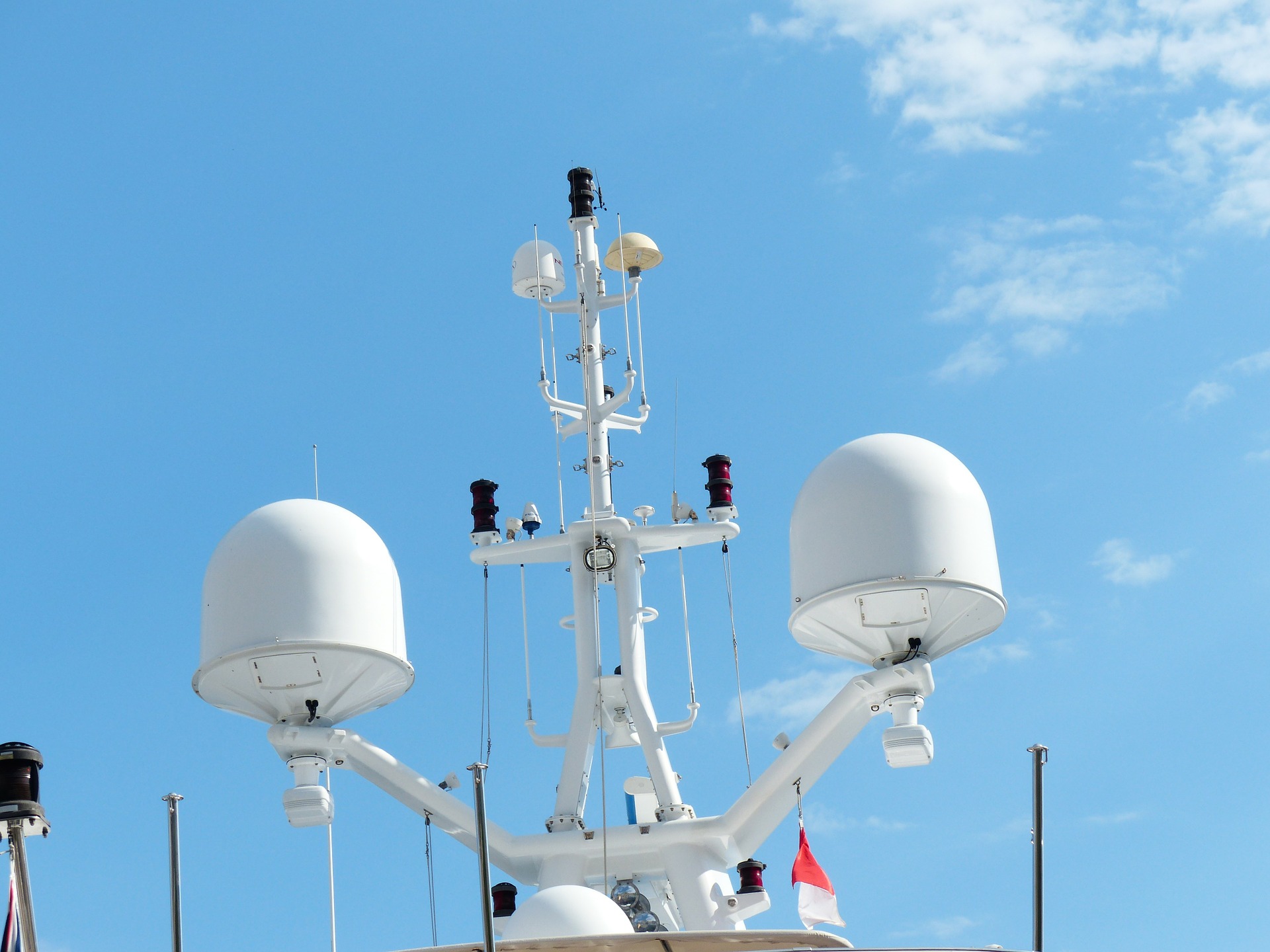
In this first of a multi-part series, we’re going over the essentials: types, purchasing, installation, and operation. This is a huge topic, so we’ll start by focusing on the communication antennas that keep you in touch: VHF, SSB, satellite, and cellular.
Small vessels require small antennas, and the converse is true for larger vessels. But no matter what kind of boat you have, the three things that matter most are gain, Standing Wave Ratio, and mounting height. We’ll show you why.
VHF
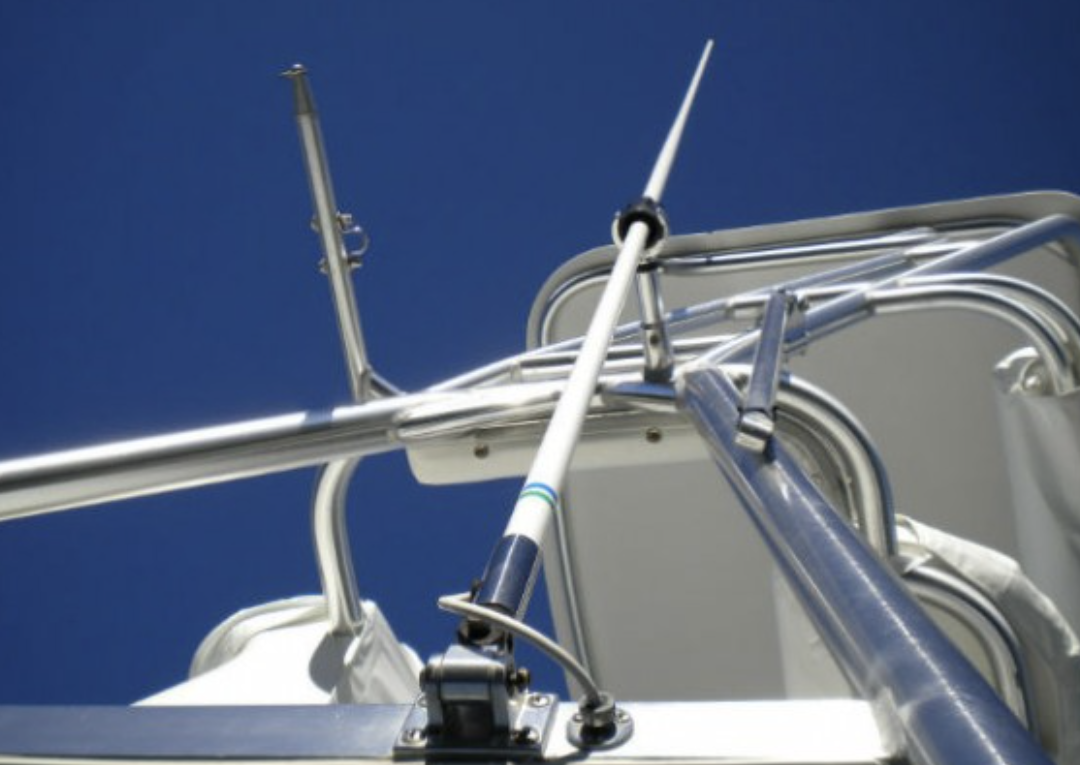
The type of VHF antenna you buy depends on the kind of vessel you have; small boats require small antennas, and the same is true for larger ones. But regardless of your boat's size, your main concerns for performance are gain, Standing Wave Ratio, and mounting height.
Gain
Antenna performance is measured by its gain, expressed in decibels (dB). The rule of thumb is simple: the higher the gain, the longer your transmission range. But there’s a catch—as gain increases, the transmission beam narrows.
For example, a 26-foot fishing boat that pitches and rolls will send a 9dB antenna's narrow beam over the target, causing a signal to fade in rough waters. This is why a lower-gain antenna is often a better choice for small, active vessels. More stable boats, however, can take full advantage of a 9dB or even higher-gain antenna.
There is a simple calculation tables to let a buyer determine the best antenna choice for any given boat:
3dB: Antenna tip height (in feet) above the water line x 1.15 = range in statute miles.
6dB: Antenna height (in feet) above the water line x 1.42 = range in statute miles.
9dB: Antenna height (in feet) above the water line x 1.52 = range in statute miles.
SWR
Another critical decision when choosing an antenna concerns Standing Wave Ratio (SWR). This measurement tells you how efficiently your antenna is transmitting. A perfect ratio of 1:1 means all of your radio’s signal is being radiated, while a higher ratio like 3:1 indicates a lot of that energy is being wasted. As Don Henry of Shakespeare Electronics explains, a high SWR results in poor transmission and a weaker signal for both you and those you’re trying to reach.
While a perfect 1:1 SWR is a theoretical unicorn, your goal is to find an antenna with the lowest possible rating—the industry standard is typically under 1.5:1.
Antenna Radiation Angle
Another less well-known consideration is the shape of your transmission beam. Each different dB rating has a different broadcast pattern, with some being rounder and some more elongated. The most important factor, however, is the angle of radiation.
What few people realize is that these beams can exit the antenna at different angles. You should look for one with a low angle of radiation. The lower the angle, the closer to straight out to the horizon your signal will travel, ensuring you get the most out of your radio’s power.
Your Final Decision
When it comes to your radio's performance, price should actually be the least important criteria. With all other things being equal, the antenna represents the single most important component you can alter to improve your signal. It's not the place to cut corners.
Installation
VHF transmission power is limited by the U.S. government to 25 Watts, so you have no legal way to increase your unit’s output. Since VHF is a line-of-sight technology, your only way to increase your actual transmission and reception range is with your choice and placement of the antenna.
Logic dictates that the higher you can mount your antenna, the greater your range will be. An antenna at the top of a sailboat mast will broadcast much farther than the same antenna mounted just a few feet above the water’s surface.
Of course, the longer the wire run between your antenna and radio, the more signal loss you'll suffer. You could easily lose 3 to 5 dB in just 100 feet of cable. For longer runs, make sure you choose the appropriate cable for the distance to minimize signal loss and maximize your radio’s performance.
RFI
It can feel like almost everything on a boat interferes with your VHF radio. Depth sounders, fluorescent lights, engines, radars, and even plasma TV screens can all pose a problem.
The key to preventing this interference is to keep your antenna and its cable away from these sources.
Antenna Installation Tips
Follow these guidelines when mounting your antenna and routing your cable:
- Keep the antenna and its cable at least three feet away from fluorescent lights, other radio antenna cables, depth sounder transducers, engines, and other antennas.
- Use only quality coaxial connectors on each end and to connect any cable extensions.
- Do not coil coaxial antenna cable neatly. Instead, store any excess in a random jumble or a figure-eight coil to prevent interference or magnetic anomalies.
Mounting
Antenna Durability & Construction
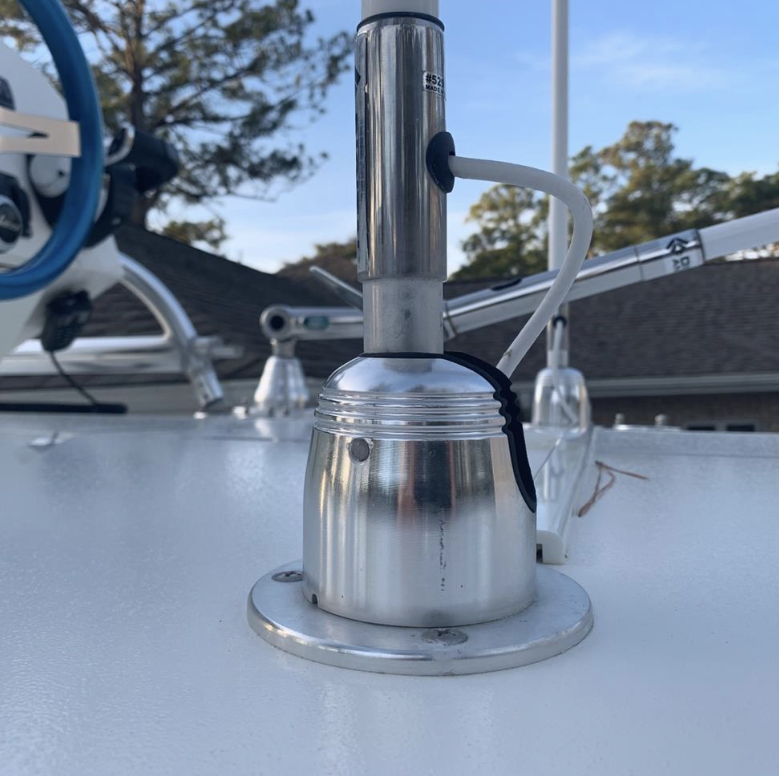
Sometimes called "whip" antennas, marine antennas can take a serious beating from wind and wave action. Smaller boats with short antennas don't need to worry much about this, but larger vessels with taller antennas must always add at least one mid-length support in addition to the antenna's mounting base. If you plan to go under low bridges or trailer your boat, you'll want to choose a mount with a ratchet adjustment so you can easily lay the antenna down.
Antenna Construction
At its core, an antenna is a piece of wire cut to a specific length for a given frequency. Manufacturers alter the antenna's dB rating by stacking "elements" on top of each other. You can choose an inexpensive fiberglass antenna that will work just fine for a while. However, the marine environment will eventually wear on it, leading to something called "antenna bloom," which you discover when you end up with a hand full of fiberglass filaments.
To avoid this, you can choose a step up in quality with a thicker wall and a high-gloss, polyurethane finish. These more expensive antennas also tend to have better elements inside, sometimes using brass tubing instead of wire. The ultimate antennas use silver-plated brass and copper elements. Ultimately, more cost means better materials and construction, which improves performance.
Small runabouts and sailboats often opt for stainless steel whip antennas for space or durability. No matter what kind of antenna you choose, we recommend you get the best one that you can afford.
SSB
Single Sideband (SSB), also called HF (High-Frequency) radio, operates in the frequency range of 3 to 30 MHz. Today, offshore boaters most commonly use it for long-distance, vessel-to-vessel communications when a VHF radio's 20-25 mile range just won't do. Its use has waned since the advent of satphones, but it's still a reliable way to communicate far offshore.
SSB radios produce two types of signals: ground waves and sky waves. The ground wave is a short-distance signal that travels along the surface in all directions. Sky waves, on the other hand, travel up into the sky, where they bounce off the ionosphere and ricochet back down to earth a long distance away.
The "Skip" Zone
A shortcoming of SSB is the "skip" zone, a no-reception area that exists between the end of the ground wave's reach and the beginning of the sky wave's landing point. This dead zone grows larger as you go higher in frequency, so you must choose your transmission frequency wisely, basing it on the distance to the receiver you're calling.
Understanding Frequency and Distance
The atmosphere's layers constantly expand and contract depending on the time of day, time of year, and temperature. Because of this, lower-frequency signals tend to travel farther at night, while higher frequencies travel farther during the day. In general, the higher the frequency, the farther the signal can potentially travel.
Your marine electronics dealer will help you match all the components of your SSB system. When you're making your purchase, remember that a cheap radio with a top-quality antenna works far better than an expensive radio with a cheap antenna.
Expected Transmission Distances By Frequency
Freq Band N.M Day N.M. Night
2 MHz 100 300
4 300 800
6 400 1000
8 500 1200
12 2000 800
16 4000 TBD
22 Worldwide TBD
Purchasing & Installation
When you're ready to buy, your marine electronics dealer will help you match all the components of your SSB system. Get the best unit and antenna you can within your budget, remembering this golden rule: a cheap radio with a top-quality antenna works far better than an expensive radio with a cheap antenna.
Once you have your gear, we strongly recommend that you hand the entire installation job over to a Certified Marine Electronics Technician, or CMET. While mounting an HF antenna on a powerboat is a straightforward process, a sailboat application requires all manner of special wiring, backstay insulators, and a copper grounding grid. It's a job best left to the professionals.
But if you insist on a do-it-yourself job, just remember this: in any onboard radio, your ground acts as the rock cliff from which your transmission launches itself. Without that firm base to push off from, the signal just falls into the sea.
The Counterpoise & The Skin Effect
For optimum performance, there are two major factors to consider. The first is an antenna tuner, which should be mounted as close to the antenna as possible. The second is the counterpoise, a grounding plane that substitutes for earth. It most frequently consists of a mesh screen made of copper, to which copper foil connects the antenna. An HF ground plane should cover at least 100 square feet.
Here’s an interesting fact about why you should use a wide copper strap rather than wire for your grounding system. At the frequencies at which HF radio operates, the electricity runs on the surface of the ground wires rather than through them. This is called the "skin effect." Because of this, a copper strap is more efficient than a wire since it offers a much larger surface area and consequently, less resistance. Make sure to connect ground straps from the radio to the counterpoise, water tanks, engine block, keel bolts, and any other grounded metal.
Antenna Tuners
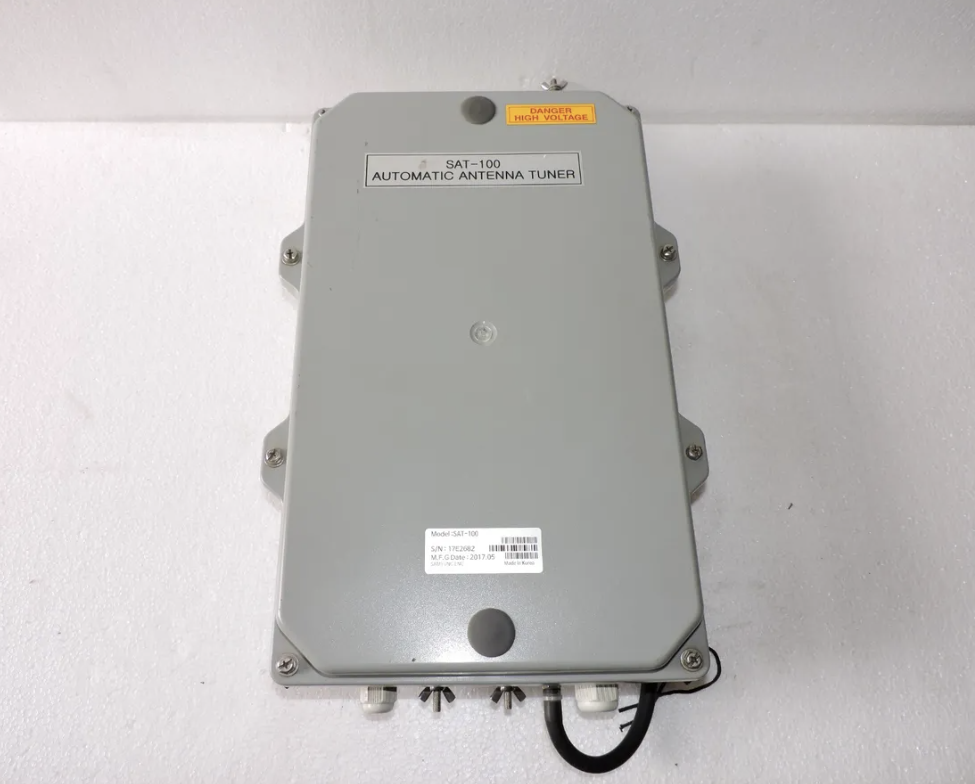
To get the best performance, mount the antenna tuner as close to the antenna base as possible. It's best to place it in a protected spot like under the deck or inside a coaming or cabin side, safely out of the weather.
When connecting the antenna feed wire, be sure to use a soldered ring connector. Finally, and this is a critical step, loosen or remove the drain screw on the bottom of the tuner to prevent condensation from collecting inside.
Satellite
With so much navigation, communication, and entertainment bouncing off satellites today, you can find a satellite antenna for virtually any purpose. However, we'll stick to communications for this overview. Depending on the size and needs of your vessel, you can find systems that will handle voice, data, or both.
While this is certainly a job for a Certified Marine Electronics Technician (CMET), we'll give you a high-level overview rather than a full installation guide.
Satellite Systems
Communications via INMARSAT’s geosynchronous orbit satellites have been a reliable property for hundreds of thousands of customers for more than 20 years. Though lower-orbit satellite systems like Iridium and Globalstar have endured a rough start, they seem to be coming out of the woods, slowly but surely.
Purchasing
Determining your satellite communication needs is the first step. Simple voice communications, email, faxing, and data transfer all require different systems with different access speeds—and of course, different price tags for both the hardware and the subscription.
Handheld vs. Fixed Systems
If your needs are strictly voice or voice and data, you might want to consider a handheld phone. These new models are affordable to purchase and use, and they offer excellent global coverage. The tradeoff is that you need to be on deck with a clear view of the sky to use one.
Fixed-mount systems, though more expensive, allow you to hook multiple phones into the system, enabling you to make calls from the comfort of your cabin.
The Hardware: It's All About Stability
The ease with which satellite systems can be used belies the sophistication of the hardware. For any communication other than straight voice, the antenna must be able to point within one or two degrees of a satellite hovering more than 22,000 miles up—all while your boat is rolling, pitching, and yawing.
This requires a gyro-stabilized platform. Straight voice communications can get away with lower frequencies and therefore smaller, omni-directional antennas that don’t require stabilization. Less hardware and power equates to less cost. Want email, internet, or fax ability? You'll need higher data transfer rates, a larger antenna, and a heftier budget.
Practical Considerations
Before purchasing your satcom system, be ruthless in evaluating your needs, as this will likely save you money. You also need to determine where you will install your antenna. Since satcom is a line-of-sight technology, your antenna must have a clear, unobstructed view of the sky. Keep in mind that some technologies, like satellite TV and satcom, cannot be combined into one unit. We’ve noticed that for nearshore fishermen, the convenience of a cellphone has, in many cases, replaced the need for satellite communications.
Finally, check the coverage area of any system you're considering. Some handle coastal areas, some are global, and some have coverage holes. If you don't want a phone call to terminate unexpectedly because you've sailed outside your satellite's "footprint," determine that the system you want will cover you where you plan to travel.
Installation
Look at a cruise ship some time. See the domes way up high, the ones that are about the size of a Volkswagen? Those are top-ofthe-line satcom antennas that handle voice, data and faxing. Without even seeing your vessel, we’d bet that you don’t have room for one of those.
So determine where you plan to install your antenna prior to purchasing you satcom system. Remember, too, that satcom, being a line-of-sight technology, must have an unobstructed view of the heavens. And unfortunately, unlike some other technologies today such as VHF and cellular, you can’t comnbine your satellite TV and satcom antenna into one unit.
Cellular
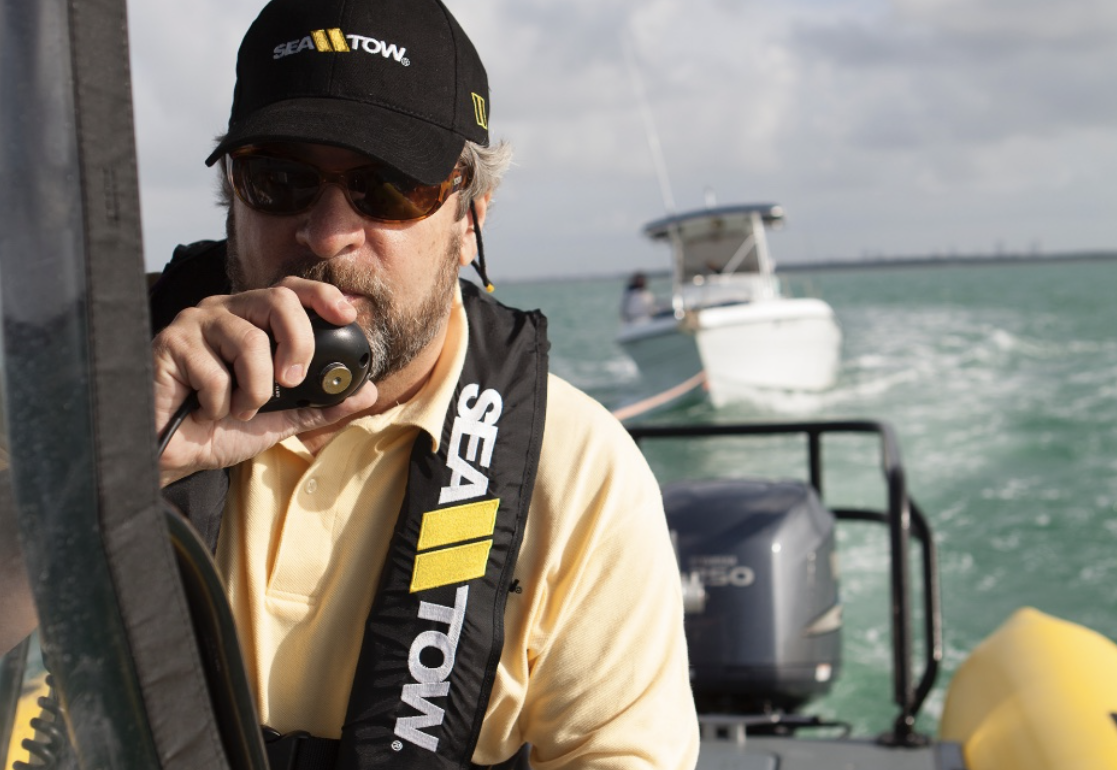
For many nearshore fishermen, the cell phone has replaced the VHF for boat-to-boat communications. The reason is simple: privacy. If a captain happens upon a hot bite, they want to notify their friends without the other 50 boats in the area knowing about it.
This works only within about 20 miles of shore-based towers, but recently, antenna manufacturers have introduced a solution. They're building remote cellular antennas that also have a signal amplifier.
This new technology boosts your phone's signal strength from a cellular-industry standard 250 milli-amps all the way up to 3 Watts. With it, you get the advantage of both an elevated antenna and a significant boost in power. What’s more, the amplifier adjusts its output to match what the cellular tower in use demands for optimum signal clarity.