Family Recreation: US Builders Double Down on Innovation as Tariffs and Margin Pressure Reshape the Market
With retail demand softening and cost pressures mounting, US boat builders are turning to product differentiation and portfolio expansion to defend market share across key recreational segments.
With NMMA data indicating softer retail sales through the opening months of 2026, US boat builders entered the year preparing for another period of flat to slightly declining demand. Elevated interest rates, ongoing affordability pressures and weakening consumer confidence have continued to weigh on discretionary spending, creating a more cautious retail environment across product categories representing the family recreational boating sector.
Despite those headwinds, activity within the sector has remained robust, particularly in the high-volume pontoon category, where roughly half a dozen new brands have entered the market over the past two years.
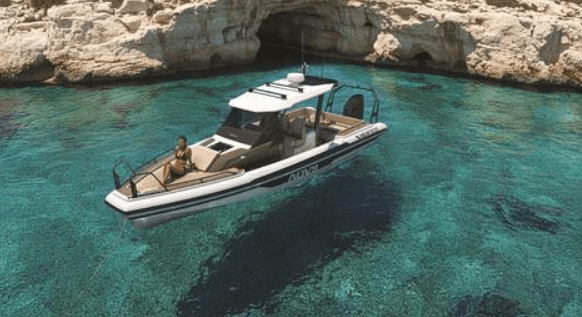
Highfield looks to captureshare with its ADV9.
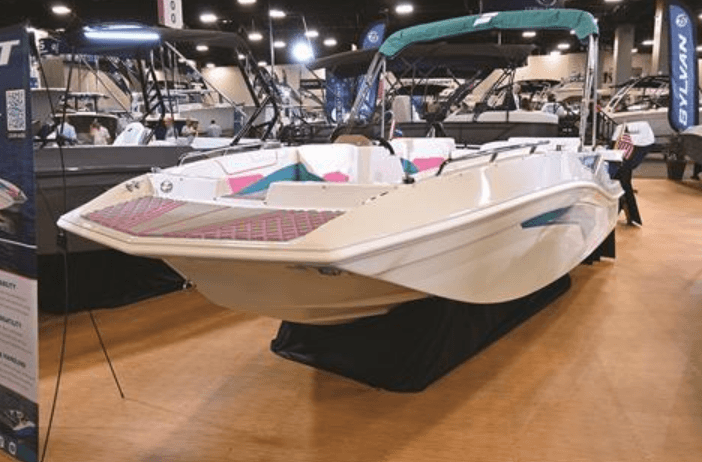
Starcraft says its new Jet Series has drawn interest from new boaters.
The arrival of these new entrants has added competitive pressure at a time when many established builders are already contending with margin compression, elevated material costs and ongoing pricing challenges. “Even if they collectively sell only 400 boats between them, that represents 400 units removed from our addressable market,” said one US boat builder. “It’s a healthy segment, but it’s not infinite.”
The competitive environment has been further complicated by the growing impact of US Section 232 tariffs on aluminum and steel, increasing input costs for pontoon manufacturers in particular. At the same time, the ongoing review of Section 301 tariffs, alongside the forthcoming review of the USMCA trade agreement between the United States, Canada and Mexico is fueling further uncertainty across North American manufacturing supply chains.
Against that backdrop, several US boat builders are increasingly positioning innovation and product differentiation as mechanisms for maintaining market share and stimulating demand.
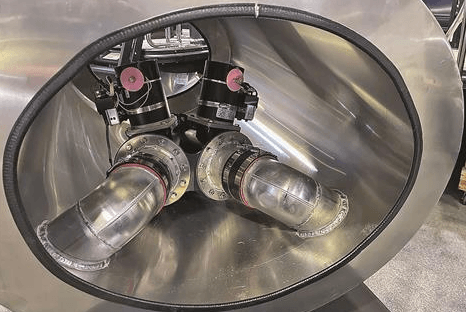
Indiana-based Polaris Marine is among those advancing new technology platforms, introducing an integrated bow and stern thruster system for select Bennington and Godfrey pontoon models.
“For many manufacturers, the current environment is becoming less about chasing unit growth and more about defending share through product segmentation, technology integration and operational efficiency”
The system, branded Pontoon Dock Assist, incorporates joystick-controlled bow and stern thrusters designed to improve low-speed maneuverability and docking precision. According to the company, the technology features two joystick-controlled motors mounted within the center pontoon, enabling lateral movement as well as forward and reverse thrust.
“Pontoon Dock Assist gives captains unmatched confidence, even in challenging conditions,” said Polaris Marine president Ben Duke.
The system will initially be available on select pontoon models featuring 25-, 27- and 29-inch center and elliptical pontoon configurations, including Bennington’s R and Q series and the Godfrey XP, Sanpan, AquaPatio and Monaco ranges.
Portfolio Expansion
Indiana-based Smoker Craft Inc used the 2026 Miami International Boat Show to launch its new Starcraft Jet Series deck boat range, marking an expansion beyond the company’s traditional pontoon and deck boat portfolio.
Powered by Rotax 1630 ACE JPS engines rated at 170-, 230- and 300-horsepower, the new models combine deck boat layouts with jet propulsion technology more commonly associated with personal watercraft.
The range comprises two 17ft models – the J7 and J7SS SuperSport – alongside the 19ft J9SS SuperSport. All three utilize the company’s existing dihedral-vee hull platform and feature open-plan interior layouts intended to maximize onboard versatility and passenger capacity.
Available propulsion modes include Ski, Cruise Control, Eco and Docking settings, while the SuperSport variants add upgraded trim packages and premium audio systems.
According to marketing coordinator Steve Huber, dealer response to early prototype unveilings during the company’s dealer meeting was positive.
“With their jet drive and no exposed propeller, these boats are well suited to watersports, swimming and family use around shallow-water environments,” he said.
Product Differentiation
Following its acquisition of Saxdor Yachts and merger with Marine Products Corp, MasterCraft Boat Holdings says it is focused on leveraging manufacturing and operational efficiencies to support future product development across its full portfolio of brands, which includes MasterCraft, Axis, Chaparral, Robalo, Balise and Crest.
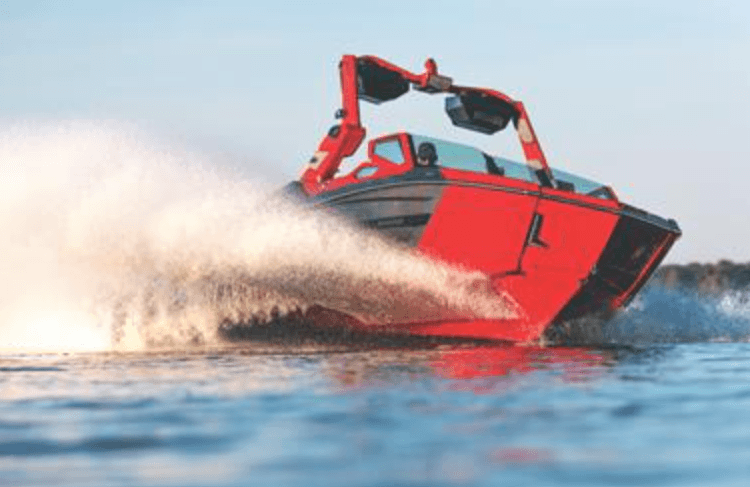
Among the group’s latest launches is the new MasterCraft X22 towboat, introduced during Q1 2026. The 22ft model incorporates the company’s SurfStar wake system and 3,800 pounds of ballast, alongside a revised helm layout derived from the larger X24 platform. Standard propulsion comes from an Ilmor 6.2L GDI V8 engine, with an optional supercharged variant.
“For years, the X family has set the standard where premium performance and luxury intersect in towboats,” said Krista Schipner, MasterCraft vice president of marketing.
The company says the model forms part of a broader strategy to strengthen its position in the premium towboat segment through higher levels of technology integration and onboard customization.
Expanding Presence
RIB manufacturer Highfield Boats continues to expand its presence across the Americas through a combination of dealer network growth and new product introductions.
The company recently added nine dealer partners across the US, Panama and Brazil, while also launching its new ADV9 crossover model earlier this year at boot Düsseldorf.
Building on the existing ADV7 platform, the ADV9 is positioned as a larger-format adventure and weekender model targeting both private owners and commercial operators. The boat accommodates up to four berths within an enclosed cabin layout incorporating a galley and head compartment.
According to Highfield Boats CEO Paul Blanc, the model reflects increasing customer demand for greater range, onboard accommodation and multi-role capability.
“The ADV9 represents the next evolution of our adventure crossover range,” he said. “We’ve created a vessel that delivers greater capability, flexibility and comfort without compromise.”
While retail conditions remain subdued relative to the post-pandemic highs, the volume of product development activity across the US recreational marine sector suggests builders are continuing to priorities long-term market positioning over short-term caution.
For many manufacturers, the current environment is becoming less about chasing unit growth and more about defending share through product segmentation, technology integration and operational efficiency. The emergence of new entrants in the hotly contested pontoon segment is simultaneously compressing competitive space while accelerating innovation cycles across established brands.
At the same time, ongoing trade policy uncertainty and rising input costs continue to reinforce the importance of supply-chain resilience and manufacturing flexibility, particularly for aluminum-intensive categories.
Although demand conditions through the remainder of 2026 remain difficult to forecast, the industry’s current product cadence indicates many builders are preparing not simply for a softer cycle, but for a more structurally competitive North American market in the years ahead.