The Great Loop Challenge for Pediatric Cancer Research

For more information, or to make a donation, visit The Great Loop Challenge at the National Pediatric Cancer Foundation.
In July 2024, Captain Scott “Red” Flowers completed the Great Loop—a 6,000-mile circumnavigation of the eastern U.S.—in a jaw-dropping 19 days, 19 hours, and 50 minutes, setting a new record.
But more importantly, this is the story of one man’s mission to raise awareness for pediatric cancer research and to help raise one million dollars for pediatric cancer research.
Racing for a Cause
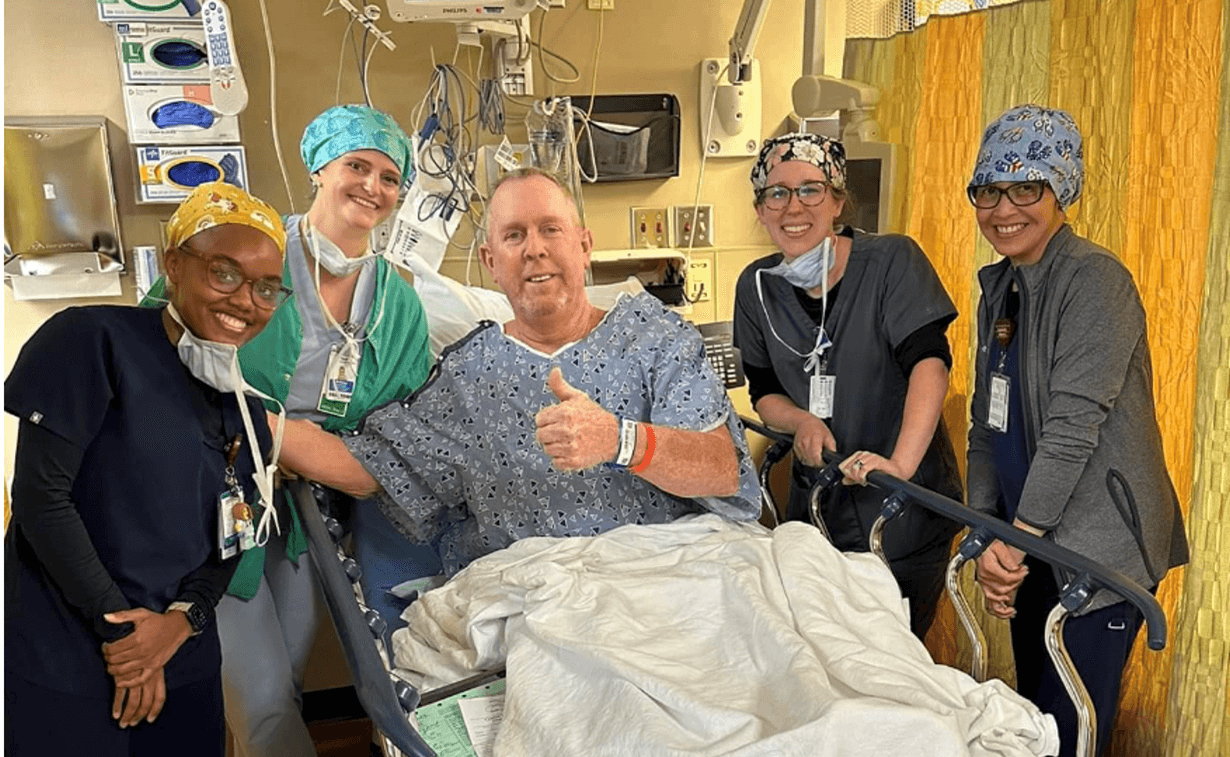
Flowers was inspired by his own battle with stage-4 melanoma, during which he and his wife Tammy witnessed the struggles of children facing cancer.
“We spent a lot of time in hospitals during my treatments,” Flowers explained. “We saw so many kids going through the same things, and I told Tammy, ‘We need to do something about this.’ The statistics shocked me—43 kids are diagnosed with cancer every day. That’s when I started brainstorming ways we could help.”
Who is Capt. Red Flowers?
Capt. Red Flowers: “I was born into a commercial fishing family as a kid. My dad was a child captain, an old-school guy, and of course, when you grow up around boats you kind of fall into it. I ‘ve done a lot of charter fishing, and I've captained boats up to 70 foot. I but was actually a power company lineman, and my wife and I ran charter fishing business for 47 years in my time off. But I’m starting to retire from that as well.”
“When I was younger, I ran Allison race boats. My wife was worried when I got in a race boat, and I told her ‘Honey, I feel as safe in this boat as you do in your car.’”

Facing Challenges
You will see in our video interview of Capt. Red (to be published soon) that there were a number of days when Red and partner were wet and miserable. There’s nothing quite like wearing foul weather gear that always seems to let cold rainwater and spray run down your back.
Perhaps the three most daunting areas of the trip were crossing Lake Eire in 20-25-knot westerlies and 6- foot seas, running Oregon Inlet, and running the debris-strewn Mississippi at night.
Lake Erie. This body of water is famous for its long fetch, and short intervals between steep waves. Red told us that he and his companion decided to take it on and if it was too gnarly, they would just pack it in. It was gnarly as expected, but having survived the first hour, they decided to go a second hour. Repeat with grit.
“When we were halfway across, I knew we could make it,” said Red. “I just kept running in the troughs, and running up the sides of the waves on the diagonal rather than taking them head- on.”
Oregon Inlet. Another daunting stretch was Oregon Inlet on North Carolina’s Outer Banks, known for its treacherous waters, shifting sand bars, swift tidal currents and occasional rouge waves. “Locals at the marina told us not to go through it,” Red told us, “but it was the fastest route , and I was determined.” “We just drove right through there. It was pretty rough, but we just managed the throttle to the conditions and made it work.”

Mississippi River. “We faced high water and floating debris on the Mississippi River, especially at night,” Flowers recalled. “The river was about to close due to flooding in the Mid-West, so we had to push hard to get through before it shut down.”
Night Running. Running at night is always hazardous, even when not trying to beat the clock. Flowers tells us that they didn’t go faster than 25 mph at night and constantly monitored their SiOnyx ultra-low-light imaging monocular, which is sensitive to infrared and ambient light.
Enhanced Radar. They also use the Tocaro Blue navigation technology that enhances situational awareness on the radar screen by interpreting blips on a screen with AI software and shows icons on the screen for navigational buoys, boats, rocks, debris, and most other objects that normally just return to the screen as an ambiguous ping.
No Wake Zones. Flowers emphasized that despite the tight timeline, the team adhered to the utmost boating etiquette. “We slowed down for idle zones, stuck to the speed limits, slowed down for other boaters in tight spaces,” he said. “It wasn’t a drag race—it was all about endurance and precision.”
About the Charity
The National Pediatric Cancer Foundation is dedicated to funding research to eliminate childhood cancer. It partners with leading hospitals to develop innovative treatments and therapies. Donations are primarily directed towards research, clinical trials, and collaborative studies aimed at finding less toxic and more effective treatments for children.
Approximately 1,000 children under the age of 15 die from cancer each year in the U.S., and a significant portion of these deaths are among children under 12. Pediatric cancer remains the leading cause of death by disease for children in this age group.
For more information, visit The Great Loop Challenge at the National Pediatric Cancer Foundation.

A Record-Breaking Finish
After 19 intense days, Flowers and his team returned home to a hero’s welcome. “When we pulled into the dock, over 1,000 people were there cheering us on,” Flowers said. “It was overwhelming. I was actually sad it was over.”
Adjusting to life off the boat wasn’t easy. “I couldn’t sleep at home,” Flowers laughed. “I’d roll around in bed, get up to eat, and still couldn’t sleep. My wife joked that I should pitch a tent on the porch to feel more like I was back on the boat.” (Flowers and crew slept most nights on the boat in a fold-up tent.)
The journey wasn’t just physically demanding—it was emotionally fulfilling, according to Flowers. “The support we received was incredible,” he said. “People tracked us online, met us at stops, and even bought us meals. We had over a million people following the trip through our tracker system.”

The Road Ahead: Beating His Own Record
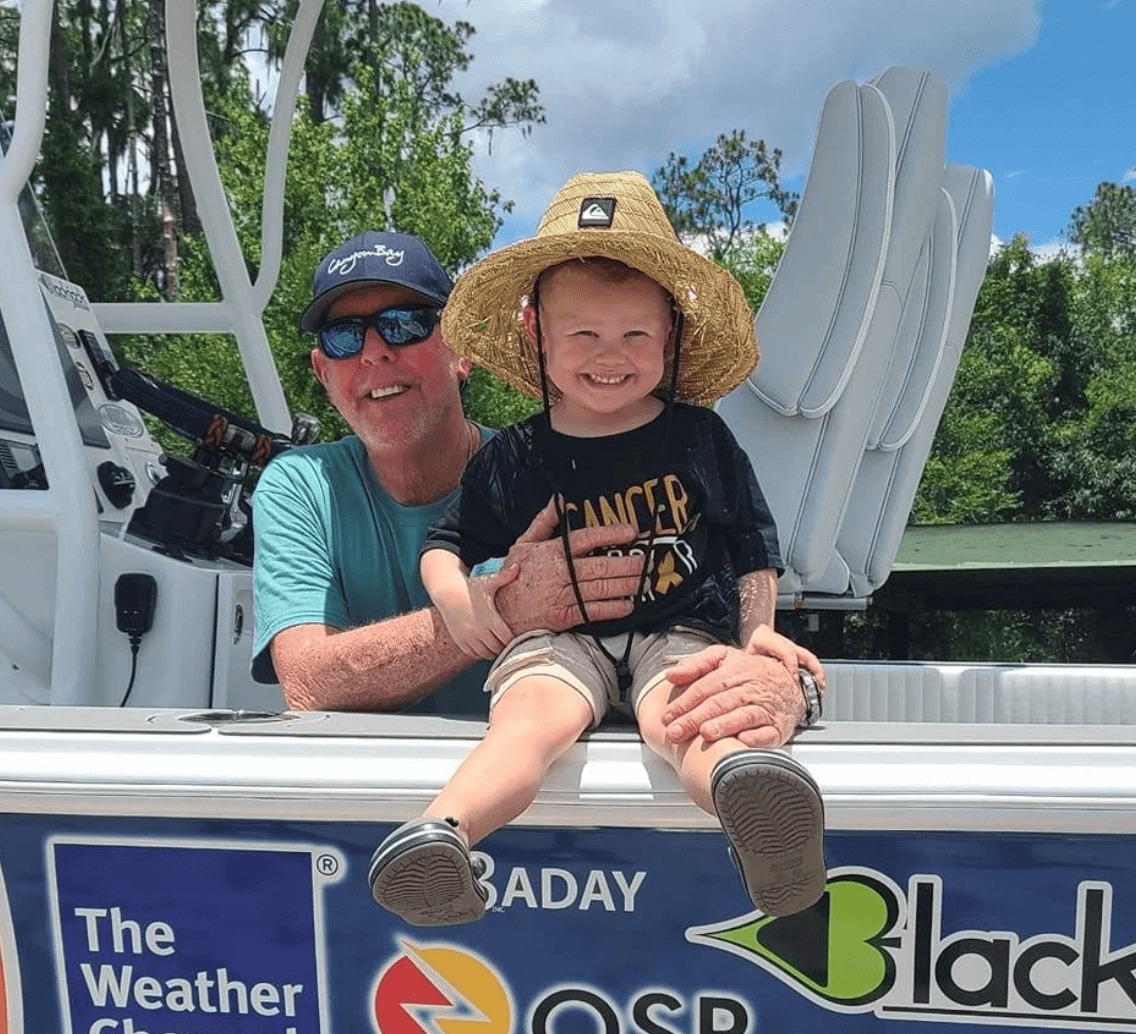
Flowers raised nearly $500,000 for National Pediatric Cancer Foundation on this first run, counting sale of the boat which will go to the charity. He’s already planning a second attempt to raise the remaining funds. With Canyon Bay committed to donating another boat and Sharrow Marine onboard again, -- this time for the whole route -- plus all of the 2024 equipment donors, Flowers hopes to shave a couple of days off his own record.
Transforming the Boating Experience
The Great Loop Challenge was a test of endurance and speed for Captain Scott “Red” Flowers and his crew, but it was also a showcase of how innovative technology can enhance the boating experience.
Looking back on the journey, Flowers reflected on what it meant to use his passion for boating to make a positive impact. “This wasn’t just about breaking a record—it was about using what we love to help others,” he said.
With another attempt on the horizon and his mission to raise $1 million within reach, Flowers remains focused on the goal: “We’re going to beat this record and raise the rest of the money.”

For more information, or to make a donation, visit The Great Loop Challenge at the National Pediatric Cancer Foundation.