How a 25% Tariff Will Impact Aluminum Boat Prices

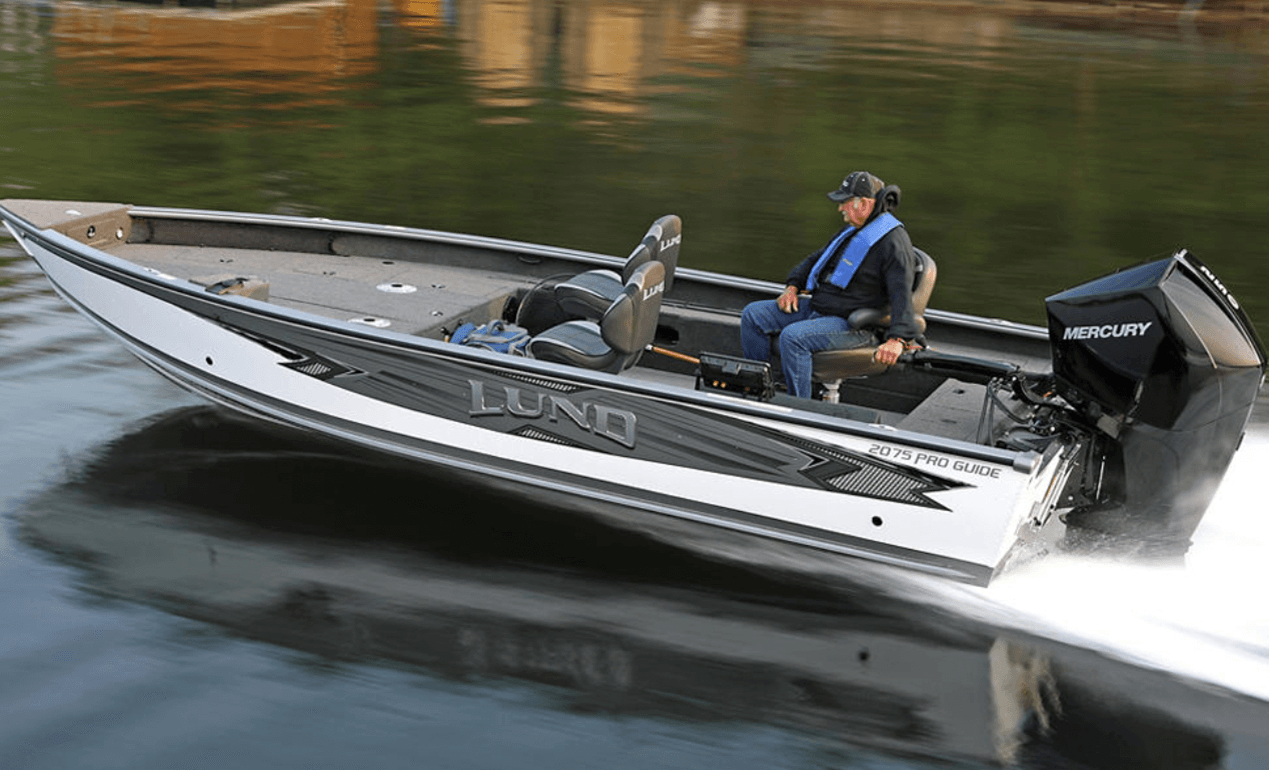
Each year, about 58% of the new boats sold in the U.S. are aluminum outboard-powered fishing boats, jon boats, and pontoon boats. Aluminum boats are hard to beat when it comes interior room, stability and affordability.
Of the 98,000 aluminum boats sold in 2023 (the last year where we have official sales numbers), 54,000 of them were pontoon boats and about 44,000 of them were fishing and jon boats.
That means the majority of American boat buyers this year will be affected by President Trump’s recent imposition of a 25% tariff on imported aluminum and steel. This is essentially a tax that consumers must bear for choosing an aluminum boat instead of a fiberglass one.
There are 7 major builders of aluminum fishing and jon boats built in the U.S.: Tracker, Lund, Lowe, Alumacraft, Crestline, Starcraft, and G3. Pontoon boat brands are far more numerous, led by Tracker, Bennington, Tahoe, Avalon, Barletta, Sylvan, and Godfrey among many others. They will all be affected by the new duty.
50% of Aluminum Used in the U.S. is Imported
About 50% of the raw aluminum used in the US each year is imported, of that, 60% or more comes from Canada, 7% from Mexico, 6% from United Arab Emirates and 4% from China. Even though a builder may use aluminum that is sourced from ore to finished plate in the U.S., the rise in price of aluminum will, in all likelihood, rise into what is known as a "blended" rate.
Aluminum is the material of choice for entry-level fishing boats, jon boats, and small utility craft because it is light, durable, corrosion-resistant and relatively inexpensive. Typically, the aluminum used is .100-inch (2.54 mm) thick 5052-H-32 alloy. It has a high tensile and yield strength, it’s relatively easy to form, holds its shape, keeps most of its strength when welded, and is 1/3 the weight of steel. What's not to like?
Aluminum for boats typically comes in flat sheets 4’ x 10’ or 4’ x 8’ from their manufacturers. Costs vary depending on many factors, and cost increases due to tariffs are not yet widely available. Nevertheless, prices from $2.50 to $3.50 per lb. are now being quoted from U.S. suppliers, we're told, with the upper range being $4.00 or more, depending on variables.
A fiberglass laminate consisting of the ideal ratio of 60% glass and 40% polyester resin will cost something on the order of $16 per lb. Since aluminum is lighter, cheaper, and less labor intensive, these characteristics make it a no-brainer for affordable boat construction.
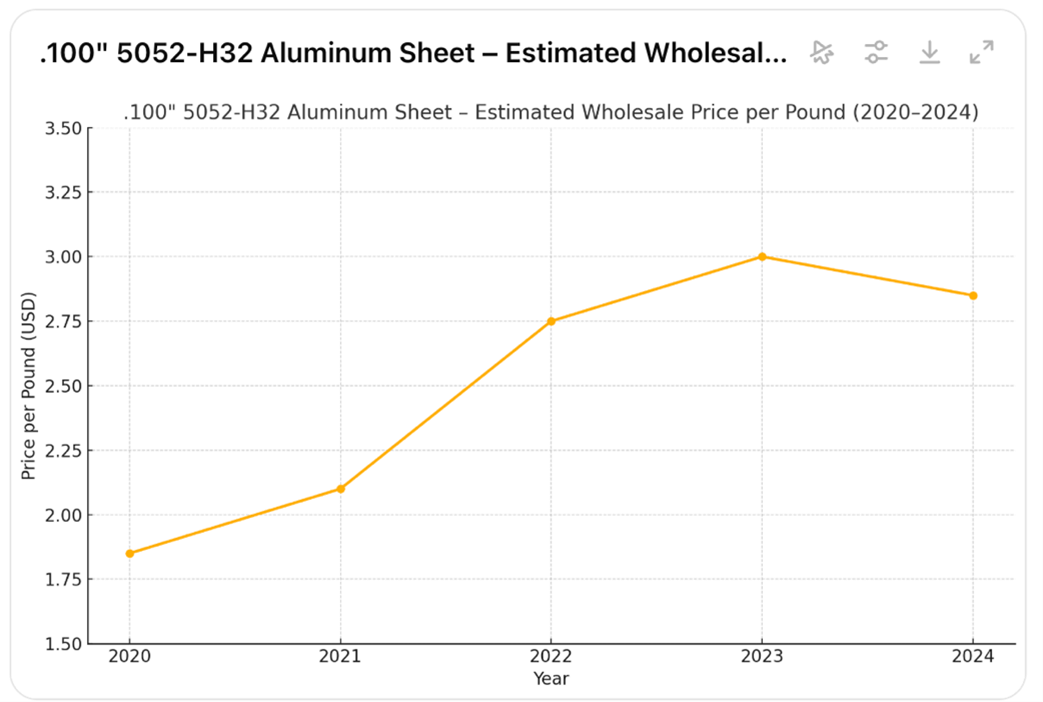
Because of the tariffs, American manufacturers of aluminum will no longer be underpriced by imported aluminum. On the contrary, U.S. foundries and smelters can be expected to "blend" pricing and that could raise prices and keep them there -- just as it did after the Covid era.

Boat Builders Are Squeezed
Small and mid-sized boat builders, many of whom already operate on thin margins, are especially vulnerable to the increase of raw material prices -- because their customers are hyper-sensitive to price. With the cost of marine-grade aluminum going up, and with few viable substitutes, builders are left with a difficult choice: raise prices or cut corners.
For most reputable manufacturers, the answer has been to pass those increases along to consumers. If a 16’ aluminum boat weighs 910 lbs., dry, and 70-75% of that weight is aluminum, we calculate that the direct increase in the cost of the metal shipped to the builder could be as much as $275 more than before the 25% tariff was imposed.
The Bottom Line
On a 16’ boat selling for $18,250, that represents a 1.5% increase in the price of the boat -- notwithstanding the mark-up of finishers and distributors, to say nothing of the cost of inflation. On larger models with more equipment and electronics, we expect the impact of the increased cost of aluminum to be an even lower percent.
Because the aluminum fishing boat market is highly competitive between Tracker Marine and Brunswick’s U.S. brands (Lowe, Lund, Crestline), we expect price increases – particularly in today’s soft market – to be minimal. Indeed, when Trump imposed a 10% tariff on imported aluminum and 25% duty on steel in July 2018, the average price of a 19' to 21' aluminum boat went up 4% in 2019. The duty was rescinded in May of 2019, but most of the 2029 models had been built by that time.
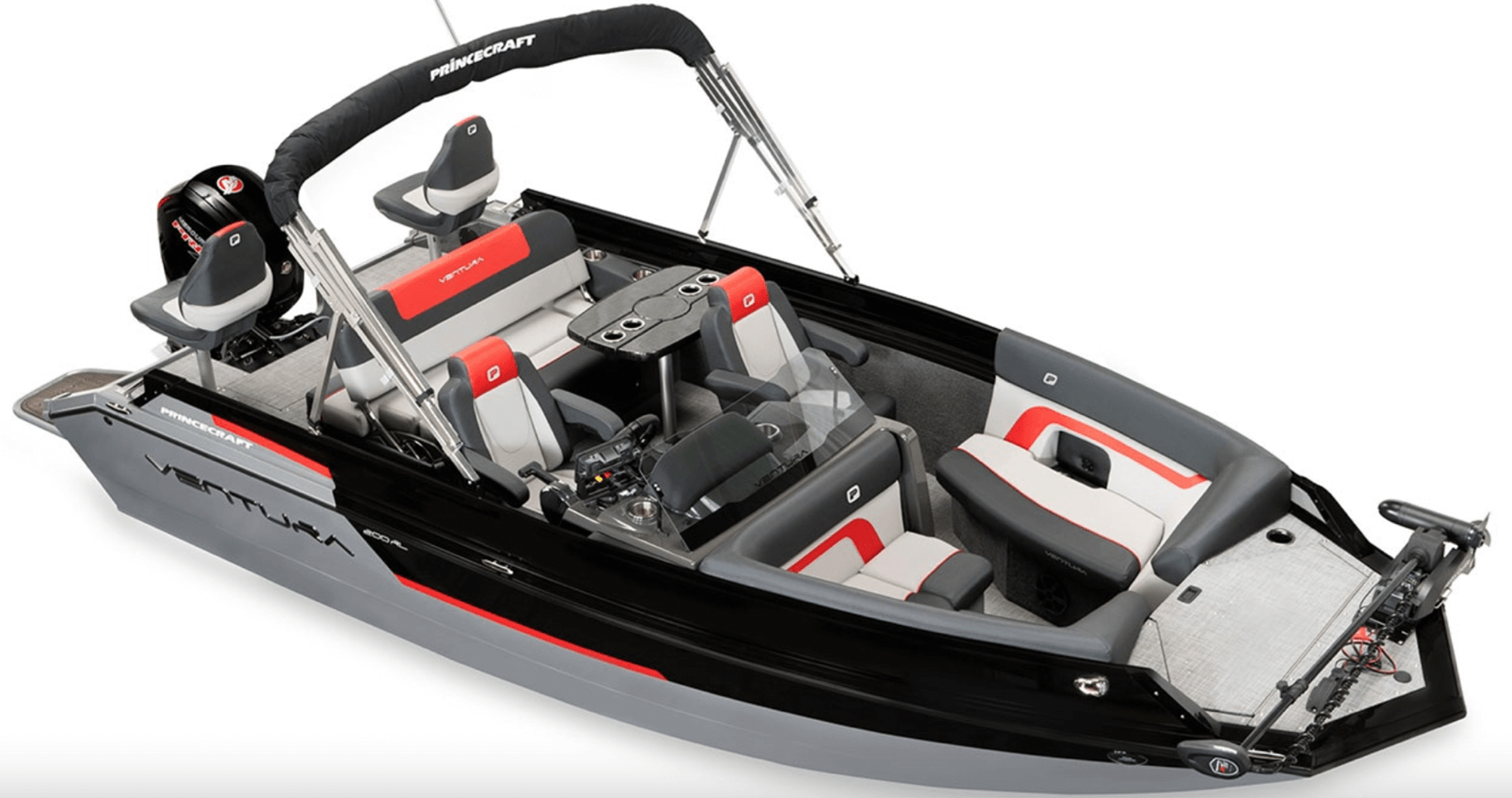
One bright spot in all of this is Princecraft, a Brunswick brand made in Canada. While this brand sells only about 600-800 boats in the U.S. per year, it will be in the inviable position of being able to buy cheap Canadian aluminum, and under-sell brands with higher, tariff-driven prices.
Steel in Aluminum Boats
It’s worth noting that aluminum isn’t the only raw material under pressure. Steel, another key component in boat manufacturing, is also affected by trade policies. In 2023, about 25% of the steel used in the U.S. was imported, with Canada providing roughly 24% of that total.
Happily, there is not much steel used in either aluminum fishing boats or pontoon vessels. Stainless steel fasteners and bolts, anodized or powder-coated seat pedestals and mounts, hinges and latches, steering hardware, pad eyes and cleats account for most of the steel items on an aluminum boat. All of this might add up to 20 lbs., or so – not much, but nevertheless, we can probably count on an escalation of costs here as well.

Trailers Will Go Up, Too
The big items in which steel is used are boat trailers. Galvanized steel is used in many boat trailers because it is cheaper than aluminum. Since 25% of the steel used in the U.S. is imported it remains to be seen what sort of “blended” rate steel fabricators will be charging. A premium steel trailer for a 23’ boat typically weights about 5,610 lbs. and sells for something on the order of $4,500.
Even a $.07 increase per pound of the raw material could add $392 -- or 9% -- to the cost of this trailer.
U.S. Inflation and Covid Sales Bounce
Inflation in the U.S. for the Period 2015-2023

When we look at the July 2018 Trump tariffs on imported aluminum (10%) and steel (25%) we discover that average retail prices for aluminum boats increased $1,358 in 2019 over the same 19 to 21' aluminum in 2018. That means retail aluminum boat prices prices (see below) increased about 390 basis points above the core inflation (5.7% -1.8% = 3.9%), but sales held steady in spite of the price increases.
Note in the blue tint area what happened to prices of this size boat when it was hit by strong demand, supply chain issues and inflation..
Aluminum Boats (both open boats and Pontoon Boats) from 19’ to 20’11”

Clearly, more was at work from 2021 to 2023 to raise prices than simply the added cost of aluminum and steel lingering from the past tariff. U.S. core inflation because of everything going on in that period had a greater effect.
Observations
The bottom line to all of this is that the current U.S. tariffs on imported aluminum and steel should not have dramatic effect on the cost of aluminum boats -- inflation is the biggest problem. Because of that we could be seeing a 5% bump in the cost of 20' aluminum boats. That, together with a 9% increase in the cost of a trailer, and a slight rise in engine prices (See our companion article on how tariffs might affect Mercury Marine), all adds up. For that reason, as little as the tariff should affect pricing, don’t be surprised if aluminum boat prices increase 5-7% next year.