I Learned About Boating From That - Inlet Intelligence
by Capt. Gregg Clark
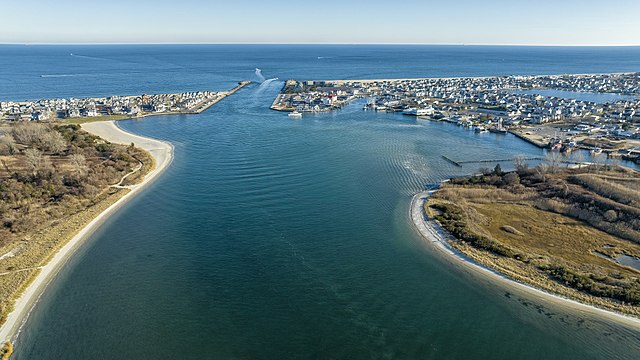
A big part of my job as a captain is doing deliveries. I have done dozens of deliveries between points north, mostly New England, and points south including south Florida and the Bahama or Caribbean Islands.
What does Farmer’s Insurance say? “We know a thing or two because we’ve seen a thing or two.” Over tens of thousands of delivery miles, I have definitely seen a thing or two. But nothing quite like a fall delivery in 2022.
I was delivering an 80’ motoryacht from western Long Island Sound to Coconut Grove, Florida. Day four was a planned leg from Charleston, NC to St. Augustine, FL. She was a fast boat, able to cruise in the low 20s, so the 197 nautical-mile run between the two ports presented no major challenge. The forecasted wind was 15 to 20 knots out of the east-northeast, something that should present no challenge to this stout, ocean capable yacht on the route we planned to take.
However, things aren’t always as forecast.
Getting Some Weather
We started the trip at first light and the wind was below the forecast level, only in the 5-8 knot range. I was hoping for a smooth trip. However, as we progressed south, the wind began to build, exceeding the forecasted range. By the time we were off Brunswick, GA it was blowing 18-20 with gusts to 25 knots.
We were 40 nautical miles offshore and the sea state was still very manageable. The seaworthiness of the yacht, including the automatics, quick-to-respond Humphree stabilizers, gave me no reason not to continue.
Building Sea State. By the time we were just south of Jacksonville, FL, the wind had built to 20-25 knots with an occasional gust to 30 knots – definitely NOT the forecast. The sea state was starting to build, but was still manageable and within the range I had operating this yacht in before. I decided to continue the additional 20 or so nautical miles to St. Augustine.
____________________________________________________________________________
Tragedy at Jupiter, FL Inlet
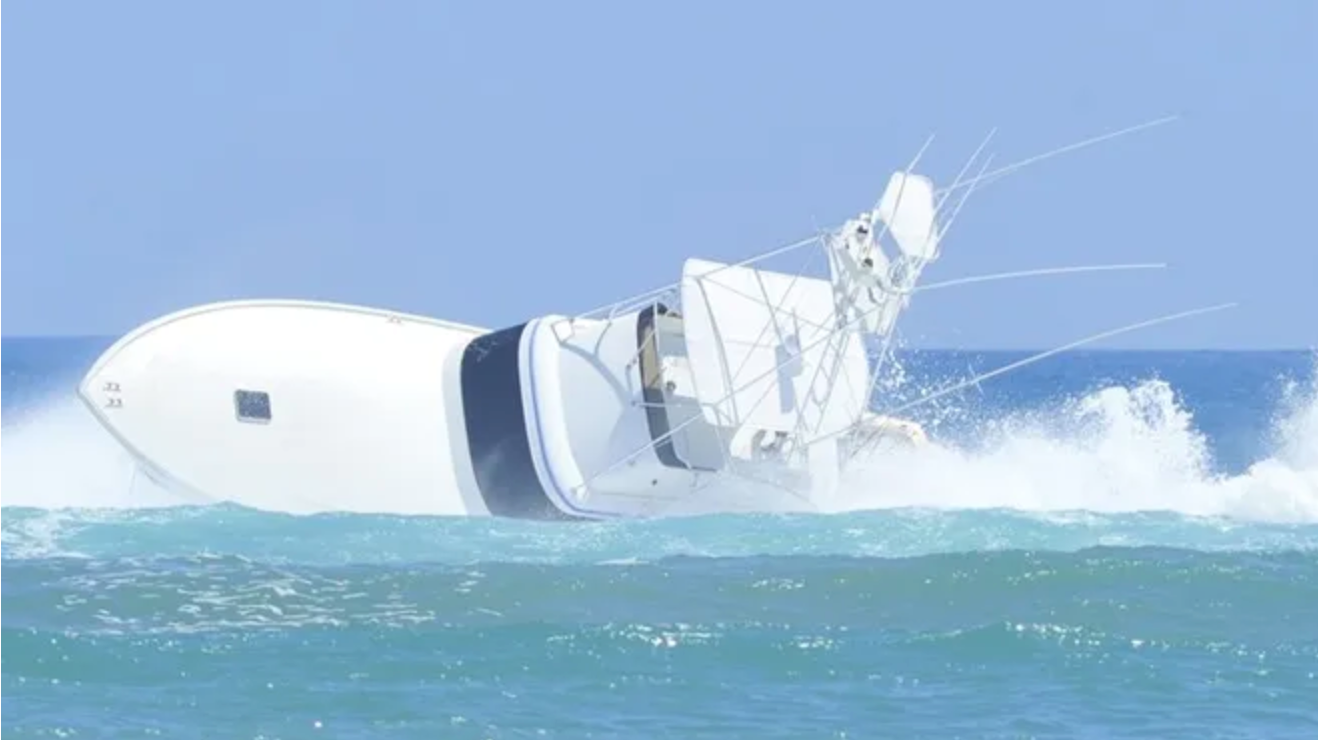
From the Palm Beach Post, Dec. 21, 2010—
Popular fishing charter skipper Thomas C. "Capt. Tom" Henry was responsible for the freak accident Sept. 3 at the Jupiter Inlet that cost him his life, a state investigation has concluded.
Henry, 59, of Jupiter, a popular and accomplished charter boat captain for two decades, died on Labor Day, three days after he fell off his charter boat, the Waterdog.
"Mr. Henry operated the vessel in a careless manner by attempting to drive over the backside of the wave as he approached the inlet," Florida Fish and Wildlife Conservation Commission investigator Jon Garzaniti wrote in a report made available Tuesday.
First mate Tim Sperling, 54, disagreed with the finding. "He was very meticulous and was always paying attention to what was going on," Sperling said Tuesday. "Things happen so fast on the water, a moment of carelessness might be one second."
According to the commission's report, the white 48-foot 1986 Sportfish had been coming into the inlet in rough seas, returning from a charter with a family of five from Carrollton, Texas, when it hit a large wave. The boat rolled to the left, nearly capsizing.
Henry, who was on the flying bridge, was thrown into the water; he struck the boat on the way down, breaking his neck, the report said.
The boat then made a 180-degree turn. Sperling realized no one was steering, took control of the boat, and called for help.
Palm Beach County lifeguards watched as the boat "plunged bow first into the trough and then pitched sideways," a Palm Beach County Ocean Rescue incident report said. It said two lifeguards "witnessed something falling overboard and suspected it could be a person."
After the lifeguards radioed the boat but got no response, another boater called to say he'd spotted Henry in the water. The lifeguards went out in a small boat and pulled Henry out. He was taken to St. Mary's Medical Center in West Palm Beach. The boat was towed to Palm Beach Inlet.
The five customers had been bounced around by the wave, but were uninjured. Diane Smith, 40, and sons Jacob, 4 and Ethan, 8, were flung about the cabin and a laptop flew off a table and struck Diane Smith's mother, Evelyn Maughon, 73, in the face. "(I) saw the deck hand on deck trying to hold on," Diane Smith wrote in the wildlife commission's report. "A few minutes later my husband went upstairs and returned to the cabin and told us the captain was overboard."
____________________________________________________________________________

The St. Augustine Inlet
I have run the inlet at St. Augustine multiple times. While there are no breakwaters, the shoaling south of the channel that continues offshore blocks the wind-driven waves which are usually out of the east-southeast, commonly making this very passable even on rougher days. However, the inlet is always tricky given the ever-changing buoy locations due to changes in shoaling nearer the shoreline. But the breeze direction was further north than usual for this area and the wind was blowing straight into the inlet.
Worse, the tide was going out. I slowed to idle speed offshore and evaluated my options. Given the waning daylight, I decided we would run the inlet as opposed to retreating to Jacksonville.
I nudged closer to the inlet and moved above to operate from the enclosed flybridge to get a feel for the wave state. It looked nasty. I questioned whether I was making the right decision. I called on VHF channel 13 for any boats who had recently run the inlet. I was lucky enough to raise a 40’ sports fisherman who had gone through about 15 minutes earlier.
I believe he used the word “sketchy” to describe the conditions. But he said he made it with no problem and that the wind direction directly down the inlet actually helped things a bit.
Running the Inlet
I had the crew put on life vests. I did as well. And off we went. The key to running an inlet with following seas is to pick a wave and attempt to stay on the back of it. The sports fisherman told me the waves were running about 15 knots, a speed easily in reach of the yacht.
I started my approach and picked a good size wave as they started to build. I worked the helm and played the throttles aggressively to stay on the back of the wave. At max, the waves were 8-10’ and about 150’ apart. The outgoing tide against the wind made the waves short and steep.
I successfully held one wave and made it through the inlet and into calmer water. I was relieved to say the least. If I drank, which I don’t, I am sure I would have had one or two once we got tied to the dock. My crew for sure did.
10 Rules for Inlet Running
Here are my 10 tips for running an inlet in snotty conditions:
- Don't. If there is an alternative port, use it.
- Situational Awareness. Gather as much intelligence as possible before making the run. Stand offshore and watch from a high point such as the flybridge. Make a radio call to see if anyone who recently ran the inlet can offer their perspective.
- Find the Channel Markers. Try to determine in advance where all the channel buoys are. They can be tough to see in waves and running aground in rough conditions is a terrible outcome. I picked a sight point as a target for my run in, in this case a familiar church steeple. The steeple and staying on the back of the wave were my main focus.
- PFDs are Mandatory. Have everyone aboard put on life vests.
- Batten Down the Ship. If you have not already done so, make sure everything is secure both on deck and below.
- Communicate Your Plan. Make sure everyone aboard knows what your are planning to do and when. Have them remain in a safe area, not sightseeing near the stern.
- No Turning Back. When you decide to go – commit. Making a 180° turn in these kind of conditions can meet with all kinds of disaster, even on a large boat.
- Adjust Trim for the Conditions. The rule of thumb is trim up for following seas to prevent your bow stuffing into the wave ahead and to trim down for head seas to keep more of the boat in contact with the water throughout the entirety of each wave. Of course, get to know your own individual boat to get the trim that is just right given the conditions.
- Ride the Back of a Wave. Try to get on the back of a wave and follow it in. Pick a big one if possible as, in theory, the wave or two behind it will be smaller. There’s an old saying that every seventh wave is the big one. I’m not sure if this is true in practice, but there is no doubt some waves are bigger than others and there usually aren’t two big ones in a row.
- Staying Square. Keep your stern square to the waves. Allowing a large wave to quarter you can lead to a spin out – even a capsize.
The yacht I was delivering handled things well and my experience having run many inlets, although not with conditions this severe, served me well. The wind stayed up for the next two days and we ran in the intracoastal.

Capt. Gregg Clark is a test captain for BoatTEST. He holds a 200 GT master license and has boating and yachting for 40 years. He owns a 56’ Vicem and is co-owner in a 40’ high-performance racing sailboat. He can be reached at [email protected].
Want To Be Featured Alongside Capt Gregg and our other Test Captains?
If you have a captivating story about what you learned from that boating moment, we want to hear it! Share your "I learned about boating from that..." tale with us, and it could be featured in our popular weekly column. Send your story, along with a high-quality photo if possible, to [email protected]. Your experience might just inspire, entertain, and enlighten our community of fellow boating enthusiasts! Don't miss this opportunity to see your name in print and share your unique perspective on the incredible world of boating.
Want to tell us your story through social media? We'd love to hear from you there, too! Share your boating insights and learning moments with us on your favorite platform, using #ILearnedAboutBoatingFromThat, tag us, and we'll share your wisdom with our online community. We can't wait to hear how the water has shaped your life!