I Learned About Boating From That - Overloading Turns Fatal
by Capt. Gregg Clark
A private fireworks show in Oyster Bay, New York used to be the best fireworks show in Long Island Sound for years. The family graciously hosted a 4th of July party for all the workers of their various companies, usually numbering several hundred people. The highlight of the evening was a spectacular fireworks show that outdid any municipal show on the Sound by a long shot. Every year hundreds of boats from Connecticut and New York would anchor around the outskirts of the multiple fireworks barges to enjoy the aerial extravaganza.
Storms Looming Ahead
In 2012, the anchored boats were denser that I had ever seen them. Every single foot of water was occupied with many boats anchored way to close for comfort across the anchorage. Storms accompanying a passing front were forecast for late in the evening, but I hoped they would pass well after the show. I was keeping an eye on the weather with multiple radar apps and realized the line of storms would be upon us before the show ended.
I didn’t want to be in the crowded anchorage for what I feared would be the carnage of anchors dragging and boats swinging wildly. I informed my guests we would be leaving before the end of the show, and while disappointed, they respected my decision without any questions. While being in a storm is never ideal, I knew we would be far safer in the middle of the sound, away from other boats. I hauled anchor, a few other boats did so as well, and headed out of Oyster Bay towards Long Island Sound.
I usually would wait for 30-45 minutes after the show before departing. The mass exodus of boats created crazy sea states, and I never trusted other boats to be completely in control of their craft, especially since I assumed many captains had been drinking during the festivities. When we departed, there were enough boats to create the confused and growing sea state, now fueled by the growing winds.
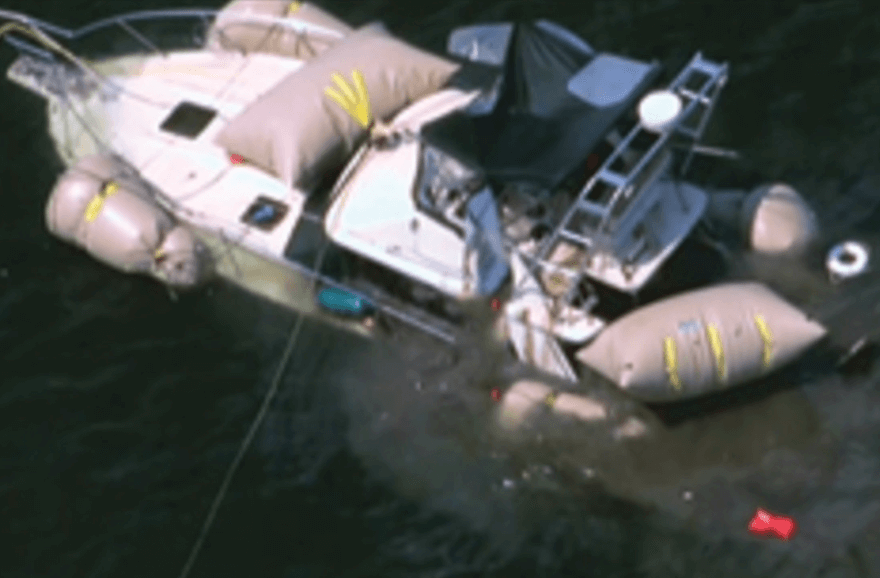
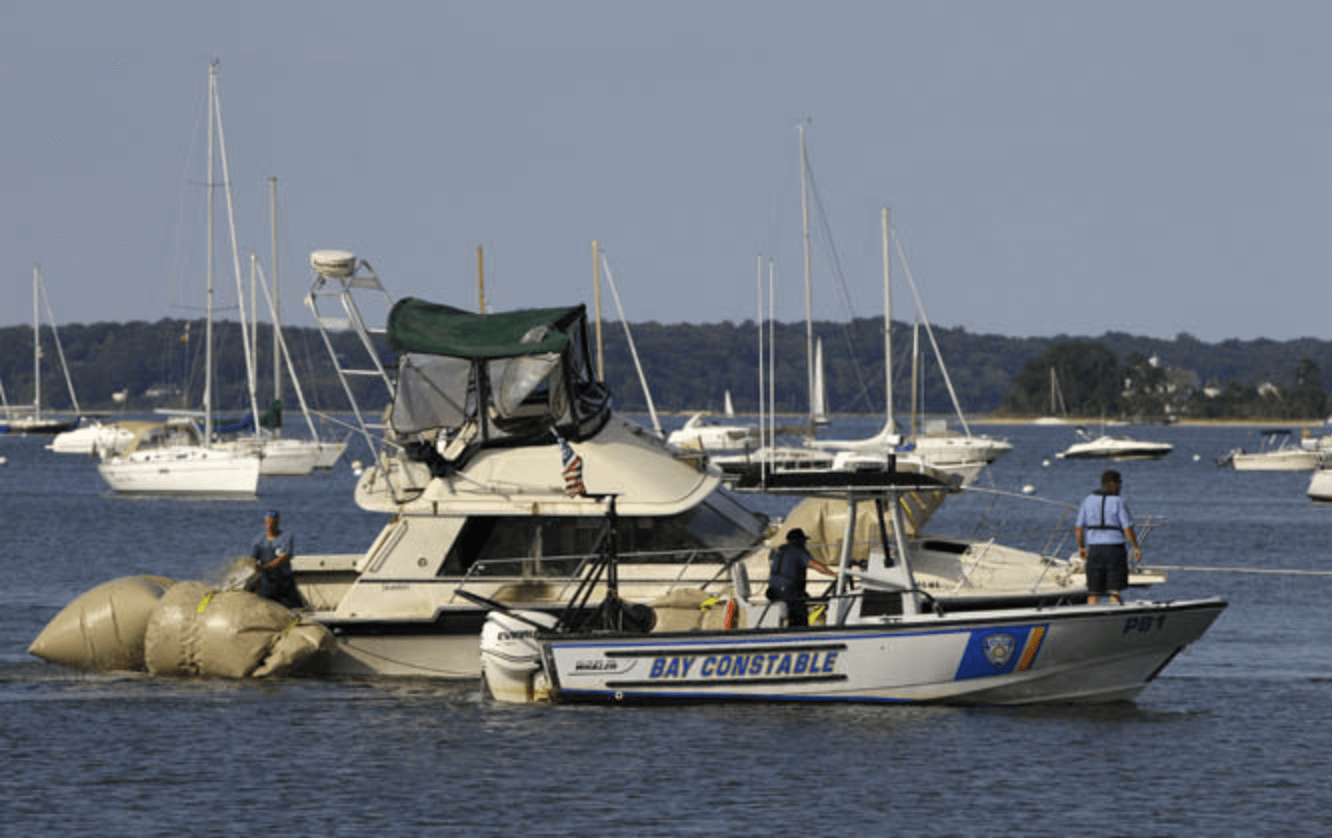
About ¼ miles ahead of me was a small flybridge cruiser, which I would later learn was a 34’ Silverton, jammed with people. I saw it rolling hard in the confused seas. On one large role it simply kept rolling and turned turtle to starboard. I was shocked to witness the fully capsized boat! Several other boats around saw the incident and proceeded to begin plucking passengers from the water.
As an experienced captain, I knew what to do. As the passengers all appeared to be making it safely to other boats, I took up the radio. I called a Mayday on VHF channel 16, given the nature of the situation and the exact latitude and longitude of the position. Once contact was made, I launched the first and what would be several aerial flares, my first time ever doing so in an emergency. I stayed on the radio giving updates as requested to local police boats and the Coast Guard. I launched a second aerial flare as those assets approached.
Tragic Loss of Life
The first of the police boats arrived in less than five minutes and began assessing the situation. The survivors said there were people trapped inside the overturned hull. Rescue personal with dive capabilities began deploying divers in a desperate attempt to save those still trapped inside the boat. Unfortunately, their efforts were fruitless. Three people lost their lives, all children.
As the details of the accident emerged over the next few days, I was shocked. This 34’ boat had 27 passengers aboard. Yes, 27!! Seventeen adults and ten children. It was unfathomable to me that someone would put that many people on a 34’ boat.
There are a number of lessons to be learned from this tragic event.
- Know the true capacity of your boat. In the US, any boat larger than 26’ that is yacht certified does not include any required vessel capacity limits. But it is the operator/owner’s responsibility to operate the boat in a safe manner. Just because a boat is “yacht certified” doesn’t mean there is no safe limit to passengers and other loads. You must know what is safe for your boat.
- Have the wherewithal to say no. It is easy for the passenger list to expand as someone says, “can I also bring so and so?” If it will put the boat near its limits, you have to say no.
- Know that sea state, especially beam seas, has a big impact on the righting moment of the boat. Even a 10° roll in a powerboat relative the angle of a beam sea can be enough to cause a boat to capsize if the center of gravity is high enough.
- Be mindful of where weight is located on the boat, especially if there is a flybridge. The accident report determined 8 people were on the flybridge, all men, the larger of the passengers aboard. This was a major contributing factor to the increased center of gravity.
- If a boat is near its limits, be more conservative in the conditions in which you will operate. Avoid beam seas and strong winds. Avoid sharp, high-speed turns. But most importantly, don’t allow you boat to be loaded to near capacity.
Boats capsize when the center of gravity gets well outboard of the center of buoyancy. It is simple physics. Having a boat overloaded with the center of gravity high is a recipe for disaster and should be avoided at all costs.
The worst things about this terrible incident in my mind is that it could have been easily avoided.
- They shouldn’t have had so many people aboard
- They shouldn’t have departed the anchorage given the pending sea conditions with the boat traffic and the oncoming storm
- They shouldn’t have had so many people on the flybridge
I keep the families of this tragedy in my thoughts frequently. It is lessons learned way too painfully.

Capt. Gregg Clark is a test captain for BoatTEST. He holds a 200 GT master license and has boating and yachting for 40 years. He owns a 56’ Vicem and is co-owner in a 40’ high-performance racing sailboat. He can be reached at [email protected].
Want To Be Featured Alongside Capt Gregg and our other Test Captains?
If you have a captivating story about what you learned from that boating moment, we want to hear it! Share your "I learned about boating from that..." tale with us, and it could be featured in our popular weekly column. Send your story, along with a high-quality photo if possible, to [email protected]. Your experience might just inspire, entertain, and enlighten our community of fellow boating enthusiasts! Don't miss this opportunity to see your name in print and share your unique perspective on the incredible world of boating.
Want to tell us your story through social media? We'd love to hear from you there, too! Share your boating insights and learning moments with us on your favorite platform, using #ILearnedAboutBoatingFromThat, tag us, and we'll share your wisdom with our online community. We can't wait to hear how the water has shaped your life!