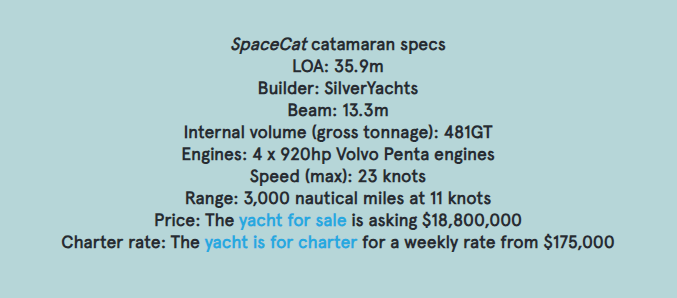
Inside the Futuristic 36m SpaceCat Featured in Season 3 of The White Lotus
By Holly Margerrison

Season three of the acclaimed and razor-sharp social satire The White Lotus has returned, bringing back its signature mix of luxury, tension, and whodunnit intrigue as it follows the lives of guests and staff at an exclusive resort. As season 3, episode 4 airs, BOAT brings you five things you might not know about the 36-meter yacht set to feature in the programme...
SpaceCat was built by SilverYachts in 2022 as the eponymous first hull from the Australian yard's 35.5-meter SpaceCat series. Outside of The White Lotus, the yacht is available for charter around Phuket, Thailand, where her shallow draft allows her to explore the region’s secluded islands, limestone cliffs, and the serene bays of Phang Nga Bay.
Set on the island of Koh Samui, Thailand, season three of The White Lotus takes place at the Four Seasons Resort Koh Samui, making SpaceCat a natural choice for her television debut.
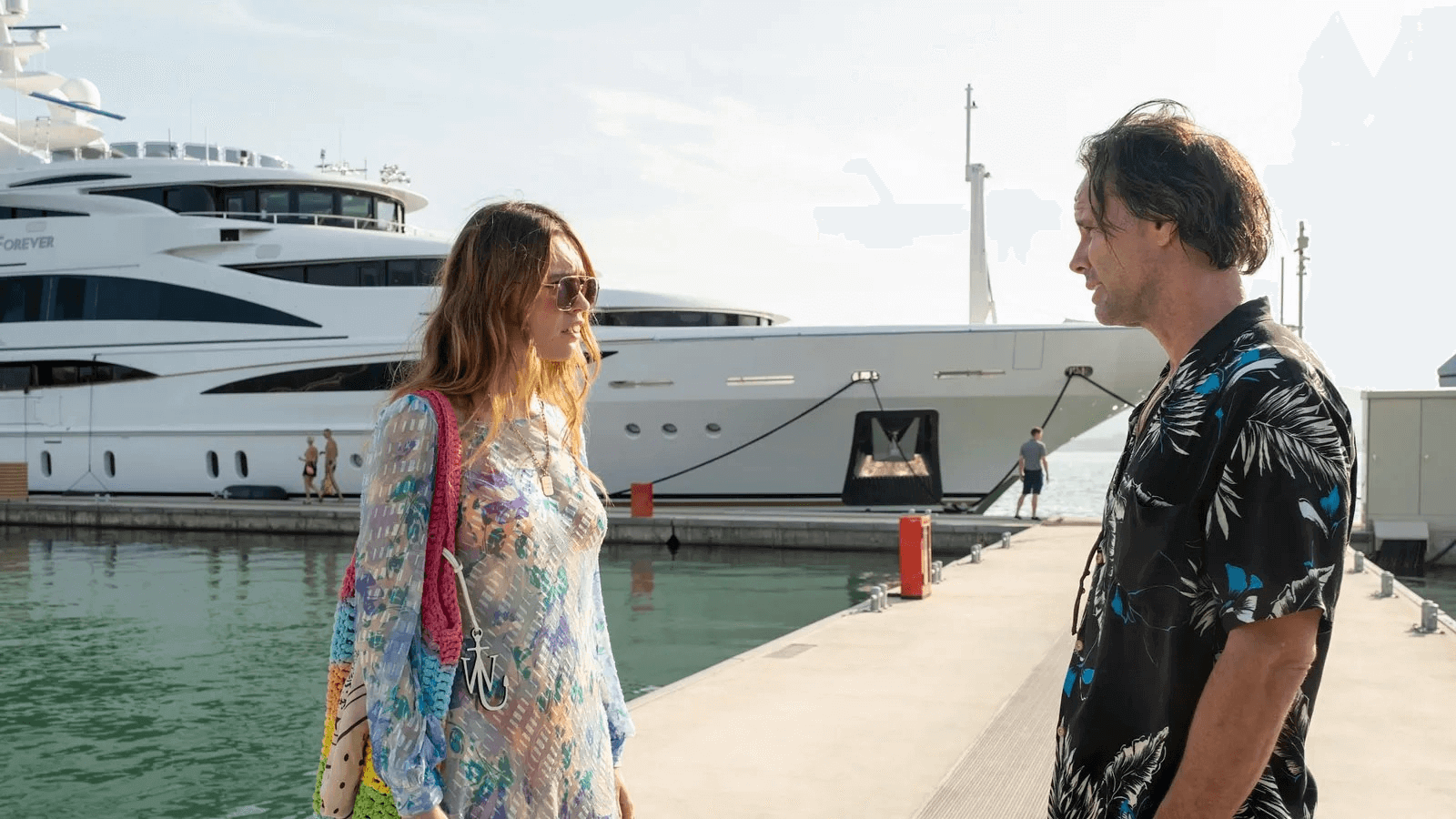
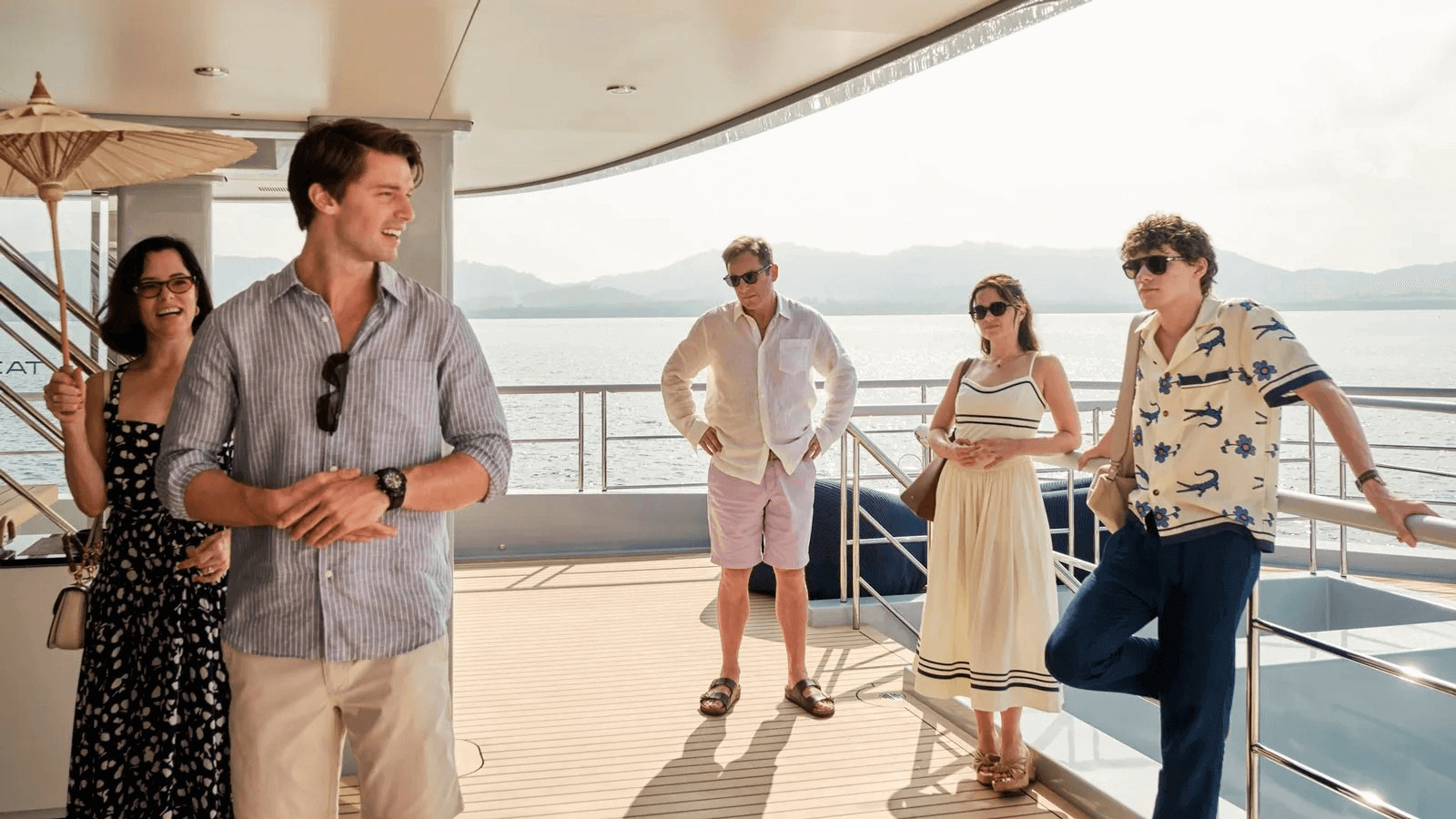
In this episode, one of the characters (Chloe) welcomes several of the main holidaymakers on board boyfriend Gary/Greg's yacht – the striking SpaceCat catamaran.
BOAT explores the most exciting features on board the 36-meter yacht, currently listed for sale under a joint central agency with IYC and Burgess, asking $18,800,000.
1. The designer initially called the yacht a "bold undertaking"
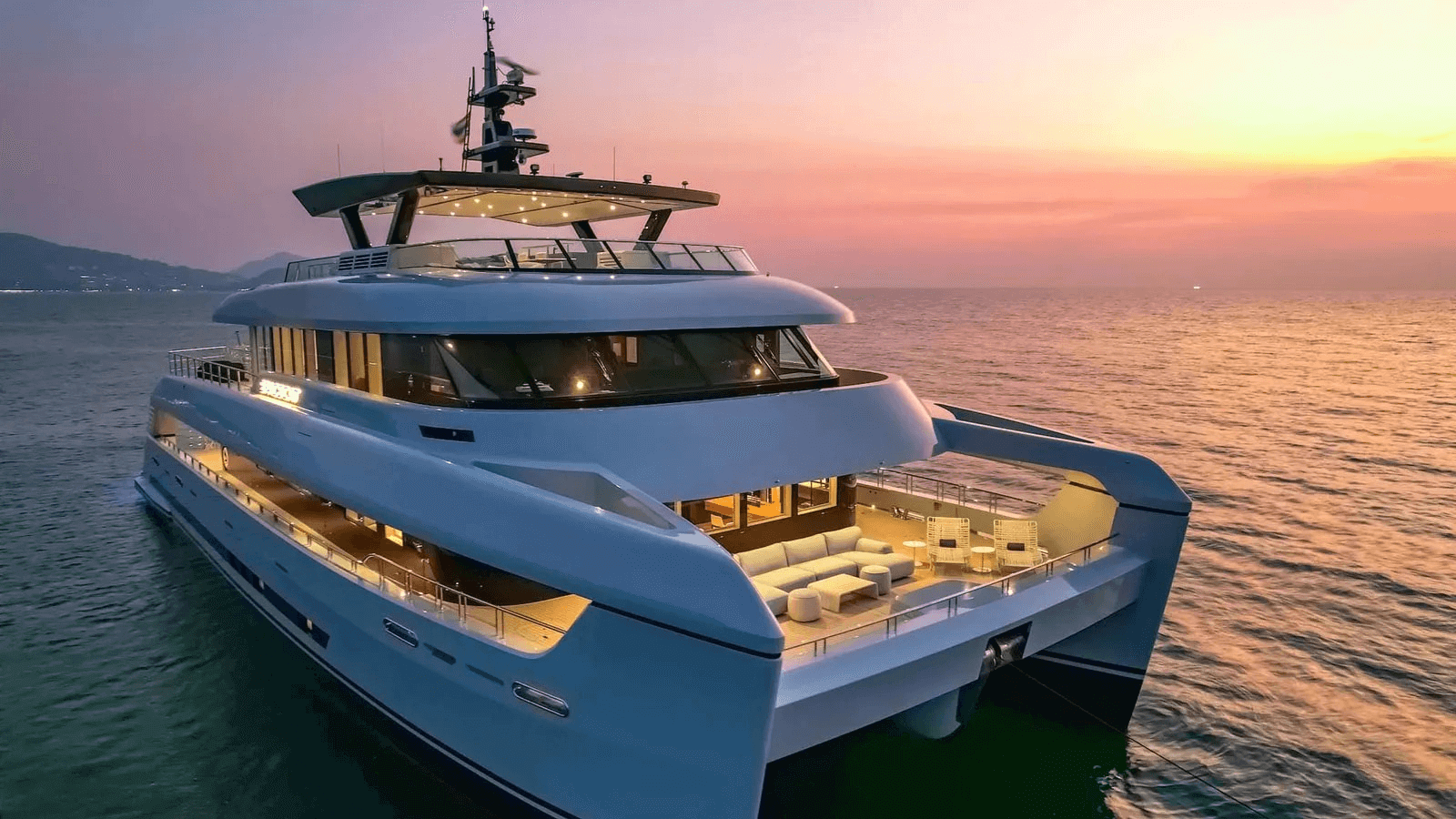
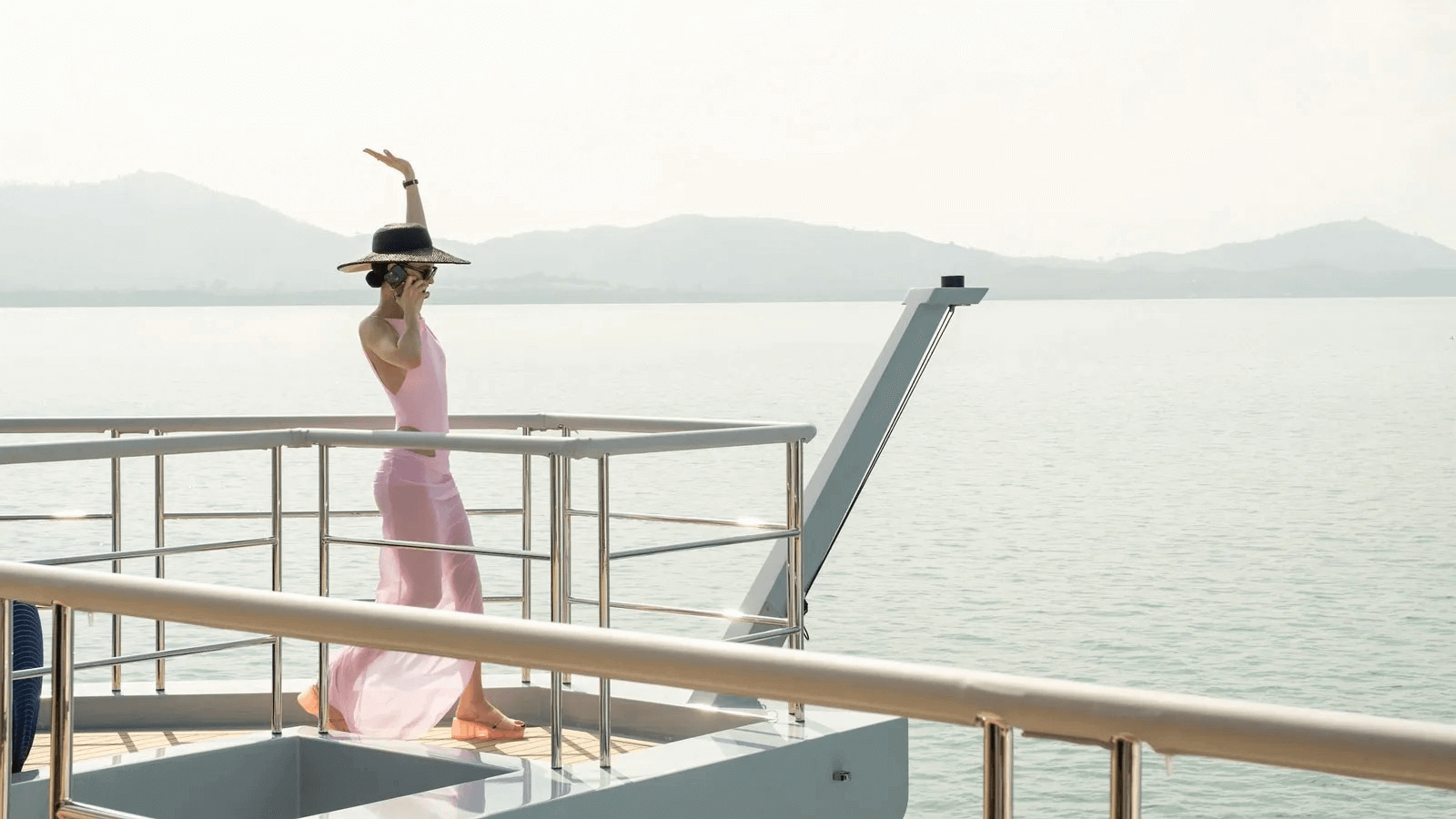
SilverYachts broke new ground with SpaceCat, which marked the yard’s first venture into multihull design. The catamaran is the result of a collaboration between Australian shipyard SilverYachts and renowned designer Espen Øino, responsible for the exterior and who previously described the catamaran as a "bold undertaking". In initial conversations with SilverYachts’ owner Guido Krass, Øino envisioned creating something entirely unconventional in superyacht design — a "floating villa".
2. The yacht's interior concept is inspired by "biophilia”
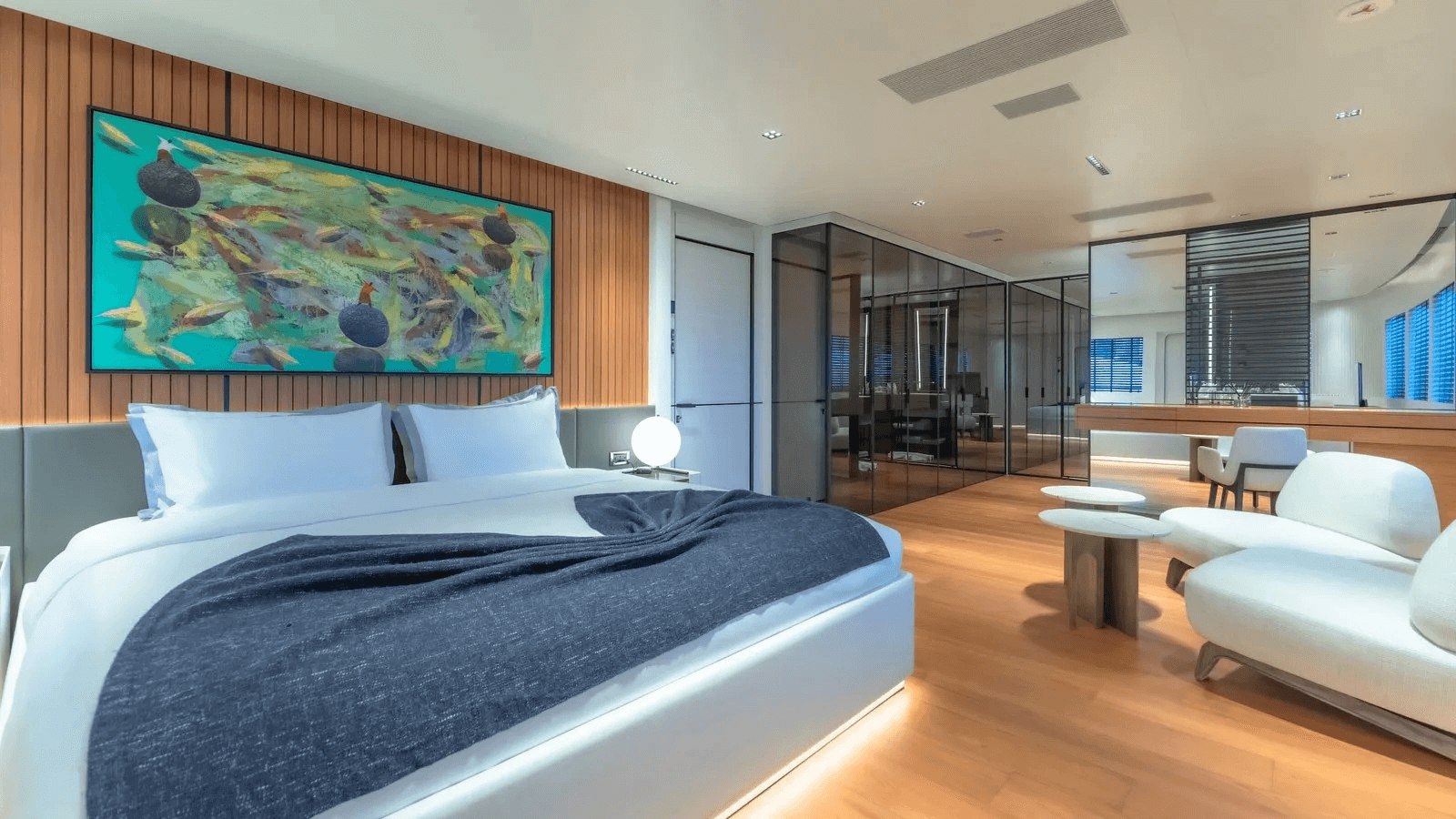
SpaceCat’s interior concept is inspired by biophilia – or "humans’ innate need to connect with nature, and modern escapism towards a safe enclosed space," says Alessandro Pulina, founder of Pulina Exclusive Interiors. Nurturing a connection to the natural world through its minimalist interior, the yacht has open spaces which focus on the relationship between indoor and outdoor environments. Thoughtful use of natural woods, along with large windows, glass surfaces and mirrors, enhance the sense of light and space.
3. The Espen Øino exterior was inspired by houseboats
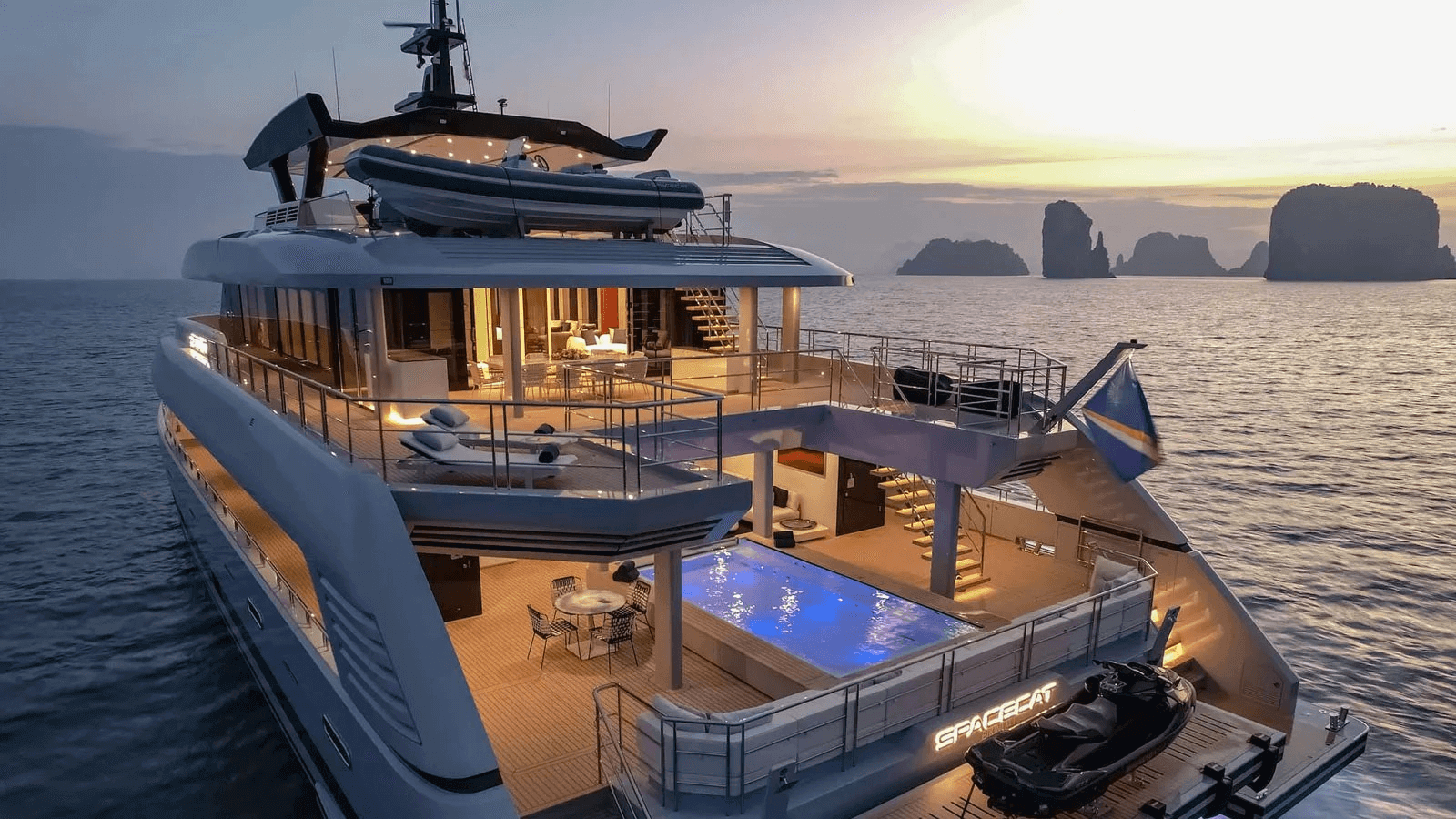

Drawing inspiration from houseboats commonly found in sheltered waters like Paris and Seattle, Øino and Krass envisioned a yacht that would prioritise spaciousness and comfort, much like a luxurious home on water. Recognizing the limitations of monohulls, they opted for a multihull design, providing more deck space and allowing for expansive living areas. As the concept evolved, Øino considered practical elements such as water treatment and the ability to relocate the vessel in an emergency, ultimately shaping the catamaran's design so that it blends the best aspects of a floating villa with the performance of a superyacht.
4. The 10,000-liter swimming pool sets a new standard in al fresco living
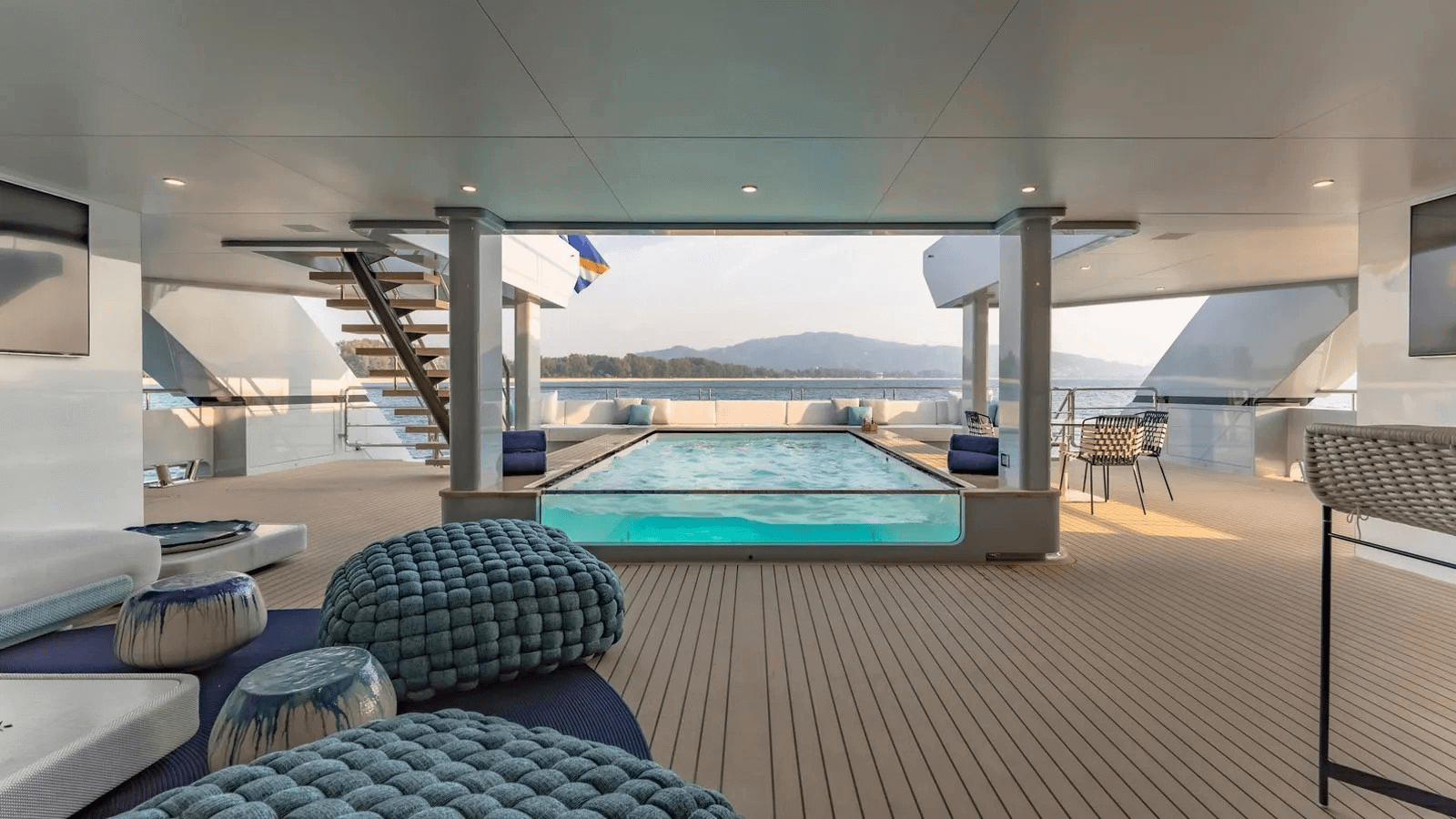

The charter yacht offers an abundance of outdoor spaces, including a covered sundeck and multiple shaded areas across the aft deck and foredeck, providing guests with endless options for lounging and dining in the sun or shade. The standout aft deck features a sleek 5.5-meter by 2.8-meter (10,000-liter) swimming pool nestled between the twin hulls, offering guests a space to unwind while surrounded by sun loungers and a stylish bar. The size of this water feature would be impossible to achieve on a similarly-sized monohull without greatly compromising living space.
5. The SpaceCat aims to achieve "ridiculously low" fuel consumption
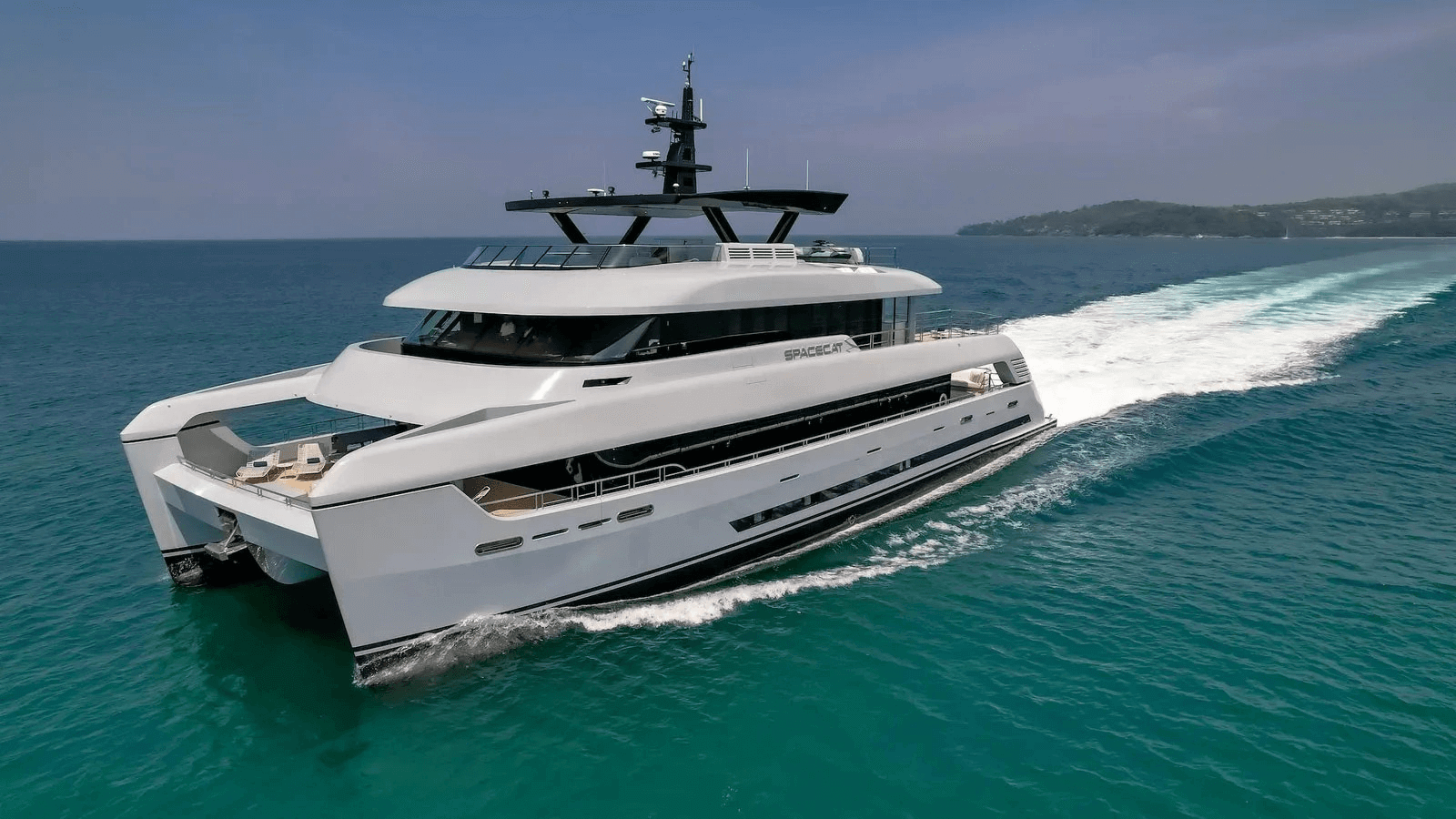

The lightweight, all-aluminium build allows the SpaceCat to achieve "ridiculously low" fuel consumption thanks to its innovative design that reduces weight and beam. “This is something which is aligned with SilverYachts,” Øino said. “Being built in aluminium, being lightweight and with slender hulls, we're able to operate at speeds with very modest power.” The yacht’s low-resistance hulls contribute to its fuel efficiency, allowing it to operate at speeds of 20+ knots with modest power and reaching a range of 3,000 nautical miles at 11 knots.