Keeping Boat Batteries Alive in Dry-Stack Storage
When a boat sits idle for weeks or months in dry-stack storage, battery neglect is one of the most common causes of trouble when it’s finally launched again. Marine batteries slowly discharge even when not in use, and a single deep discharge below about 10.5 volts can cause permanent internal damage. Understanding how to prevent this — and what the battery switch really does — can save time, frustration, and expensive replacements.

Why Discharged Batteries Fail
A 12-volt lead-acid battery is considered deeply discharged at around 10.5 volts. When voltage drops that low, lead sulfate crystals form on the plates — a process called sulfation. If the battery remains discharged for long, these crystals harden and permanently reduce the plate area that can hold a charge. Even if recharged later, the battery will never again reach full capacity.
This type of failure is especially common in marine applications, where boats often sit unused for extended periods. For that reason, most OEMs decline warranty claims for batteries that test as sulfated — it’s considered poor maintenance rather than a manufacturing defect.
Charging Before Storage
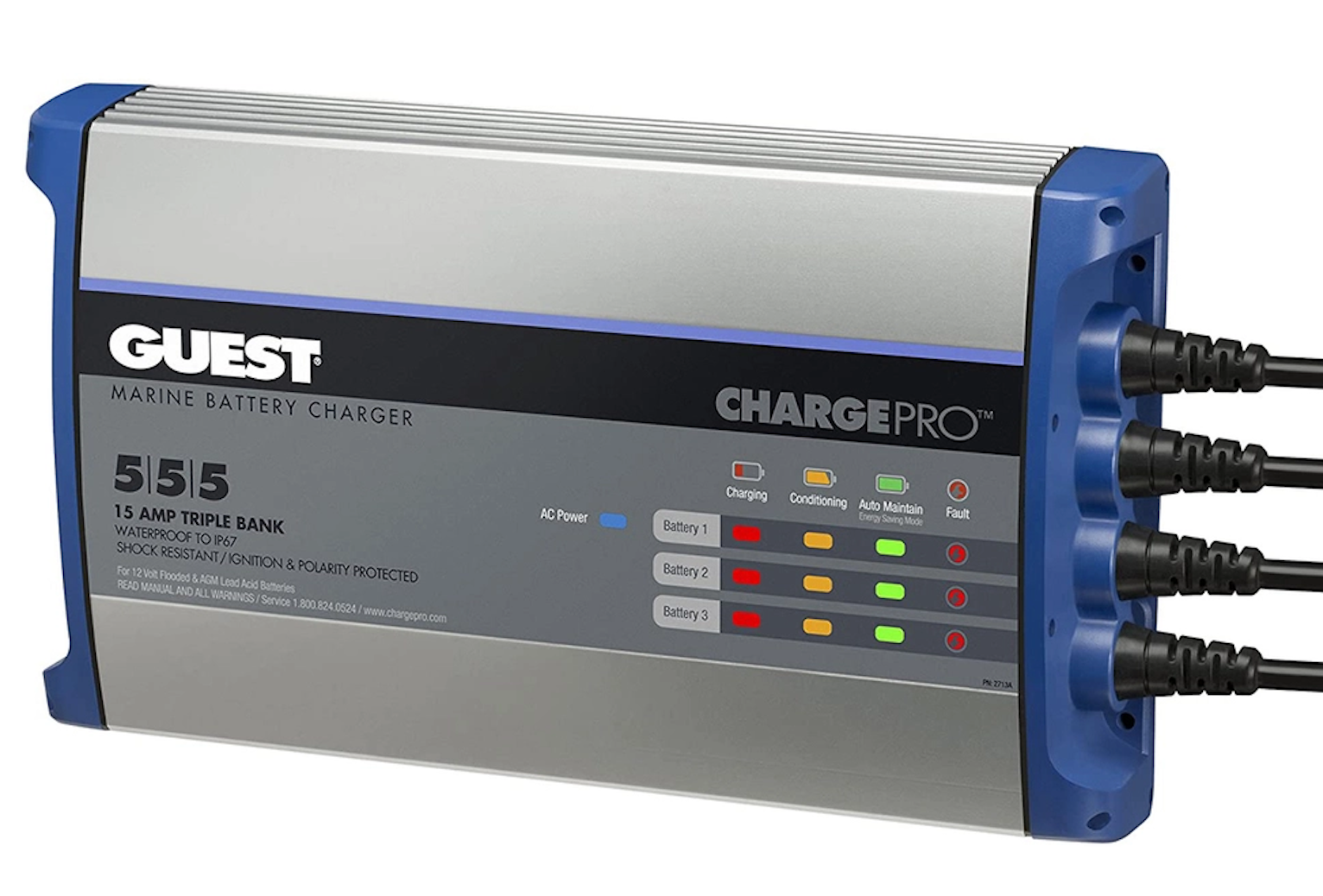
The best defense is to fully charge all batteries before putting the boat away. Use a smart, multi-stage charger and allow at least 24 hours for a complete top-off. A fully charged lead-acid battery self-discharges only about 3–5% per month, so a good charge can protect the battery for several months if all loads are removed.
Disconnecting Loads
Turning the main battery switch to OFF isolates the batteries from most onboard systems — including helm electronics, lights, pumps, and engines — so they can’t draw power. However, some items are wired “always hot,” meaning they bypass the switch and remain connected directly to the battery. These typically include:
- Automatic bilge pumps
- High-water or CO alarms
- Stereo memory and clocks
- Security or monitoring systems
These devices draw very small currents, but over weeks or months they can drain a battery completely. To prevent this, disconnect or pull fuses on nonessential “always hot” circuits if the boat will sit unused.
The Bilge Pump Exception
Every boat builder wires the automatic bilge pump directly to the battery on purpose. This ensures that the pump will operate even when the battery switch is off — vital protection if rainwater or leakage enters the bilge. The circuit is protected by an inline fuse near the battery to meet ABYC safety standards.
Owners should test the pump and float switch before storage and confirm that the fuse is in good condition. A failed float switch can render the entire system useless, even if the wiring is correct.
Using Solar or Maintenance Chargers
If your dry-stack marina allows it, a 10- to 20-watt solar maintainer with a small charge controller is a simple way to offset self-discharge and keep the batteries topped up. Where solar isn’t an option, some facilities will connect a charger periodically for a fee — well worth the small investment to prevent battery loss.
For a low-maintenance alternative, lithium-iron-phosphate (LiFePO₄) batteries self-discharge only 1–2% per month and can hold a charge for long periods. Just ensure your charging system is compatible before switching chemistries.
Best Practices for Long-Term Storage
- Fully charge batteries before haul-out.
- Turn the battery switch OFF to isolate most systems.
- Disconnect or fuse-pull any nonessential “always hot” circuits.
- Test the bilge pump and float switch.
- Use a solar or smart maintainer if allowed.
- Check charge levels monthly if the boat sits more than 3 months.

The Bottom Line
Keeping batteries alive in dry-stack storage isn’t complicated, but it does require attention. One deeply discharged cycle can shorten a battery’s life dramatically — an expensive and preventable mistake. With a proper charge, load isolation, and periodic maintenance, your boat’s batteries will be ready to go when the season starts again.