Keeping Corrosion at Bay: Part Two
Read Part 1 here.
In Part 2 of our review of corrosion analysis techniques, we’ll look at sacrificial anodes for running gear, how shore power connections effect corrosion, and which alloys work best in given environments.
As we continue our look at corrosion, and how to keep it under control, we’ll focus on running gear, as well as the effects of plugging into shore power. We’ll also discuss anode alloy selection, and which ones are most effective for given environments.
Running Gear
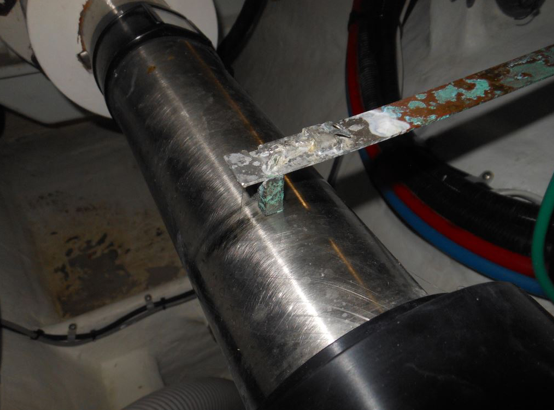
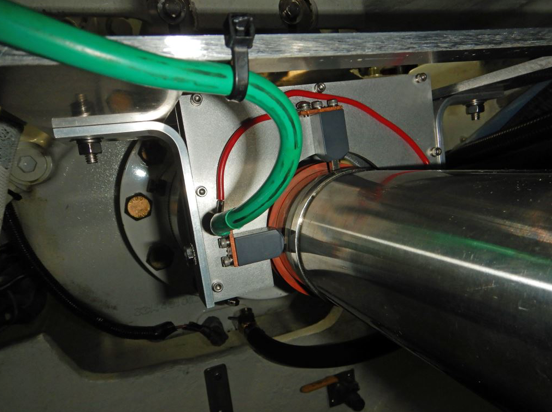
The propeller and shaft are a special case, even though they are connected to the engine via the marine gear (‘transmission’ in lubber’s parlance), and thus the bonding system, the electrical contact is poor at best because the medium is oil-filled. Common, low-cost shaft brushes can make for poor connections at best as well, the threshold for resistance between any protected metal and a sacrificial anode is a scant one ohm, so don’t count on ordinary brushes for protection.
Shafts and props should have their own anodes and they should be protected and measured separately, or utilize a properly engineered brush system, one that relies on silver slip rings, which are capable of meeting the one-ohm standard.

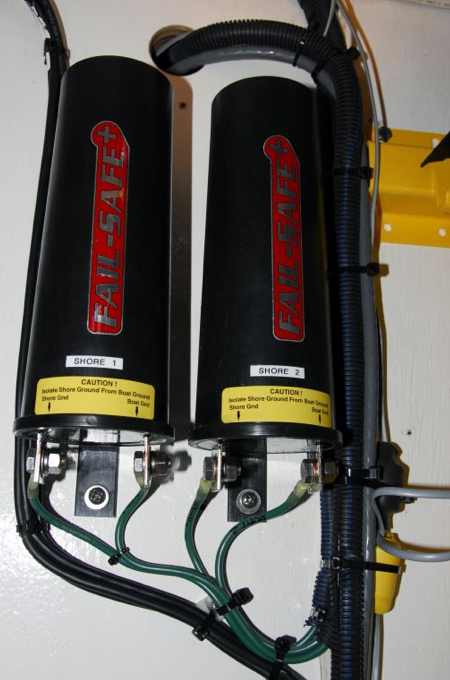
Repeat the testing after reconnecting the vessel’s shore power. If the readings change, the boat is not properly isolated from the shore grounding system. The vessel’s galvanic isolator, the device that is supposed to isolate the bonding system from shore power and other vessels, is not working, not wired properly or not present altogether, or there is an open circuit somewhere in the grounding conductor’s path (a potentially dangerous scenario). There also may be problems with the shore power transformer wiring, if present, and if it’s wired for isolation.
Measuring Procedure
When measured with a silver/silver chloride reference cell, protection ranges for seawater are as follows; aluminum -950 mV to -1100 mV; a fiberglass vessel with common underwater metals excluding aluminum -750 mV to -1100 mV (a range more conservative than that dictated by ABYC Standards); a timber hull with common underwater metals other than aluminum -550 mV to -600 mV, steel hulls -850 mV to -1100 mV.
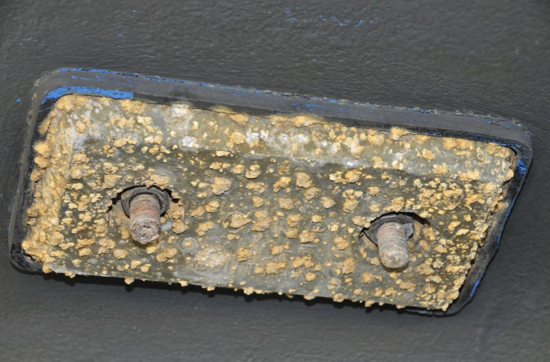
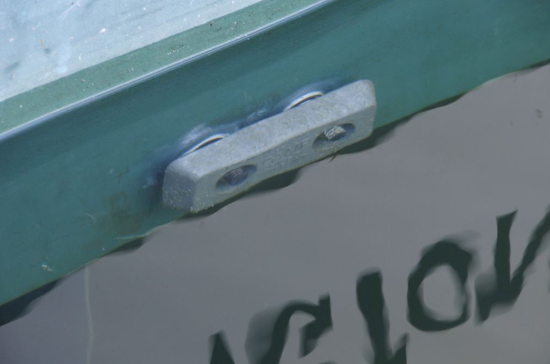
Finally, as far as anodes are concerned, zinc should be used in seawater only, magnesium in fresh water only, while aluminum may be used effectively in sea, fresh or brackish water. Zinc anodes, when used in fresh or brackish water, develop a coating that causes the anode to go dormant. It can be brushed off using a non-metallic stiff bristle brush. Magnesium should never be used in sea or brackish water, as it will drive most protected metals into over-protection, which is an issue particularly for aluminum.
I’m partial to aluminum anodes on hulls and underwater metals, however, I have had issues with them when used in pencil form in internal heat exchangers. Aluminum anodes are more reactive than zinc and as such, they often develop a white surface “froth,” or aluminum hydroxide. This material does not hinder the anode’s performance; however, it can make pencil anodes difficult to remove from heat exchanger housings.
What is Protected?
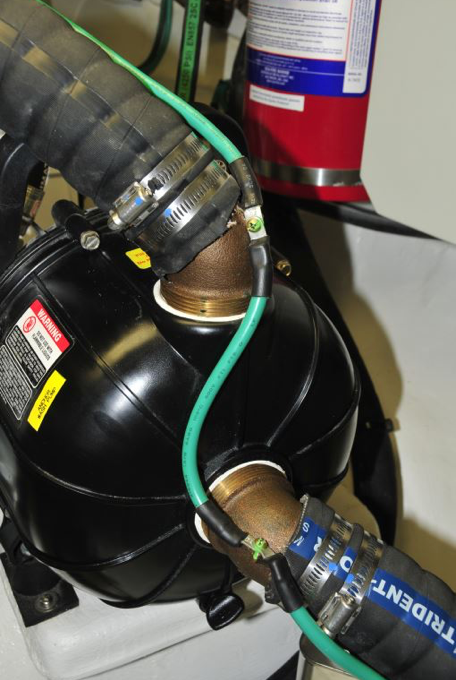
Because internal metals like heat exchangers are considered to be in a “different body of water” than hull anodes, the two have no effect on each other and thus hull anodes will not protect heat exchangers and vice versa. Furthermore, bonding internal raw-water plumbing like metallic pipes, strainers and heat exchangers, will afford them no additional protection from common, every-day galvanic corrosion because they are too far from anodes. It may, however, provide them a measure of protection from stray current corrosion, which represents an abnormal scenario, one that occurs rapidly and is especially destructive. To reiterate, cathodic protection/anodes will provide little if any protection in a stray current corrosion scenario, but a sound bonding system can prevent or reduce damage caused by stray current, which makes it worth having and maintaining.
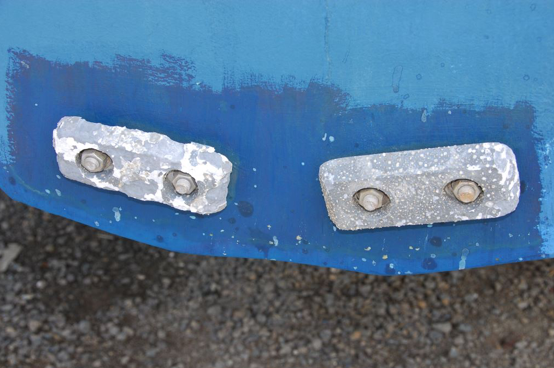
I’m often asked, “What happens if I mix anode types on the hull because I can’t get aluminum anodes for a prop, thruster (at least one thruster manufacturer has switched to aluminum anodes) or weed cutters?” Mixing anode metals, while not ideal, is not harmful. Both will provide a measure of protection proportionate to their voltage potential.
Another question that is often posed involves anode placement. While in theory, any anode connected to a common bonding system will protect any bonded underwater metal, in practice, it’s best if the anode can “see,” or be within the line of sight of the protected metal. In other words, favor positioning anodes closest to or directly contacting metals they are designed to protect. For metal hulls, distribute the anodes around the hull while increasing the density around the stern gear where the struts, props, shafts and rudders are located.
Ultimately, when it comes to corrosion analysis, there should be no guesswork whatsoever. If you are being told by a marine industry professional, or fellow boat owner, that the corrosion you are experiencing is the result of XYZ, ask them to, as one of my corrosion instructors is fond of saying, “follow the electrons.” In other words, explain how the corrosion is occurring by tracing the route the electrons, which travel through metals, and ions, which travel through water, are taking. If they can’t do that, they don’t understand how corrosion works and thus are ill-equipped to make an analysis.
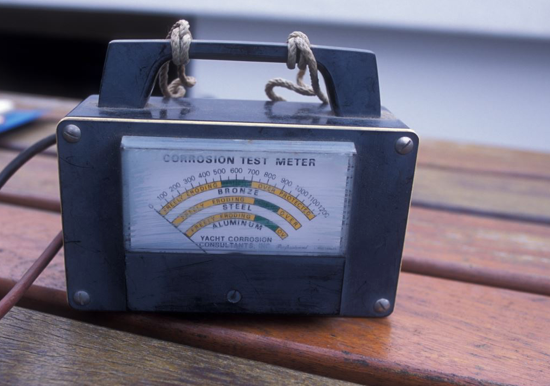
Whether professional or boat owner, the reference cell and multi-meter are among the most valuable tools in the corrosion analyst’s quiver. Without them, it’s impossible to know whether underwater metals are being adequately, under or over-protected.
By Steve D’Antonio
Beginning his career in 1988, as a marine mechanic, electrician, manager and partner of a custom boat building shop and two boatyards and technical journalist, as well as through Steve D'Antonio Marine Consulting, Inc, Steve provides personalized and hands-on service to boat buyers, boat owners, boat builders and equipment manufacturers, as well as others in the marine industry around the world. Steve is an American Boat and Yacht Council Certified Diesel, Electrical, Corrosion and Systems Master Technician/Adviser. To learn more or to contact Steve, go to SteveDMarineConsulting.com.