Monaco Energy Challenge Highlights Electrically Powered Boats
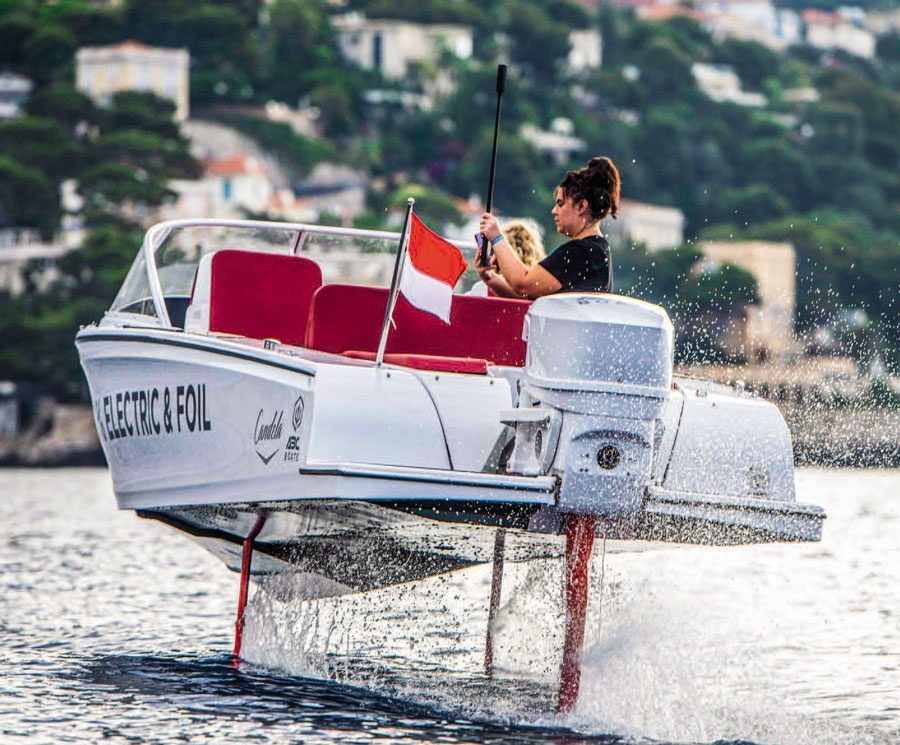
Sweden’s Candela Boats C-7 hydrofoiling electric boat took top honors at the YCM International Speed Record Race in Monaco in July, beating 14 other electric boats in a 253-yard sprint race, averaging 27.055 knots. Second went to Dinsdale Watersport, which ran more than 24 knots. The Dutch entry, Sunflare Solar Team, harnessed the sun’s power to run an average speed of nearly 20 knots and claim third place.
Multiple Disciplines
The Sprint Race was part of the Monaco Energy Challenge, which is billed as the world’s biggest competition for electric and alternative energy boats. It was held at the Monaco Yacht Club. It was also one of three events for boats in three different classes.
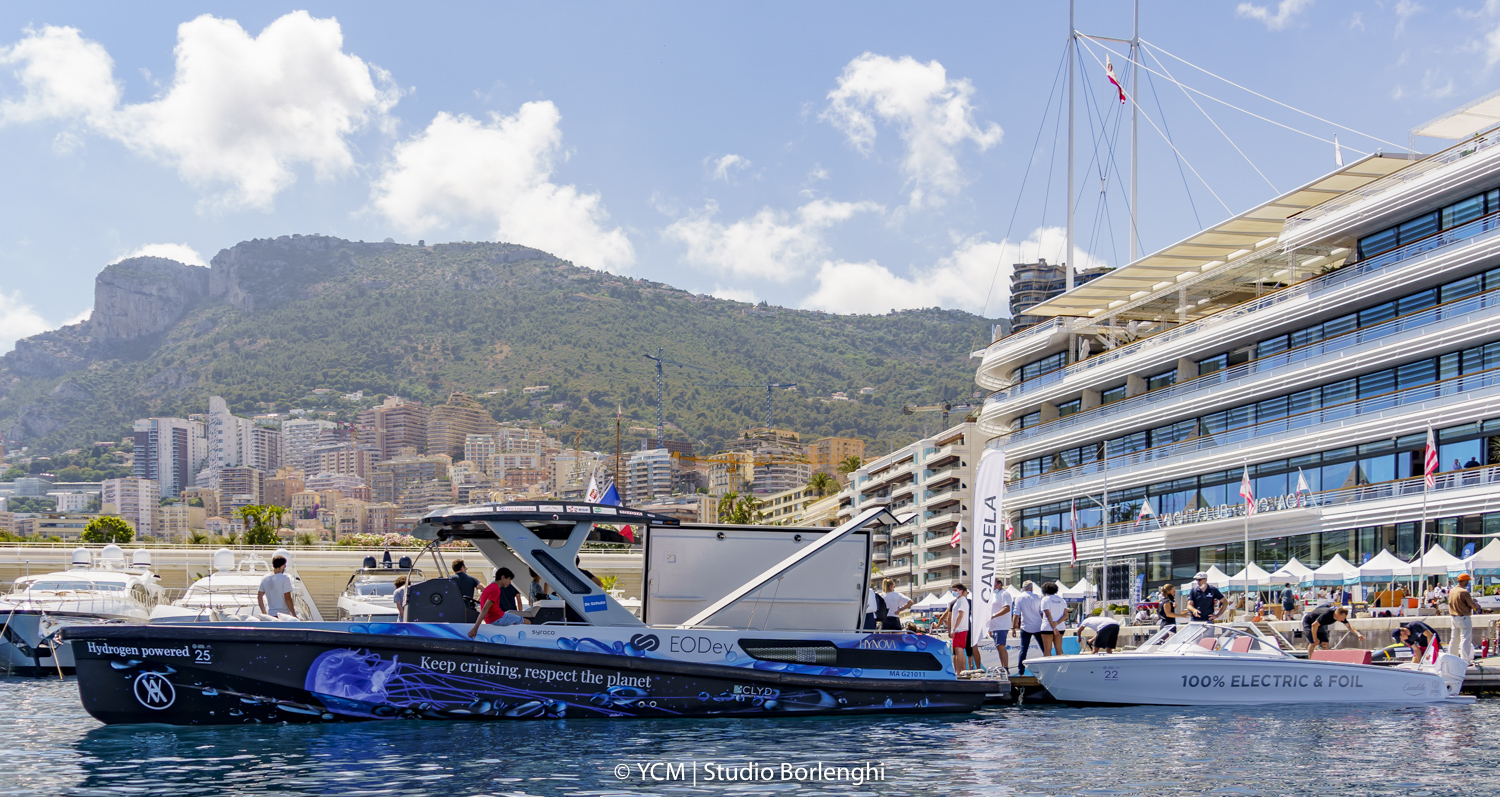
In the Endurance competition, the boats faced some chop and a light breeze. The Monegasque tender Vita X made the round trip in 45 minutes in the Open Sea Class. Second went to the Dutch entry Tenderworks, which was a few minutes behind. The largest boat in the class, the 39.37 (12 m) Hynova Yachts and its hydrogren-electric boat rounded out the podium.
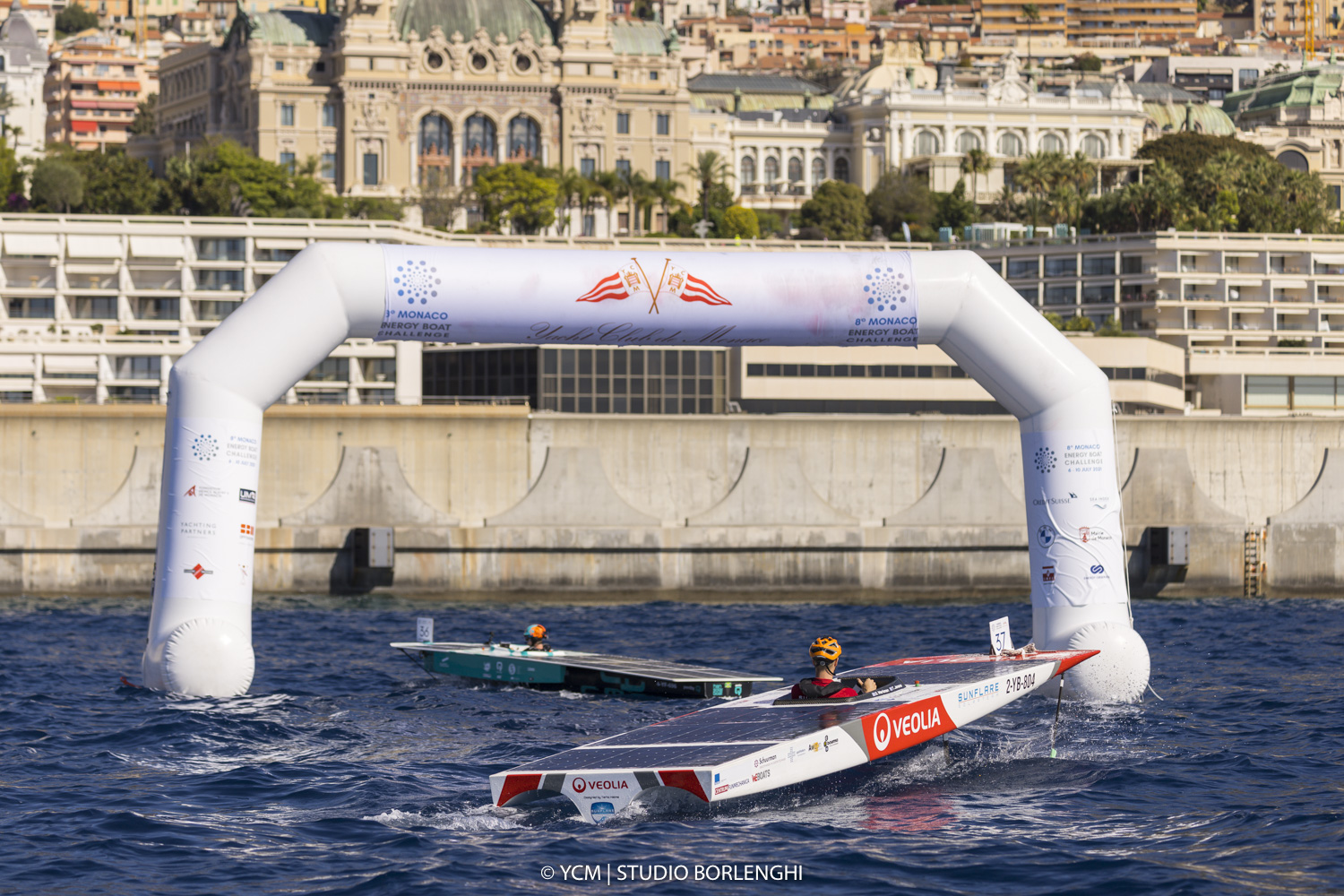
Another Dutch crew, Sunflare Solar Team, which has been developing its solar-powered boat since 2015 completed the most laps in the Solar Class. More than a minute behind, the Polish entry, AGH Solar Boat, finished second followed by its compatriots from Arnhem University, Hana Solar Boat, which crossed the line third.
In the Energy class, the Italian students and their UniBoat finished well ahead of the French entry, CapGemini Engineering, and Mines Energy Challenge took third.
Bio-Mimicry
In the Energy class, Hydrovinci, was an example of the innovation shown throughout the event. It uses bio-mimicry, a technology centered on reduced carbon and energy impact that’s inspired by the fin movements of large marine mammal. It’s propelled by an undulating membrane that pushes the craft forward.
Candela Consistency
Since its introduction in 2019, the C-7 has become one of the best-selling electric boats in Europe and needs just 25 hp to cruise at 20 knots.
“This is a big day for electric boating,” Mikael Mahlberg, PR and marketing director for Candela, said after the race. “Instead of fitting bigger motors and more batteries into conventional inefficient hulls, hydrofoils allow you to use less power to reach higher speeds and longer range. By flying above the water, you also get a smoother ride.”
The C-7 has an on-board flight controller that automatically adjusts the hydrofoil 100 times per second to account for side winds, waves and different loads. Receiving input from many sensors, the flight controller computes the foil’s optimum angle of attack.
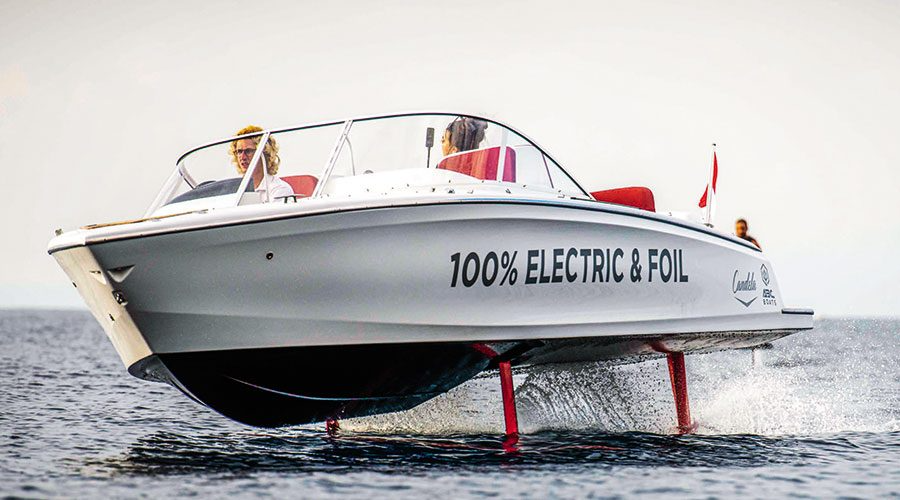
Candela’s hydrofoil system is also being used for larger boats and next year the company will launch its P-30 electric foiling ferry for the city of Stockholm as well as a 12-person water taxi called the Candela P-12.