Name Game
The Obfuscation of the American Power Vessel
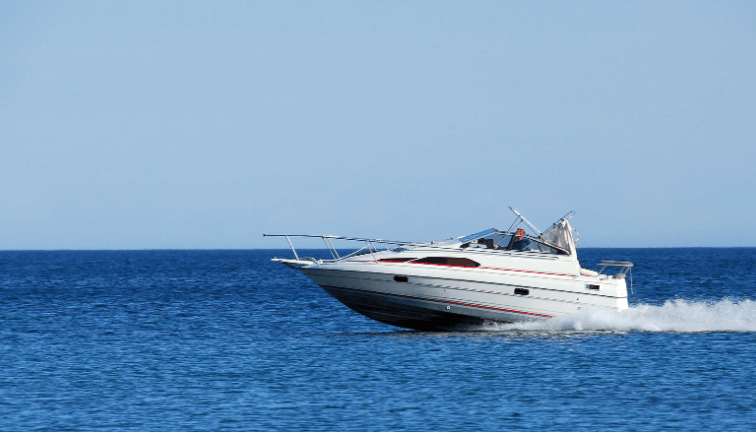
Back around the turn of the century time, things were a lot easier for the American boatsman. Essentially, there were two types of boats: powerboats and blow boats. Back then, they were selling big hunks of steak and the American pleasure boat marketing industry had not even thought about peddling sizzle. Nowadays, there is so much dammed sizzle being hawked, that the American boatman should be crying out “where’s the beef?”
Marketing types for the American nautical dream have conjured so many different powerboat designations that even your seasoned, sophisticated Spectator finds things extremely bewildering. And if I feel that way, think of what the poor slob just entering the powerboat market faces: a seemingly, mind-boggling variety of powerboats trafficked by creative yacht brokers and marketeers spouting hype, tripe, fluff and bluff.
Only Four
Of course, we do need some powerboat appellations (in addition to the builder, length and year built) to properly describe vessels. Descriptions that I deem useful number just four:
– Motor Yacht
– Cruiser
– Sportsfisherman
– Runabout
That’s it! There ain’t no more. I might allow an adjective or two with the above classifications to help describe the boat a little better. Example: pilothouse motor yacht or express cruiser or sedan cruiser or flush deck motor yacht. These are useful descriptions. Unfortunately, there are far too many useless, meaningless and just plain foolish descriptions out there.
Old Rudders
I am looking at a Rudder Magazine dated October 1907. A glance at the brokerage pages tells the story. Here we have powerboats listed with appellations such as: “Cabin Launch,” “Gasoline Yacht,” “Power Launch,” “Steam Yacht,” and simply “Powerboat.” Refreshingly simple, no? A peek in the back of this August magazine (actually this is the April magazine not the August magazine) reveals the confusion and ambiguity that runs rampant in marine broker sections.
Poaching Lobsters Legally
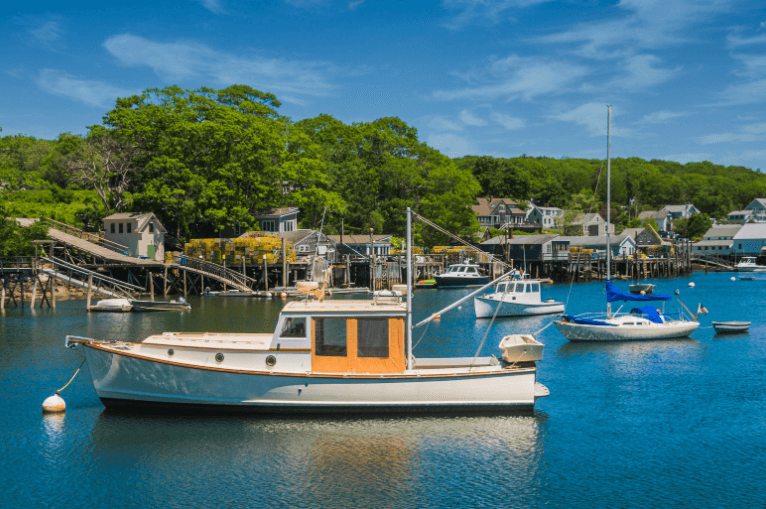
Let’s talk about “TRAWLER YACHTS” and “TROLLER YACHTS.” Do you know the difference between a “trawler” and a “troller?” A troller drags lines with multiple hooks behind the boat and a trawler drags nets – the purpose of both being to snag unsuspecting fish in great quantities. Do you really think a motor yacht with porcelain smooth topsides, polished stainless steel deck hardware and pristine teak decks is going to be cruising the oceans dragging lines with hooks behind it or, worse yet, a huge net? There is, therefore, no such damned thing as a troller or trawler yacht. And how about the “RESEARCH YACHTS” that we have been hearing about lately? Just what kind of research do you think the owners of these vessels carry out? I can guarantee you the only “research” most of the owners of these vessels might do is in the yellow pages looking up the latest trendy restaurant at which to spend the evening.
And what of “PICNIC BOATS?” Now, really, how many people buy boats so they can have picnics? In fact, my well-used Webster unabridged defines “picnic” as “an excursion or outing with food.” Hell, this makes every single boat ever built a damned “picnic boat.” Then there is the “LOBSTER YACHT.” Does that mean you can use your yacht to poach lobster traps without fear of being apprehended? (“really officer, I am authorized to take these lobsters – after all this is a “lobster yacht!”). “COASTAL CRUISER” is pretty popular these days too. I wonder just how close to the coast you have to cruise to be a “coastal cruiser?” And how far offshore does one have to venture before changing the description to an “OCEAN CRUISER” or “OFFSHORE CRUISER?” How about “WIDE BODY.” Does this describe a boat designed for an obese owner? 3
“PROMENADE DECK” yachts have been much advertised (actually, this term is out of favor now but was really big in the 50’s and 60’s). When was the last time you took a leisurely walk or stroll around the decks of your vessel? “Promenade” evokes visions of a couple strolling arm in arm along the deck with parasols. Fact is, on most boats, people must carefully walk single file along narrow decks holding on for dear life ever vigilant for a chock or cleat that will trip them and toss them over the side. What kind of promenade is that?
Then I’ve seen “SPORT TUGS” for sale. You figure this one out. Obviously, it is a tugboat converted for sporting use but exactly what kind of “sport” would it engage in? Towing other boats for kicks (whether they wanted to be towed or not)? Pushing icebergs for fun? And what exactly is a “HOUSE BOAT?” Just when does a “house boat” become a “motor yacht?” (Actually, most motor yachts today are provided with amenities far exceeding those of their owner’s homes. For example, it is common for an 80-foot motor yacht to have six heads. How many houses do you know that have six bathrooms?) “SUPER SPORT” is a popular term nowadays. I’ve always wondered, does this describe the owner or the boat?
I am sorry to say that, in one regard at least, rag baggers have us beat. Puff boats usually are simply described by their builder, size and year (Example: “Passport 40 – 1982”) without any huffy hyperbole.
Strange Stuff Boats?
But since things are getting so segmented in the powerboat market, why not go all the way and come up some really good monikers for boats that will help them sell. How about a “BEER BOAT?” (truth is, most fishing boats could properly be labeled “beer boats” and I think using that description will attract a whole new breed of boat owners). For those a little more sophisticated in their drinking habits, we could have a “MARTINI BOAT” (which is, come to think of it, exactly what 90% of all motor yachts are).
We know a lot guys use their boats for weekend trysts away from their family. So why not address this lucrative market directly? How about a “STRANGE STUFF YACHT” with an interior done in a Puerto Rican whorehouse motif? (Maybe this has already been done since South Florida is full of vessels with Puerto Rican whorehouse interiors). For you unmarried types out there, we should offer a “SEDUCTION CRUISER.” And to hell with those genteel picnic boats – lets go all the way and have a “PIG OUT BOAT” for folks who really enjoy stuffing their snouts on board.
Let’s face it, they are all only pleasure boats – every single last one of them. So let’s stop confusing things by dreaming up grandiose, dubious epithets and use simple descriptions. I must, however, reluctantly admit that I, your Spectator, have been guilty of concocting cute adjectives to describe vessels. Recently, I came up with “SUV” (sport utility vessel) which is being ravenously accepted in the industry. I am very sorry about this indiscretion and I will really try to better control these marketing urges in the future.
(Reprinted with permission of Regina Fexas.)
If you would like to read more of Tom's pearls of wisdom, tune in next Friday -- "Fexas Friday."
Better yet, why not get a full dose of infectious Fexas whenever you need it -- and buy one of the volumes below. Better yet, why not buy all of them -- we call them the "Fexas Five." They will provide many evenings of fun reading (better than Netflix), and you'll make the widow Regina very happy knowing that Tom will live on with you the way most of us remember him.
Order 1, 2 or "The Fexas Five" --

To find the "Fexas Five" on Amazon, click here...
Tom Fexas (1941-2006) was one of the most influential yacht designers of the last quarter of the 20th century. With the narrow Wall Street commuters that were built in the 1920s and '30s always on the back of his mind, he wanted to design boats that were at once fast, comfortable, seaworthy and economical to operate. Over the years, he and his firm designed over 1,000 yachts for some of the most prestigious boat builders in the world, including Choey Lee, Palmer Johnson, Grand Banks, Mikelson Yachts, Burger, Abeking & Rasmussen and many others.
Even though toward the end of his career he only designed megayachts and superyachts, including the remarkably influential PJ "Time" in 1987, he is best remembered for his first major vessel in 1978 -- Midnight Lace -- which became a series of 44-52-footers. They were light, narrow, and fast with relatively small engines. He was also influential in the boating community because of the monthly column he wrote for Power and Motoryacht, which began in its very first issue in January 1985.