Navigate the Storm: How to Prep a Boat for the 2025 Atlantic Hurricane Season from Sea Tow
PRESS RELEASE
Southold, NY – June 16, 2025 – After an above-average hurricane season in 2024, with record-breaking surge following a peak-season lull, The Weather Company and Atmospheric G2 released its official forecast for the 2025 hurricane season. 19 storms are forecasted to form in 2025, nine of which are predicted to become hurricanes and four of which will reach Category 3 or greater. That's just shy of 2024’s total of 11 catastrophic hurricanes. The 2025 Atlantic Hurricane season started on June 1 and runs through November 30, with typical peak activity occurring in August and September.
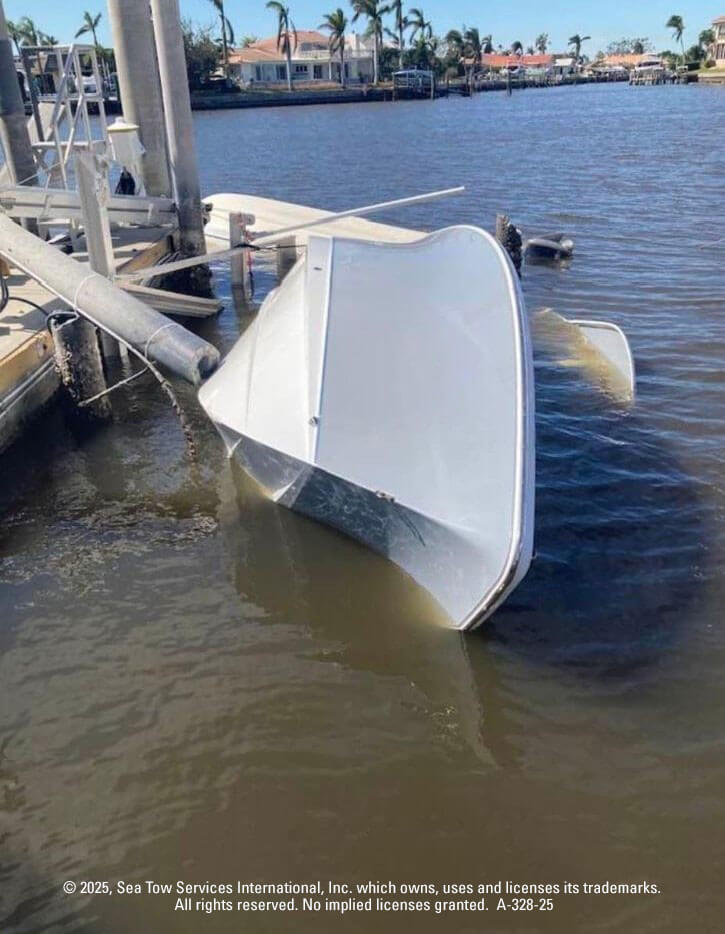
Three named storms hit Southwest Florida in 2024. In early August, Debby approached with heavy rain before it made landfall in the Big Bend area as a Category 1 Hurricane. Less than a month later, Hurricane Helene hit with a deadly storm surge, and just two weeks later, Hurricane Milton devastated the already flooded region. Businesses and residents in Hillsborough and Pinellas counties experienced damage amounting to nearly $5 billion in 2024.
Just two years prior, in September 2022, catastrophic Hurricane Ian pummeled the entire State of Florida, resulting in over 150 deaths and over $112 billion in damage, including the displacement and destruction of thousands of boats. According to the National Oceanic and Atmospheric Administration, it was the costliest hurricane to affect the state to date.
Post-storm damage and dislocation of vessels left many boat owners at a loss for how to recuperate. In Southwest Florida, Sea Tow® is still recovering vessels to this day. Preparation in advance of a storm is critical. Sea Tow captains experienced all four storms and have been a key resource in catastrophe response, vessel recovery and clean-up efforts. Sea Tow is happy to share advice for boaters, with tips to prepare for the 2025 Atlantic hurricane season.
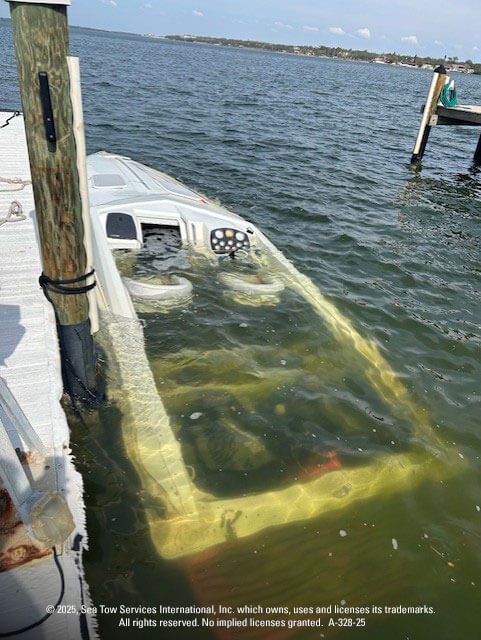
“The 2022 and 2024 hurricane seasons were among the most destructive in recent history,” said Sea Tow’s Catastrophic Event Coordinator, Michael Murphy. “Our captains have seen firsthand the devastating impact these storms can have, not just on boats, but on lives. We strongly urge all boaters to take proactive steps in advance of hurricane season. Don't wait until a storm is approaching to act. Have a plan, secure the vessel and stay informed.”
Sea Tow offers the following tips for a hurricane response action plan:
- Prepare in advance. Have a storm plan in case a storm is expected to make landfall in the area. The plan should also include what to do after the storm in case a home dock is displaced or destroyed.
- Ensure insurance is up to date. Know and understand the boat’s insurance policy and its coverage. The insurance company may require a hurricane plan or provide specific storage instructions. Store the policy and all documents in a safe place.
- Take pictures of the boat and all contents before the storm to document equipment, boat condition and any pre-storm preparation efforts. These photos may become important to share with the insurance company post-storm.
- Keep in mind that service providers must prepare too and will shut down in preparation for the storm. If the boater depends on any services to assist with securing their vessel, plan so with enough time.
- Ahead of hurricane season, arrange a prepaid haul-out service. Some marinas have long wait lists, and boaters may not be able to find a marina to haul and store a boat a few days before a storm is predicted to make landfall.
- If the boat is being stored at a marina, the boater must know and understand the marina’s storm plan and their own responsibilities.
- Just because the boat is on a lift doesn’t mean it’s safe. Boats can also sink on a lift and drift away if not properly secured. If leaving the boat on a lift, or in its slip, double up all lines so that if one breaks, there’s another one to hold the boat in place.
- If there’s not a safe location or marina to store the vessel, tie the boat securely in the middle of the slip so it can ride up and down with the storm surge. Double all lines and run crossing lines from one end of the vessel to the opposite side of the dock.
- Once the boat is in position to ride out the storm, remove all sails, fishing rods, vinyl windows, Bimini tops, and anything that can fly or float away. Lower all VHF and radio antennas so that they are out of harm’s way. Tie down anything that can’t be removed.
- Ensure the bilge pumps and float switches are operational on the boat. If the boat is on land, leave the drain plug out during a storm so that rainwater can drain.
- Secure the deck hatches down so that if the wind catches, the latch can’t break and open and ruin the interior of the boat.
- Put a tracker on the boat. If the boat floats away from its storage location, this will make it easier to find.
- Once the storm has passed and the boat is back out on the water, stay alert for debris.
- If a boat is damaged or displaced by a storm, it is important to only work with local, licensed and insured companies for recovery. Sea Tow has the experience to safely raise sunk boats, recover boats displaced on land or in their slips, or otherwise assist with the recovery of a damaged vessel. Sea Tow has established relationships with most marine insurers to work with directly for a stress-free process.
Beyond the member-only on-water assistance services that it’s known for, Sea Tow has responded to nearly all major catastrophic events since 1989 to assist with vessel recovery and clean-up efforts. For specific questions about hurricane preparation or post-storm recovery, please contact the local Sea Tow franchisee. To find the nearest Sea Tow location, use the service locator at seatow.com/service-locator.
About Sea Tow Services International, Inc.
Sea Tow Services International Inc. is the administrator of the worldwide Sea Tow® membership program and network of Sea Tow franchisees who provide assistance to members. Sea Tow has been the premier leader of on-water assistance for 40+ years. The pioneering concept, founded by Captain Joseph Frohnhoefer, was established in Southold, NY when the United States Coast Guard ceased response to non-emergency assistance calls. Sea Tow members are provided with a 24/7 connection to Coast Guard-Licensed Captains to assist with their on-water needs. In addition, the franchise network handles salvage and recovery operations, and responds to natural disasters, environmental hazards and oil spill cleanups. Sea Care is Sea Tow’s B2B offering that provides participants the option to include on-water assistance membership with the purchase of a boat, trailer, or engine.