The New Boating Paradigm
It's no secret that this spring has seen a drop in boats sales, down from a level that had already been depressed for the last 12 months. The Covid-19 boat buying frenzy notwithstanding, boat sales generally rise in a robust stock market and are subdued when the market is in decline.
The market is once again at an all-time high, yet boats sales continue to be slow. Still moving, but slow.
This fact is confounding the whole boating industry, as there are remarkable buying opportunities waiting at dealerships all over the country for your favorite brand, no matter what it is! If it's below 45’ or so, we know several dozen brands who will sell you boats for prices you will never see again.
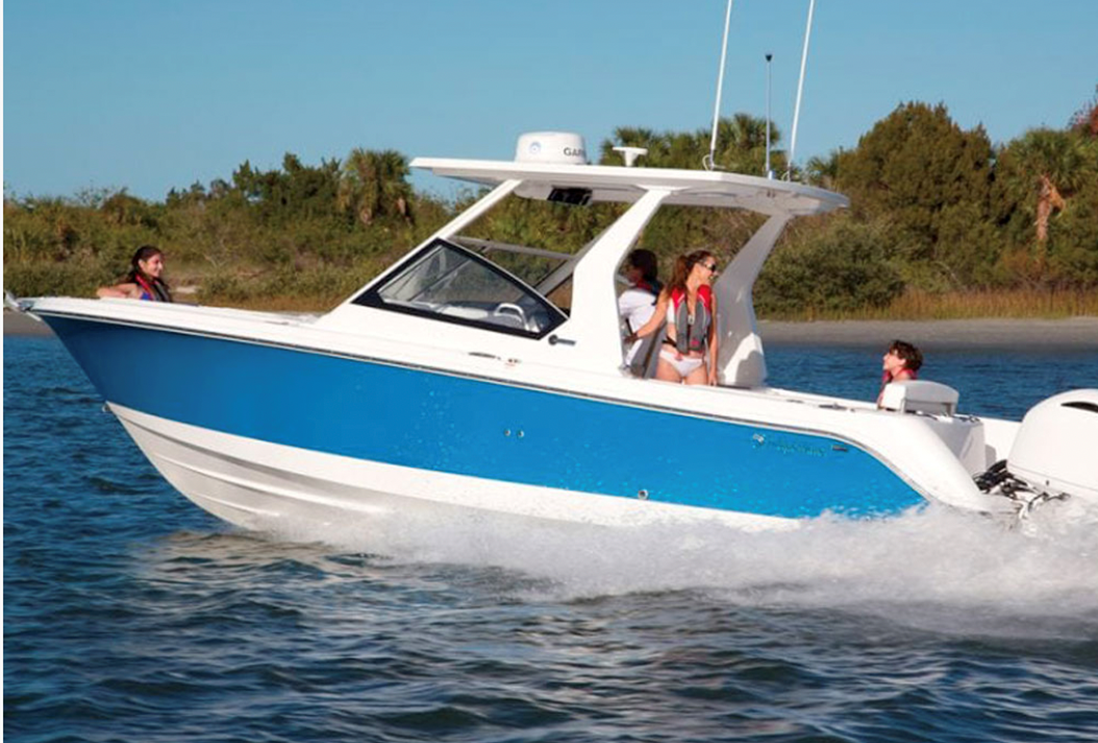
The Edgewater 262 CX is one of the best-built dual consoles in class and new boats are available at remarkably low prices. Get plugged in here.
A number of boat brands over 45 feet are currently ripe for picking up at unheard of discounts. Gold-plated brands, however, are another story and booked out into the future due to limited building capacity.
But most brands that build smaller boats have excess inventory that the dealers, builders, and loan institutions would all like to be sold.
How to Buy a Boat in These Times
Buying a boat is a little like buying stocks: Buy low in a reputable company, then hold on to it through the ups and downs of the market. It's the best way to capitalize on blue-chip stocks, and the same is true with boats.
The first trick is to select the right boat, the right brand, model and power for your needs. And just as it is with stocks, a boat that doesn’t have what it takes for the long haul will leave you dumping it at a loss.
In normal times, if you discover your boat is the wrong one and decide to sell it, not only is this your first loss, the next boat you buy has depreciated 30% as soon as you drive it away from the dock. But these times aren’t normal. If you’ve made a mistake, you can now correct that by buying the right boat at dealer cost in many cases.
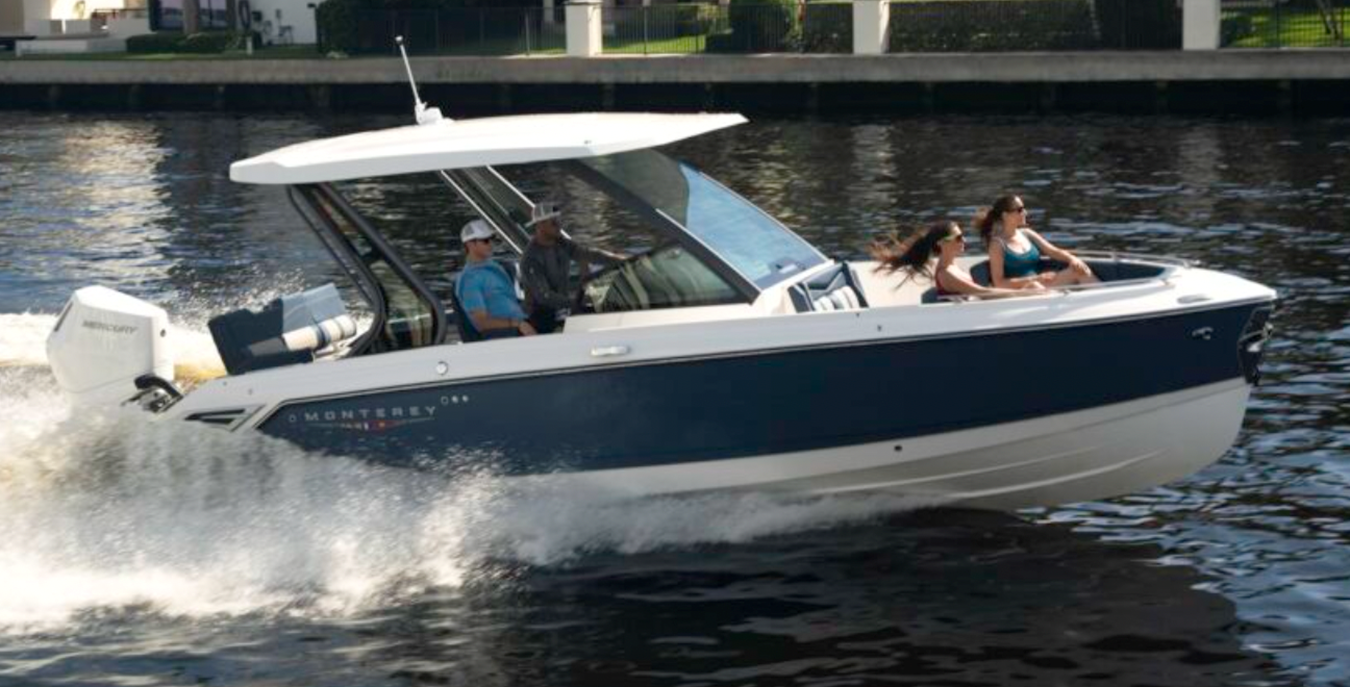
The Monterey Elite 27 is a center console bowrider dayboat with a single engine at a remarkably low price. Check it out here.
We Are in Different Times
The last four months in the stock market have been scarier than the Top Thrill 2 rollercoaster at the Cedar Point, Ohio amusement park. Just look at the chart below, a snapshot of the S&P 500 for the last four months:
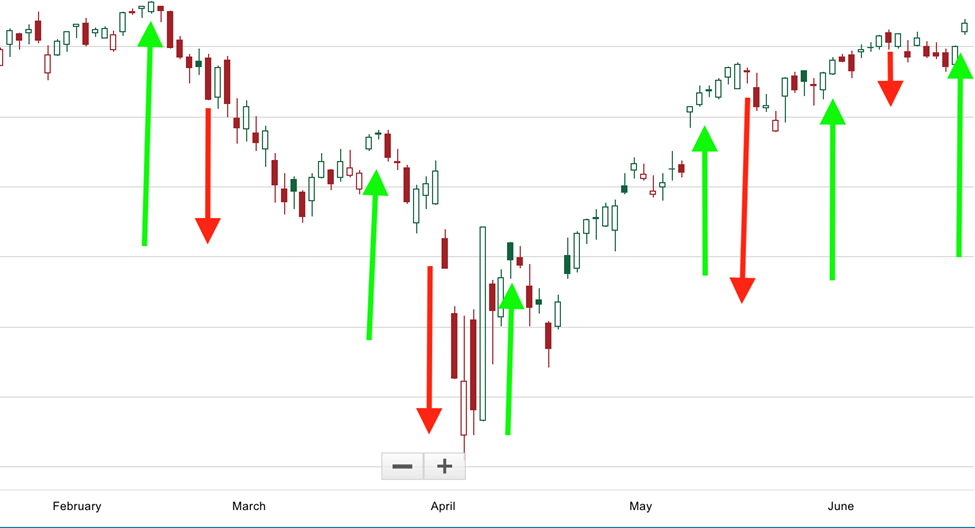
At the bottom of the market on April 3, the day after “Liberation Day,” the S&P 500 was down 19% from its February 19th high. $2.6 trillion of wealth disappeared - as if by magic - from stock portfolios, IRAs, pension funds, mutual funds, and ma and pa’s retirement nest egg.
Little wonder that people aren’t buying boats this spring, as they normally do. The world is full of uncertainty. And it will probably remain uncertain as the commonwealth faces issues such as debt service, Putin’s War, increased tariffs (no matter what they are), as well as inflation, AI, robo-cars loose on the streets, and the rise of China feeling its oats. This is the world we live in.
6 Things You Should Know About Buying
- Excess inventory will be sold off at fire sale prices this summer; the only question is, will you be one of the smart consumers who knows a bargain when it presents itself?
Again, the stock-buying analogy holds true. Many people don’t buy stocks when they're down, because they are afraid they’ll go even lower. The same is true of boat buyers. But folks, in most cases lower prices won’t happen because the bank will take over the asset and sell it for what is owed - the dealer invoice price!
Dealers planning on staying in business are not selling at invoice price, so they're adding a little much needed margin. Let them have it, because you'll be coming back to that dealer later when you need a slip, or want to get something fixed in a hurry.
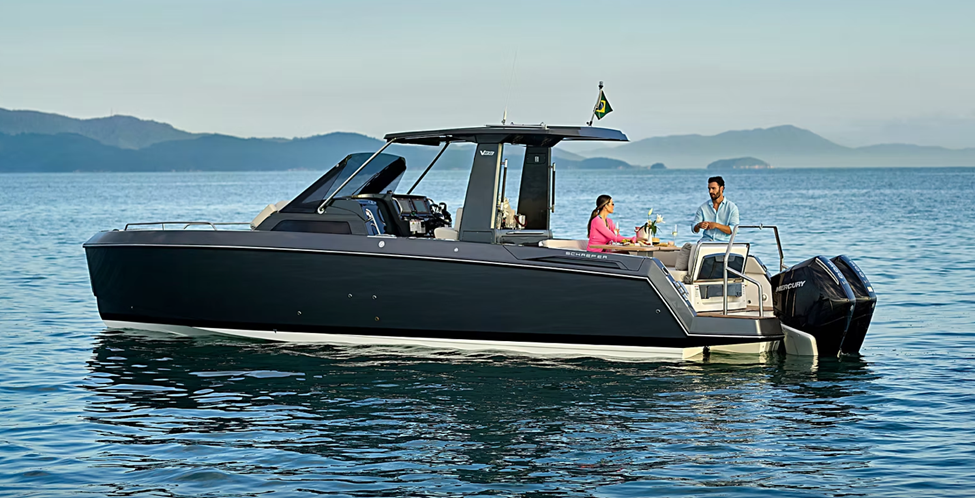
The Schaefer V33 is imported from Brazil by the largest manufacturer of large motoryachts in that country. She is a lot of boat for the money. Get pricing here.
-
Since January the U.S. Dollar has lost 12.6% against the Euro. On Jan. 1, 2025, 1 Euro was the equivalent of $1.03 U.S. By June 25, 2025 1 Euro had risen to $1.16. That means European boats are 12.6% more expensive than they were in January. This is before the new tariffs are finalized, which will jack up prices even more.
-
A weak U.S. dollar is effectively the current government policy. Any effort to bring manufacturing jobs back to America necessitates making U.S. goods and services cheaper, which can only be done by weakening the dollar. According to Reuters, the U.S. dollar has dropped 10% against a basket of currencies. Those waiting for it to get stronger might have a long wait. If you want a boat built offshore, buy it now. If you want an American-built boat, use your weak dollars. But when you find that prices have gone up, just remember it's because many components are imported with a tariff and paid for with weak dollars.
- Tariffs are coming, the only question is how high they will be. For the last few months there has been a reduction in tariff talk, but that’s set to resume in July so don’t be lulled into complacency. Tariffs at some level are a standard matter of government policy. With any luck most will cap at 10%. Even at that rate, boats manufactured in Europe, incurring a 10% tariff and paid for with a weaker dollar, will see a price increase of roughly 20%.
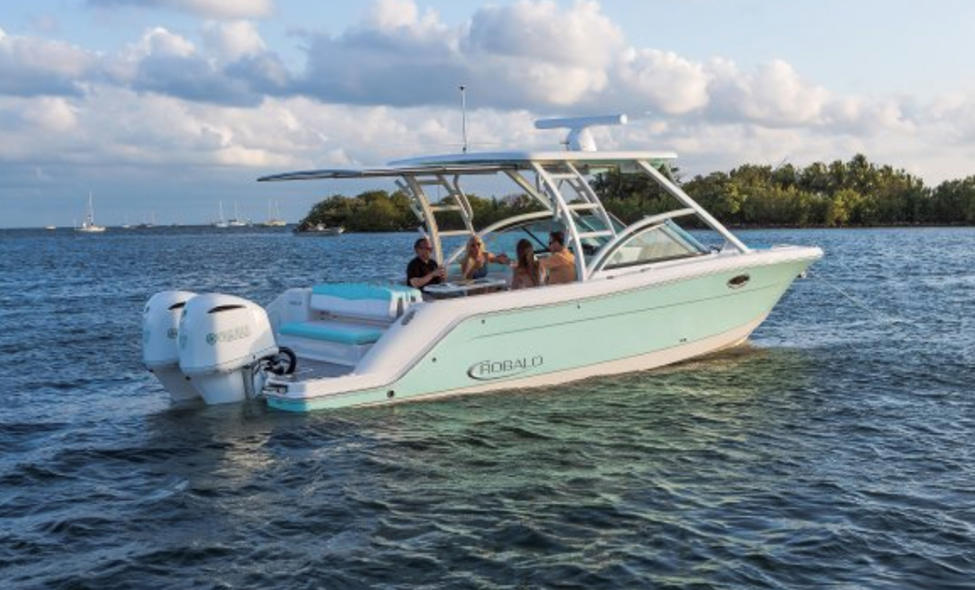
The Robalo R317 is the builder’s largest dual console and because of her beam, is one of the largest boats in class. Find available inventory here.
-
Some Foreign-made boats are still sitting in inventory at the pre-tariff prices and were paid for with strong ($1.03 to 1 Euro) dollars. As new boats begin to hit the shore, some dealers have already raised the prices of their pre-tariff boats to about the same as the freshly imported ones. Buyers can’t move quick enough to pick up the “pre-tariff” boats before they are exhausted. With the mixed signals coming out of Washington, importers of boats built offshore are keeping their cool, biding their time, waiting for news and hopefully positive agreements on tariffs. Most have stopped importing boats unless compelled to do so because of pre-existing contracts. Other offshore builders have put their boats in bonded warehouses, awaiting the tariff shoes to drop.
This summer and fall if you see large boats freshly imported from overseas, chances are they're bonded and can't be sold. Our advice for someone with their heart set on a foreign brand is to pow-wow with your local dealer. Some creative minds are working on this project.
- The prospect of greater inflation is still on the horizon. Recent CPI numbers have been relatively low, but higher tariffs / weakened dollar is a double-whammy that's hard to sweep under the rug. Virtually all American-built boats have complex and important parts made offshore, sourcing from places with the greatest skill and expertise. But these components, tariffed and bought with a weak dollar, increase the price significantly. Right now, weak sales are keeping a lid on prices. Once inventory is in equilibrium, watch for annual or bi-annual price increases.
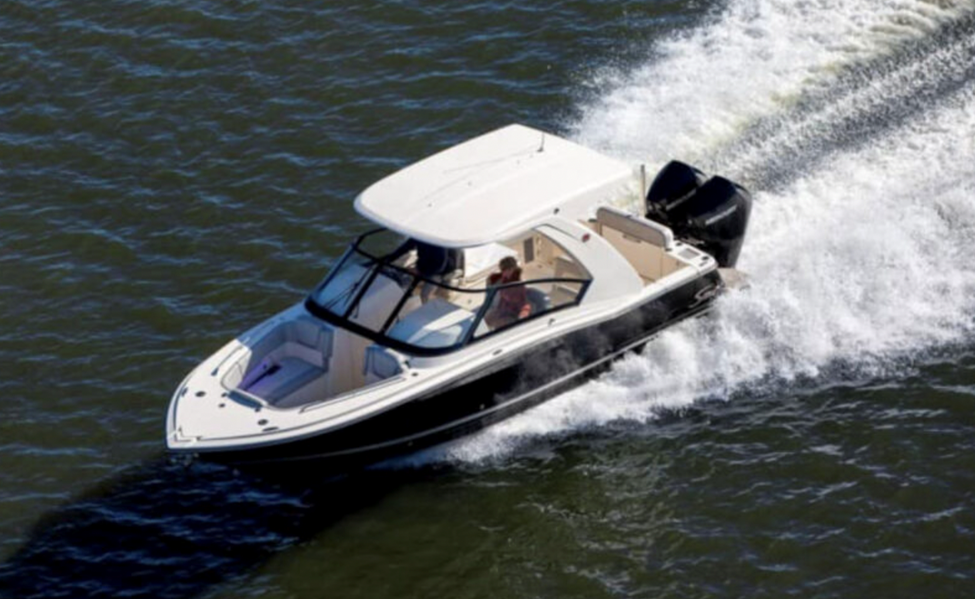
The Scout 277 Dorado is one of our favorite dual consoles and one of the best in class. Find out about availability inventory here.
Observations and The New Paradigm
The aftermath of the 2008-2013 Great Recession is instructive. Inventory was stacked up everywhere for almost all boats, even the largest ones. It slowly sold off as Americans regained their confidence in the economy.
As boats at the pre-tariff prices sell off they will be replaced by boats, both foreign and domestic, that are higher-priced. Further, they will generally come with fewer standard features, and the list of purchasable options will grow. This will lead to people buying smaller, simpler boats. Many consumers buy as much boat as they can afford. That number will be several feet shorter in the future than before. Downsizing actually started about a decade ago, as owners of large sport-fishing convertibles grew discouraged when trolling to hook up with a billfish was sometimes starting to take several days. Plus, the cost and hassle of keeping a full-time captain, the expense of maintaining a large vessel, was simply no longer worth it for a growing number of big game anglers.
The same thing is happening in express cruisers, flybridge cruisers and smaller motoryachts. More and more people are giving up the dream of doing serious cruising, and down-sizing to large dayboats.
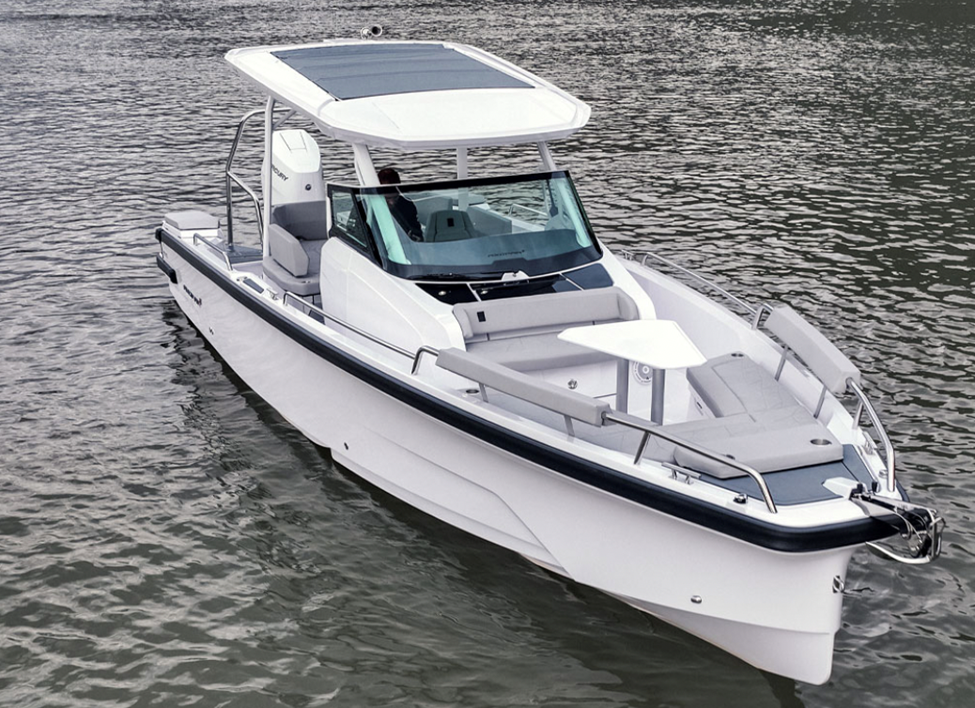
The Axopar 29 Sun Top is the new generation of this much-copied brand. She has a head and a cuddy forward. Find out where the pre-tariff units are here.
Sadly, fewer boats of all types and sizes will be sold in the future. This will continue a 25-year-old trend that has reduced the new boats sold by over half in total, and by far more in certain types and categories. For example, in 2000 over 10,000 new "inboard cruisers" were sold in the U.S. Last year, there were about 1,600, including imported brands that weren't around in 2000. This is bad news for new-boat buyers, but good news for owners of popular used boats.
The New Boating Paradigm: Boats will have longer 1st-owner hold times. Longer lives overall. Slower depreciation. For the last 30 years or so, the average boat owner bought a new boat every 4-5 years. The market has changed, and except for the 2-3% few at the top of the income pyramid, those days are gone. If people can’t afford new boats they’ll search for used. In this market, there’s something for everyone.
These are just a few aspects of the new Boating Paradigm. Stay-tuned to find out about more.