No Room at the Marina: The Global Race for Berths
By Tony Esposito
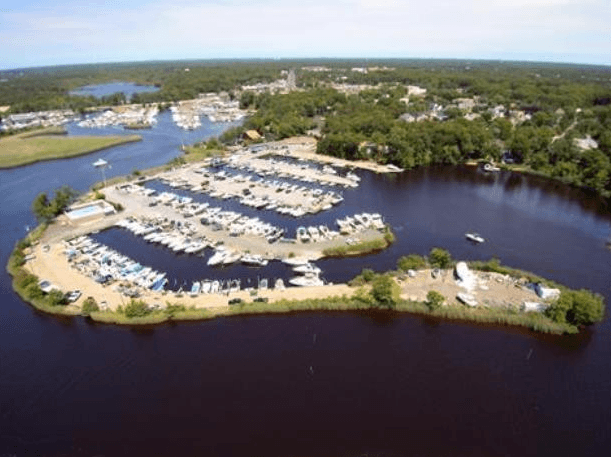
Tony Esposito examines the growing shortage of marina berths worldwide, the investment reshaping the sector, and why expanding capacity is proving increasingly difficult.
With approximately 30,000 marinas dotting the globe, it’s hard to believe that the recreational marine industry is facing a slip shortage; one driven by a larger boating fleet made up of increasingly larger vessels. And while many marinas move to accommodate the growing superyacht market, it creates a dearth of space for smaller boats. Boat owners have reported shortages from Florida to New Zealand and prices for berths are surging to new highs across the Mediterranean and elsewhere.
Slips in marinas are so difficult to find, according to a University of Florida (UF) Warrington College of Business study, that boat and yacht brokers advise clients not to buy a vessel until they have first found somewhere to store it.
With waterfront property a finite commodity, and strict coastal permitting regulations, building new marinas or expanding existing ones can be incredibly difficult, requiring an investment of both money and time, and proving out the adage that it is easier to buy than to build. And buying in the US became easier in 2018 when the Internal Revenue Service (IRS) ruled that rents from floating docks qualify as real estate income for REIT purposes. A REIT (Real Estate Investment Trust) is a company that owns, operates, or finances income-producing real estate.
Dallas, Texas, US-based Suntex Marina Investors became the marine industry’s first REIT. “We’re just the latest roll-up strategy in the real estate business that no one has been able to do before,” said Bryan Redmond, CEO, in the study.
Since then, two other publicly traded REITs have joined the fray, among them Sun Communities, which spent more than US$3 billion to buy more than 100 marinas, including market leader Safe Harbor Marinas, in 2020. Last year, Blackstone Infrastructure
purchased the Safe Harbor assets from Michigan, US-based Sun Communities in a US$5.6bn deal.
“I think there are, depending how you define them, 35–40 groups actively trying to acquire marinas. Probably five years ago there were less than 10,” the study quoted Matt Putnam, senior vice president for Collier’s International Leisure Property Advisors in Tampa, Florida. “There’s a lot more money chasing good-quality deals.”
Suntex Marinas
Florida boasts 8,436 miles of shoreline and has the nation’s highest number of documented boats. In 2024, the state led the nation with 1.2 million boat registrations, representing 10% of total US registrations, according to the National Marine Manufacturers Association (NMMA). And yet, according to the UF study, counterintuitively, the count of marinas in Florida dropped 6.5% from 2018 to 2023. In prime South Florida boating markets such as Fort Lauderdale, “there’s seven boats for every slip,” claimed Phil Purcell, director of the trade group Marine Industries Association of South Florida.
Some of that drop can be attributed to 2022’s Hurricane Ian, which heavily damaged marinas on Florida’s south-west coast, many of which are still not fully operational.
“Part of the problem is the easy sites are done,” said Hans Wilson, an environmental consultant and marine engineer who has worked in the business for 40 years. “We’re left with sites that are not optimum for marina development. So, it becomes a great challenge to get those marinas constructed.”
Marinas globally are struggling to keep up with demand as the number of yachts grows along with a change in boating habits. On Mexico’s Bahía de Banderas, Puerto Vallarta and other local marinas are approaching capacity as yacht owners use the bay for extended stays, from stopovers along Mexico’s Pacific coast, to basing or storing boats there. The bay’s five-marina circuit is often counted as about 1,350 slips.
According to Marina Projects, a UK consultancy firm, the world’s fleet of superyachts exploded 25% in the last five years, about 4,600 in total, but environmental regulations and the high costs of starting new marinas big enough to handle superyachts are deterring developers from adding more berths in places where they’re needed most, according to Dennison Yachts.
Few places may be suffering from an obvious lack of berthing as much as Hong Kong (HK), where its eight marinas are filled to capacity. Between 2007 and 2011, the number of yachts in HK jumped 40% to 675, according to the country’s Marine Department (HKMD). And while destinations like Croatia, Greece, North Africa, the Red Sea, the Indian Ocean, and the Nordics are all making major investments to capture some of the overflow, Hong Kong’s last major marina opening, the Gold Coast, was in 1993. Local officials aren’t eager to add more berths when there are so many other competing uses – many far more lucrative – for the city’s limited waterfront property.
The government has written it off as a “rich man’s issue,” Leo Wong, a local boat dealer, told the Wall Street Journal. “They don’t want to be seen as helping the wealthy.”
Marina Projects estimates the number of Mediterranean superyacht berths at some 3,000, and the demand is driving up prices. A berth for a 200ft yacht in southern France now costs the equivalent of about US$2,600 a day, or US$78,100 a month. Local real estate agents are offering up to 16-year leases of prized docking space for as much as US$6 million, according to reports by Lloyd’s Register. Rather than renting month to month, boat owners and syndicates are increasingly investing in berth ownership or long-term subletting to guarantee a spot.
With a 78% increase in the number of US millionaires over the past decade, it is conceivable that the growing pains marinas around the world are experiencing won’t go away any time soon, meaning a likely increase in the number of marinas that are pivoting to high-capacity dry stack storage for mid-sized and smaller boats under 50ft.
The dry stack solution, though, faces similar coastal permitting requirements, in addition to building codes, height restrictions and the inevitable opposition from local neighbors.