NTSB Report: Superyacht Lovebug’s Door Was Left Open Prior to Capsizing
By Meg Walburn Viviano
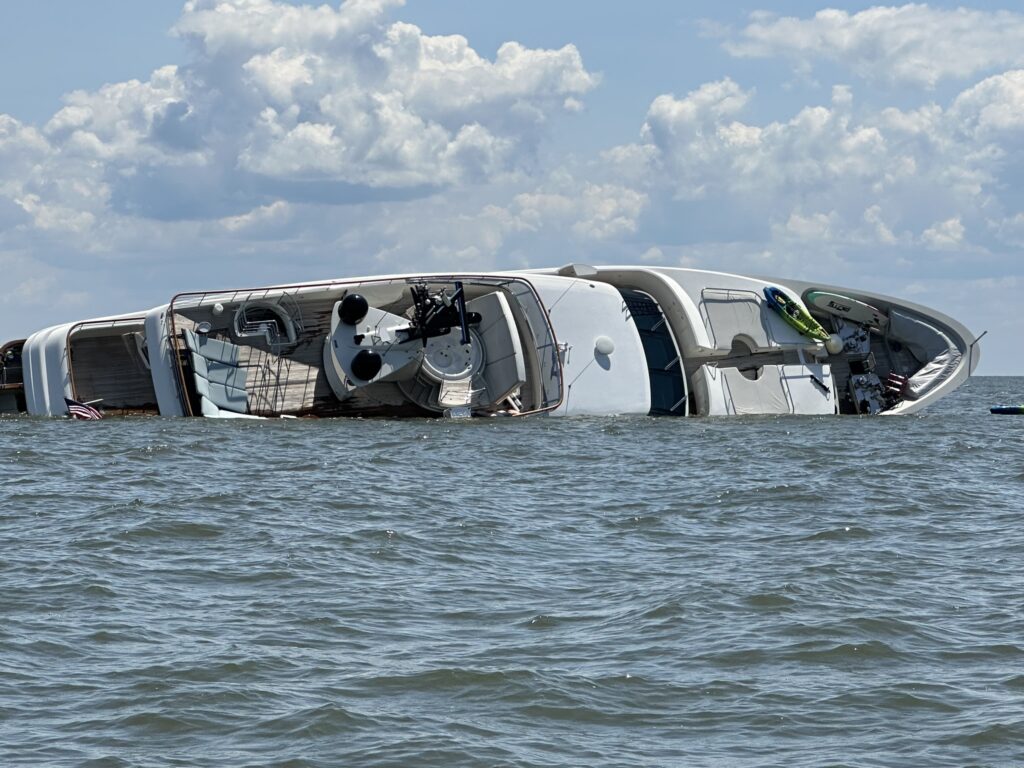
Anyone who was out in the middle Chesapeake Bay on July 27, 2024, remembers the shocking sight: a high-end private yacht, grounded and listing dangerously where the West River meets the open Bay.
The 122-foot-long yacht Lovebug was virtually laying on its side in 12 feet of water as four crew members (captain, deckhand, chef, and steward) and one of the yacht’s owners were rescued from the water by TowBoatUS Annapolis captain.
Fortunately, no one was hurt aside from one minor injury, but the large boat remained in place for 16 days and significant damage was done. The salvage was challenging because of the mud the Lovebug rested in, and further complicated by Tropical Storm Debby.
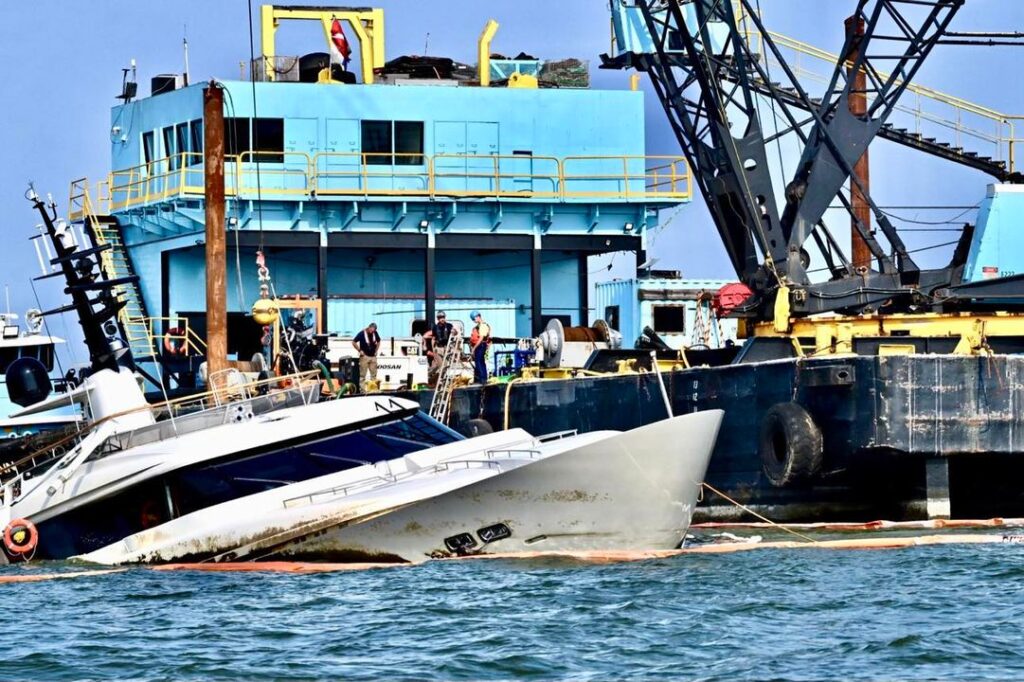
More than a year after the incident, the National Transportation Safety Board (NTSB) has released its final report on what caused the wreck. The report comes in the same week that the repaired Lovebug left a New Jersey shipyard, destined for a new owner overseas.
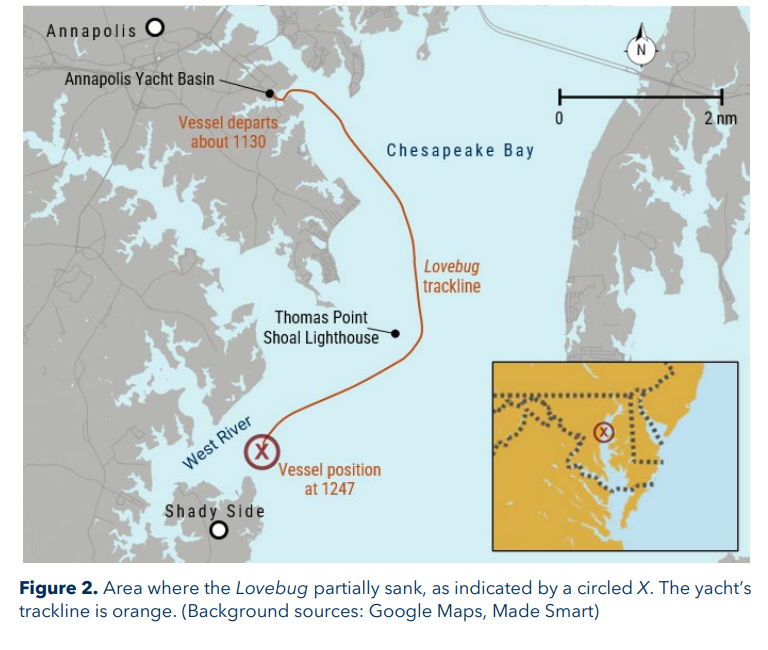
The NTSB report describes that the yacht left Annapolis Harbor around 11:30 a.m. on July 27, bound for Shady Side, a frequent destination for its owners and crew. As it passed Thomas Point Shoal Lighthouse going about 7-10 knots, the captain made rounds and found nothing amiss.
But by 12:35 p.m., when the yacht approached West River Entrance Light 2, the captain noticed a starboard list. He checked the steering, rudder indicators, and stabilizers on the bridge but didn’t find a problem. The list quickly increased, the captain told the NTSB, and the Lovebug lost power. The speed dropped to about 4 knots and the captain ordered the deckhand to get ready to lower the anchor. Before the anchor could be dropped, however, the list had become so extreme that the captain ordered everyone to abandon the vessel. The deckhand, chef, steward, and yacht owner jumped into the water and the captain made a distress call on VHF channel 16 before jumping into the water himself.
The NTSB says from the time the Lovebug started listing to the time the crew jumped in the water, only four minutes elapsed. It came to rest with a list of about 45–50° and was grounded in the mud.
There was a lot of speculation about what caused the yacht to partially capsize. The NTSB report finds that the Lovebug was taking on water because of a door to the engine compartment being left open. In short, the NTSB says, “We determined that the probable cause of the listing and partial sinking of the yacht Lovebug was undetected flooding through an open watertight door, resulting in the vessel losing stability.”
What was this all-important watertight door that was left open? It was between the “toy garage” (which housed personal watercraft) and the engine room compartment. An external garage door that allowed watercraft to be launched and retrieved was also partially open. Salvage divers discovered both doors open during diving operations as they attempted to recover the yacht. But the captain told investigators that he visually observed the external garage door was closed before the yacht got underway.
When the yacht was salvaged and brought into drydock in New Jersey, investigators found no sign of a hull breach or other place where water could have come in. The NTSB analysis reads, “Because the door’s lower edge was situated at the waterline and no other potential source of water ingress was identified, it is likely that water entered the yacht via the partially open garage door.”
The report concludes that if the water level in the garage reached the open engine compartment door, Bay water would have flooded into the engine room. This minor flooding could have caused a reduction of initial stability that could have gone unnoticed at first. Ultimately, though, the yacht would have become unstable, meaning that it was unable to return to an upright position when it heeled over from wind, small waves, or making a turn. This resulted in a sudden large list and further flooding, which led to the Lovebug‘s demise. To read the report’s full explanation, click here.
The incident caused an estimated $8 million in damage. An oil sheen around the superyacht was contained with a boom, and there was not determined to be any significant environmental impact.
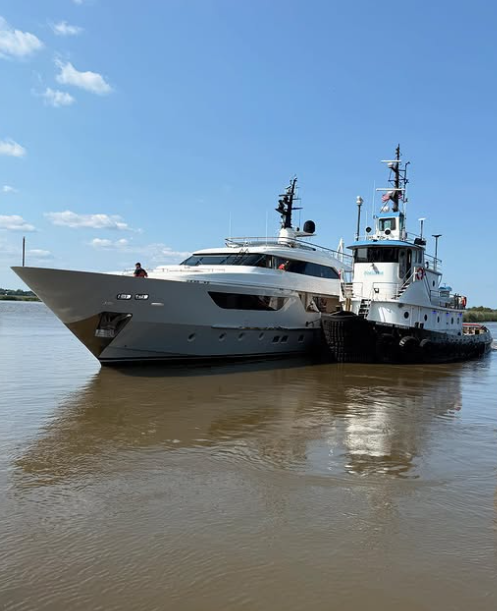
Yank Marine in Dorchester, New Jersey, where the Lovebug has spent near a year under repair, just left the boatyard this week and then arrived safely to Wilmington Delaware with help from North Star Marine. Yank says the yacht was sold and will be going to a new owner in Turkey.