Plans for Hybrid Offshore Energy Parks Advance
Renewables innovators Mocean Energy and Solar Duck have signed an agreement to jointly develop a new generation of floating hybrid power stations.
The ocean has long been seen as a source of renewable energy by harnessing offshore wind, but now two companies want to add solar and wave energy into the mix in dedicated floating energy parks. The idea is that all these renewable sources will supplement each other in one location and help fill any gaps in the grid supply.
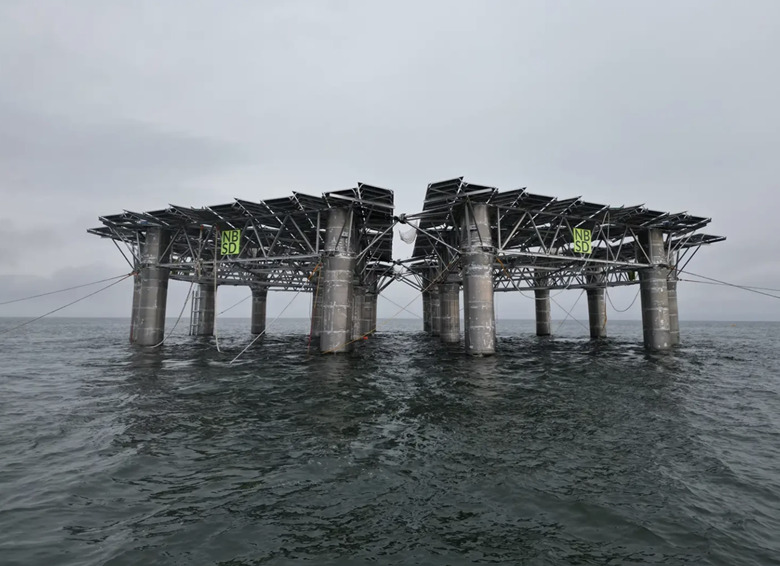
A grey, windless day may still be subject to wave action ‘scend’ from a gale elsewhere, for example, or if there is no wind and a calm sea, the sun could still be beating down. Meanwhile, the park could hook all the various generating hardware into one subsea cable system or energy storage unit, greatly reducing overall infrastructure costs.
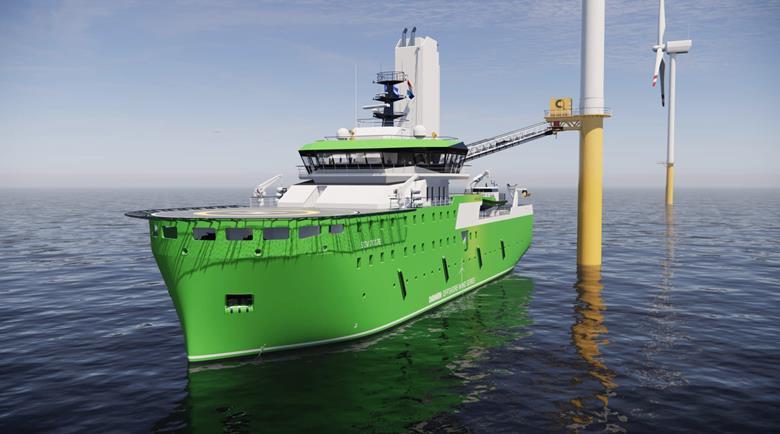
For the seafarer, however, it means more offshore installations appearing along their cruising routes, with possibly less opportunities to anchor for fear of snagging subsea cables or hardware. On the plus side, though, electric cruisers could get the chance to fast charge from a special umbilical from an energy park whilst en route. This system has already been trialed for Service Operation vessels (SOVs) which are running hybrid propulsion systems.
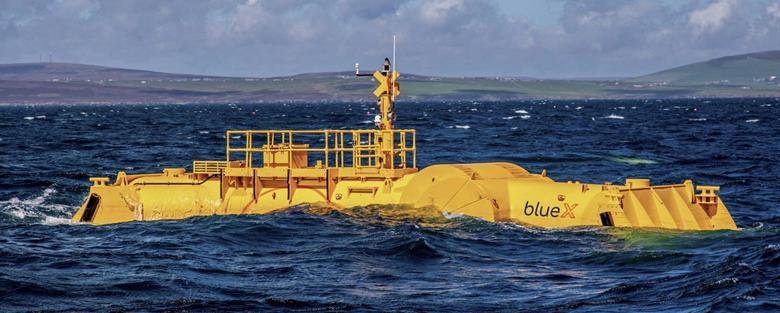
The two companies involved are Scotland-based Mocean Energy and the Netherlands-based Solar Duck, the latter founded in 2019 as a spin out from Damen Shipyards.
Mocean Energy is a specialist in grid connected floating wave energy generators, whilst Solar Duck develops modular floating solar farms. Both companies have pilot projects operating successfully in the North Sea, with more planned elsewhere. Ian Crossland, the Commercial Director of Mocean Energy, says that the UK is a global leader in offshore wind and has a unique opportunity to revolutionize its renewable energy strategy.
“More than 12GW of tidal stream and wave energy capacity is forecast to the installed in the UK by 2050, a figure that equates to roughly 10% of offshore wind capacity,” he writes in his blog. “Hybrid offshore parks present a solution by integrating complementary technologies like wave power, floating solar, and subsea energy storage alongside offshore wind. A recent study found that combining wind and wave energy could reduce the cost of wind power by 17% by ensuring more consistent grid utilisation. Wave energy, though still in its relatively early stages, has the potential to complement wind by generating power during low-wind periods, reducing energy balancing costs by an estimated £1 billion ($1.26 billion) a year.”
Crossland feels that now is the time for decisive government and sectoral action to ensure the investment climate remains active.
“Scaling up deployment would drive costs down, just as we have seen with solar and wind over past decades,” he explained. “By 2050, if all projected deployments come to fruition, including domestic manufacturing capabilities, the sector could generate up to £8.8 billion ($11 billion) in Gross Value Added (GVA), with a further £32 billion ($40.4 billion) from exports.”
So, if you see a long yellow structure low in the water, or a flat bed oil-rig type platform with no apparent upperworks, these are prototypes for a new generation of offshore energy park. More designs will follow.