Ports of Call
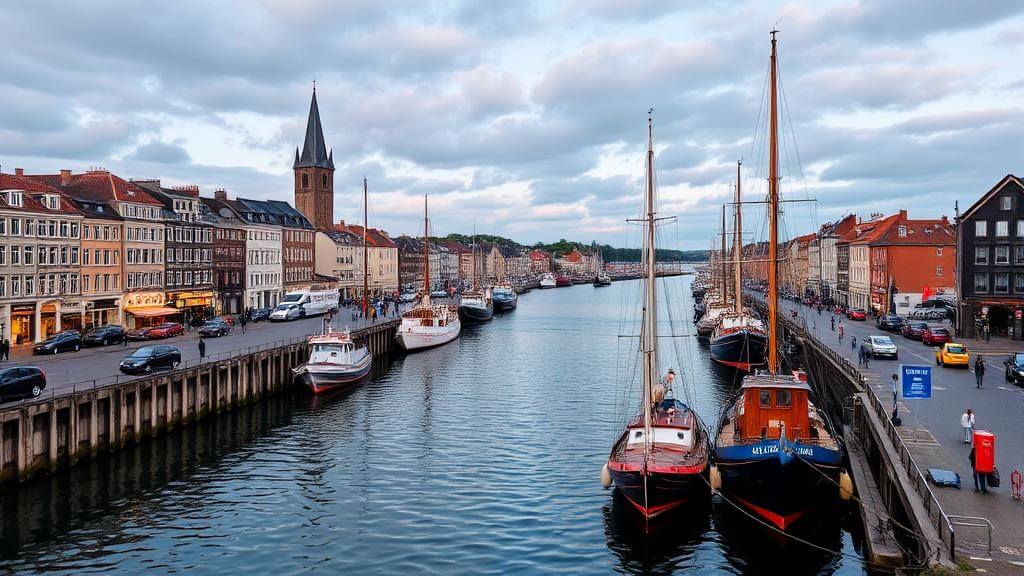
Nice Is Nice but Saint-Mandrier-Sur-Mer Is Better
This is the first of an infrequent series about major yachting ports throughout the world. These articles will tell you the “real stuff” unlike travel or waterway guides, which give you the “real fluff.”
Ah… Nice. The Côte D’Azur. The picturesque settings, the exquisite food, the lovely women, the great boats and the BLATANT ARROGANCE! Business has taken me to France a number of times and, after visits to Nice, right or wrong, my wife and I came away with the above impression. Built along a crescent beachfront, Nice is a beautiful city, the layout being very similar to Copacabana beach in Rio (less the begging kids, the poison sand, the maniacal drivers and the street crime). Nice can be considered a disinfected Rio. If the setting gives you warm feelings, however, the residents might as well be from Antarctica.
American Luddites?
When traveling between Italy and Southeast France, one can’t help get the feeling that the Italians genuinely like Americans but the French think we are Luddites and have never really forgiven us for liberating them from the Nazis. Not very logical, eh? But, then again, nobody ever said that the French were logical. Just consider the way they count for Pete’s sake. The French have expressions or words for every number from 1 to 69. But after “69” you are on you own (why they picked “69,” as the cut off number is unknown and get your mind out of the gutter). Therefore, “seventy” becomes “sixty plus ten” and “1999” becomes “1900 plus 4 times 20 plus 19.” Now that makes a hell lot of sense doesn’t it? This is no joke, folks. Why not simply invent words for every number up to 100? No wonder the French government is so screwed up trying to run an economy with this kind of numeric system.
Anyway, here we have the people of Nice, whose city’s major revenue must be from tourists, doing everything they can to make Americans feel unwelcomed. Example: we stopped for a nice lunch at a major restaurant. The menu was in French only and the waitress didn’t (or wouldn’t) speak English. When we asked for an English-speaking waitress she pretend she didn’t understand. We bailed and settled for what I call a “French Franc” – a long wiener on a baguette roll at a roadside stand where they did speak some English. People were similarly mute in stores and taxis. One gets the distinct impression that most people do speak at least some English but just damn well don’t want to.
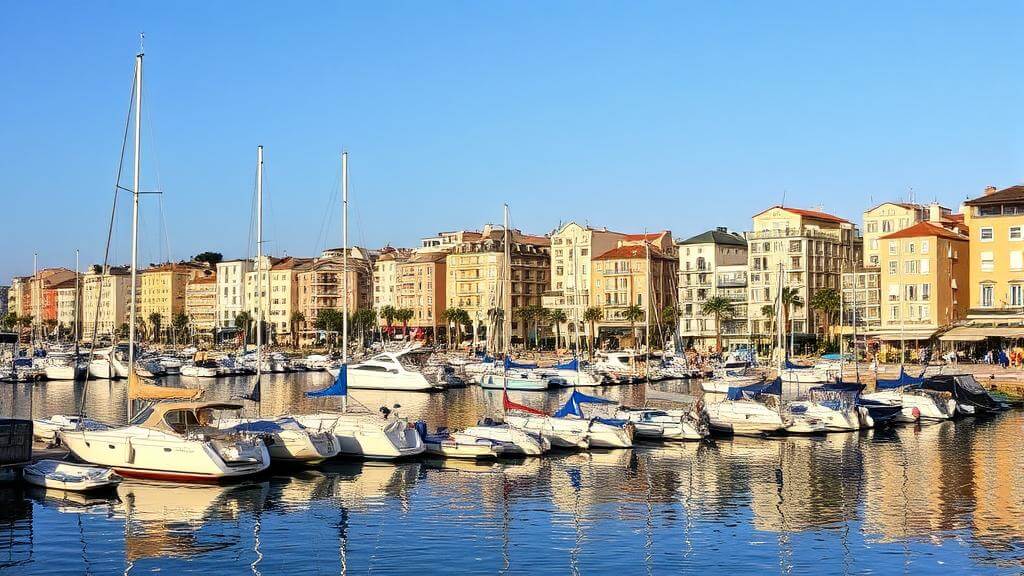
Skip the Old French Dirt
Most of our trips involve business. But once the business is concluded, where do you think my wife and I head? To the museums? Visit old ruins? Hell no! Who wants to ogle old French dirt? When business was concluded, we headed directly for the boatyards and marinas of Antibes, a short way up to coast. Looking for a cab, we let the numerous miniature Fiats and Citroens and Lancias pass. We flagged down a black Mercedes owned by the driver who was a character out of Hollywood. As we cruised along the Côte D’Azur, we started talking. Here was one Frenchman who enjoyed speaking English! This man, whose name was Maurice, had a French accent so thick that it made Maurice Chevalier sound like he came from Brooklyn! After the usual questions about where we were from, what I did, etc., etc., we got down to the real stuff. Maurice was comfortably in his 60’s and our discussions covered the following:
- The Economic Community in Europe – “Monsieur”, he growled, “The new generation forgets – Germany will be the king of Europe again. Very, very dangerous.”
- World War II – Maurice was just out of school when the Germans invaded the South of France. He took to the mountains to avoid being taken prisoner by the Nazis and sent to factories in Germany. He lived in the woods for three years. He remembers when the Allied forces invaded Southern France. “A glorious day – they landed by sea and dropped parachutes all over the area.”, he said. “We invited thirty Americans soldiers into our home. They stayed for days and were very nice people.” Chalk up one Frenchman in Nice who did not hate Americans.
- Topless Beaches – Maurice asked if we would like him to take us to a topless beach in Saint Tropez. He said that, often, he took the same people there two or three times during their visit to Nice. Being a student of French beach culture, I asked: “What for? You have topless beaches here also.” “Oui, Monsieur,” he said, “but Saint Tropez is topless and bottomless.” Apparently, tourists visit Saint Tropez and take advantage of a massive peeping Tom infrastructure there. You can rent boats that run along the beach or charter a helicopter for views from the air. High-powered binoculars are supplied by the management.
- Cars – Although he obviously hated the Germans, he had to admit that they made fine cars and he felt that Mercedes was the best. He called Citroens “funny French cars” (you’ve got to love this guy).
Towards the end of the trip, he looked back to my wife and commented, “the Madam does not talk very much.” When I mentioned that Regina was from Brazil, he muttered something under his breath like “so that explains it.” The conclusion being that American women have big mouths.
Floating Museum
We got out at the Walled Marina in Antibes (pay attention here, because this is the part about boats). It was an eye-opening experience. Here we saw megayachts, megamegayachts and some really, really big boats lined up cheek by jowl like so many Hatteri at Bahia Mar. If you like European boats, this is the place to visit. Docked at the marina behind the fort must have been 1,000 vessels (mostly power and mostly Italian). This marina was like a floating museum displaying the genealogy of Italian styling from the 50’s to the present. There it all was for the entire world to see: every iteration of convoluted window, funny radar arch, weird sheerline and exaggerated exhaust blister ever conceived since the dawn of Italian powerboating.
Fifties Italian boats were mostly knock offs of American Chris-Crafts. In the sixties Italians started going their own way and some truly lovely, distinctive wooden vessels were built. Baglietto built some great boats in the 60’s and there were quite a few restored (or maintained) to perfection at the marina. In the 70’s Italian boat designers went the way of the drug culture that existed at that time. I must say, there were some truly horrendously styled 70’s Italian boats that must have been designed and built by people in an altered state. Italian yacht styling has come a long way and, while many modern Italian boats are styled with a heavy hand, some truly inspirational creations exist. When visiting this area, my advice is to skip the museums and ruins and hit the marina in Antibes.
Yes, the boats make Nice worth the arrogance. I must say, however, that moving west – away from the tourist infected areas – there are places like the lovely village of Saint-Mandrier-Sur-Mer near Toulon. The general feeling here was entirely different. Although the town was much smaller than Nice, almost everybody spoke English and the people were sweet and helpful. Maybe there is hope after all for the French Empire. Who knows, once they get their archaic numbering system straightened out, maybe, over time, they can join the rest of the world instead of fighting it. Just don’t count on this happening anytime in 1900 plus 4 times 20 plus 19.
(Reprinted with permission of Regina Fexas.)
If you would like to read more of Tom's pearls of wisdom, tune in next Friday -- "Fexas Friday."
Better yet, why not get a full dose of infectious Fexas whenever you need it -- and buy one of the volumes below. Better yet, why not buy all of them -- we call them the "Fexas Five." They will provide many evenings of fun reading (better than Netflix), and you'll make the widow Regina very happy knowing that Tom will live on with you the way most of us remember him.
Order 1, 2 or "The Fexas Five" --
To find the "Fexas Five" on Amazon, click here...
Tom Fexas (1941-2006) was one of the most influential yacht designers of the last quarter of the 20th century. With the narrow Wall Street commuters that were built in the 1920s and '30s always on the back of his mind, he wanted to design boats that were at once fast, comfortable, seaworthy and economical to operate. Over the years, he and his firm designed over 1,000 yachts for some of the most prestigious boat builders in the world, including Choey Lee, Palmer Johnson, Grand Banks, Mikelson Yachts, Burger, Abeking & Rasmussen and many others.
Even though toward the end of his career he only designed megayachts and superyachts, including the remarkably influential PJ "Time" in 1987, he is best remembered for his first major vessel in 1978 -- Midnight Lace -- which became a series of 44-52-footers. They were light, narrow, and fast with relatively small engines. He was also influential in the boating community because of the monthly column he wrote for Power and Motoryacht, which began in its very first issue in January 1985.