Predicting Vessel Motion Up to 2 Minutes Ahead
By Jake Kavanagh
Commercially available technology that uses predictive AI could have a role in advancing the responses of yacht positioning and stabilizer systems.
Exhibiting at this year’s Ocean Business was Miros AS, a company that specializes in advanced sensor systems that predict the height of waves and how they can impact on a specific vessel. The data is collected via radar and then AI is used to detect wave patterns up to 2 minutes before they hit. Whilst currently being used to help shipping and the offshore energy sector operate safely in a variety of conditions, there are possible future applications for the leisure sector. These would include enhancing dynamic positioning, improving the reaction time of stabilizers, and making the launching of tenders by crane a lot safer. These on-board systems can become more proactive as different wave shapes approach, rather than just reacting once movement has begun.
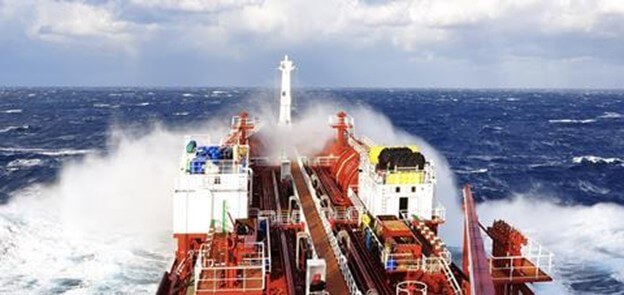
Key to the predictive system is a downward facing radar beam, which accurately detects wave height by comparing it against the depth of the seabed. The frequency and height of the waves is monitored between each peak and trough, and the AI calculates what is likely to happen in the next few moments. In some ways, this is what experienced seafarers already due thanks to their experience. They can spot rougue waves, or squalls, as they approach, and handle the vessel accordingly. However, when vessels are operating in close proximity to structures at night or in fog, this advanced warning could prove invaluable.
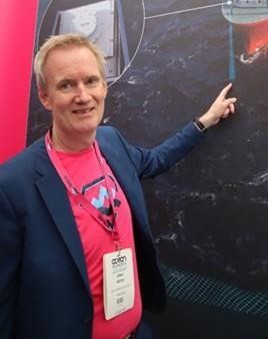
“We can predict the type of incoming waves, and also predict how the vessel will respond to them,” explained Chief Commercial Officer Jonas Røstad. “We can predict movement up to 2 minutes in advance. We do this with an X band radar on the vessel, that sees the approaching waves and anticipates their height, direction, frequency and speed. Then we have a really accurate downward looking radar that can verify that prediction.
In addition, we have a machine learning algorithm that has been trained on over 30 years of data. This learns how the interaction between waves and the ship the system has been installed on translates into motion. Whilst many ships have had their reactions to a seaway calibrated by designers and test models, once in operation, these parameters can change more than you think. A major refit, for example, can make substantial changes to a ship’s seakeeping.”
Røstad said that it is important that a ship should be measured in the way it responds to various sea states, rather than how the designers and simulations suggest it should. On a human scale, the predictions can help a captain make some informed decisions. But as full automation approaches, they could greatly help automatic appendages on board that need to quickly counter any movement by knowing what is coming.