RAD Electric Outboards Power 104’ African Luxury Houseboat
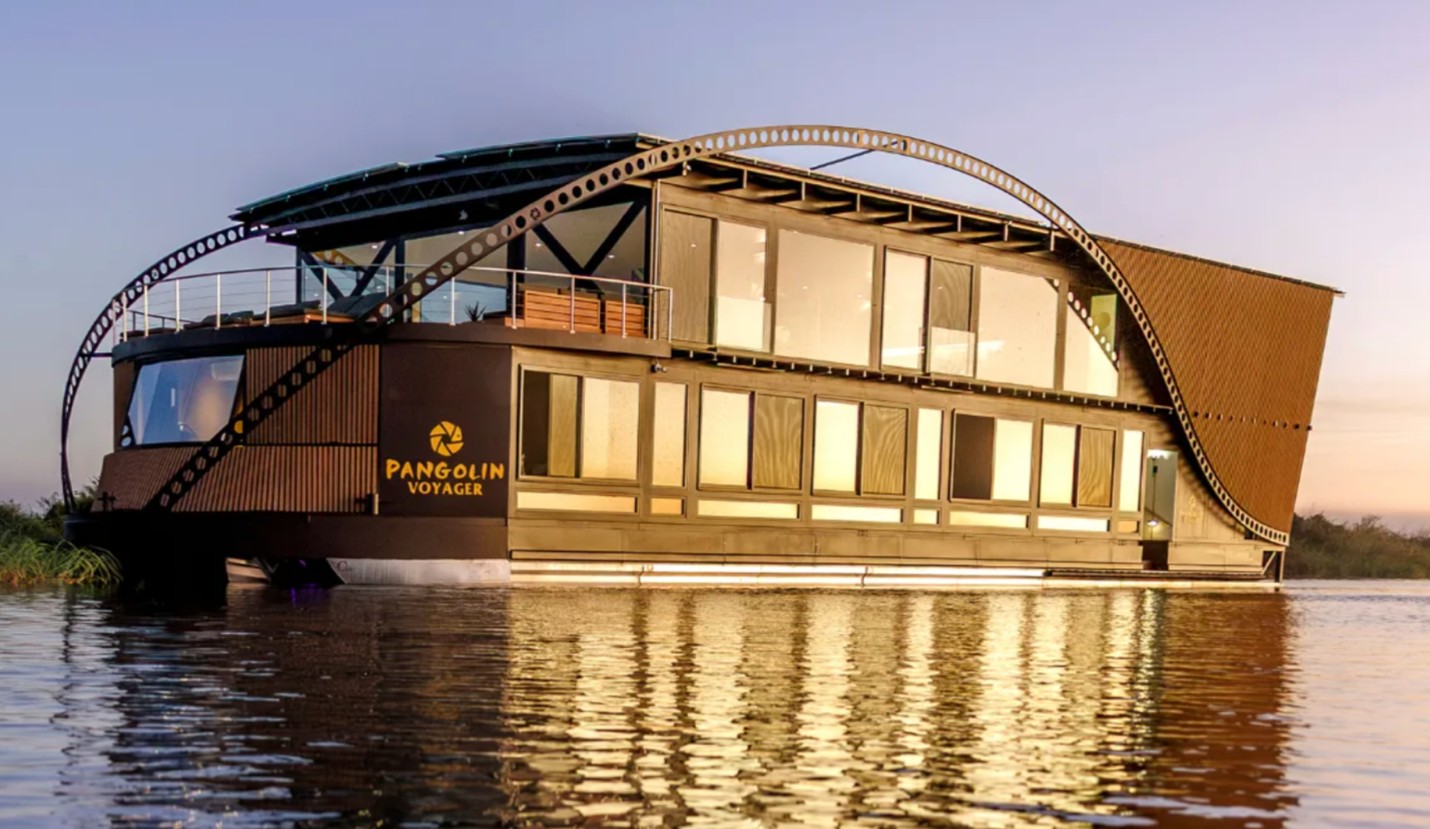
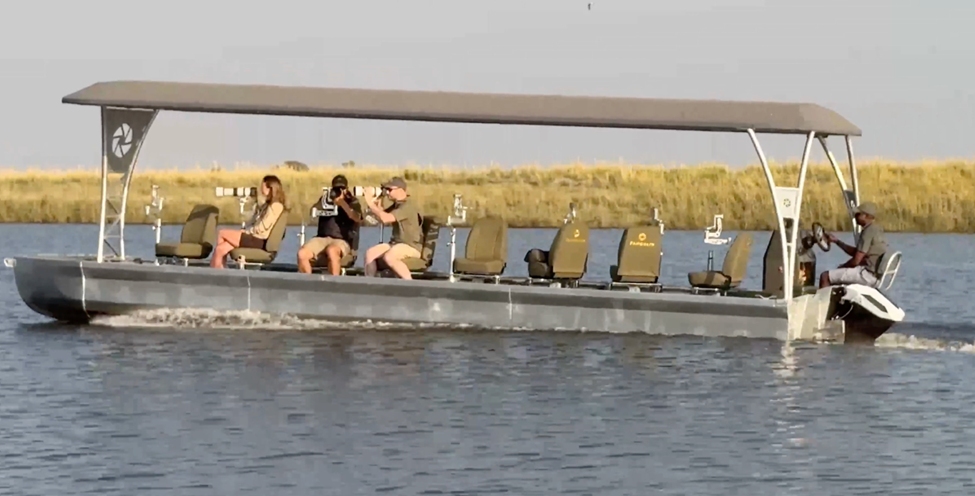
The Pangolin Voyager is a luxury tri-toon houseboat operating on the Chobe River that separates Namibia and Botswana. She is 104’ long, 32’ wide, weighs over 60 tons, and she’s one of the largest solar-powered houseboats in the world -- and she’s the only houseboat in the world propelled by four 40 kW RAD electric outboard motors. She is the mothership for a 30’ 8-passenger specially designed and built photo boat, powered by a single RAD 40 kW electric outboard motor.
The Pangolin Voyager is owned by Pangolin Photo Safaris, which has been in business since 2015, and is arguably the premier African outfitter for truly world-class wildlife photography. She plies the 83-mile long Chobe River, which joins the Zambezi River before flowing over the mile-wide Victoria Falls.
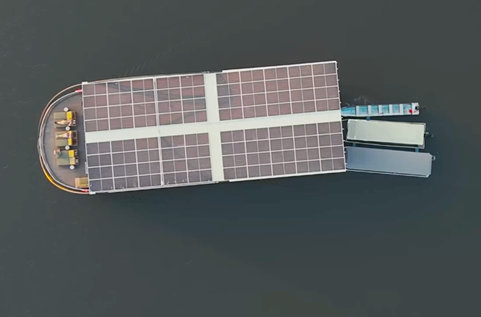
The energy for the motors comes from 80 solar panels -- adding up to 2,152 square feet -- that produce from 20 to 30 kilowatts per hour, depending on the time of year, time of day, and other conditions.
Pangolin Photo Safaris
All of this was created by the company’s co-owner, Guts Swanepoel, an internationally known photographer and his business partner, Toby Jermyn, a London businessman, the two have built what is arguably the best photographic safari business in Africa.
Given how close photographers can get to the animals, it is little wonder that the Pangolin Chobe Hotel and Photo Safaris have won several international travel awards.
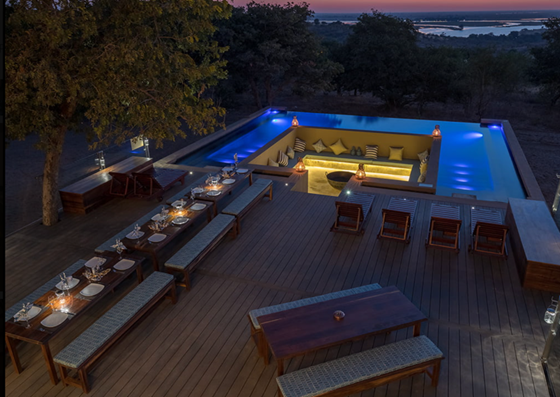
Home base for the company is the 14-room Pangolin Chobe Hotel, in Kasane, Botswana. It is a welcoming place with soaring cathedral ceilings, a firepit for camaraderie at night, and a view of the Chobe River. From the hotel, guests can mount daily land trips into the Chobe National Park in a 4-wheel drive vehicle to capture images of a wide array of animals. The entrance to the park is just a mile down the road from the hotel.
Pangolin Voyager
After a day or two of game drives on land, guests are transferred to the Pangolin Voyager, which resides on the Namibia side the Chobe River. There are four en-suite staterooms on the Pangolin Voyager, each with a huge picture window looking out on the river and passing game. The top deck has lounges both outside and inside, a well-stocked bar, dining room and even an air-conditioned photography room where guests can edit their wildlife images at night.
The vessel is powered 100% by solar energy, including its air-conditioning and all other systems. There is a diesel generator aboard for emergency use, but as of our visit, we were told it had never been needed.
Electric Outboard Motors for Power
The question begs, why propel the 50-ton mothership and the 8-passenger photo boat with electric power, rather than time-proven gasoline outboard engines?
Guts explained that when operating a luxury houseboat and photo boat in the African bush, the last thing a business owner needs is downtime due to maintenance problems. And outboard motors are notorious for maintenance problems due to the harsh use in Africa.
A 4-stroke 50-hp gasoline outboard engine can have over 1,000 named parts, over 200 in the powerhead alone, more than 100 in the ignition system, 150 in the fuel and air intake system, 100 in the cooling system, and so on. Any one of these parts can put the outboard engine out of service, and a tour company out of business. Ordering outboard engine parts from the bush and having Amazon Prime deliver them the next day is not an option.
The Voyager is over 1,100 miles from the busy shipping port of Durban, South Africa, and 736 miles from the nearest International Airport, in Johannesburg, both of which are ports of entry for spare parts and equipment.
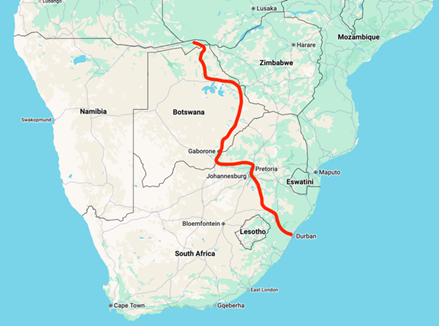
That’s the good news. The bad news is those parts have to clear customs in three countries – South Africa, Botswana and Namibia. Botswana being the worst, where trucks are lined up from 5 to 20 miles every day waiting to clear customs. Typically, according to Guts, it takes two weeks for parts to clear Botswana customs.

All Quiet on the Set
Another reason why Guts decided to use electric outboard motors was because they are quiet. One need only hear the racket created by a single outboard-powered boat running down the river at 4000 rpm to understand how disturbing it is to the game. Thirsty animals coming to the river’s edge for a drink, are easily scared by noise, and often will stay away until nightfall, when boating on the river is forbidden.
The solution to river noise is electric outboard motors which are quiet. Even when putting the motor in gear, or changing gears, there’s no clunk as the dog clutch engages.
Gasoline is not cheap in the middle of Africa, nor is it easy to transport. All of this makes selecting electric outboard motors the best choice in the bush.
Why RAD Electric Outboards were Selected
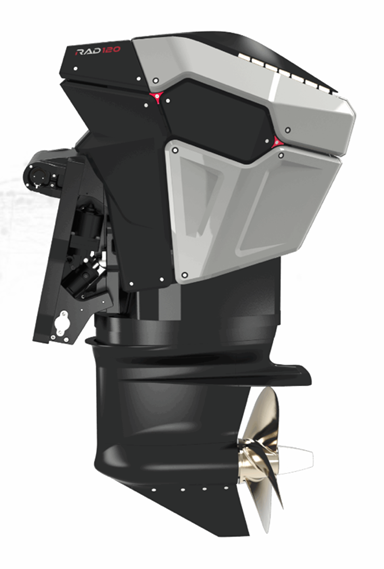
Guts Swanepoel said that there were 7 basic reasons why he chose RAD electric outboards—
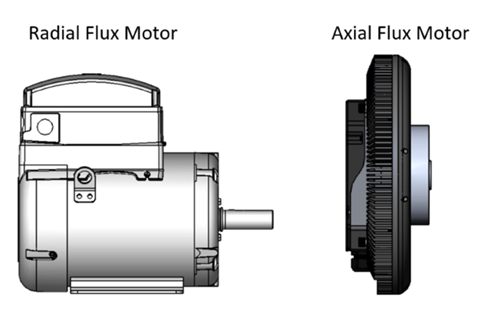
#1 Axial Flux Design. RAD motors use axial flux motor architecture, as opposed to the traditional radial flux design used by most electric outboard companies. RAD’s design is inherently more efficient with higher torque density in the low and mid RPM ranges. These motors are designed to turn at lower RPM than radial flux units and can simply deliver more torque to the props – something that’s key when moving a 60-ton houseboat.
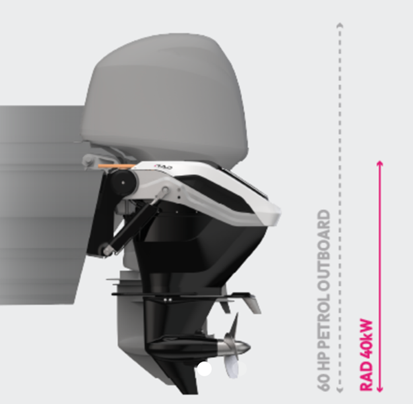
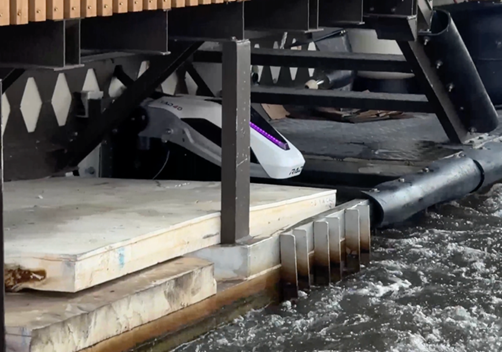
#2 Low Profile. Another benefit of the axial flux RAD motor design is its inherent low profile. A low-profile design allowed Guts to place the four motors under the houseboat’s floorboards, rather than having to create a well for them, something that was particularly important with the two forward motors which are situated directly under the pilothouse in the bow.
#3 80-Degree Motor Tilt. On his 30’ photo boat, the low-profile design meant Guts didn’t need to waste precious inboard space on an outboard well. That allowed him to design the vessel’s helm at the stern, and even with the motor tilted all the way up, it doesn’t intrude into interior space.
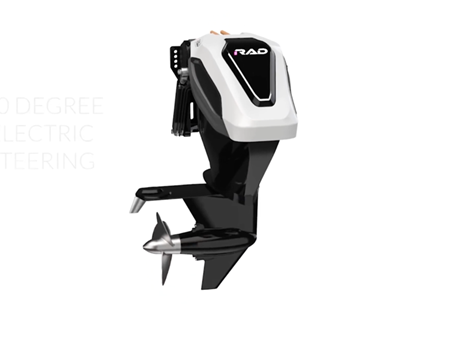
#4 180-Degree Lower Unit Steering. Another important feature of the RAD design is the fact that the lower unit can swing-180 degrees without having to turn the whole motor unit, as is true for most outboards. This means both houseboat and the photo boat have the ultimate in maneuverability. It’s the only outboard motor made in the world that we know of -- either electric or gas powered -- that can do that.
Virtually all conventional gasoline and electric motors only turn by pivoting the entire motor assembly a maximum of 30-degrees to port and starboard.
On the Chobe River that means the Pangolin photo boat can point into the beach where the animals are, then turn on its own axis 90 degrees to give all 8 of the photographers an equal and clear vantage point to the game. When it comes to docking alongside the mother ship, all the driver has to do is point the bow in, then turn the prop perpendicular to the mother ship and the photo boat slides right up to the boarding steps.
In essence, it’s like having a stern-thruster and outboard motor combined.
On the 104’ Voyager, with the forward outboard lower units 90-degrees to port and the aft ones 90-degrees to starboard, she can turn 360-degrees on a single point, like a ballerina.
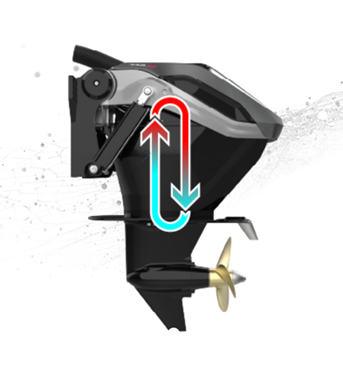
#5 Closed Loop Cooling. The RAD outboard also has its own closed loop cooling system with a 12-volt integral pump. The unit’s heat exchanger is adjacent to the lower unit’s cavitation plate. That design eliminates the need for a raw water pump that can become damaged or clogged by debris in the river. It also eliminates the need after every use of a freshwater engine flush, something that’s advisable in freshwater, as well as in saltwater.
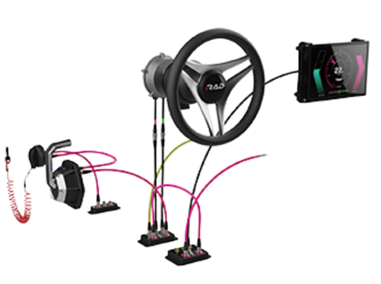
#6 Control-by-Wire. Maintenance headaches are further reduced by eliminating cable steering and throttle controls. The RAD system is strictly drive-by-wire digital. This also makes installation easy.
#7 Factory-Monitored Telemetry. Not surprisingly, Guts opted to have RAD’s telemetry system connected to all of the RAD equipment so it can be monitored at the factory in southern England 24/7. If and when the techs see a problem brewing, they can call Guts, so he can take remedial action.
The Miracle of Solar Power
There’s nothing new about solar power, but the world in general, and boating industry in particularly, has been slow to adopt this remarkable technology.
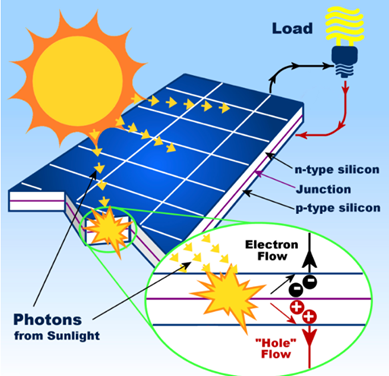
In a nutshell, photons from the sun interact with electrons in silicon wafers and “kick” out loose electrons which then flow to a battery. In the case of the Pangolin Voyager, 80 solar panels on its roof agitate electrons which flow into the two 61 kW Lithium-ion house battery stacks (total 122 kW), located just abaft the helm.
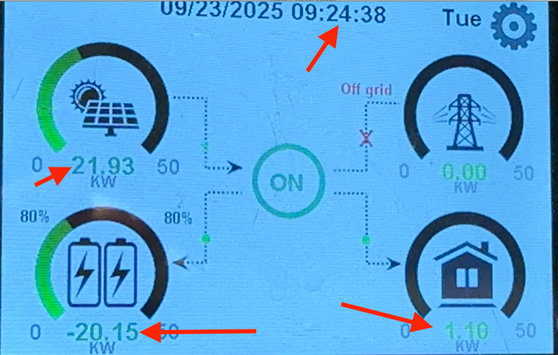
From there, electricity is fed to a dedicated 61 kW battery in the bow under the deck to power the two forward outboards, and to another one in the stern to power the two aft motors.
With the sun less than 20 degrees above the horizon, the solar panel generated 21.93 kW of power, of which 20.1 kW were going to the house batteries, and just 1.1kW going to top off the outboard motor batteries.
The Voyager Helm
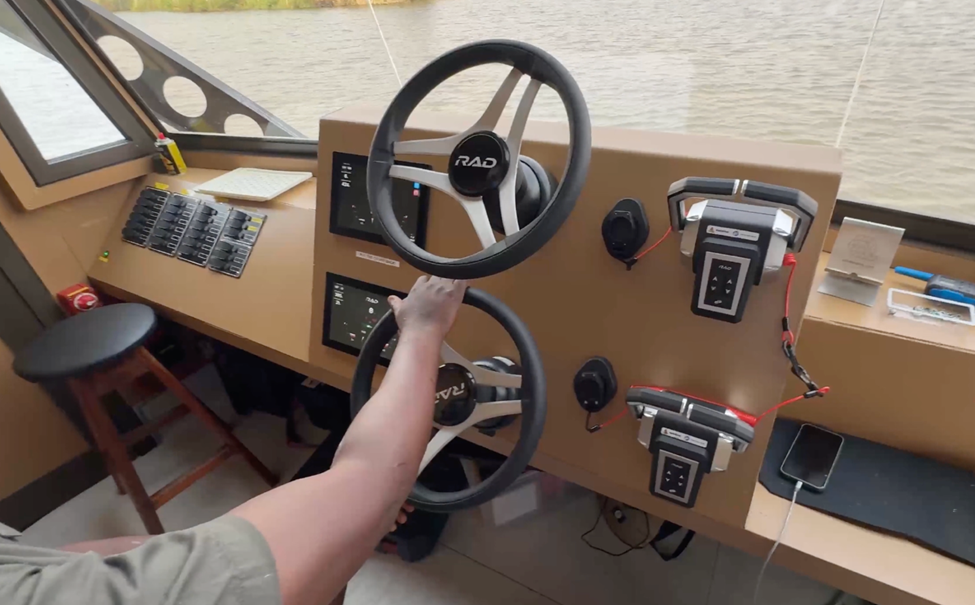
The pilothouse of the Pangolin Voyager is literally at the bow, much like a 1960s-style VW camper. However, it has two wheels instead of one. The top wheel and adjacent levers on the binnacle, control the two forward motors. The bottom heel and binnacle control the aft motors. To port are the RAD screens for energy monitoring both the front and rear units. To starboard is a split screen which display the views from cameras placed around the boat.
Note: There is no gps, and no chartplotter at the helm. Nor is there a depth sounder. Communication is strictly by hand-held units and cell phones.
When underway, the 60-ton houseboat is typically driven at from 2.5 to 3.5 mph which is fast enough to get to the next overnight stopping point. She can go 5 mph in a pinch. But, going slow is the order of the day, because that minimizes prop damage when – not if – the boat hits bottom or an obstruction.
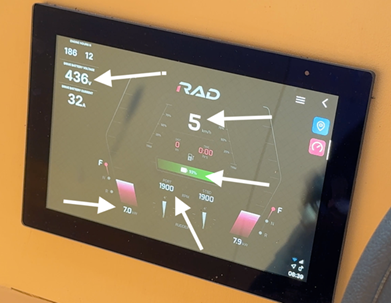
There are performance screens for each set of motors. Going counterclockwise around the screen for the two aft motors, we see that the batteries have 436 Volts pushing the electricity at 32 amps and the two motors combined are using about 15 kilowatts at 1900 rpm. When the above snapshot was taken, the boat was traveling at 5 kilometers per hour, or about 3 mph.
Since the 61 kW batteries were 92% charged, the Pangolin Voyager could go over 3 and a half hours at that speed before being drained – which will almost never happen because more power is being generated by the solar cells – 22 kW or more -- than the two motors consume at 3 mph -- leaving a positive charge of 7 kilowatts.
The Pangolin Custom-Designed Photo Boat
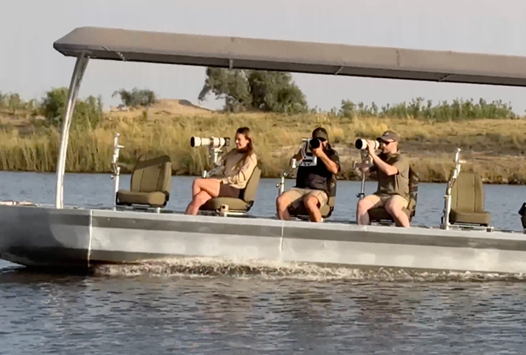
Like virtually everything else to do with the Pangolin experience, the 8-passenger photo boat was designed from the keel up by Guts Swanepoel, an engineer turned photographer. Her beam is 8’ and her freeboard is low so that photographers can sit or lay on the deck when up close to game in order to get more dramatic photos. The boat’s bottom is a cathedral design for stability.
Eight swiveling seats are located on the centerline and each has an articulating, gimbaled camera mount to keep the Cannon state-of-the-art cameras with telephoto lenses steady and ready to shoot in almost any direction. A single RAD 40 kW motor and a single 61 kW battery bank under the deck team up to power the boat. Note that all of the battery banks on the houseboat and the photo boat are the same which means their components can be swapped out if need be.
Like any outboard motor you run, the faster you go, the heavier the load, the more power your engine consumes. The chart below shows the speed, kWh consumed and the range in statute miles.
Typical Performance of the 30’ Photo Boat w/40 kW RAD Motor
| RPM | MPH | kWh | Range S. Miles |
| 3350 | 16 | 40.0 | 21.9 |
| 2650 | 10 | 22.5 | 24.4 |
| 1825 | 6 | 5.0 | 65.8 |
Depending on what prop geometry is used, with a 90% battery charge, at 16 mph burning 40 kW per hour, the photo boat can travel almost 22 miles.
At 10 mph, burning 22.5 kW per hour, the vessel can travel for 2 hours 45 minutes and cover nearly 25 miles. And at 6 miles per hour, the boat burns just 5 kW per hour, giving her a 65-statute mile range with a 10% energy reserve.
Because the length of the Chobe River where the game viewing is best is just 83 miles long, the combination of slow speed, proximate location of the mothership for battery recharging, and two outings per day – morning and evening when game viewing is best, with charging in between if needed – means there is always enough battery capacity no matter how fast the photo boat goes.
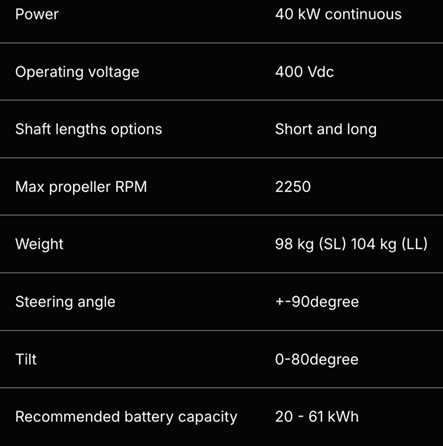
40 kW RAD Electric Outboard Motor Specs
For more information, visit the RAD website.
For more information about the Pangolin Photo Safaris, visit the Pangolin website.