Reimagining Revenue: How Floating Homes Are Helping Marinas Maximize Margins
As marina space becomes increasingly constrained, houseboats offer a high-yield alternative that’s already proving successful across the UK.
With berth availability shrinking and pressure mounting on profit margins, marinas are being forced to think differently about how they use their real estate. For many, the traditional business model – charging berth holders annual fees – no longer stretches far enough. Larger yachts mean fewer boats. Costs are rising. And expansion isn’t a viable option for most. Enter Waterlife, a UK company that believes it has found a smarter, higher-margin solution: residential houseboats.
Founded in 2018 by long-time yacht broker Ian Watkins, Waterlife was born out of an observation that more and more customers were buying boats not to sail, but to live aboard. “During my time in brokerage, I saw people buying old sail and motor yachts as liveaboards – but they were rarely suited to that lifestyle,” Watkins explains. “Cramped layouts, steep maintenance costs, and impractical systems made long-term life on board challenging – especially for people unfamiliar with boat handling or marine maintenance.”
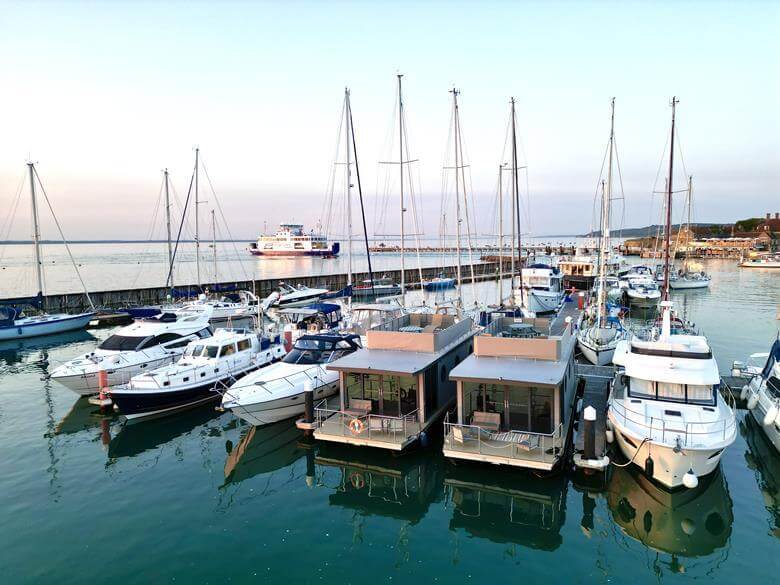
Recognizing a gap in the market, Watkins and his team developed the Waterlodge and Waterstay ranges – self-contained, high-spec houseboats designed for full-time living, leisure, or short-term holiday rental. The concept is simple: offer marina operators the ability to repurpose berths into revenue-generating accommodation units, without the regulatory headaches of land-based development.
A Leap in Yield
From a marina’s perspective, the numbers are compelling. A typical 12m berth on the UK’s South Coast might fetch £12,000-£15,000 per year. Replace that same berth with a Waterlodge or Waterstay houseboat in a short-term rental program, and the return can jump to £30,000-£50,000 annually, according to Watkins.
“This is about yield per square meter,” Watkins explains. “We’re not just putting a boat in a berth – we’re giving marinas a new commercial asset class that delivers three to four times the income of a conventional berth, often with lower overheads.”
Some marinas are already realizing these returns. Brighton Marina, for instance, now have over 70 Waterlodge units, used by their owners as holiday homes. Watkins says other major operators, are now pursuing additional developments, including potential joint ventures for floating hotel concepts.
Minimal Disruption, Maximum Upside
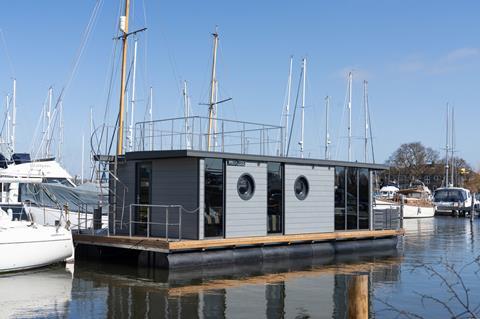
One of Waterlife’s most strategic advantages is that its floating homes are legally classed as vessels. That means they are CE (or UKCA) marked and capable of propulsion, even if most UK units don’t have engines. This distinction bypasses many of the planning hurdles that typically accompany new waterside developments.
“This isn’t a caravan on pontoons,” says Watkins. “These are architecturally designed floating homes built to high standards. But they’re legally boats – so planners have very limited grounds to object.”
They’re also low impact. Units are delivered complete and plug into existing marina infrastructure with ease. They can rest comfortably on mud at low tide, making them perfect for underutilized or awkward marina spaces – like tidal berths or shallow corners inaccessible to larger yachts.
And the flexibility doesn’t stop at homes. Waterlife also designs and delivers a wide range of bespoke floating structures to suit customer needs. Examples include a floating shower block and launderette at Shepperton Marina, and even a floating sauna cruise boat for Taymouth Marina in Scotland – proving that almost any onshore facility can now be reimagined as a water-based asset.
Bringing New Demographics to the Waterfront
Beyond their financial performance, houseboats are helping marinas attract new customer demographics. A growing number of buyers are single professionals, retirees, or people priced out of coastal property markets. Some are looking for quiet, affordable waterside living. Others, like resorts or marina operators, are investing in fleets for holiday rental.
“Interestingly, a significant proportion of our B2C customers are single women in their 50s and 60s – something unheard of in the conventional yacht market,” says Watkins. “They want to live near the water, but without the complexity or cost of running a boat.”
Holiday lets are also a powerful draw. Units are frequently listed on Airbnb and other platforms, giving marinas an entirely new way to engage with the booming domestic tourism market. “In places like Yarmouth and Brighton, our houseboats are playing a role in supporting the local economy – bringing in visitors, driving footfall to restaurants, cafés, and shops.”
Platform for Growth
Waterlife is now in talks with several national and regional marina operators, including inland groups like Aqua Vista and Lakeland Leisure, as well as coastal players. The company has exclusive rights to distribute its products in the UK, with early steps underway to break into the American market.
“Marinas in the US are far more open-minded when it comes to alternative use cases,” Watkins notes. “But even here in the UK, attitudes are changing. When we first approached marinas five years ago, many were hesitant – some even dismissive. Now they’re calling us.”
That shift is happening out of necessity. Building new marinas or expanding existing sites is virtually impossible due to planning constraints, environmental concerns, and lack of suitable coastline. Meanwhile, berth sizes are increasing, total capacity is shrinking, and customer expectations are rising.
“If you can’t build out, you have to build smarter,” says Watkins. “Floating homes and facilities offer a way to do just that.”