Sharrow Prop Tested on Boston Whaler 270 Vantage
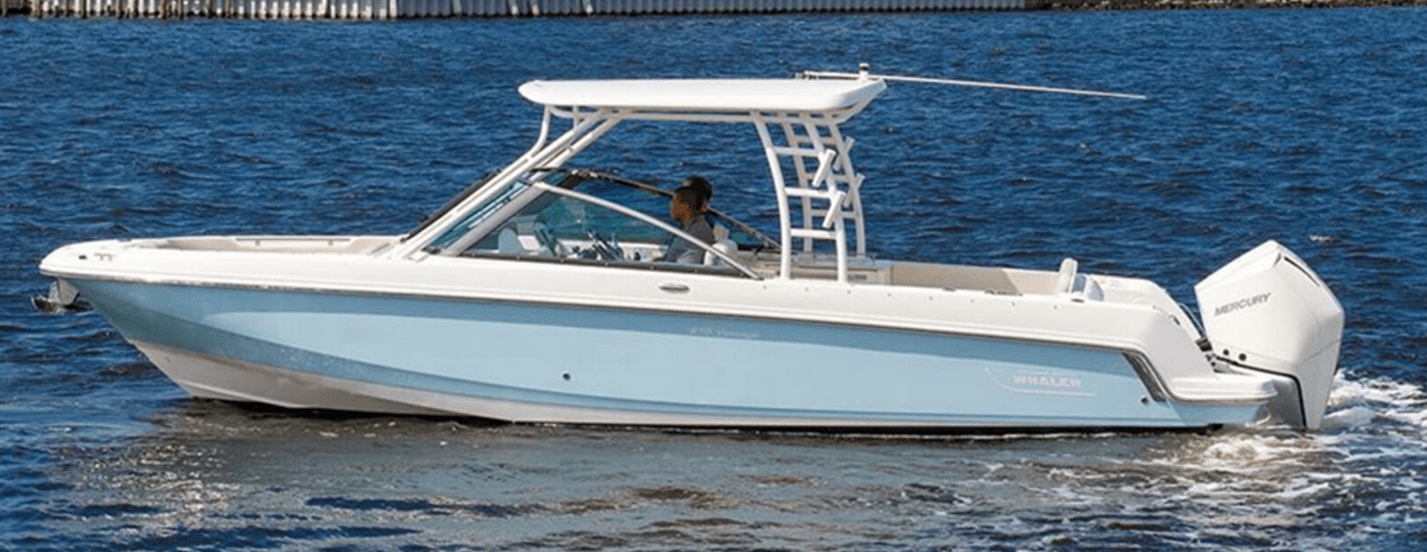
The Boston Whaler 270 Vantage is a large bowrider with a LOA of 28’3” (8.61 m) a 9’ (2.74 m) beam and a dry weight of 5,200 lb (2,358.7 kg).
For the test by Sharrow engineers, it was powered by twin Mercury 300’s equipped with Mercury’s Inertia ECO 16 x 19 propellers to create a baseline. These are stainless three-blade propellers Mercury markets as being highly efficient, as opposed to being designed for maximum speeds.

Sharrow propellers feature an unusual continuous blade design that has proven to increase efficiency in a wide variety of applications since introduction by founder Greg Sharrow in 2012.
The test wheels from Sharrow were 15.5 x 20 True Advance models in stainless steel. The propellers were selected by the Sharrow engineering team to give the best all around performance on this particular boat/engine combination.
We note they were 1” higher in pitch than the Mercury propellers, which could be a factor in the Sharrow’s delivering a slightly higher top speed, 57.1 mph vs. 56.6 mph. Sharrow’s are not designed for top speed, though they do sometimes deliver in that parameter as well as in efficiency.
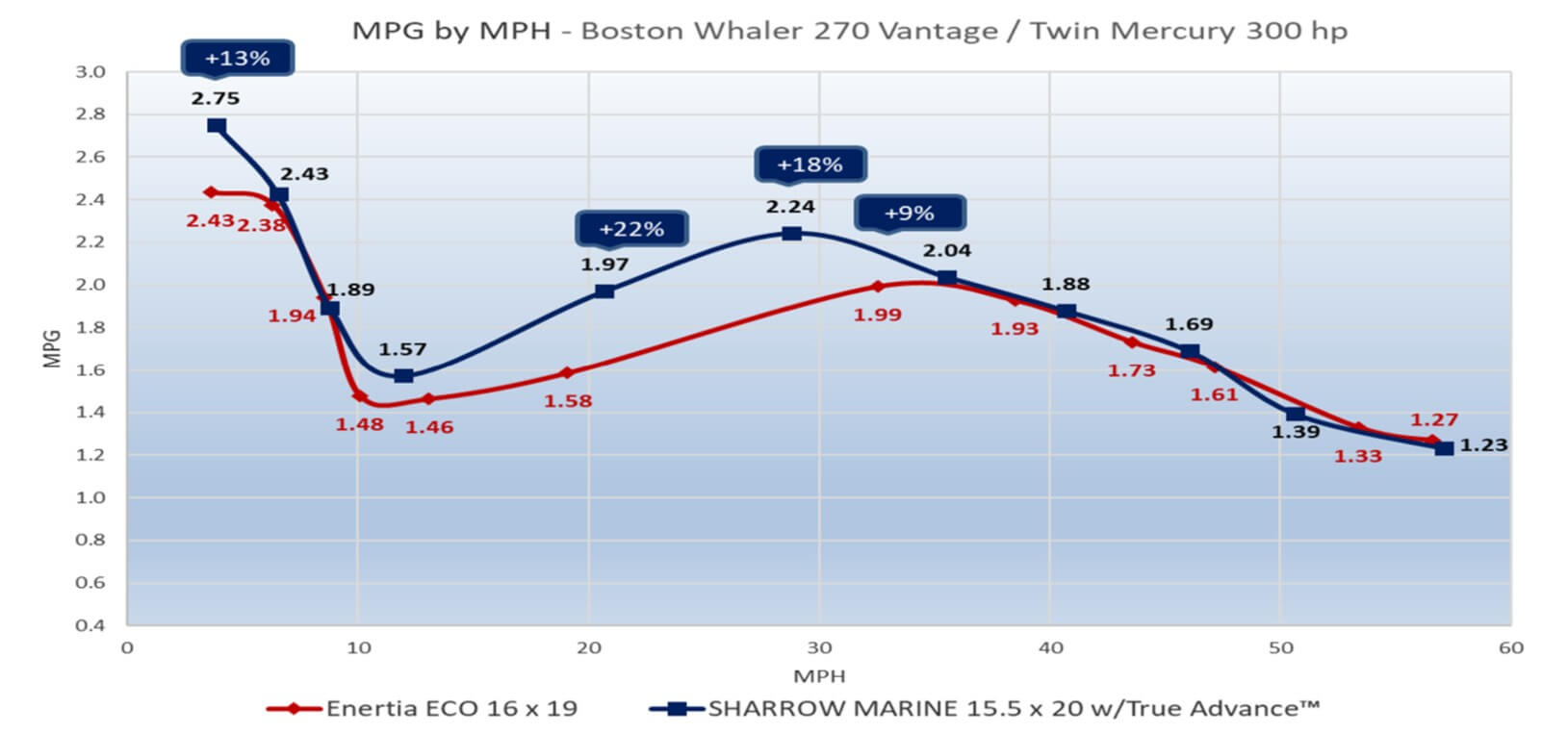
The Sharrow Marine propellers showed a 13 percent MPG advantage at idle speed, and maxed out at 22 percent better at 20 mph, declining to 9 percent at around 33 mph in the test. At full speed, the ECO propellers lived up to their name, edging out the Sharrow’s, but only by a scant 0.04 to 0.06 MPG.

Greater range is an advantage in any boat, including a day boat like this one that might be used for occasional down-bay trips to the beach or offshore for fishing. Run in the mid-ranges where most wise skippers run their boats, the Sharrow’s significantly extended the range of the Whaler, up to a max of 56 miles at 20 mph.
The improvement in range not only makes the boat more versatile, but also reduces the number of trips to the fuel docks.

The advance rate in inches is a good measure of the efficiency of a propeller in pushing a boat because it can be compared directly to the pitch. A 21” pitch propeller with a 21” advance rate would be the ultimate, 100 percent efficient, but no such propeller exists for boats.
The Sharrow’s, however, come much closer to the mark, as seen in this graphic. The Sharrow’s peaked at over 18” per revolution from 3500 RPM all the way to WOT.

Propeller efficiency is another way of expressing what level of performance and fuel use can be expected with a given prop set. Both propeller designs in this test did well once they reached about 4000 rpm, reaching 94%, with the Sharrow’s slightly better at 4500 and 5000, and both equal at 5500. At 6000 rpm—top of the recommended operating range for these engines—the Enertia ECO dropped back a bit but was still highly effective.

While all boat propellers slip significantly in the liquid medium in which they operate, the continuous blade design of Sharrow propellers frequently shows a significant reduction in this parameter in the midranges.
At 2500 rpm, the Sharrow’s were slipping only 23%, while the Inertia ECO’s were at 49%--over twice as much.

The Sharrow propellers produced a significant jump in speed at 2500 rpm, putting the boat on full plane and running at 20.7 mph, while the stock props had her still trying to get over the hump at 13.1.
But it’s throughout the mid-range, where a boat like this one is likely to be operated most often, that the Sharrow’s have a significant advantage, producing higher speeds at lower RPM. This means less engine wear and likely reduced repair/replacement costs. Running at lower rpm for a given speed also produces less noise and vibration, making the overall boating experience more pleasant for most users.
While Sharrow propellers represent a significant investment up front, they can pay for themselves over several seasons due to reduced fuel costs, as well as delivering the advantages of longer range and less frequent trips to the fuel dock.