Showdown on the Detroit River
Sharrow vs. Traditional Prop
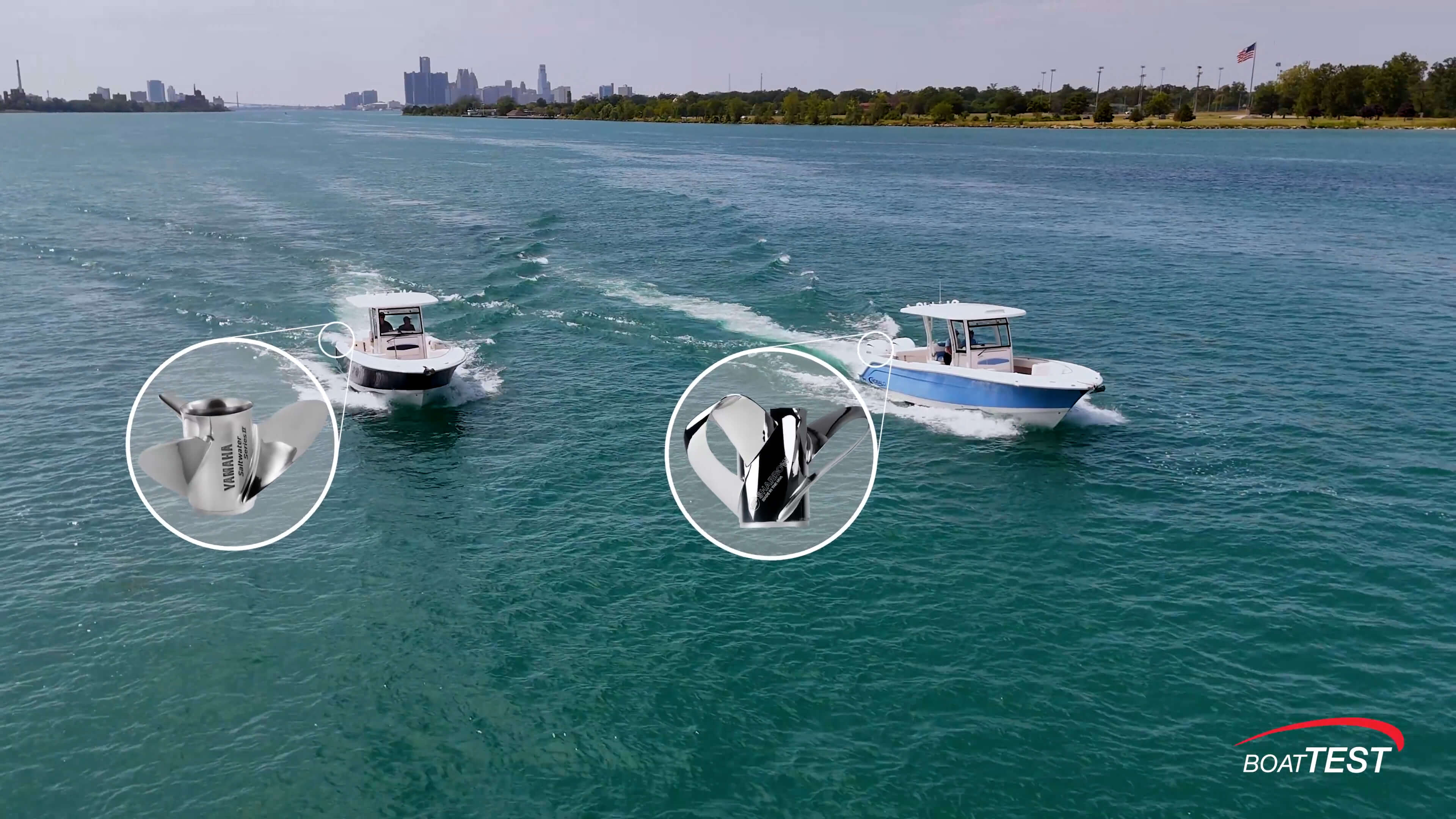
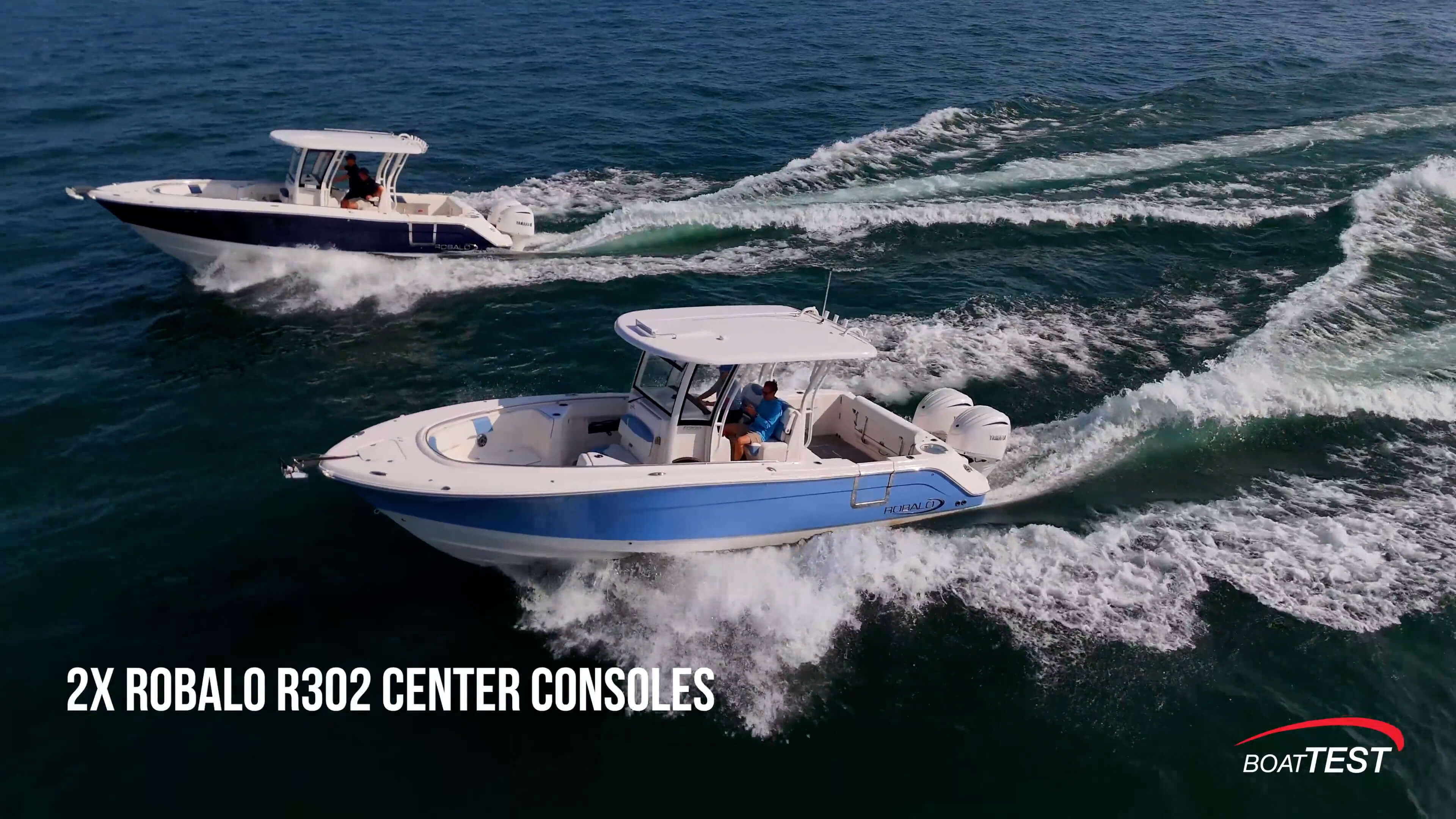
Two identical Robalo R302s, twin Yamaha 300s, and one difference: the propellers.
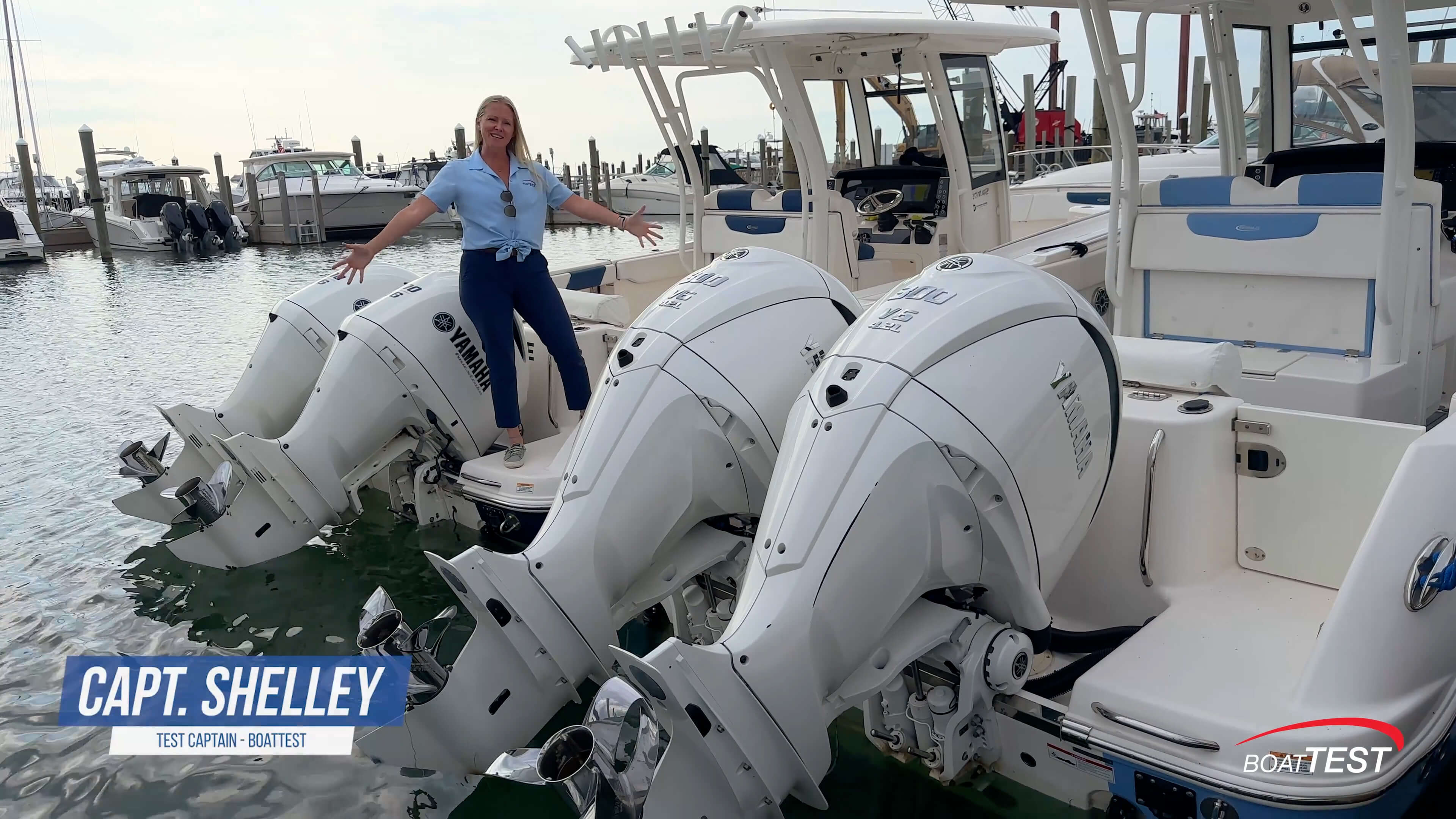
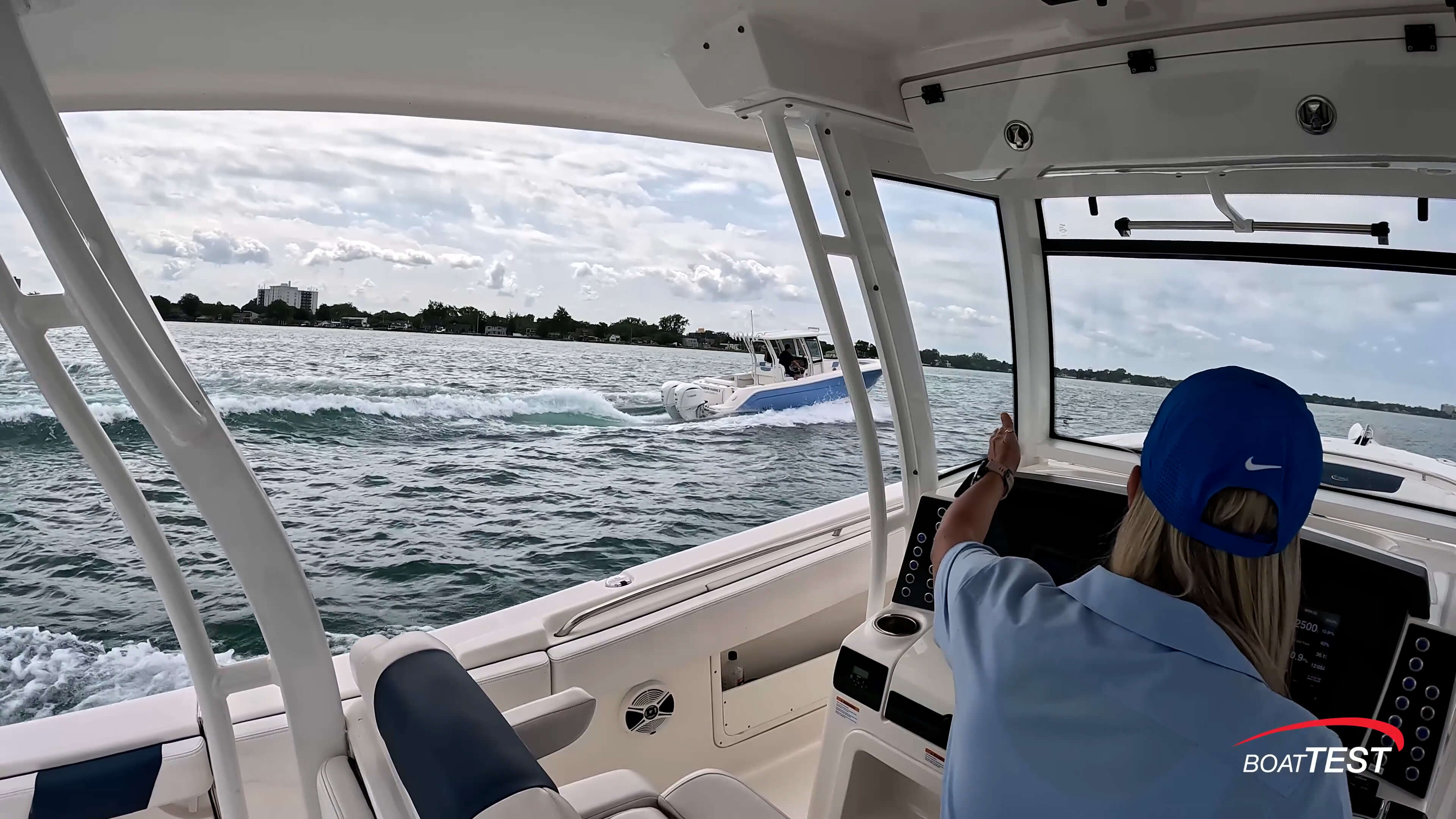
Watch: Capt. Shelley runs two identical Robalo R302s side by side, one on a traditional prop and one on the Sharrow prop.
Seven years ago, BoatTEST captains discovered the Sharrow prop. After a week of testing by three different BoatTEST captains (the longest and most in-depth test we have ever conducted on a single product), there was no doubt we had found a revolutionary advancement in propeller design.
At the time, we didn’t understand why the Sharrow propeller was so efficient in the midrange, tenaciously grabbed the water in hard-over turns, backing down like it had four-wheel drive, and it was so quiet. The fact that it was so much quieter turned out to be the tip-off to one thing that was making it so efficient. Later, when we saw tank-testing videos and began reading up about tip vortices on airplane wings and propellers, the explanation became clear.
It’s not magic. It’s physics. Physics that no one in nearly 200 years of boat prop-making had ever thought about exploring, until the idea popped into Greg Sharrow’s mind one morning while he was walking his dog.
Many Different Tests: The Same Result
Over the years, we have tested Sharrow props against conventional designs made --or used -- by all of the outboard companies and virtually all of the independent prop-makers. We’ve tested them on monohulls, deep-Vs and shallow-Vs, catamarans, and on both gasoline and diesel engines. The result has always been the same: Sharrow props are 20% to 40% more fuel-efficient in the mid-RPM range,
So, if the Sharrow prop is so efficient, why don’t all of the outboard engine companies just make their own version of it?
Because Sharrow has over 200 patents in 30 countries, and an an aggressive team of lawyers at the ready. Further, the big engine companies have a thriving prop business with a huge, built-in customer base. They make millions a year selling old technology. Why give it up?
That’s essentially why, if you want to give your boat new life by re-propping, or if you just want the most fuel-efficient props available, you are on your own.
“The efficiency gains are real.”
Capt. Shelley, Test Captain, BoatTEST
Gallery
On the Water With the Test Boats