"Slow" Cruising, A New Trend At The 49th Cannes Yachting Festival
From September 18-13, 2026, the Cannes Yachting Festival will highlight another way to enjoy life on the water: slow cruising. Inspired by slow tourism, this approach focuses on cruising in stages, exploring places along the coast and better respect for marine environments. It is embodied by a new generation of boats that focus on comfort on board and smooth cruising, and is defined by a way of cruising based on pace, choice of the itinerary, restraint and the quality of the experience.
Through networks of marinas, port operators and nautical destinations like Barbados, Catalonia, D-Marin, Sardinia, Tunisia, and so on that are present, the Festival shows how networks of stopovers can become the infrastructure for more local, responsible cruising full of experiences.
"Slow sailing meets a very specific need, that of returning to the slower pace of travelling by sea and putting more focus on the places visited. Both the boats and the networks of marinas and destinations attending this year show how travel and stopovers are a vital part of the nautical experience, serving cruising that is more responsible, local and aware of marine environments," explains Constance Brément, Director of the Cannes Yachting Festival.
Marinas at the Service of Slow Cruising
Slow cruising is not just based on being intentional, it means having the right infrastructure. This is where marina networks come in. In providing boating enthusiasts with a well-distributed network of marinas to stop at, they can choose coastal cruising, organize their stopovers according to weather conditions and use the engine less frequently.
These organized stopovers can also help to better distribute flows, direct boats to equipped areas and reduce pressure on environmentally sensitive anchorage areas. Lastly, they turn the port into a gateway to a place: its gastronomy, heritage, expertise, coastal culture and local encounters become a key part of the trip and not just a transit point between two courses.
A Sector Changing Course
This change is part of a wider trend, where tourists want to take more time when travelling and avoid standardized itineraries, are looking for destinations with fewer visitors and place greater emphasis on the local experience. According to a 2023 study by the Fédération des Industries Nautiques, 72% of sailors surveyed said they wanted to slow down their cruising pace, 65% wanted to reduce their fuel consumption, and 58% expressed being bored with restricted itineraries. It is also worth noting that, according to Booking.com, 67% of travelers surveyed would like to enjoy immersive experiences and discover destinations with fewer tourists in a survey of over 27,000 travelers in 33 countries. Boating is not an exception to this transformation. Between the environmental transition, the search for authenticity and boating enthusiasts' new expectations, the stopover becomes a strategic element of a journey by sea.
Boats Dedicated to the Art of Slow Living
Slow cruising is also reflected in how certain boats and floating habitats presented at the Cannes Yachting Festival have changed. They have been designed for a simpler, more self-sufficient and calmer experience of the sea. Jeanneau’s Sea Loft or Caelum’s Oasis Meu Amor 1029 illustrate this search for cruising at a gentle pace or for life onboard with economical operation. The growing interest in trawlers also shows appeal for long-distance cruising at more moderate speeds.
What to Discover at the Festival this September
In 2026, the Cannes Yachting Festival– Europe’s largest in-water boat show– will bring together more than 680 exhibitors and a fleet of 700 boats from 5 to 50 meters long, yachts, sailing boats, monohulls, multihulls, dayboats, trawlers, and inflatable boats, with nearly 150 world premieres. It brings together boat builders, equipment manufacturers, toys, brokers, destinations and companies in fit-out and services around a shared vision: all the ways the sea is used.
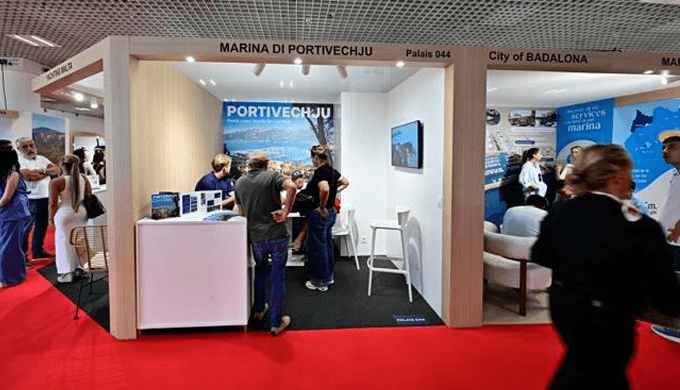
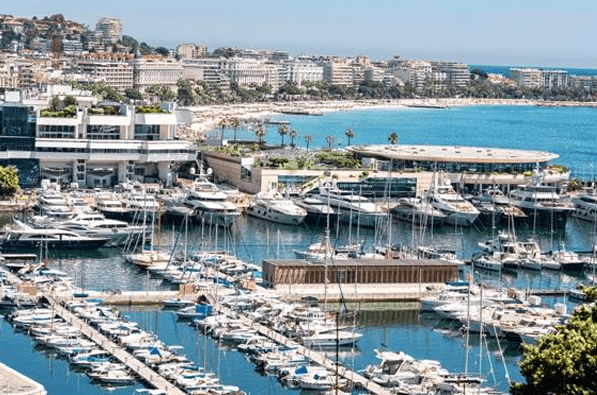
The presence of marina networks committed to slow cruising is part of this continuity. Making marinas a driver for responsible cruising is shared by the infrastructure operators or cruising areas involved.
Associació Catalana de Ports Esportius i Turístics (Catalonia) / JETEE 124
With 580 km of coastline between Cases d'Alcanar and Portbou and nearly 50 marinas, Catalonia offers one of the highest concentrations of stopovers in the western Mediterranean. The short distances between each port make it possible to sail along the Cap de Creus or Ebre Delta nature parks without ever forcing the pace. The association also advocates an inclusive vision of sailing, which is accessible to small boats, open to all levels, and anchored in Catalan coastal cultures.
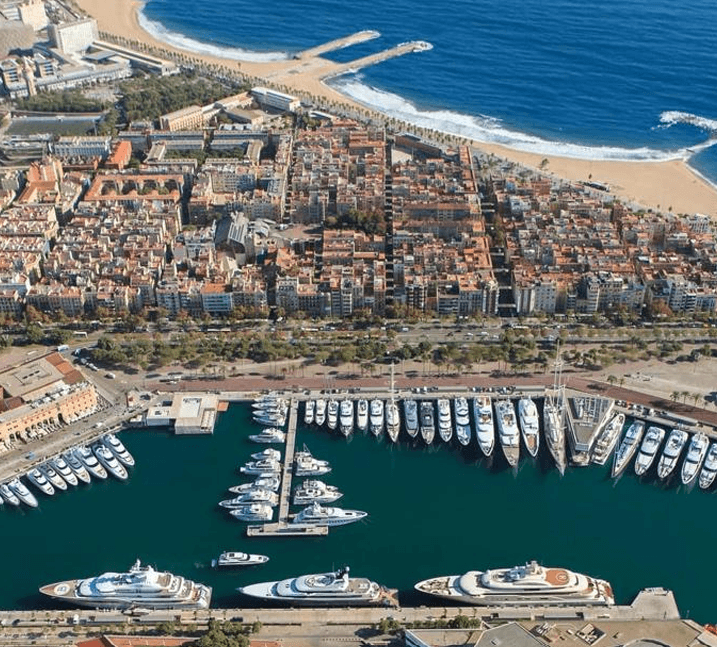
Maribay Infrastructures Management / PALAIS050
Lying between Nice and Antibes, Marina Baie des Anges is part of an architectural ensemble that has been awarded the 20th century heritage label. Its 515 mooring berths (from 5.50 m to 35 m) are ideally positioned near the Bay of Villefranche, Cap d'Antibes and the Lérins Islands– all natural stopovers for coastal cruising in the Riviera. An investment program of €63 million is underway to make it a recognized leader in the marina sector on the Côte d'Azur.
D-Marin / JETEE154
Founded in 2003, D-Marin operates 28 marinas in 9 countries in the Mediterranean Basin and the Gulf for a total of more than 14,300mooring berths, from Greece to the United Arab Emirates via Croatia, Malta and France. This multi-territorial presence offers boating enthusiasts a consistent network of stopovers so they can cross the Mediterranean from port to port and avoid long crossings. The group has deployed washdown water recovery and antifouling treatment systems to reduce the port’s impact on marine ecosystems.
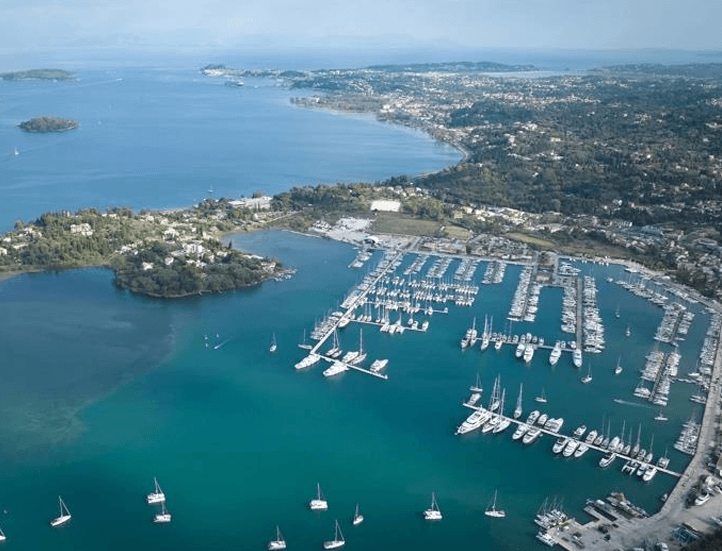
Barbados Tourism / PALAIS039
Barbados confirms its ambition to become a leading yachting destination in the Caribbean. The island offers boating enthusiasts steady trade winds, protected anchorage areas and a dedicated Yacht Masters Guide, a cruising guide to enable yachts to prepare for their arrival and organize their stopovers. It is a slow cruising area par excellence, combining structured port reception and immersion in an island culture protected from mass tourism.
IPM-IMG Marine Group / PALAIS
IPM-IMG was established from IPM Group and Insotel Marine Group merging and operates some of the best located marinas in the western Mediterranean: Mallorca, Ibiza, Minorca, with refit and repair yards in Palma and Valencia. The Balearic Islands are ideal for slow cruising– islands within sailing distance of each other, anchorage between creeks and distinctive ports. The group also presents its Marina Port Valencia project, a future nautical hub combining revamped marinas, a dry marina, refit areas and mixed-use spaces open to the city.
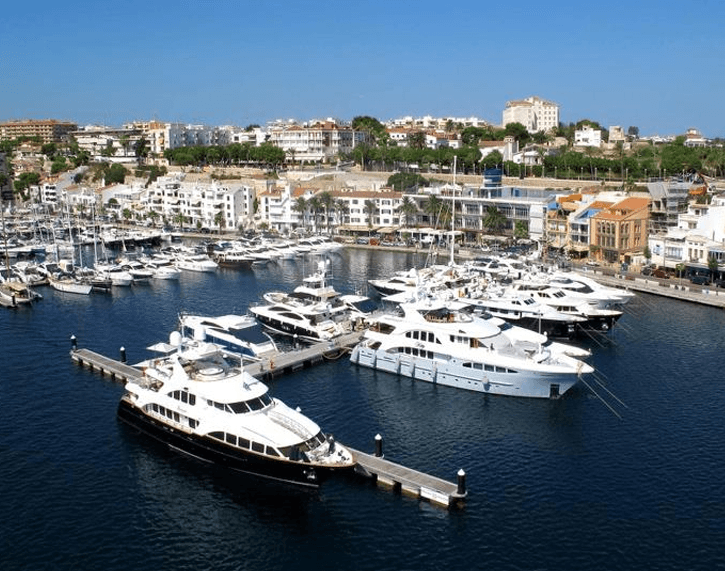
Associazione Rete Porti Sardegna (Sardinia) / PALAIS053
Sardinia has one of the best-preserved coastlines in the Mediterranean: crystal clear waters, isolated rocky coves, and fishing villages that can be accessed from the sea. With 29 structures and more than 8,300 mooring berths, the network connects the island’s main marinas along the entire coastline, offering regular stopovers short distances apart. This distribution makes it possible to sail from one heading to the next, making each anchorage a stop in a place to experience local life rather than an imposed stage. The network of ports can also help direct flows to equipped areas and reduce pressure on environmentally sensitive anchorages.
Marina Vieux Port de Cannes / PAN125
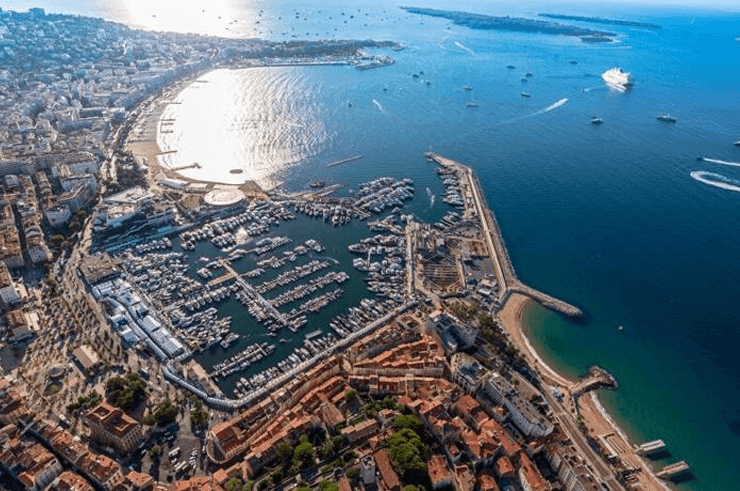
The Vieux Port marina in Cannes is one of 24 marinas in 14 countries managed by IGY Marinas. It is a global portfolio entirely dedicated to premium yachting destinations, which welcomes over 10,000 customers each year and accommodates some of the world’s largest superyachts. In Europe, the network also extends its reach with iconic addresses: the marinas of Ibiza, Porto Cervo and Portisco on the Costa Smeralda, as well as Málaga, Sète and St. Katharine Docks in London.
Tunisian National Tourism Office / PALAIS041
With its 7 marinas along more than 1,300 km of coastline, Tunisia is an accessible and authentic slow yachting destination. The coast of Tunisia, with Carthage, Sidi Bou Saïd, and the Kerkennah islands, gives sailors the opportunity to immerse themselves in Mediterranean culture that is still little visited by recreational boating, a few nautical miles from Sicily and Sardinia.
As for Boats, Some are a Perfect Example of this Trend:
The Jeanneau Sealoft/POWER050
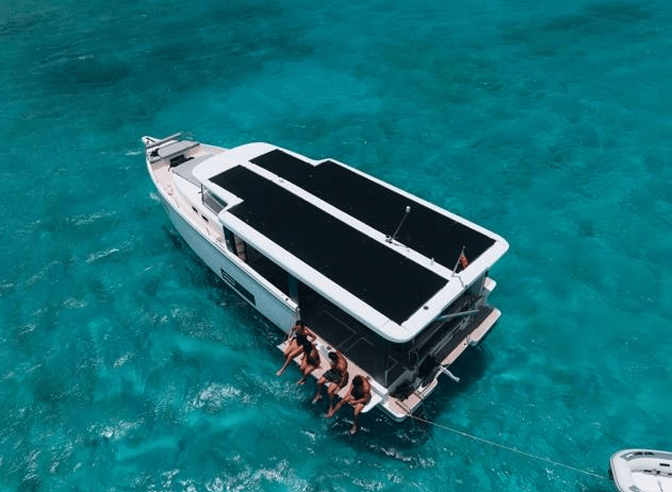
Created from the “Island Cruising” prototype developed in-house by the Beneteau Group, the Sea Loft 480 looks like no other boat in the Jeanneau range. It is neither a monohull nor a catamaran but redefines coastal cruising around one guiding principle: to slow down. In the hybrid version, it reaches a range of up to 250 nautical miles at 7 knots; in pure electric mode, cruising is silent, with 15 nautical miles of range and 4.2 kW of solar panels for charging at the stopover. It is precisely this model of cruising– slow, clean, anchored in the local area– that embodies slow cruising in its most tangible version.
The Oasis Meu Amor by Caelum 1029/PALAIS063
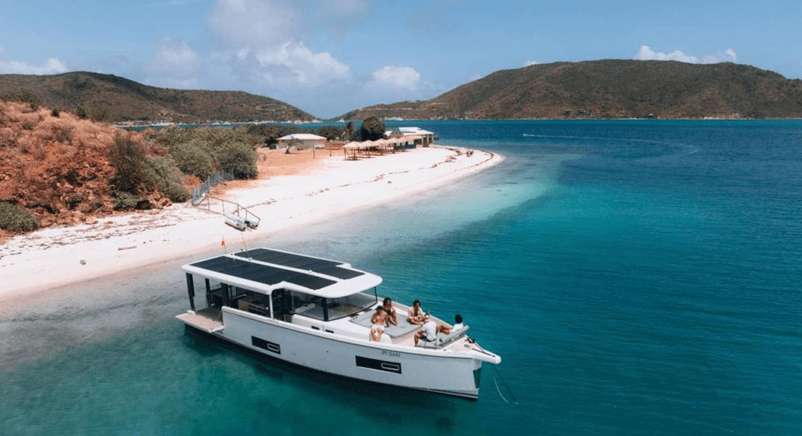
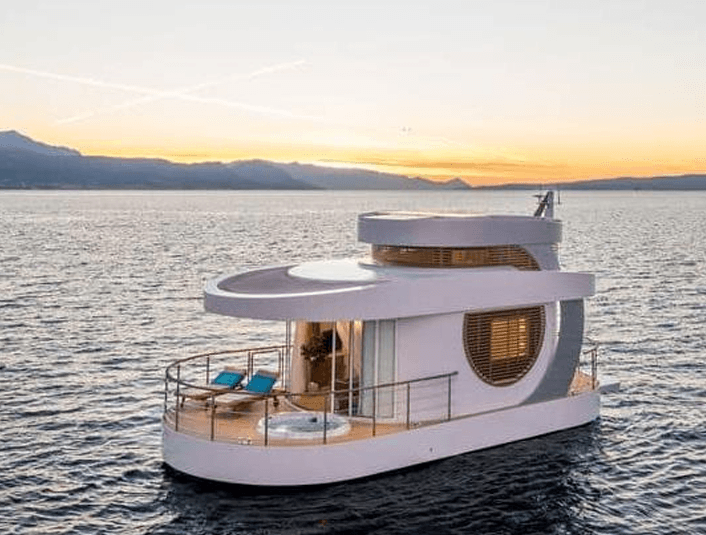
Developed in line with Croatian boat building tradition and a clear ambition to live on the water rather than cross it, the Oasis Meu Amor is a two-level floating house designed to accommodate four people in comfort for extended stays. Powered by solar batteries and made from eco-friendly materials, it offers a jacuzzi on its front deck looking out 360° over the landscape of water– lakes, rocky coves, sheltered bays. The Oasis Amor restores the stopover to be a destination in its own right, making berthing the center of the journey rather than just a break between two courses.
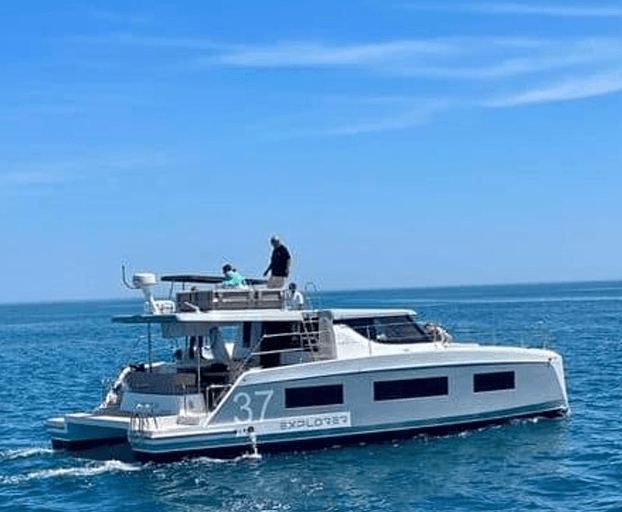
The Aventura 37 Explorer by Aventura Yachts/PAN058
With over 80 boats produced on its original platform, the Aventura 37 Explorer is one of the most tried and tested trawler catamarans on the European market. Its 11.60 meters and BAU at 5.94 meters give it remarkable stability that allows long, slow cruising with no discomfort nor fatigue on board. Designed for long-distance cruises with family or friends, this fuel-efficient type of Powercat trawler that's reassuring in all weathers is exactly what boating enthusiasts who like cruising for the itinerary and not speed they are looking for.