Steering Italy’s Yachting Giant into a New Era
By Nick Walton

Azimut|Benetti Group CEO Marco Valle continues to lead the world's largest privately owned yacht manufacturer through an era of unprecedented innovation, growth and environmental ambition.
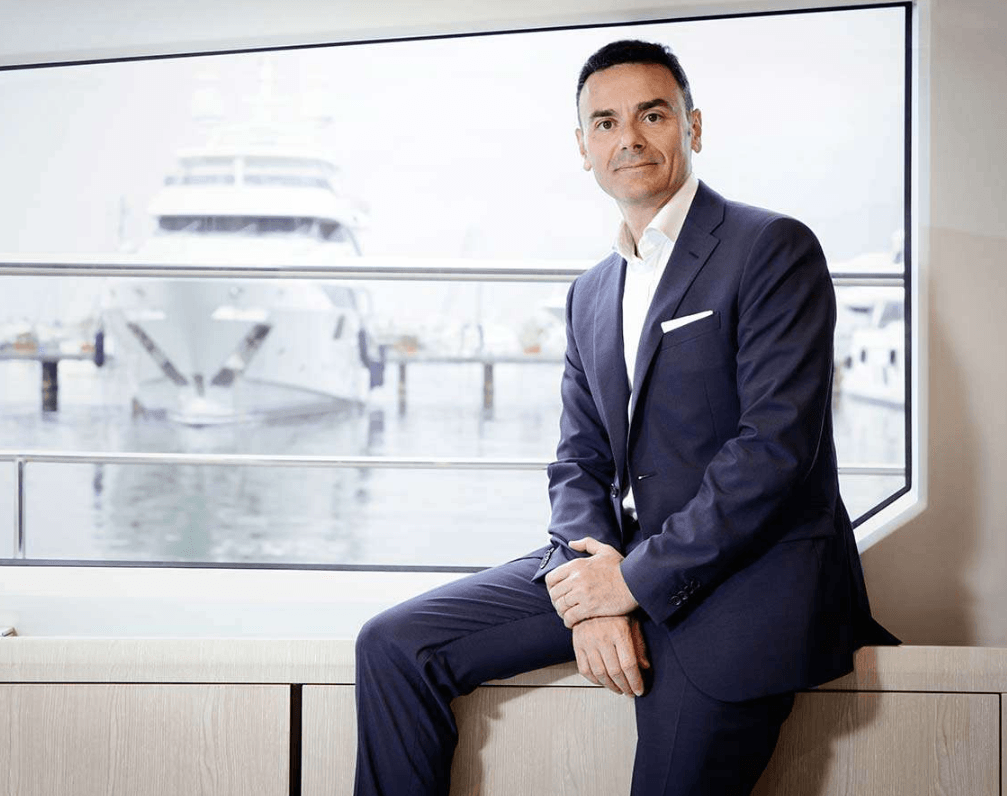
Few figures in the global yachting industry carry the breadth of experience that Marco Valle brings to the helm of the Azimut|Benetti Group. Having joined Azimut’s sales team in 1996 — his first role in yachting, and one secured in a final interview with the company’s visionary founder Paolo Vitelli — Valle has spent nearly three decades at the heart of an organization that has grown from a relatively small Italian boatbuilder into the world’s largest privately owned luxury yacht group.
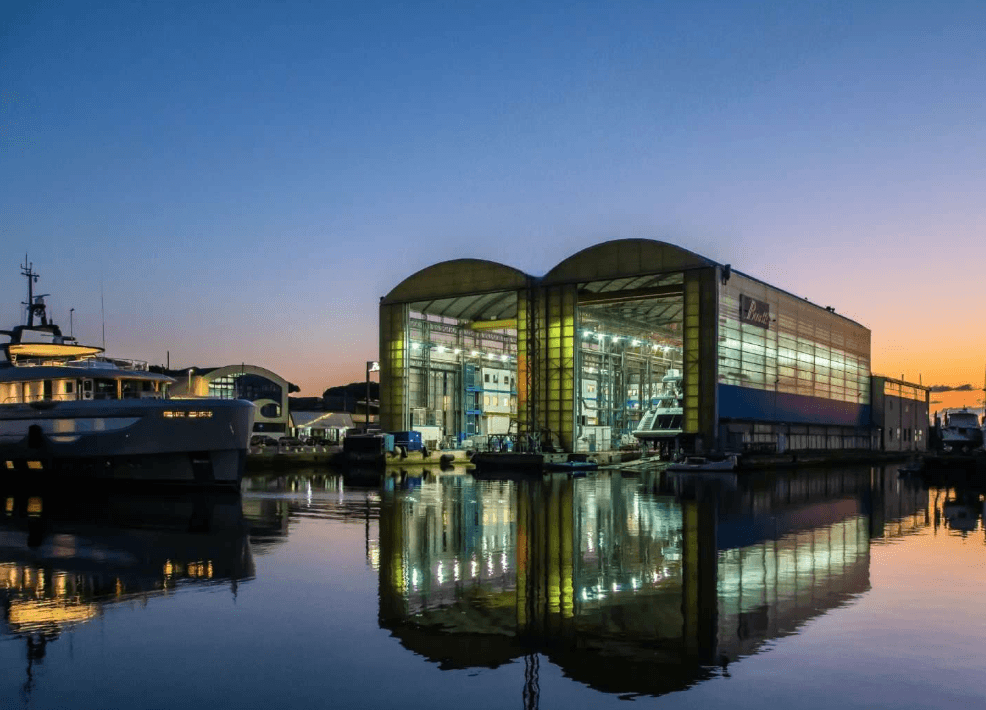
Appointed CEO in 2020, he now leads a business that has retained its position as the world’s leading manufacturer of yachts over 24 meters for 26 consecutive years.
The past three years have been among the most consequential in the group’s history. Revenues for the 2024/25 financial year reached €1.5 billion euros (US$1.53 billion) — a 98% per cent increase over six years — supported by a new-order backlog extending through to 2029. To sustain that trajectory, the group has launched a multi-million-euro investment plan focused on increased production capacity across all shipyards as well as research and development.
All Eyes on Asia
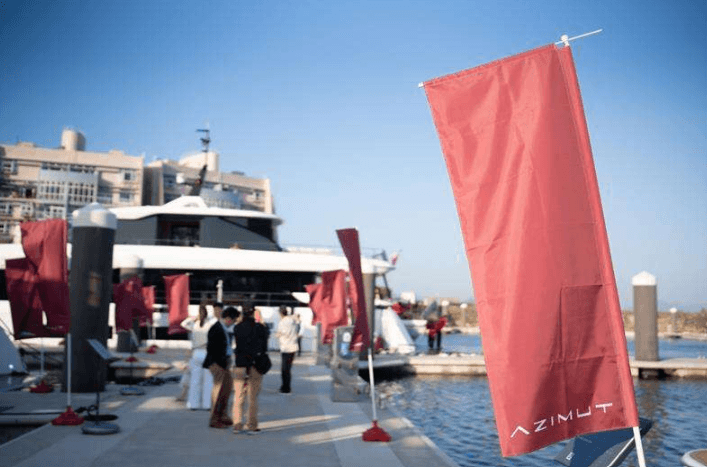
With so much development under way and given the political and financial tensions generated by the US-Iran conflict, it is clear that Valle has his eyes firmly on Asia and its potential for both the Azimut and Benetti brands.
“We see that this kind of impact, like other tensions the world has experienced, inevitably resonates across every industry. Within the yachting sector, however, it primarily concerns the smaller boat segment,” says Valle. “When we’re talking about 80 feet and above, the demand remains steady and I can see that our customers are still increasing in number. “
Asia-Pacific is seeing significant growth in the number of ultra-high-net-worth individuals — an audience the group is keen to capture.
“From my point of view, considering all the geopolitical tension that we have in the world, I think that Southeast Asia could have a bright future for any kind of business, and of course that relates to the yacht industry,” says Valle. “I think that Southeast Asia [markets] can develop a bigger potential than what they are right now.”
Two Brands, Two Directions
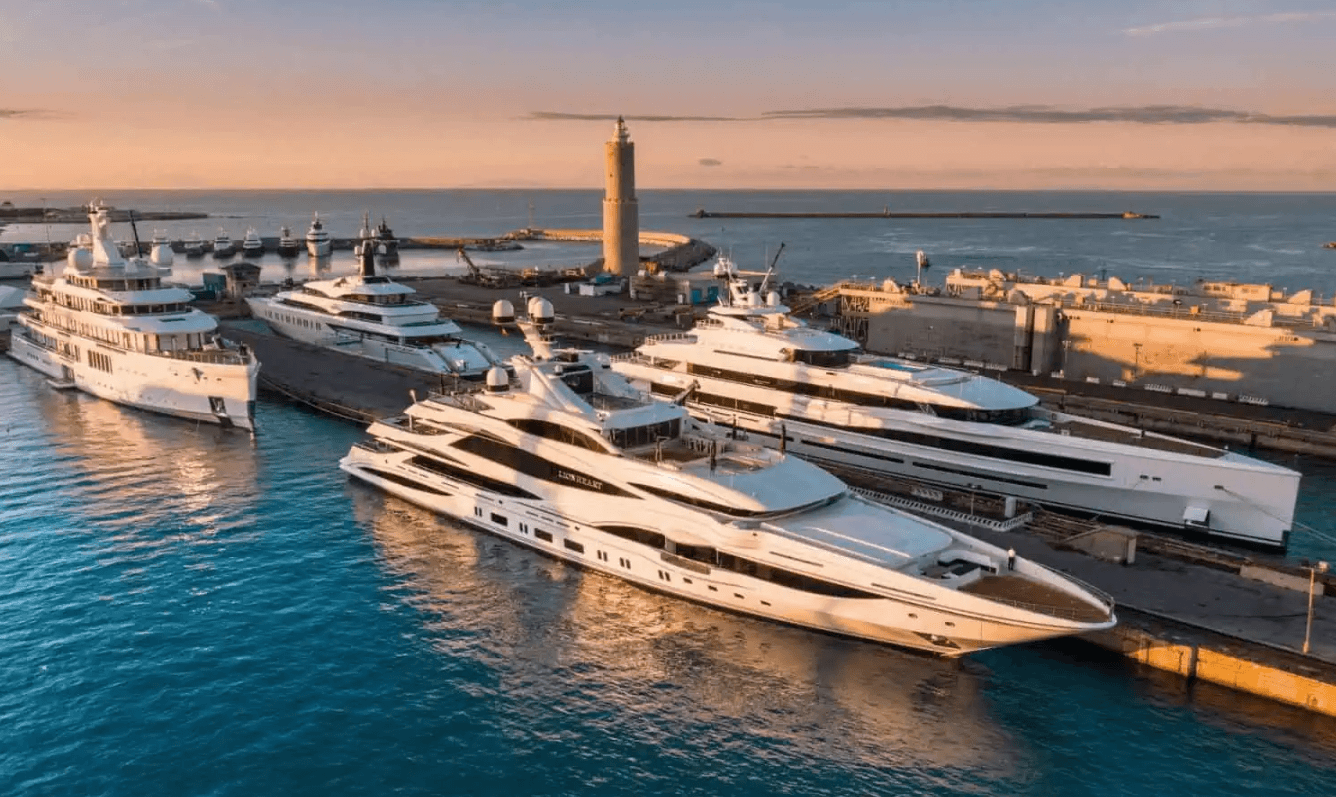
The group’s dual-brand positioning is central to Valle’s vision. Azimut is characterized as a sportier, more elegant brand, whilst Benetti occupies the space of classic high-luxury yacht building — a distinction that is more than cosmetic.
“We have always worked to keep the two brands in two separate areas, and the distinctiveness between the two brands has been very clear, both in terms of products and in terms of how we communicate those products. We have different designers, both for exteriors and interiors, for each brand, because we like these identities to be very clear. Beyond the fact that Azimut does planning hulls and Benetti does displacement hulls, if you look at the boats from the outside, you will immediately recognize that they are very different kinds of products, and very different brands."
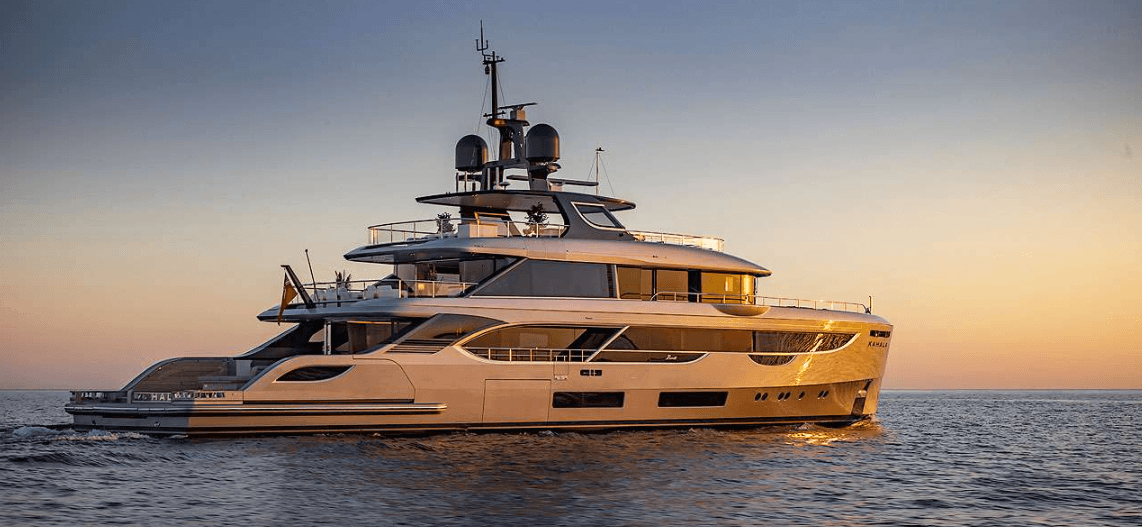
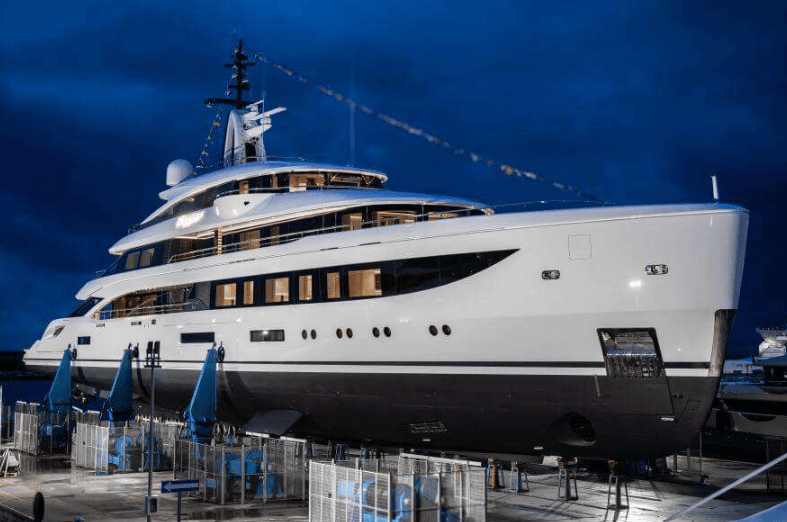
This brand distinction has also been reinforced by the introduction of landmark models from each marque. For Benetti, the defining innovation of recent years has been the Oasis Deck — a concept that has become the new experience and style paradigm for the entire industry, fundamentally reimagining the relationship between the yacht’s beach area and the sea. The Oasis 40M (above), which exemplifies the concept, places an expansive, resort-style deck directly at water level, dissolving the boundary between vessel and ocean and responding to a generation of owners who prize immersive, outdoor-focused living over the enclosed formality of traditional superyacht design.
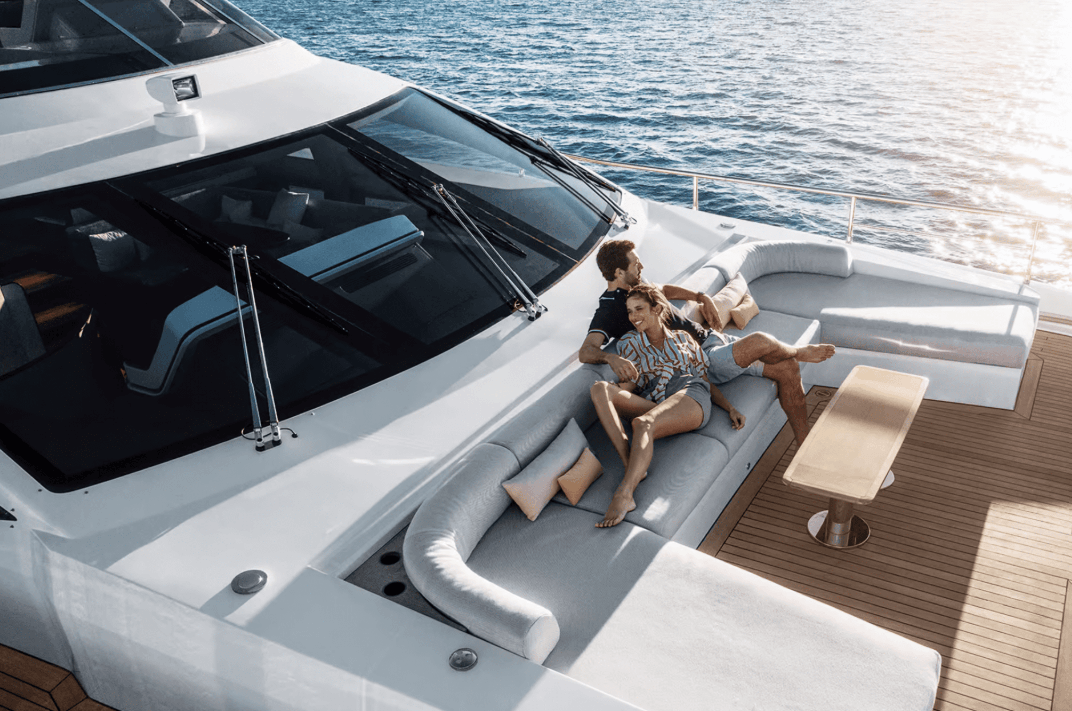
The Oasis Deck’s success has proved contagious within the group. Inspired directly by Benetti’s Oasis range, Azimut developed the Seadeck series — its most ambitious and technologically advanced product line to date. The Seadeck 6, first of three models, made its world premiere at Cannes Yachting Festival in 2024, with the Seadeck 7 (below) and Seadeck 9 following across 2025 and September 2026. The series is Azimut’s first hybrid motor yacht range at this scale, and its most efficient: the Volvo Penta hybrid-electric package fitted to the Seadeck 7 enables the yacht to cruise and maneuver in full electric mode at speeds of up to 11 knots, with the ability to recharge batteries under way and power all onboard systems for up to 12 hours at anchor without the generator running.
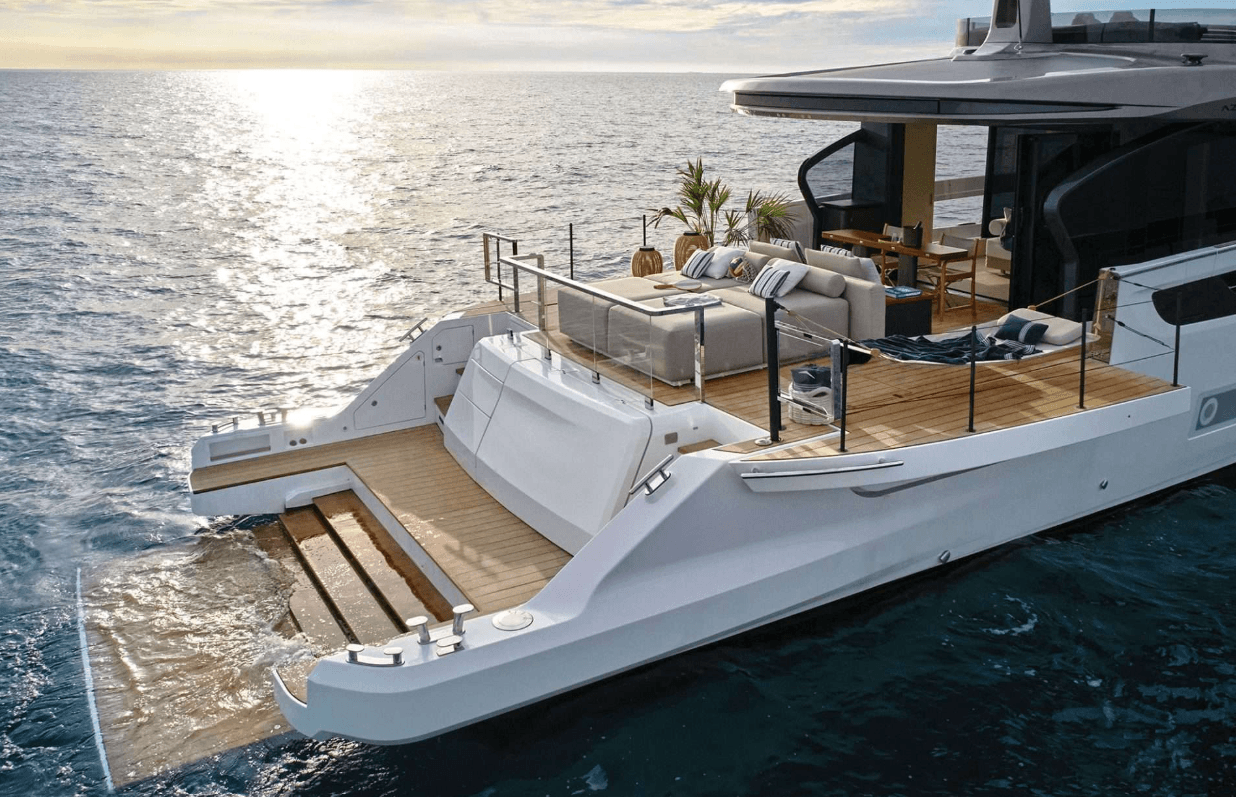
Another signature feature is the so-called Fun Island — an open aft terrace conceived as a floating social space, where sliding doors dissolve the boundary between interior and exterior and guests in the water remain part of the conversation on deck. Sustainable materials complete the picture: cork replaces teak on the decks, recycled fabrics are used throughout, and FSC-certified timber features in the joinery.
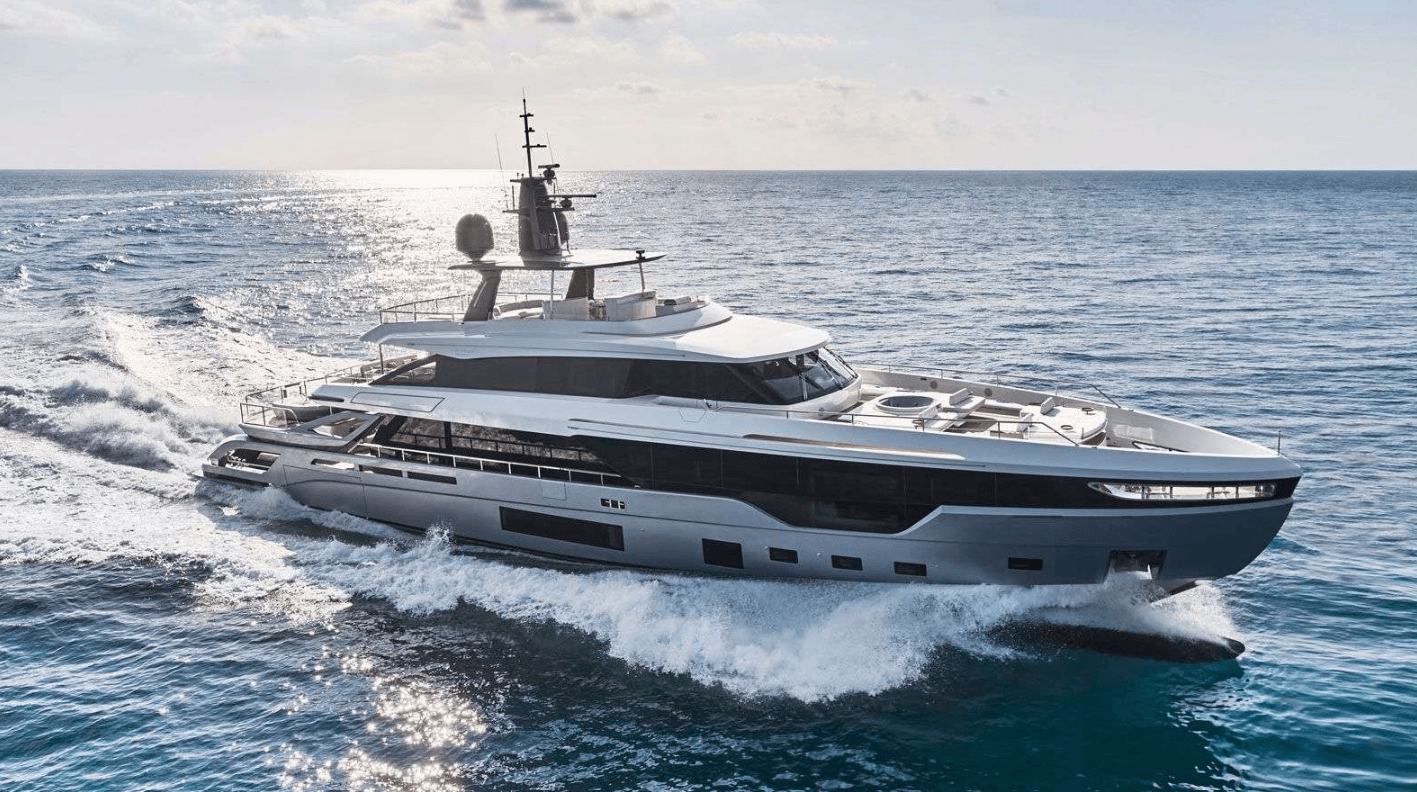
Complementing the Seadeck at the upper end of the Azimut range is the Grande Trideck 38M (below) — the current Azimut flagship and one of the most talked-about superyacht launches of recent years. Its “three decks plus one” concept introduces a half-raised aft deck that creates four cascading terraces, generating a uniquely sea-immersive effect across the entire vessel. The pioneering use of carbon fibre lightens the superstructure by up to 30 per cent, enabling increased interior volume and stability without adding total weight, and the high-efficiency D2P hull reduces fuel consumption by at least 20 per cent compared to the market average.
With the September 2026 European boat show season on the horizon, anticipation is already building around what the group will present at Cannes and Monaco. Highlights will include the world debut of the Magellano 27M — a new long-range voyager with exterior design by Finnish architect Jarkko Jämsén — and the eagerly awaited first public presentation of the Grande 44M, the largest model Azimut has ever produced.
“Grande 44M is proof that true innovation anticipates what owners really desire,” says Valle. “This is confirmed by the five units sold even before the official presentation of the project, all bought by Azimut owners who understand the shipyard’s values and wish to grow with us.”
A Greener Approach
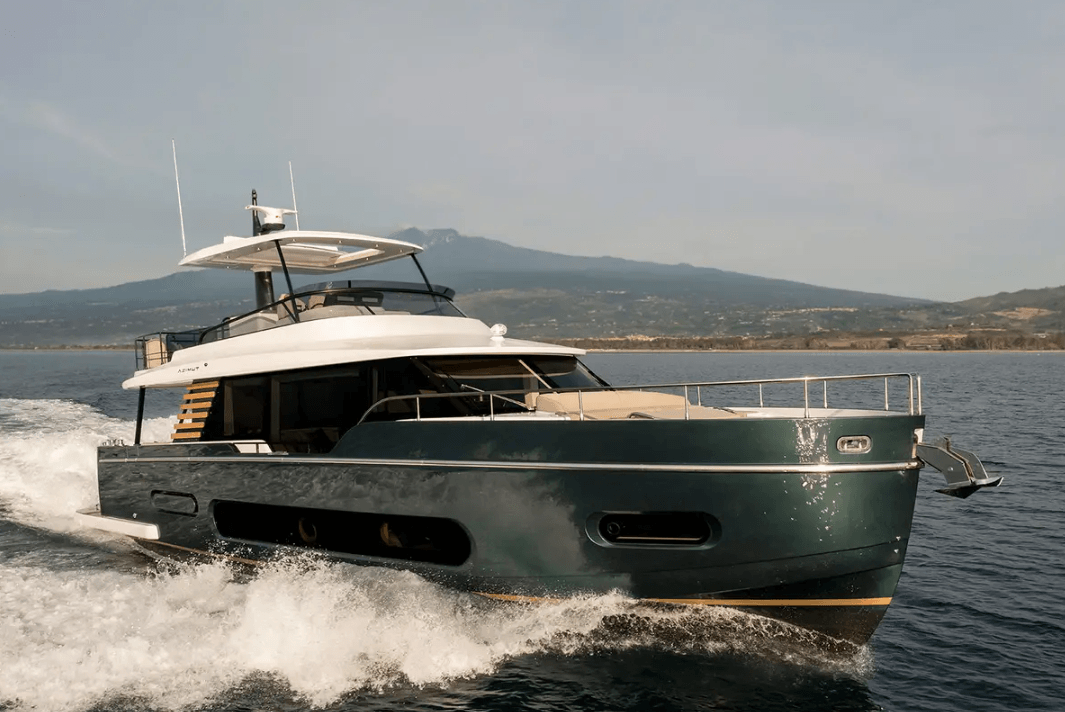
Underpinning all of this product development is a sustainability agenda that Valle has positioned as a genuine commercial and ethical priority rather than a marketing exercise.
“We are following a pragmatic approach when it comes to sustainability, and we have always done so,” Valle told APB. “Remember that sustainability, as a word, was once very important to say, and everybody was working on a marketing approach only to stay unsustainable in reality.”
In 2023, the group signed the first agreement of its kind in the sector with Eni Live, replacing all fossil fuels used for sea trials, tests and prototype transfers with HVO biodiesel — a renewable fuel derived from organic raw materials that can reduce CO2 emissions by up to 90 per cent compared to conventional fossil fuels, depending on the raw materials used in its production. Research at Benetti’s R&D department has since extended to green methanol from renewable sources.
“We entered into this agreement in an attempt to anticipate the times ahead and even now, there are no others [yacht companies] following us,” said Valle. “We pushed hard to have HVO as an alternative fuel, because, again, this was something that was very pragmatic and very real.”
Valle is quick to point out that the use of HVO biodiesel is not about directly cutting the emissions of individual yachts but about a much larger impact.
“You do not reduce current emissions because you’re using HVO. We advocate for the use of biodiesel because it reduces the emissions of fuel producers. Instead of thinking tank to wake, we are thinking well to wake, and that’s allowed us to reduce emissions dramatically. I think that now, with the pressure on fuel production, this could be an alternative that is real and sustainable.”
On emissions transparency, Valle commissioned Lloyd’s Register in 2023 to develop a carbon-emission index for sub-24-metre yachts — an extension of the SEA Index already available for larger vessels — so that every Azimut yacht now carries an official emissions rating from one of the world’s most respected classification bodies. It is an initiative that no other shipyard has yet adopted. “This kind of rating is on almost all products today, from houses to electrical appliances, but not in this industry,” said Valle. “We decided to do it in the hope that others would follow.”
A yacht model’s Carbon Index level is something that is factored in before the concept even leaves the drawing board.
“Whenever we launch a new yacht, we set not only the contents that we would like to have on board — in terms of dimension, size, power, speed and accommodation — but also the level of CO2 or Carbon Index level that we want to reach for each new model. This is determined by many factors, not only propulsion but also the weight of the vessel and its performance during cruising.”
All innovations, of course, take time before they are adopted and become the norm. “Whenever you try to launch an innovative product, it takes time for the market to absorb,” says Valle. “You start with something that is new in the production phase, and then you start communicating what you’re doing, then you have the time it takes to deliver, and then the time it takes for the market to realize the benefits. We’re now at a point when the market has realized that there is a very real, concrete benefit to what we are doing.”
Valle also sees a direct correlation between the reduction of emissions through sustainable technology and improvements in onboard comfort, including reduced vibration and noise and the ability to power hotel loads in emissions-free silence.
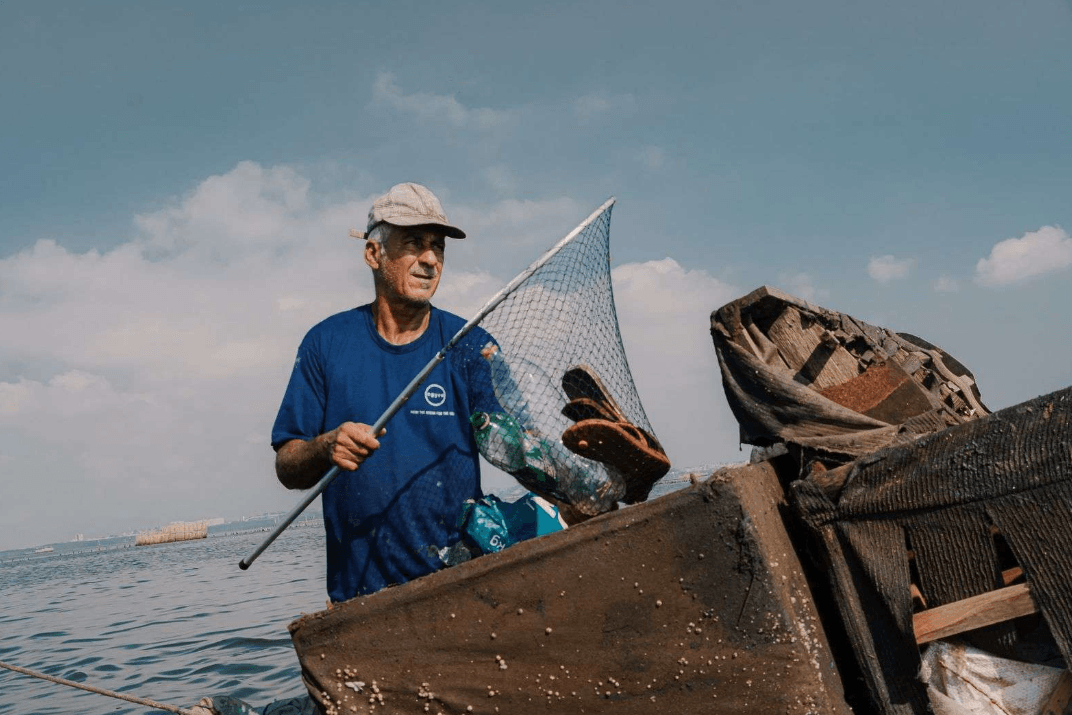
The group’s environmental commitments extend beyond emissions reduction into the urgent challenge of ocean plastic pollution. In late 2024, Azimut|Benetti became the first company in the nautical sector to partner with Ogyre, an Italian platform dedicated to the recovery of plastic waste from the sea, in a collaboration that signals a meaningful broadening of the group’s sustainability agenda.
The partnership targeted the collection of over eight tons of plastic from the world’s oceans in 2025, achieved through the work of local fishing communities in Italy, Brazil and Indonesia operating a so-called Fishing for Litter model — whereby Ogyre provides fishermen with equipment, logistical support, training and financial compensation to collect marine waste alongside their daily work, placing coastal communities at the centre of positive environmental change.
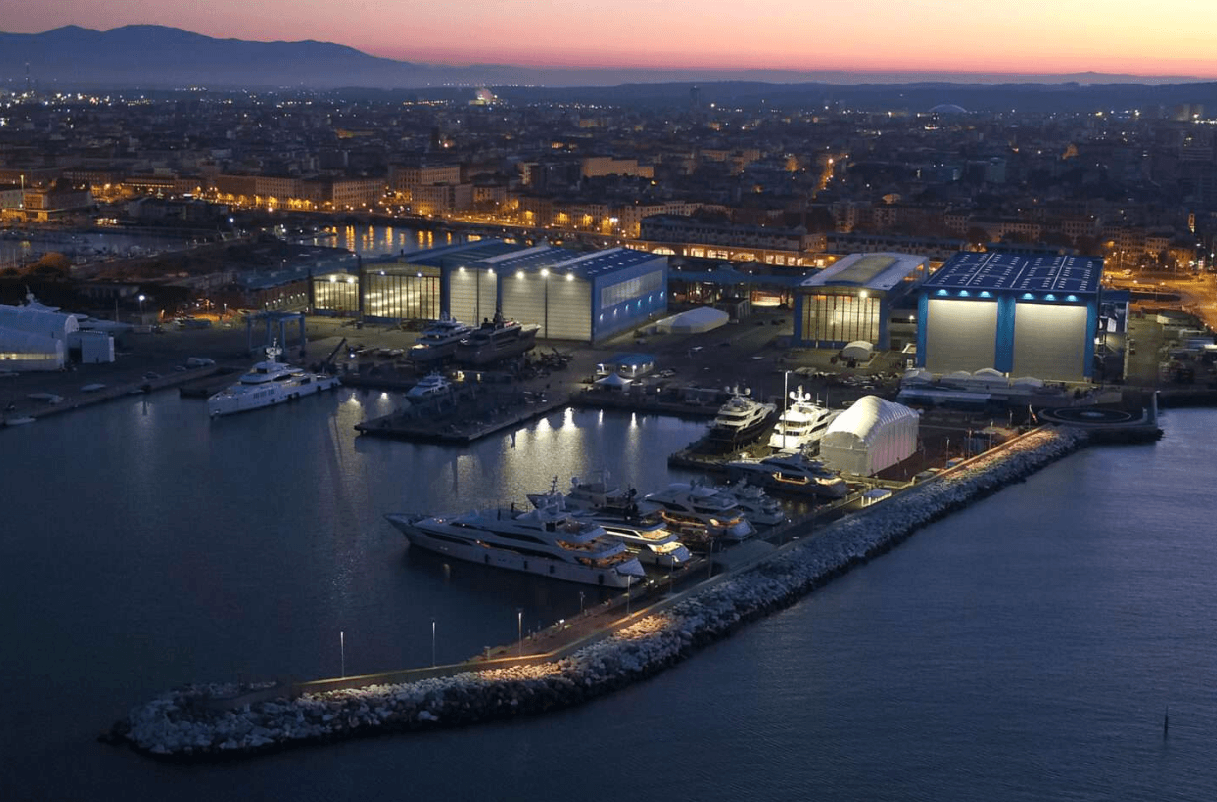
The next phase of the collaboration involves launching a collection hub in Livorno, a key territory for the Group as home to the Benetti shipyard, reflecting a commitment to give back to the local community
“Through this partnership, we can expand our contribution, extending it from the construction of low-emission yachts to the removal of plastic waste from the seas.”
For Valle, the message is simple: in yachting’s new era, sustainability and commercial success are not in conflict — they are, increasingly, the same thing.