Take a Susquehanna River Cruise on Budweiser Beer Baron’s 1912 Boat
By Joel McCord
The folks at the Susquehanna National Heritage Area (NHA) and their colleagues in York and Lancaster counties in Pennsylvania were trying to get people to see their river as a connector, rather than the barrier some considered it to be. The efforts have resulted in a one-of-a-kind cruising opportunity on a fascinating historic vessel.
“The river connected the counties in the past and connected the people with Chesapeake Bay and we wanted to restore that connection,” explains Abigail Teaford, the boat manager for Susquehanna NHA. The problem, she says, is the river isn’t accessible to a lot of people unless they have a boat. “So, we started the pontoon boat tours to give more people access to the river and its heritage.”
The pontoon boat tours launched in 2019 from a dock at their headquarters in a colonial-era mansion not far downstream from the bridge that connects York and Lancaster counties. But the grant funding for that program ran out at the same time they were looking for a bigger pontoon boat to accommodate more people, recalls Mark Platts, NHA president.
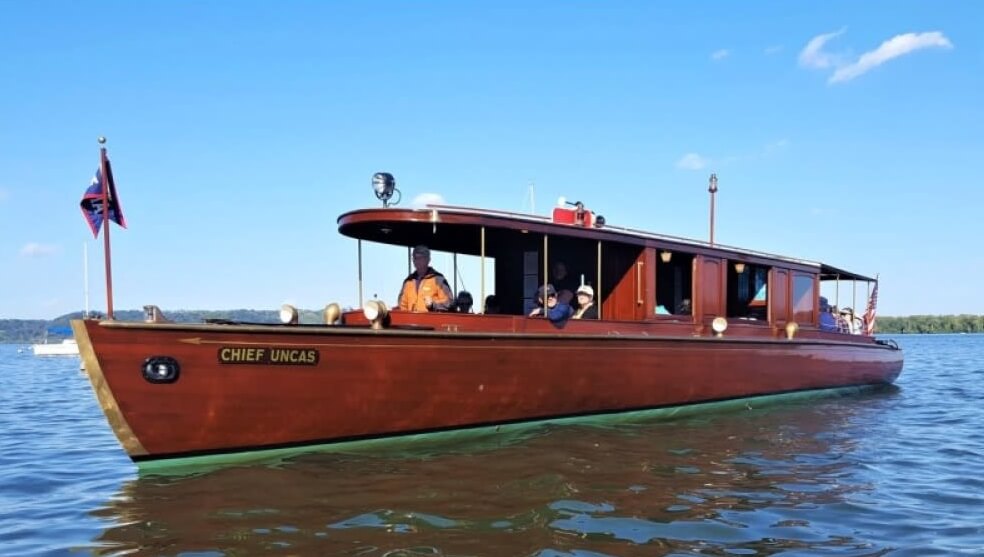
And that’s when they learned of a boat that would accommodate more people and had a genuine Susquehanna River history. It was Chief Uncas, a 55-foot electric motor yacht built in 1912 for Adolphus Busch, the Budweiser beer baron. The boat, built by Elco Motor Yachts, had cruised Lake Otsego, the headwaters of the Susquehanna, from the Busch family’s summer estate in Cooperstown, New York, for more than a century.
Friends put Susquehanna NHA staff in touch with Lou Hager, Busch’s fourth great-grandson who was looking to sell the boat. Chief Uncas, one of the earliest to have an electric motor, is a truly unique vessel. A team from the heritage area headed upstream to take a look.
“We went to Cooperstown, took a ride on the boat on Lake Otsego and decided it would be the perfect connection,” Teaford recalls.
An Electric Legend
The 55-foot-long boat, made of mahogany planking with white oak ribs and frames, “was in pretty good shape, but it didn’t meet U.S. Coast Guard requirements for a passenger boat on the Susquehanna,” Platts said. Nonetheless, they negotiated the deal with Hager to buy the boat using grants and donations and loaded it on a huge flatbed truck for the 400-mile journey downstream from Cooperstown to its new home on the river.
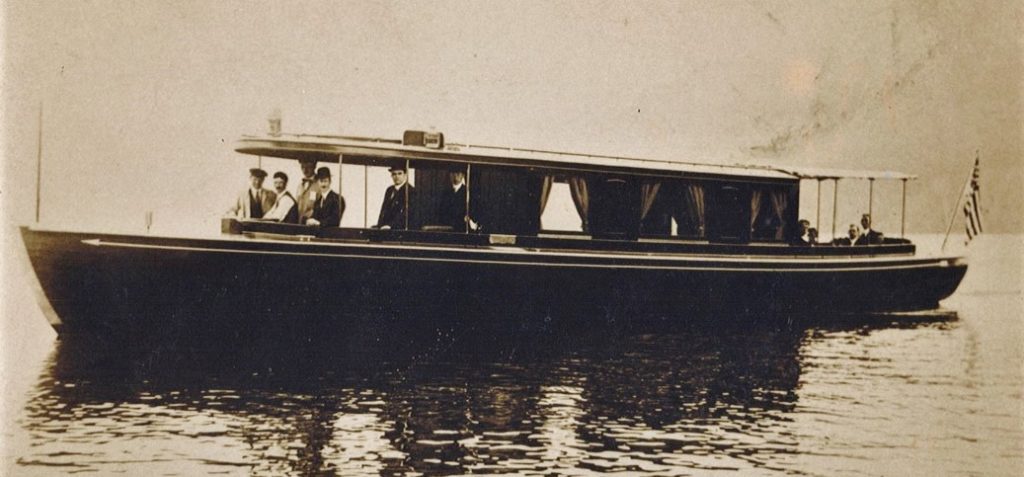
The boat, named for a character in James Fenimoore Cooper’s novel The Last of the Mohicans, arrived in Wrightsville (in York County, Pennsylvania) in the fall of 2021 and a crew went to work on it.
“We had to redo the electrical system to meet marine standards, replace windowpanes with tempered glass, add safety equipment and signage, add a ton of ballast (repurposed railroad track), and pass a USCG stability test to confirm the number of passengers we could safely carry, which turned out to be 24,” Platts explained.
The stability test consisted of 50-gallon barrels filled with water placed on benches amidships. The barrels were then moved to the rails to determine how far the boat would tip. That gave the crew their biggest challenge, Platts said.
Just as they were in the middle of the test, the owner of a pontoon boat moored nearby took off at top speed, creating a wake that rocked the boat terribly. “And the Coast Guard evaluator was screaming, ‘Move the barrels!’” Pratts said. “We had to start dumping barrels of water into the river.”
Surviving the Test
Despite the excitement, Chief Uncas passed the test, and the Heritage Area began public tours that fall. The start of the 2023 tour season was delayed while they finished more work on the boat, and the NHA is now coming down the stretch of Chief Uncas‘s second full cruising season.
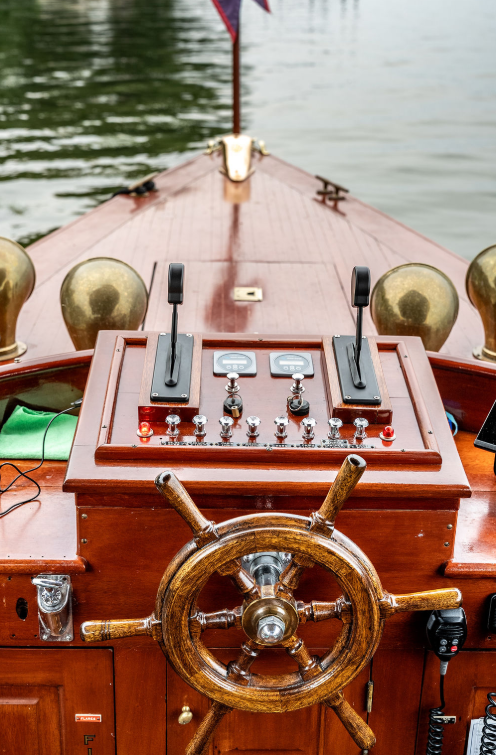
The boat is powered by two 4-hp electric motors that are charged by 16 12-volt batteries. With its shallow draft of 2.5 feet, it can comfortably cruise at about 8 knots through this part of the river, deepened with water backed up from the Safe Harbor hydroelectric dam, just a few miles downstream around a sharp bend.
Ron Lawson, one of several pilots who operate the boat, says one provision in a series of licenses that allow the dam to operate requires it to keep the area where Chief Uncas cruises deep enough for navigation.
Lawson, who has a home nearby, has a Coast Guard Master’s license from his days on an offshore fishing vessel in the Florida Keys. He says he heard the NHA staff “needed someone with a master’s license and there aren’t that many of those around here,” so he applied. “It started out as a lark, but now I’m a regular for their weekend trips,” he said.
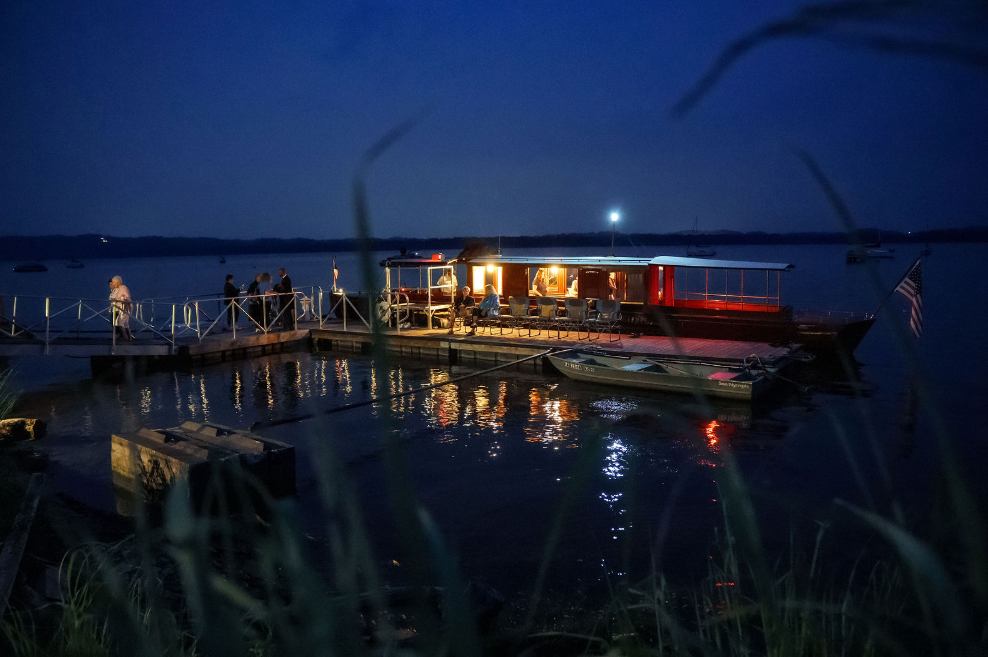
The heritage area says that Chief Uncas‘s “well-documented family heritage, eco-friendly power, and historic association with the Susquehanna River at its source” makes it “a fitting vessel to showcase SNHA’s mission and focus on history, environment, and the river.” On a recent evening tour, the focus was on the connection between the river and the Chesapeake Bay. Not only is the Susquehanna the largest feeder into the Chesapeake, the Bay was formed as a drowned valley of the ancient Susquehanna.
There is also a key historical connection to freedom seekers in the era of slavery. Nelson Polite Jr., the president of the African American Historical Society of South-Central Pennsylvania, told of the Underground Railroad’s routes along the river through the state.
Dressed in a black tailcoat, white shirt, and red bowtie, which he said was what the railroad’s conductors wore to stand out to freedom-seeking people, he worked his way back and forth on the boat, telling the stories.
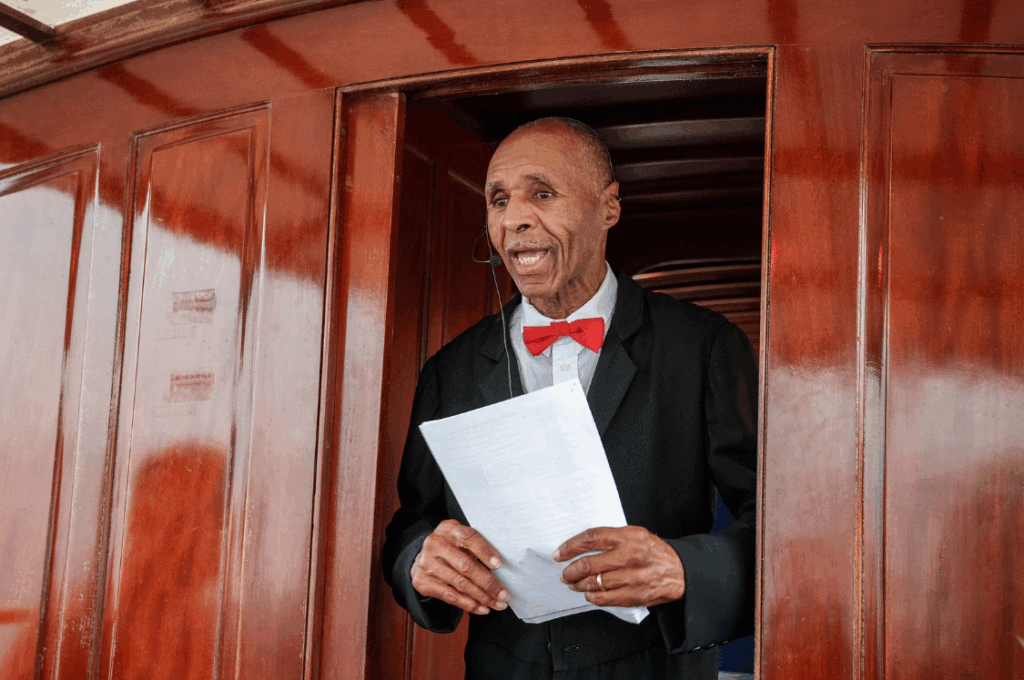
“There was a network of people, black and white, helping to guide Africans to freedom,” he said. “They weren’t African Americans then because they weren’t citizens.”
He said Harriett Tubman, the Maryland native and most well-known Underground Railroad conductor, led freedom seekers to Peach Bottom, Pennsylvania, just north of the Mason-Dixon line. There was another crossing farther upstream at Wrightsville, where Robert Loney, a free Black boatman, ferried Underground Railroad travelers across the river in the dark.
Hearing about the unique vessel and tour from friends, local developer Ed Milner brought more than a dozen friends out for the experience. He called boat manager Abby Teaford and asked, “How many tickets you got left? I’ll take them.” So, he and 16 of his friends boarded, along with an array of salmon, shrimp, lobster pieces, crab salad and drinks that he had catered, from the dock at Long Level for the tour.
“It’s the novelty of the boat,” he explained. “And we’re getting out on the river with good food and good friends and getting some education.”
There are plenty of River Discovery Boat Tours slots left for this month. To learn more or make a reservation, visit the Susquehanna National Heritage Area online.