Tidal Power Integration Success
A test combining tidal power, battery storage and hydrogen production has been successfully completed by the European Marine Energy Centre (EMEC)
In a demonstration hailed as a World first, a test facility in Scotland has successfully integrated three power generation and storage technologies to deliver an uninterrupted supply of renewable energy. This could provide coastal ports and communities that already have access to tides with a fully dependable domestic grid, without the variable nature of other renewables such as wind and solar. The secret has been to find a way to sustainably plug the gaps when the tide slows, goes slack, and then turns. Another system needs to automatically step in and fill the gap, but without using fossil fuels.

On a test station on the Island of Eday, the three technologies were combined. These comprised of Orbital Marine Power’s O2 tidal turbine, Invinity Energy Systems vanadium flow batteries and an ITM Power 670kW electrolyzer.
When the tide around the Scottish island was flowing fast, 2MW of power from the tidal turbine was used to charge the battery system, as well as supply electricity to run the hydrogen electrolyzer. Any surplus power was exported to the grid. As the tidal power diminished, the batteries kicked in to keep the electrolyzer going, so it could split water to create hydrogen and oxygen. The hydrogen could subsequently be used in a standby fuel cell.
As part of the tests, a few emergency situations were introduced, such as the electrolyzer tripping out. The team were able to respond in seconds to prevent a total shut down.
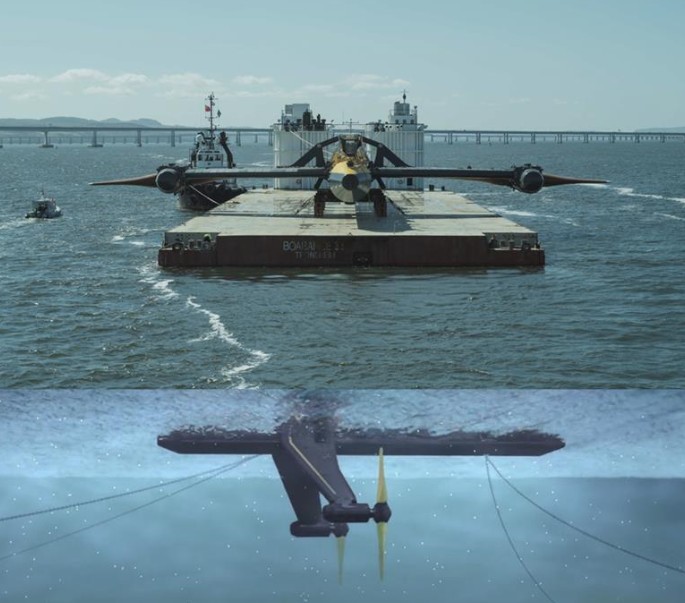
The results from the tests have shown that some improvements can still be made, particularly in the battery management systems and electrolyzer control, but overall, the combined technologies successfully smoothed out the cyclic nature of tidal energy.
Andrew Scott, CEO at Orbital Marine Power, remarked “This approach will be key as the tidal industry scales globally while strengthening energy resilience for coastal communities. Tidal energy offers a predictable source of renewable power, and this demonstration shows how we can unlock its full potential through innovative integration.”
Scott also commentated that the use of a large battery bank helps tidal power generation to be fully exploited, creating new markets and opportunities for industry to decarbonize. The EMEC feels that this type of technology overlap could remove constraints in the grid and create more resilient renewable energy systems.
Jonathan Marren, CEO at Invinity Energy Systems, said, “With this exciting demonstration, EMEC have proven the suitability of vanadium flow batteries for two emerging applications in the form of green hydrogen production and tidal power firming. We are delighted to have supported EMEC in the delivery of this world first project, integrating our Scottish-made battery technology into cutting edge applications which could form a key part of our future grid networks, not only in the UK, but globally.”