Timesharing and the Goldilocks Syndrome
Introducing the Yacht/3
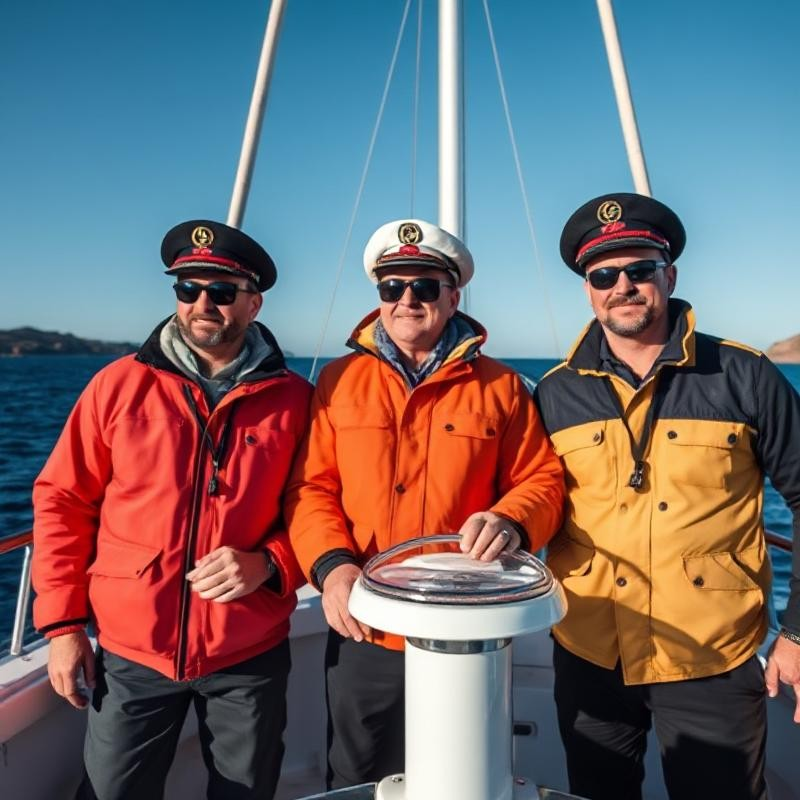
I read in the Ol’Trade Journal that a major yacht manufacturing company will be offering timeshare programs for their large vessels. Their rationale is that the typical large motoryacht is only used about 6 weeks (total) out of the year by their owners so why not timeshare her to cut owner’s expenses (and, by the way, hopefully sell a lot more big boats)? The three owners (owners/3) will each have the use of the yacht (yacht/3) for around three months of the year with three months total down time for maintenance, repairs, crew rest and rotation.
I know this has all been market researched to death (so was the EDSEL!) by MBA types who are far smarter than I am and these guys think this is a floating gold mine. Timesharing makes sense to entice new people into boating and, from this standpoint, the idea will probably be successful. Once these people become experienced boat people, however, things will change fast and I will tell you why.
Needs
Boats and yachts are very personal expressions of the owner’s wealth, taste and needs. “Needs” is key here. How do you build a large yacht for the masses? Problems arise from the outset. What we will have here is a whole series of bland, lifeless, nondescript yachts/3 designed to please the lowest common denominator. Slob yacht design will be born. The blah designs will offend no one (but, at the same time, excite no one).
How do you lay out the interior? Is the owner’s stateroom on deck or below? Does the owner get a den or not? Engine type? What is the speed and range? What gear will be fitted? Hell, it is difficult to get any two boat owners to agree on anything! How in the hell will you get three to agree on what their ultimate yacht/3 will be? Which wife is going to decorate the interior and will it be French Provincial or Art Deco? Here again the interior decor will be to the lowest common denominator (slob interior design). Floating Motel 6s will prevail. Finally, who is going to name the yacht/3? This is a real problem since owners take great pride in coming up with original names for their vessels. Again, the lowest common denominator will prevail and some bad, bland names like “EZ Life” or “Fun in the Sun” or “Fansea” will be affixed to the transom of these poor vessels/3. Better yet, they could simply be numbered!
Those are the biggies. Owners simply love to get involved with minutia like the sheen of the interior wood, helm type, engine controls, size and type of TV’s, door knobs, switches and the color of the compass card for God’s sake. Recently while on a West Coast trip, I had the opportunity to board a magnificent 160-foot motor yacht. While touring the interior, I noticed a number of funny little inconspicuous trap doors built to the same high standard as the rest of the joinerwork. Turns out, these were for owner’s cats who regularly cruise with him. The trap doors lead to tiny cat heads! Now maybe this is not the greatest innovation in the yacht world but it was important enough for the owner to spend the time and money to have them incorporated in the vessel.
Stuff
Then there is the all-important “stuff factor” which is an integral part of owning a boat (not to be confused with the “strange stuff factor” which is something else entirely and beyond the scope of this article). Yachtsman love to have their familiar stuff aboard. Owners want to step aboard their boats and be ready to cruise. They keep separate wardrobes, toiletries and other personal items on the boat full time. They do not want to “move in” every time they come aboard for a cruise and they do not want a Marriot-like check in procedure with the captain at the pilothouse when they board the vessel (“May I have your name and your credit card? Single or double bed? Smoking or nonsmoking cabin?”).
This brings up the question of the crew and their relation to the owners. Owners/3 will merely be guests aboard their yacht/3. With this system, it will be the crew who truly owns the boat and will be the crew who will be directing owners/3 around. The crew will be employed by the timeshare company. Oftentimes, the crew will be rotated so when you check in for your stay, strangers may greet you at the pilothouse. Many owners love to run their own boats, do you think the captains of these yachts/3 will let the owners/3 run the boat? Doubtful.
Because it is There
When one owns a boat, it is nice to know that it is there and can be used anytime you wish. You can pop down to Florida from wintery Michigan on a lark. Even if you do not want to use the boat, it is nice knowing that it is there. Hell, nothing is more useless than a boat on a cradle in winter storage, yet owners love to visit their boats in the dead of winter just because they know it is there – like an old friend. Yachts/3 will not be old friends to their owners/3 – they will be total strangers.
Jealousy
With owners/3, jealousy will run rampant. “That bastard put 600 hours on the boat last year and I only put in 30. Why the hell should I be subsidizing his cruises?” Big questions arise: who gets the yacht/3 for the Fourth of July weekend or the wife’s birthday party or the daughter’s wedding? Where will the vessel/3 be located in the summer? The Med? Maine? Florida?

Goldilocks and the Three Bears
Most importantly, there is the Goldilocks syndrome. It all comes down to “WHO’S BEEN SLEEPING IN MY BED?” This will be the most troublesome problem of all. What jerk put that scratch in the magnificent cherry joinerwork? What are these stains on the bedspread? Who dented this rail? Who put the notches in my headboard? Who reset my favorite TV channels? Who’s bra is hanging in the locker? Who’s condom is under the mattress? And just what is that foul smell wafting from the wardrobe?
The fact is that most people spend very little time with their possessions yet still like to completely own them. Statistics show that people spend only about one hour a day in their cars, and a total of 88 hours a week in their homes. Why not timeshare cars and homes? Finally, the typical husband spends about 1 hour and 20 minutes a week with his wife. LET’S TIMESHARE WIVES TOO! Husbands will be nagged less and the divorces will be much cheaper!
This is a great idea to bring more folks into boating (or for poseurs who really can’t afford large yachts), but a bad idea for experienced yachtsman to whom my advice is: if you can’t do a biggie, buy a smaller vessel. Then you will know that the condom under the mattress is yours.
(Reprinted with permission of Regina Fexas.)
If you would like to read more of Tom's pearls of wisdom, tune in next Friday -- "Fexas Friday."
Better yet, why not get a full dose of infectious Fexas whenever you need it -- and buy one of the volumes below. Better yet, why not buy all of them -- we call them the "Fexas Five." They will provide many evenings of fun reading (better than Netflix), and you'll make the widow Regina very happy knowing that Tom will live on with you the way most of us remember him.
Order 1, 2 or "The Fexas Five" --
To find the "Fexas Five" on Amazon, click here...
Tom Fexas (1941-2006) was one of the most influential yacht designers of the last quarter of the 20th century. With the narrow Wall Street commuters that were built in the 1920s and '30s always on the back of his mind, he wanted to design boats that were at once fast, comfortable, seaworthy and economical to operate. Over the years, he and his firm designed over 1,000 yachts for some of the most prestigious boat builders in the world, including Choey Lee, Palmer Johnson, Grand Banks, Mikelson Yachts, Burger, Abeking & Rasmussen and many others.
Even though toward the end of his career he only designed megayachts and superyachts, including the remarkably influential PJ "Time" in 1987, he is best remembered for his first major vessel in 1978 -- Midnight Lace -- which became a series of 44-52-footers. They were light, narrow, and fast with relatively small engines. He was also influential in the boating community because of the monthly column he wrote for Power and Motoryacht, which began in its very first issue in January 1985.