The Trend After the Next, Part 1
Where We Go after the Retro-Boat Craze has Run its Course
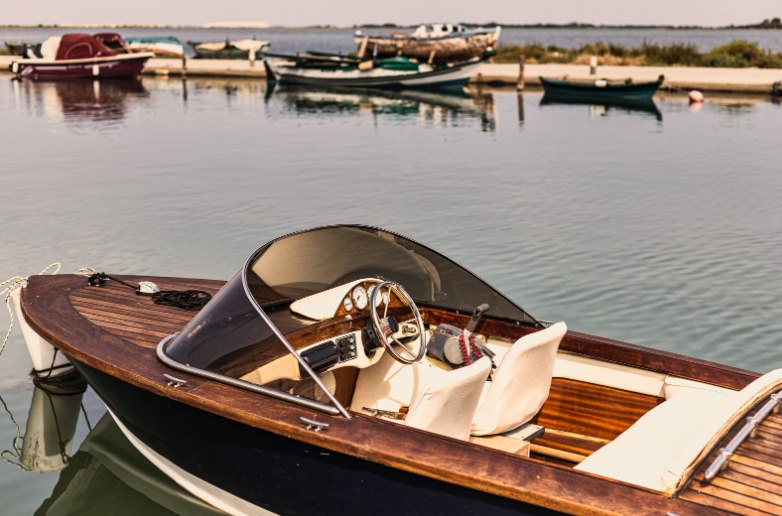
As I predicted many years ago and have recently expounded on, we are presently in the midst of the blobbist period in the time line of yacht design. Ever since the early eighties, boats have become increasingly blobby and will continue to do so until they have virtually no discernable form at all and we can no longer stand to look at them. About five years ago when blob boats were well established, I was already predicting the next trend would be retro boats -- vessels designed with an eye towards the past. I called it right.
Back Is Beautiful
Presently, we are seeing a plethora of retro boats being introduced: Witness Morgan (March 1993) under construction at the Baglietto facility in Italy. Fraser Yachts is touting a new 136-footer that looks like an old steam yacht -- clipper bow, fantail stern, square windows, smokestack and all-drawn by Jay Coyle. Krogen has just come out with a 65-foot Express Commuter. We have recently designed a fiberglass 44-foot Speed Boat for Tornado in Italy which eschews tailfins, oblong vertical windows, wedgy profiles and zoomo striping.
The stern area with its multiple clamshell ventilators, custom cast air intake grills and highly crowned decks, is a throwback to the wonderful runabouts of the twenties and thirties. If you are not convinced that retro is the coming thing, pick up a copy of WoodenBoat magazine and take a look at the great number of ads for new old boats: replicas of old Chris Crafts, Hackers, Gold Cup boats, etc. Yes, after the blob period runs its course (which won’t be too much longer), we’ll roll into the retro period. The question here is, after the retro period, then what?

High Finish = Low Enjoyment
Lately I’ve talked to more than a few clients -- owners of large motorboats -- who love the concept of owning a boat, love boating, love cruising, but absolutely hate the exorbitant maintenance expenses to keep their vessels looking shipshape. This is a rather sad development which started with the fiberglass/aluminum revolution in the sixties. Until then, most boats were made of wood (you remember wood?) and painted with a brush. That was the accepted yacht standard of the time. Brush strokes were expected.
The degree of finish was determined by the finesse of the brush strokes and how well seams and fastenings were hidden. They always showed some, mind you, but on the really well-maintained boats, they didn’t show much. With wooden boats it was never really possible to get a completely flawless finish so few boats were spray painted. But when the era of seamless fiberglass and aluminum dawned, high gloss gelcoats or spray applied paint quickly became the new standard. Suddenly, if your boat had brush strokes, you were a bum -- but a happy bum. Gouge the paint on a brush finished boat and you broke out the surfacing compound, putty knife, an old can of paint and a paintbrush. In a few minutes, it looked like new again.
Do the same on a fiberglass or aluminum boat and it’s just like scratching your Ferrari. Time to decommission your boat to visit the marine body shop with all their sophisticated tents, masks, spacesuits, metering devices, advanced chemistry and spray equipment. Even then the touch up probably won’t be perfect so you might have to paint the whole side of the hull if you want it right (just as you must paint a complete fender or door for a perfect repair on a car).
Floating “88’s”
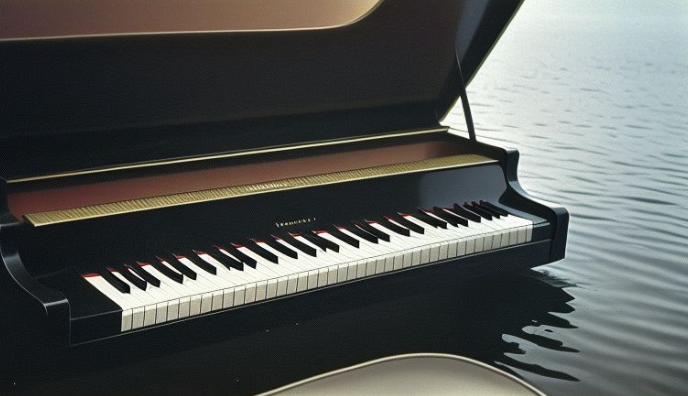
Over the years, the quality of finish has been ever upgraded to the point where “yacht standard” means that we are cruising around in damned floating Steinway pianos! Most yacht owners resent having to carry the large crew necessary to maintain their vessels. Managing a large crew is actually like managing a complete, separate business enterprise (which in fact it is). For boats without crew, yard bills are exorbitant to maintain any vessel in “like new” condition.
Floating Steinway pianos wouldn’t be bad if, like their landlocked brethren, they could be kept in an enclosed, temperature/humidity controlled area. Unfortunately, a boat is subject to UV rays, heat, dampness, cold, corrosive saltwater, fuel oil, potato chips, fish blood, seagull poop, vomit, wracking, pounding and lightning strikes (try barfing on your Steinway piano a few times and see how the finish holds up). Then, of course, now and then the thing has to be docked. Think how you’d feel maneuvering your Steinway piano into contact with a cement wall! Sure, you throw fenders over the side in a feeble attempt to preserve your peerless finish, however, even the fenders will degrade the high gloss surface.
Out on a Limb without a Paddle
I’m going to go out on a limb on this one although it may be a rather stout limb. Some of my prophecies may be somewhat self-fulfilling by means of this article and the fact that we are in a position to plant ideas in clients’ minds which oftentimes get implemented in their new boats. We’ve always prided ourselves on keeping our clients well ahead (or behind in the case of retro boats) of the pack.
We were doing round boats in the seventies while everybody else was doing Origami boats, littered with hard corners. In 1978, we introduced one of the first retro boats to go into production -- the now famous 44-foot Midnight Lace which was then followed by a 52-footer and then a 65-footer. You can look it up. We’ve usually been five to ten years ahead. So you can mark this on your calendar. Put a note on your refrigerator. Program it in your electronic notebook. Here in September, 1993, you saw it first. After retro boats have run their course, the next hot thing in boating will be… the PARAMILITARISM PERIOD.

Sadly, I cannot say that we “invented” the paramilitary pleasure boat. The concept has been around for some time in isolated pockets of the industry. Baglietto has been building boats like this for years (mostly for the same client). The first time I saw one, I must admit, I viewed it as an anomaly and initially poked fun at the concept. That was about eight years ago but since then I’ve acquired a floating Steinway of my own which makes me miss my old wooden boats. Believe me, the paramilitary concept makes sense!
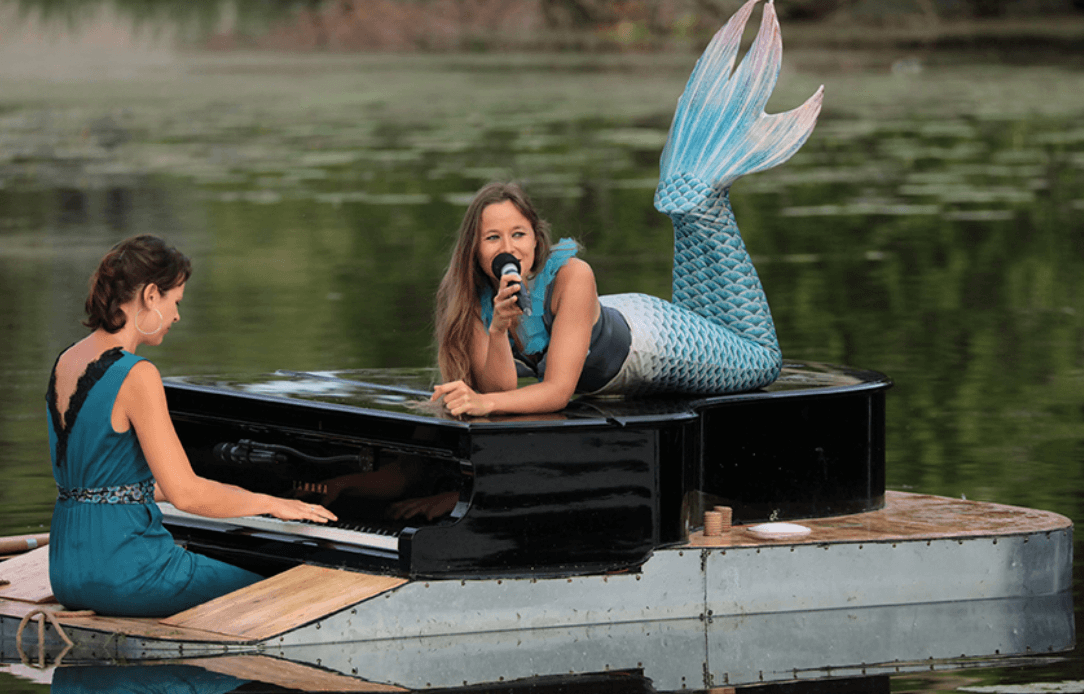
Think about it! A very handsome and purposeful (but not finely finished) low maintenance exterior with an absolutely drop-dead, elegant interior. You could dock with impunity, eat greasy pizza on deck, invade small Bahamian islands or even install a fire hydrant on the foredeck for your dog. Your boating pleasure will increase greatly for two reasons: 1) You won’t be constantly worrying about stuff like your beautiful stainless-steel mast (which looks like a deranged pipe organ that inadvertently dropped on deck) turning to brown crud and 2) Your expenses will drop significantly because you will need fewer crew and/or be covering much smaller boatyard bills. You will become a better person and have extra money for things you’ve always wanted like a Steinway piano, for example.
(Reprinted with permission of Regina Fexas.)
If you would like to read more of Tom's pearls of wisdom, tune in next Friday -- "Fexas Friday."
Better yet, why not get a full dose of infectious Fexas whenever you need it -- and buy one of the volumes below. Better yet, why not buy all of them -- we call them the "Fexas Five." They will provide many evenings of fun reading (better than Netflix), and you'll make the widow Regina very happy knowing that Tom will live on with you the way most of us remember him.
Order 1, 2 or "The Fexas Five" --

To find the "Fexas Five" on Amazon, click here...
Tom Fexas (1941-2006) was one of the most influential yacht designers of the last quarter of the 20th century. With the narrow Wall Street commuters that were built in the 1920s and '30s always on the back of his mind, he wanted to design boats that were at once fast, comfortable, seaworthy and economical to operate. Over the years, he and his firm designed over 1,000 yachts for some of the most prestigious boat builders in the world, including Choey Lee, Palmer Johnson, Grand Banks, Mikelson Yachts, Burger, Abeking & Rasmussen and many others.
Even though toward the end of his career he only designed megayachts and superyachts, including the remarkably influential PJ "Time" in 1987, he is best remembered for his first major vessel in 1978 -- Midnight Lace -- which became a series of 44-52-footers. They were light, narrow, and fast with relatively small engines. He was also influential in the boating community because of the monthly column he wrote for Power and Motoryacht, which began in its very first issue in January 1985.