The Trend After the Next, Part 2
Where We Go after the Retro-Boat Craze has Run its Course
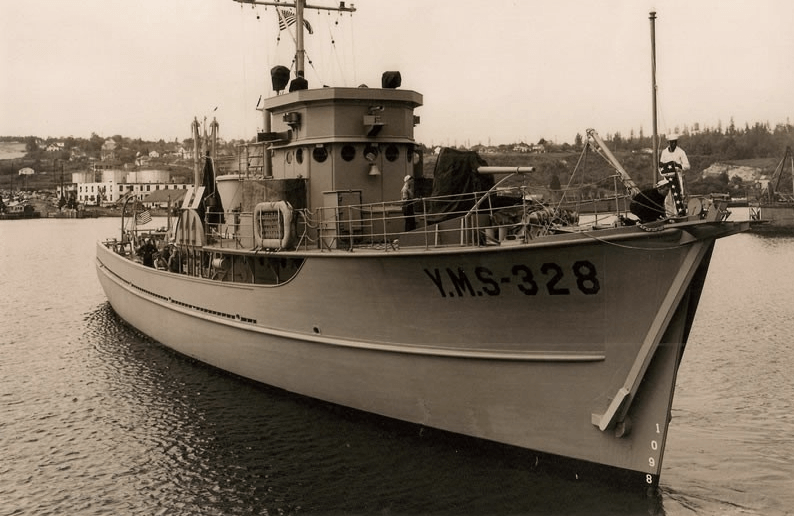
Macho is Practical
When you hear this, the first thing I’m sure you’ll think of is machismo. After all, what could be more macho than conning a mean, aggressive, dangerous PT boat. Actually, machismo has nothing at all to do with it. This will not be for people who need an ego boost or who view their boat as an extension of their manhood. No, this will be a practical trend as an era of practicality dawns on the powerboat world.
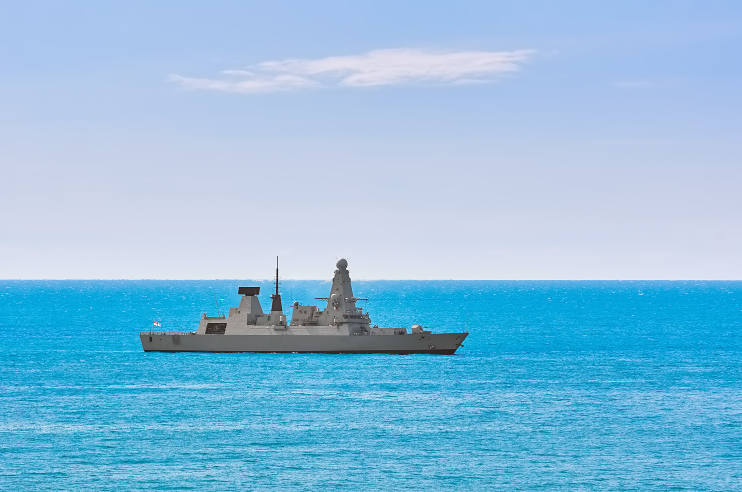
To illustrate what a paramilitary cruiser might look like imagine a scaled down Destroyer or Corvette. Is there anything afloat more beautiful than a Destroyer? (Here the term “beautiful” means “shippy,” functional, purposeful.) Her lines are trim. Her profile is low. She is a truly lovely vessel. This, despite the fact that her flat gray paint looks like it was applied with a broom in a windstorm. Despite the fact that she is devoid of chrome and stainless-steel gewgaws. Despite the fact that her welds are rough and her plating is washboard city. Despite the fact that she is devoid of teak or bright work.
With a paramilitary exterior crew size can be diminished since major exterior upkeep is not necessary. Scrape the hull, go over the side with a bucket of gray (or whatever color) flat paint and a brush. Dent the plating and it doesn’t really matter. Yard maintenance bills would be severely curtailed and the crew that you do have would be much happier not having to maintain. And yet, the motoryacht described above would provide all the pleasures and more.
But there is a problem here. Mike Kelsey, C.E.O. of Palmer Johnson, sometimes says some pretty profound things. One of my favorite “Kelseyisms” states that a boat had better be good looking because the owner spends more time looking at a picture of his boat on the wall than he spends on the boat itself. Boats need to be pretty. Now go back to my Destroyer/PT boat analogy. A boat does not have to have a finish like melting ice to be pretty and, in fact, in a photograph which of necessity must be taken from some distance away from the vessel to get it all in the viewfinder, doesn’t show details. This takes us to the famous footer system for determining vessel condition.
In the world of boats (and cars) a 100-footer can be a six-footer. Conversely, a six-footer can be a 100-footer. It all depends, see, on the detail threshold -- the point as you step away from the boat where blemishes and defects disappear. A perfectly finished 100-footer becomes a ratty six-footer because she can be viewed “up close and personal” revealing a flawless finish. Conversely, you might have to back up 100 feet away from a six-foot dinghy before the blemishes disappear. To be perfectly honest, I must tell you that this system can be applied to women also (send your accusations of chauvinism to me).
Imagine a picture of a Destroyer on your wall. Is anything more “shippy” than a Destroyer? Is anything more uplifting than a PT boat? Yes, from 100 feet, all you see is the silhouette of the boat, the windows, the sheer, how she floats. What you don’t see are the dings, scratches, scrapes, chrome with zits, faded, blackened varnish, etc., etc., therefore, our owner’s portrait of a paramilitary boat sitting in his office if she is well designed, will be pleasing to him.
It is important to note that it is not that owners cannot afford to keep their boats pristine — they simply resent the cost and expense. As the degree of finish is ever upgraded, things can get ridiculous. I saw a crew of a large yacht scrubbing dock lines for God’s sake. Scrubbing dock lines!
I’ve got a real Walter Cronkite for you: THE PURPOSE OF A PLEASURE BOAT IS TO PROVIDE PLEASURE. Did you get that? Many people lose sight of that simple fact. Primping and preening the exterior of a yacht is hardly pleasurable, especially when you have to pay big bucks for somebody else to do it. Increasing the cost of a new vessel by perhaps one-third for a pristine finish is not pleasurable. Worrying about every little scratch and ding is not pleasurable. Maintaining a big crew is not pleasurable.
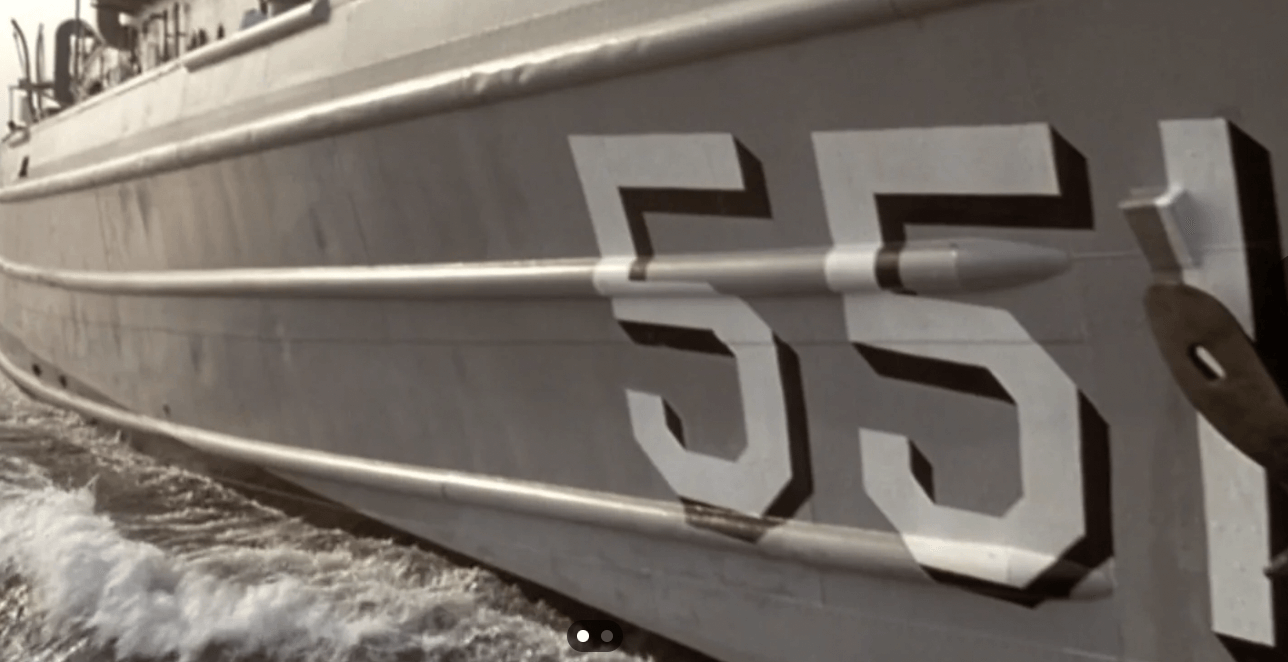
The paramilitary yacht will put pleasure back into pleasure boating, allow one to extract the maximum pleasure from a given investment. Get too close to a military vessel, it looks like a floating, beat-up, corrugated metal garbage can that’s been around the block one to many times. Yet move back and they look purposeful and salty. If the standard of finish keeps increasing every year, soon we will be microfinishing boats and 100 footers will become one-half inchers.
(Reprinted with permission of Regina Fexas.)
If you would like to read more of Tom's pearls of wisdom, tune in next Friday -- "Fexas Friday."
Better yet, why not get a full dose of infectious Fexas whenever you need it -- and buy one of the volumes below. Better yet, why not buy all of them -- we call them the "Fexas Five." They will provide many evenings of fun reading (better than Netflix), and you'll make the widow Regina very happy knowing that Tom will live on with you the way most of us remember him.
Order 1, 2 or "The Fexas Five" --

To find the "Fexas Five" on Amazon, click here...
Tom Fexas (1941-2006) was one of the most influential yacht designers of the last quarter of the 20th century. With the narrow Wall Street commuters that were built in the 1920s and '30s always on the back of his mind, he wanted to design boats that were at once fast, comfortable, seaworthy and economical to operate. Over the years, he and his firm designed over 1,000 yachts for some of the most prestigious boat builders in the world, including Choey Lee, Palmer Johnson, Grand Banks, Mikelson Yachts, Burger, Abeking & Rasmussen and many others.
Even though toward the end of his career he only designed megayachts and superyachts, including the remarkably influential PJ "Time" in 1987, he is best remembered for his first major vessel in 1978 -- Midnight Lace -- which became a series of 44-52-footers. They were light, narrow, and fast with relatively small engines. He was also influential in the boating community because of the monthly column he wrote for Power and Motoryacht, which began in its very first issue in January 1985.