US Military Power Meets Iranian Resilience – How the Gulf Leisure Marine Industry is Coping
By Mike Derrett
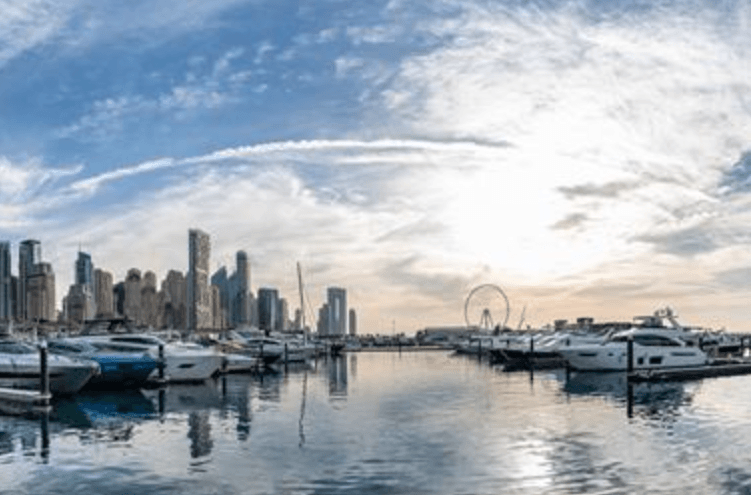
IBI’s Middle East correspondent spent last week in the UAE assessing the impact of the conflict on the industry and meeting key industry players.
The conflict that erupted on 28 February 28 has never been far from the world’s headlines since. What the US expected to be a short, sharp conflict has dragged on as Iran has doubled down, relying on years of planning and resilience-building to survive.
The impact on life in the Gulf and on the marine industry could have been seen as catastrophic: airspace was disrupted, flights were cancelled, oil prices rose, and some people left Gulf countries. This was all fueled by the interconnectivity of the modern world. Yet, something rather un-newsworthy happened: everything worked, people carried on with life, many working from home, and the casualty rate from the attacks was light, with just ten unfortunate people killed in the UAE; more than this would likely have died in normal times from road accidents.
Iran’s initial response tactics to the US attacks were to target Gulf countries’ civilian infrastructure with missile and drone attacks; this was seen as a surprise, but not entirely unexpected, given the way the authorities in most Gulf countries responded. From attack warning systems over the mobile phone network to repairing damaged buildings, everything worked fast. The closure of the important Strait of Hormuz shipping route was always on the cards, while now partially open to traffic, ship owners and their insurers are looking for more transparency before shipping fully returns to pre-conflict schedules.
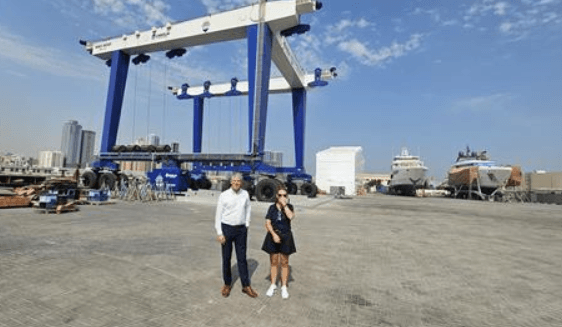
The industry has been very adaptive to any problems. Gulf Craft CEO Erwin Bamps told IBI: “Production at our Umm Al Quwain shipyard was not affected and the supply chain quickly re-focused on other routes for delivery. We are now managing to ship our larger yachts, some destined for the Cannes Yachting Festival via the UAE east coast ports”.
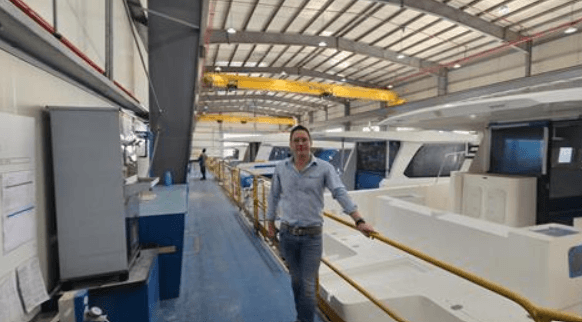
Derrett’s view of the market after speaking to many last week is that the boat manufacturing sector in the UAE is performing well, supply disruptions have been well managed, and industry expansion is likely to continue as forecast, with manufacturers such as Gulf Craft, Sunreef, ENATA and many others leading the way, much of it export-focused.
The boat sales market in the UAE is facing challenges given the current situation. However, the industry remains positive about the consumer market returning in the GCC, and boats are still being sold from Dubai, the regional industry hub, to markets in the Gulf, India, the Indian Ocean islands and Africa.
In the UAE, Emirati nationals will lead the recovery in local boat sales, and this will also be the case in the other GCC countries. Expatriates living in the region, mainly in Dubai, are likely to be less inclined to purchase boats and yachts until the security and economic situation is clearer.
What is positive is how the UAE has faced up to these difficult times and how plans were already in place to cope with this situation. In the opinion of many in the UAE that IBI spoke with, the government response cannot be faulted.
Derrett has been working in the region since 1988 and has seen several conflicts, as well as economic and health (COVID) crises; the GCC countries, especially the UAE, have always emerged stronger, and this will be the case again.
One point of industry concern is the change in date of the Dubai International Boat Show from the historic March/April time slot to November this year, which conflicts with the established time slot for the Abu Dhabi International Boat Show (ADIBS), which closes two days before the planned DIBS opening date. IBI has reached out to the organizers of both shows for comment.