US Navy Modernizes Torpedoes With Sharrow Prop Design

The U.S. Navy has awarded a Phase I SBIR contract to Sharrow Engineering to make a new propeller for its Mark-54 Lightweight torpedo. Sharrow will co-develop with Materials Sciences LLC (MSC), a premier provider of composite and non-metallic structures. The Mark-54 torpedo is used primarily to target enemy submarines and defend naval ships.
The Sharrow props design was chosen by the U.S. Navy to enhance its Mark-54 Light Torpedo’s propulsion efficiency, minimize the acoustic signature, and improve its hydrodynamic stability.
“This is a significant step in our ongoing efforts to modernize naval propulsion,” said Greg Sharrow, Founder and CEO of Sharrow Engineering. “We’re proud to collaborate with MSC and apply our patented closed-loop-blade technology to support a quieter, more efficient, and tactically superior torpedo propulsion system.”
“This effort brings together the best of both worlds—Sharrow’s hydrodynamic innovation and MSC’s expertise in advanced non-metallic materials,” said Luke Colone, MSC's Chief Technical Officer. “We’re proud to jointly support the Navy’s drive for undersea superiority.”
Work is already underway at Sharrow’s R&D facility in Detroit and MSC’s headquarters in Horsham, PA.
Under the SBIR project, financed by Navy Topic N24A-T007, the two companies will co-develop an advanced propulsor for the Mark 54 Lightweight Torpedo. Collaboratively, these companies aim to innovate torpedo propulsion technologies to enhance the capabilities of the US Navy.

Key details of the contract:
- Purpose: To co-develop an advanced propulsor for the Mark 54 torpedo.
- Technology: The project will combine Sharrow's patented closed-loop-blade technology with MSC's advanced composites expertise.
- Goals: The partnership aims to improve propulsion efficiency, reduce the acoustic signature, and enhance the torpedo's hydrodynamic stability for undersea operations.
- Work location: The work is being conducted at Sharrow's R&D facility in Detroit and MSC's headquarters in Horsham, Pennsylvania.
The key benefits for the U.S. Navy's Mark 54 torpedo are:
- Reduced acoustic signature: The elimination of tip vortices and cavitation dramatically cuts down on the underwater noise generated by the torpedo's propulsion system. In anti-submarine warfare, a quieter torpedo is much harder for a target submarine to detect and evade.
- Greater efficiency: By reducing drag and friction, the technology improves propulsion efficiency. For a torpedo, this means it can travel faster and/or increase its effective range with the same amount of onboard energy. The standard Mark-54 Lightweight weighs 600-lbs.
- Enhanced hydrodynamic stability: The smoother, more controlled flow of water created by the closed-loop design improves the overall handling and stability of the torpedo as it travels underwater.
The U.S. Navy Discovers the Sharrow Prop
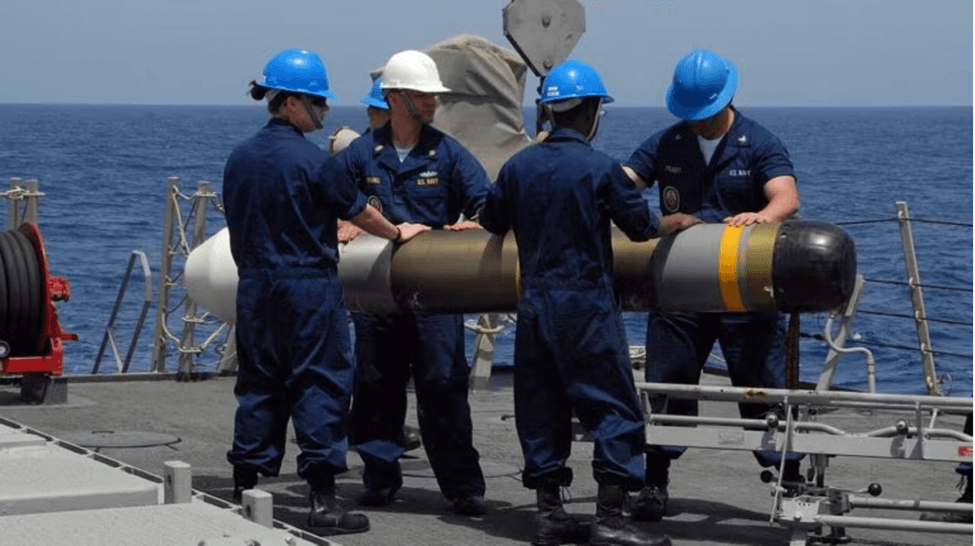
This new contract follows Sharrow's expansion into a new facility in Detroit and is a significant step toward applying its propeller technology to defense applications. The MK 54 is a torpedo that uses a sonar system and guidance technology to autonomously hunt its target. The torpedo combines the advanced sonar from the older MK 50 torpedo with the warhead and propulsion system of the legacy MK 46 model. The weapon can be deployed for offensive attacks from aircraft or defensively from surface ships against a submarine that is detected nearby.

Platforms That Can Launch the MK-54
The MK 54 is a versatile weapon that can be launched from a variety of platforms used by the Navy:
- Surface ships: The torpedo can be fired from the standard Mark 32 surface vessel torpedo tubes on warships like destroyers and frigates.
- Vertical Launch ASROC (VLA): It can also be delivered via the RUM-139 Vertical Launch Anti-Submarine Rocket (ASROC), which launches the torpedo from a vertical-launch system.
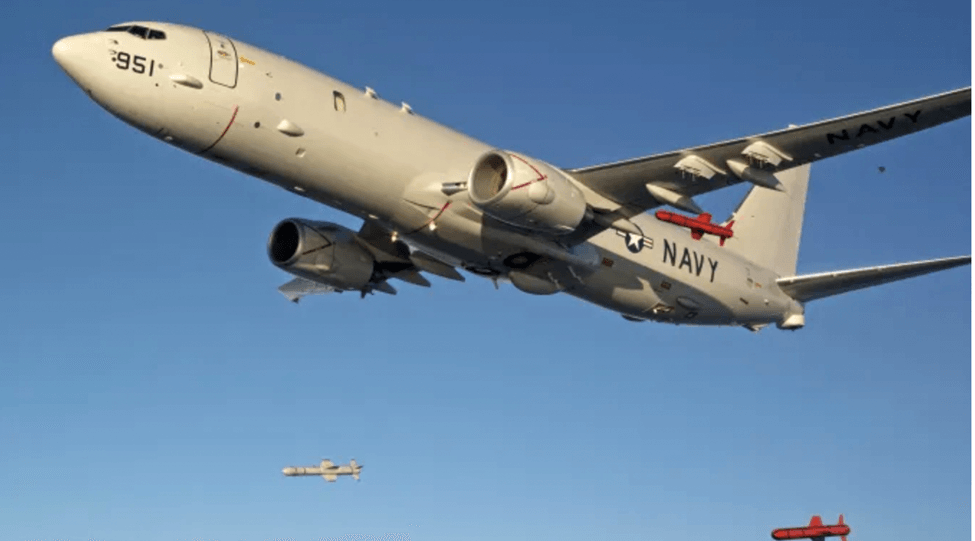
- Fixed-wing aircraft: The torpedo is a standard payload for the Boeing P-8A Poseidon maritime patrol aircraft. The P-8A can also use an Air Launch Accessory (ALA) kit that adds wings and a GPS guidance system, allowing the torpedo to be released from high altitude and glide toward the target area.
- Helicopters: Naval helicopters, such as the MH-60R Seahawk, are equipped to carry and launch the MK 54 for anti-submarine missions.
Legacy 7-Blade Props
Looking back on World War II ship propulsion, we discover that generally 3 and four-blade props were employed. But in the late 1950s and early ‘60s, when the Cold War heated up, both the U.S. and Soviet navies developed multi-blade propellers.
Increasing blade count lowers the load per blade and smooths the pressure distribution, which reduces tip-vortex and sheet cavitation — the main source of underwater radiated noise. Less cavitation makes torpedoes – and submarines -- harder to detect
By using more blades, the required thrust can be achieved with a smaller diameter prop (useful in compact torpedo rear sections).
What Does This Mean for Boat Owners?
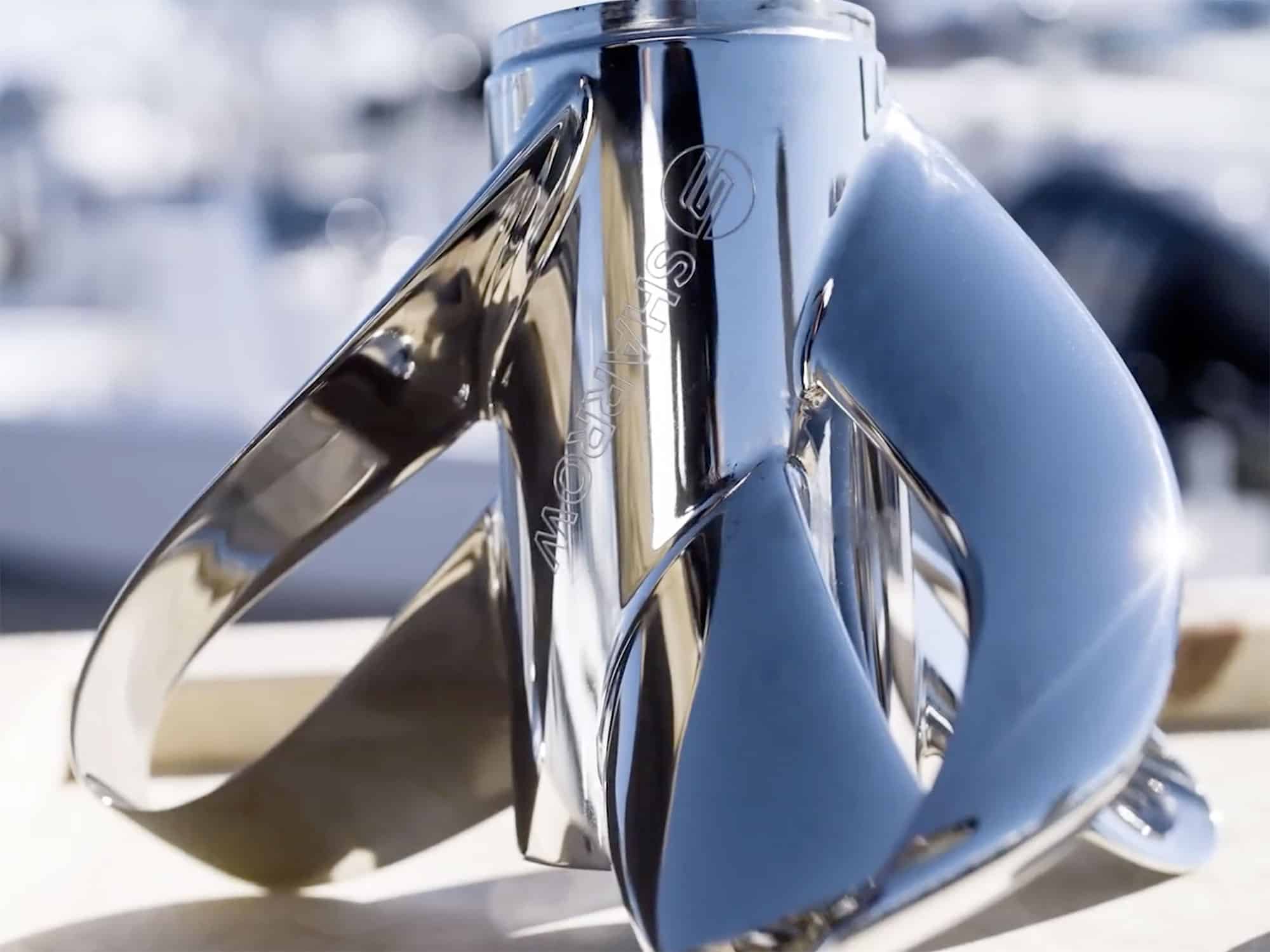
For the last six years, early adopter boaters discovered the attributes of Sharrow props. Even though the design got traction with boat owners in the beginning because of their remarkable mid-range fuel efficiency, in the last several years more and more owners are raving about how quiet it makes the boat.
For years boaters thought that most of the engine noise emanating from the stern of the boat was from the engine (and much of I was), and outboard engine manufacturers spent millions of dollars trying to quiet their products.
But it turns out that much of the noise coming from behind the boat is the slap of the rooster tail, but more importantly the bursting of millions of air bubbles hitting the surface of the water and popping open. The bubbles are caused by cavitation and the blade-tip vortices. Sharrow’s “loop” design virtually eliminates the bubbles coming off the blade tips, and therefore, boats equipped with Sharrow props are much quieter.
Now, the U.S. Navy knows it, too.