Volvo Penta Unveils New D13 IPS Hybrid Yacht Propulsion System
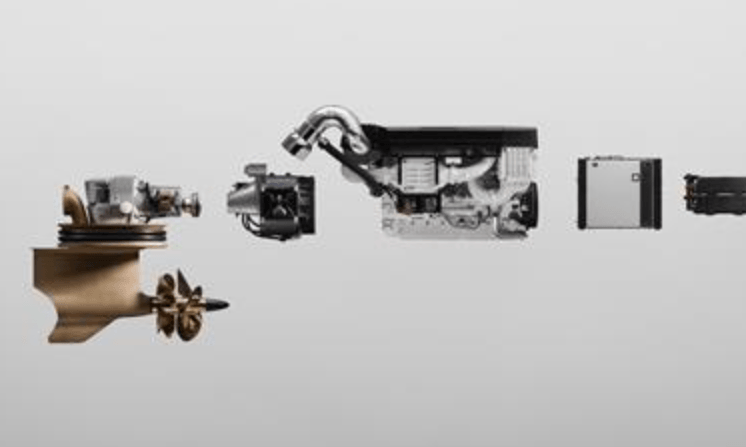
The Swedish power solutions manufacturer set to take a significant step towards its goal of producing fully electric propulsion systems by releasing a 700hp-1000hp (515kW-735kW) parallel hybrid propulsion system later this year.
The Volvo Penta D13 IPS Hybrid has been heralded for some time. The company’s collaborative work in developing early examples for Azimut’s Seadeck 7 was rewarded with a win at the 2024 edition of the IBI Metstrade Boat Builder Awards. Much testing has happened since and now the D13 IPS Hybrid is poised for a wider launch, with several international journalists invited to view and experience the system in its production format at Volvo Penta’s Krossholmen on-water test facility in Gothenburg last week.
Single Solution Provider
Volvo Penta Marine Business SVP, Hanna Ljungqvist said:”Volvo Penta is placing strong emphasis on its strategic goal of providing full turnkey solutions for boat manufacturers and shipyards. The D13 IPS Hybrid combines propulsion, electric motors, batteries, energy and cooling management and controls into a single package. It is a complete helm-to-propeller marine solution.
”By delivering a fully integrated package with one point of responsibility, we simplify everything from design and installation to operation and service, while elevating onboard comfort and performance.”
Volvo Penta vice president of yacht & superyacht sales, Nicola Pomi added:”By working as a single partner across the full system, we can support customers from initial design through installation and operation. This level of co-engineering and collaboration enables more efficient builds, optimized performance and greater flexibility in yacht design.”
The D13 Hybrid leans on growing expertise on electrification across the Volvo Group. By mid 2025 it had already delivered more than 5000 fully electric trucks in a dedicated range of eight models and has considerable experience of electrifying passenger road transport
Volvo Penta’s dedicated marine division, which accounts for three per cent of Volvo Group turnover, targeted the higher end of the leisure boating sector for its marine hybrid propulsion launch in anticipation that it will prove to be an economically easier entry point. The ambition is to scale electrified solutions downwards as market and technical opportunity dictates.
The low initial volumes involved in large motor yacht applications will also enable Volvo Penta to organically upskill service partners among its nearly 3000-strong global network of dedicated service partners according to demand.
Key Components
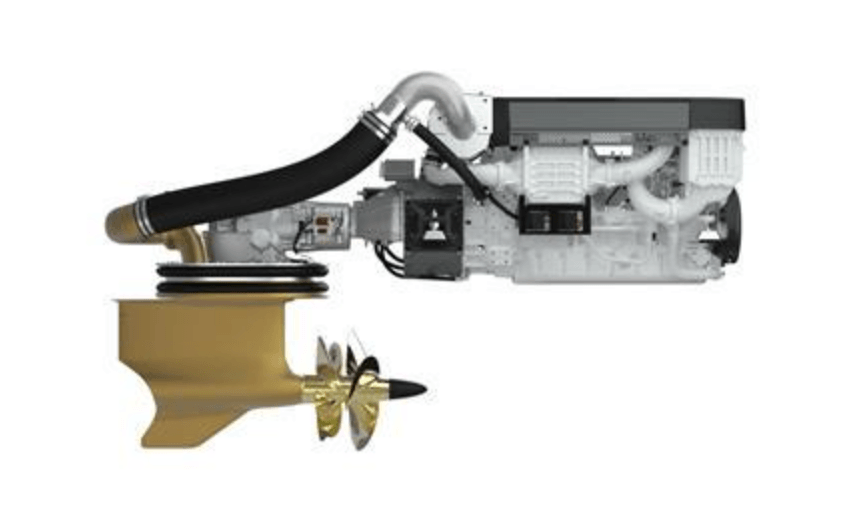
At the core of the system is Volvo Penta’s proven D13 HVO100-compatible diesel, which has an optional compact IMO III-compliant after treatment system available. This is directly coupled to an IPS 30 pod drive through a dedicated 650V DC parallel hybrid motor with a hydraulic electrically controlled clutch that provides 160kW (215hp) of propulsive power in full electric mode. Other modes include pure engine operation, hybrid with the motor assisting the engine and crossover for slower speed single engine operation on twin engine installations where the working engine provides direct drive to its own propeller shaft and electrical energy for the parallel hybrid unit on the other unit.
The parallel hybrid drive also serves as a generator in two different ways. The battery pack can be charged while underway – in this mode the system exploits the gap between the propeller curve and the optimum power output of the engine to get best efficiency out of fuel burned. Alternately at anchor you can operate in generator mode to charge the battery pack up in as little as 45 minutes so it can then serve deliver up to 43.6 kVA hotel load for silent overnight vessel operation. Given this capability Volvo Penta is confident the D13 Hybrid can serve as a complete generator replacement rather than a supplement on many installations.
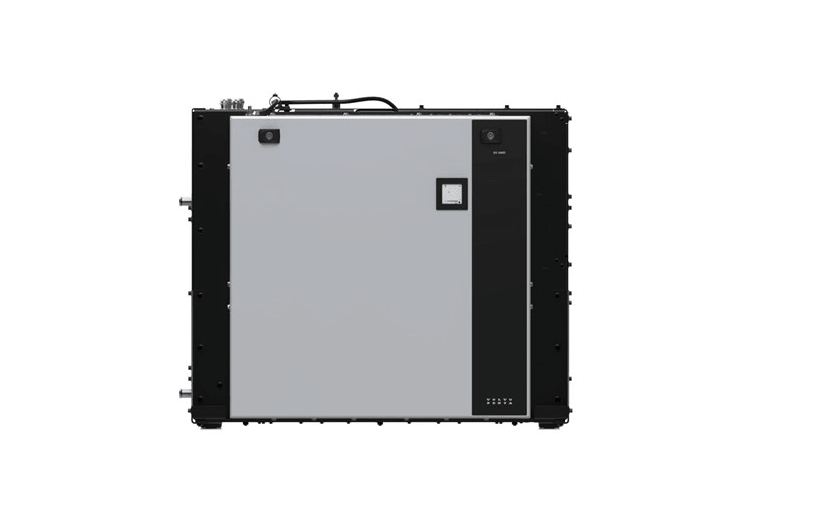
The D13 Hybrid’s dedicated lithium iron phosphate battery packs will initially be offered in two capacities – 147kWh (four pack) or 221 kWh (six pack). Volvo Penta has achieved DNV approval for these liquid cooled/heated packs, which feature advanced safety management and robust cradles with shock mitigation. In the event of the failure or safety shut down of a pack the rest of the system can continue in operation.
To minimize cabling and improve installation and serviceability, Volvo Penta developed a dedicated Volvo Penta IPS Hybrid power distribution unit. This serves both as a fully enclosed junction for the cables and integrates a charger, house load AC inverter, 24V DC converter, as well as a DC grid distribution point. Solar integration has yet to be included but is under consideration.
The company has also designed a dedicated thermal management unit for the hybrid drive and batteries. It handles the closed-circuit liquid cooling/heating requirements of the system, utilizing an electric pump for circulation and a separate raw water pickup to the IPS drive.
The D13 Hybrid in Practice
Last week’s on-water trials utilized one of Volvo Penta’s test fleet, a 22m 36-ton aluminum workboat. The D13 Hybrid system utilizes the company’s now familiar suite of Electronic Vessel Control (EVC) displays, controls, autopilot and assistive docking technology. In several hours of operation with journalists testing out on the water the system performed flawlessly, a testament to what has been a long and highly structured development path. Particularly noticeable was the seamless transition between propulsion modes, as well as the benefits of this modular system to maintain installation quality. There is little demand on the owner or captain in terms of technical knowledge or skill to helm the D13 Hybrid system, other than an outline concept of what each mode does and how it benefits the user.
The launch of full electric IPS drives and a hybrid option for Volvo Penta’s Professional Platform are scheduled to follow over the course of the next three years. It’s clear also that this overt necessary move into onboard power management may yet to take the company into an even broader role as a strategic partner of boat builders and shipyards as the capabilities of its electrification systems are further developed.