Why Boats Perform Differently in Salt Water vs. Fresh Water
If you've ever taken the same boat from a lake to the ocean and thought, "This feels different," you're not imagining things. There are subtle yet significant differences in the way a boat behaves depending on whether it's in salt water or fresh. These changes are largely due to physical properties like density, viscosity, and buoyancy-and they influence everything from fuel economy to handling.
Understanding these factors can help boat owners and captains better anticipate how their vessel will perform, depending on the body of water they're in.
Density: Seawater Gives You a Lift
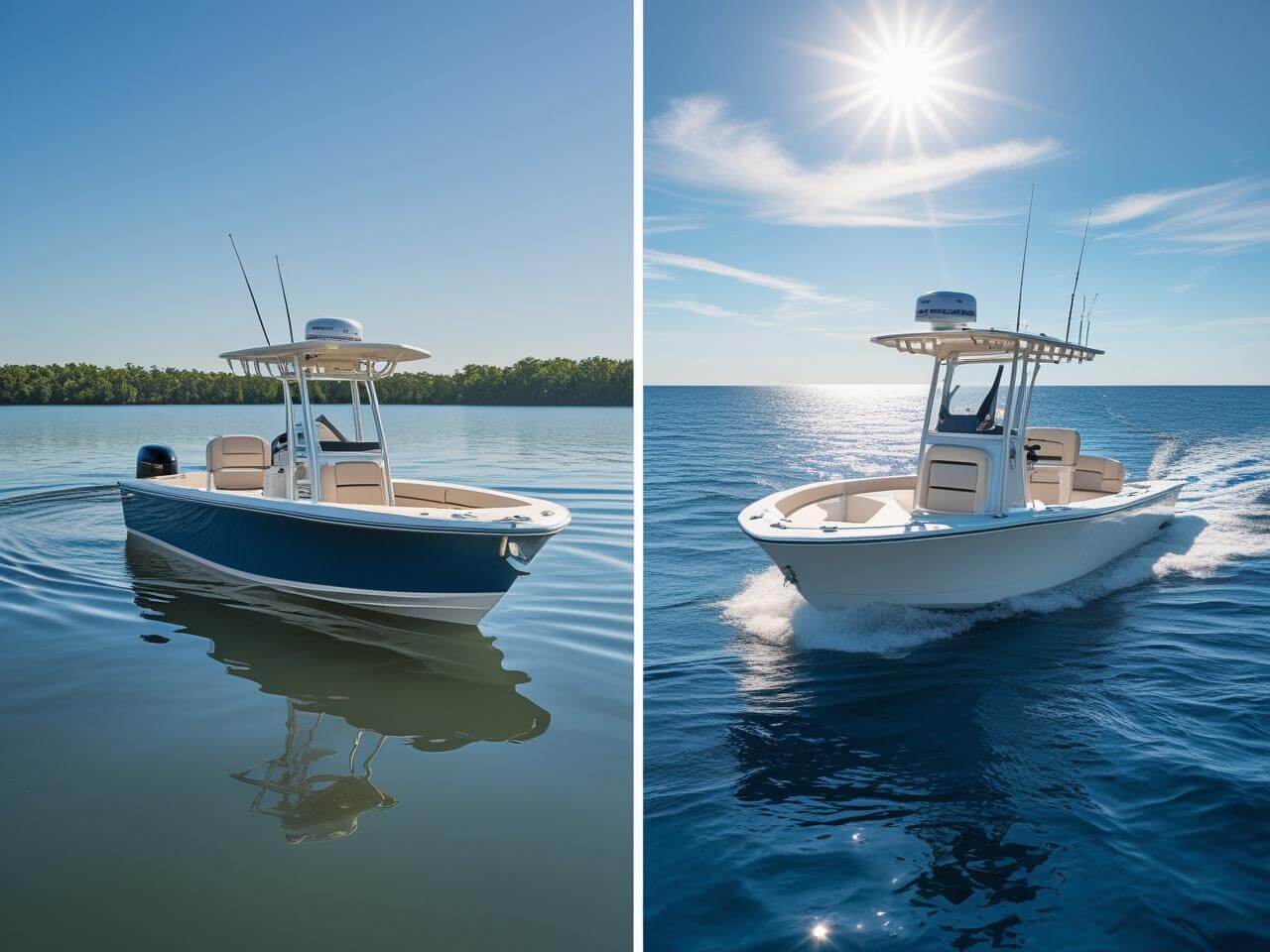
Freshwater has a density of about 1.000 g/cm³ at 20°C (68°F). Seawater, thanks to its roughly 3.5% salt and mineral content, is denser-around 1.025 to 1.030 g/cm³ at the same temperature. That small change-just 2.5 to 3%-makes a noticeable difference in how a boat floats.
Boats sit higher in saltwater than in freshwater. This means less hull is submerged, which generally reduces hydrodynamic drag. That reduced drag can result in better fuel efficiency and slightly higher speed. It can also change the trim and balance of the boat, especially if the weight distribution was optimized for freshwater.
When a boat floats higher in saltwater, the reduction in wetted surface area not only improves performance but also affects stability. That's why careful operators often recalibrate trim tabs or ballast slightly when transitioning from lake to ocean.
Viscosity: Thicker Than Water... Barely
Viscosity is a fluid's resistance to flow. It influences how easily water slides past the hull and how well the propeller can push against it. At 20°C, freshwater has a dynamic viscosity of about 1.002 centipoise (cP). Seawater is slightly more viscous, at around 1.08 to 1.20 cP, depending on temperature and salinity.
While that difference might seem trivial, it has a measurable impact at high speeds or in finely tuned propulsion systems. Higher viscosity means slightly more friction along the hull. But it also improves propeller grip, especially when pushing heavier boats or accelerating from a stop.
As a result, many boaters notice that their vessel responds faster to throttle in saltwater than in freshwater, particularly with properly pitched propellers.
Propeller Efficiency: Saltwater's Sweet Spot
Propellers don't just push water-they push mass. Denser water provides more resistance, which means a properly sized propeller can produce more thrust in saltwater than in freshwater at the same RPM.
This extra thrust can translate into: Faster acceleration, Lower RPM required to maintain a given speed, and Slightly better fuel economy under certain loads.
On the flip side, because the boat is also pushing through a slightly more viscous and denser fluid, top-end speed might not change much-or might even drop by 1-2% depending on hull shape and design.
Buoyancy and Load Handling
The difference in density also affects how much buoyant force the water exerts on a vessel. Since saltwater is denser, it provides more lift per unit volume, allowing boats to carry a bit more load while maintaining freeboard.
That's why a boat that feels bogged down in freshwater may feel more agile in the ocean. Commercial vessels in particular often use this to their advantage when scheduling cargo loads and draft requirements.
Temperature Adds Another Layer
Temperature affects both viscosity and density. As water warms up, it becomes less dense and less viscous. So a boat in warm saltwater may not float quite as high or perform quite as crisply as in cooler seawater. Similarly, freshwater performance will vary slightly between cold mountain lakes and warm southern reservoirs.
This is why professional captains take both salinity and temperature into account when evaluating performance-or choosing propellers.
Corrosion and Maintenance: Saltwater's Downside
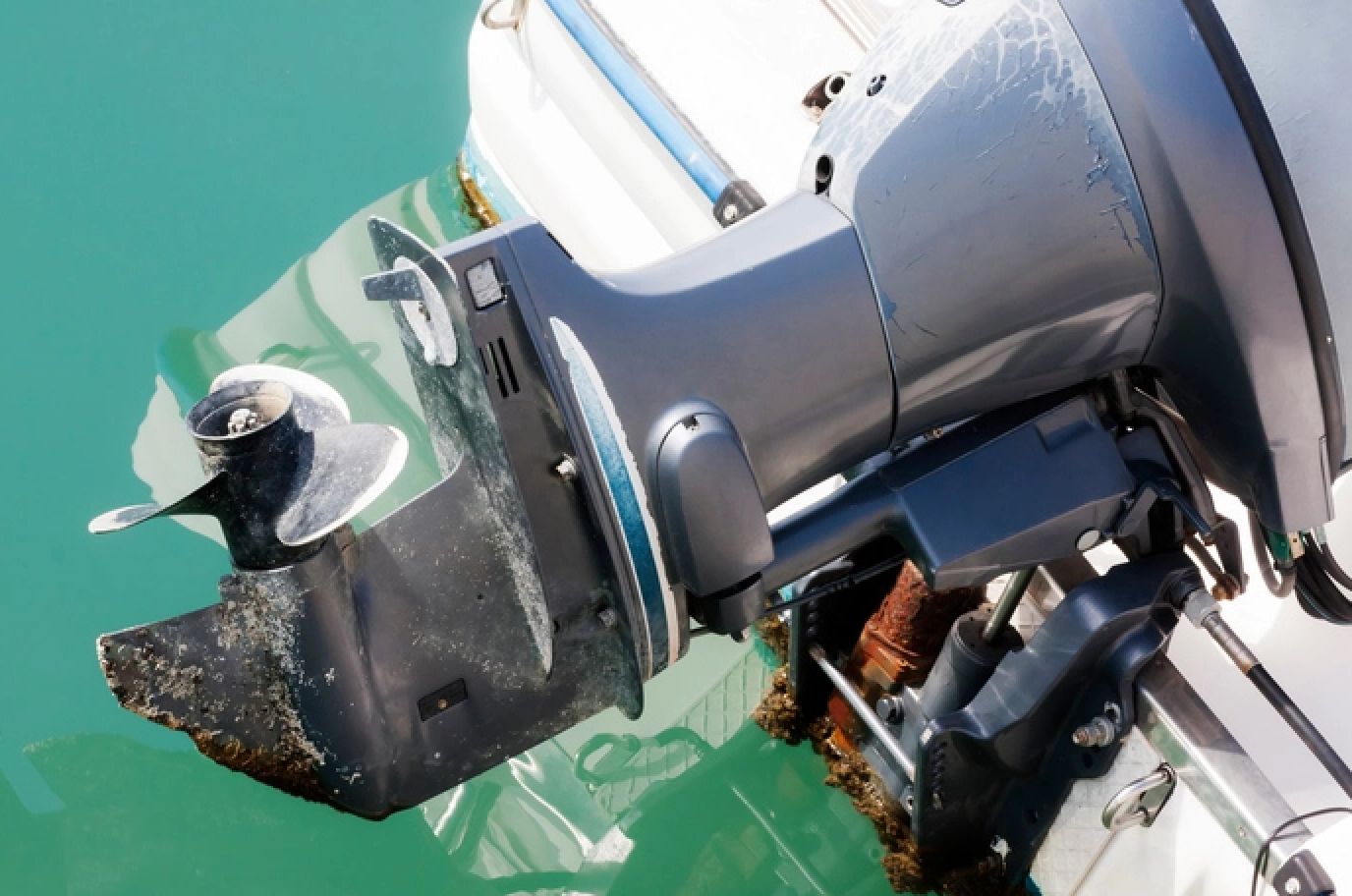
While saltwater improves buoyancy and propulsion characteristics, it comes with an often overlooked trade-off: corrosion and fouling.
Salt accelerates corrosion of aluminum, steel, and even certain grades of stainless steel. It also supports more aggressive marine growth on hulls, shafts, and intakes-adding drag and reducing performance over time if not cleaned regularly.
By contrast, freshwater is far less corrosive and generally supports slower growth, making it easier to maintain boats over the long term.
Summing It Up
While seawater and freshwater may look the same from the deck, they behave very differently underneath. Seawater offers better flotation, more thrust, and slightly better efficiency for properly matched boats-but at the cost of greater maintenance. Freshwater provides cleaner running and less corrosion but demands more from your hull and propeller to achieve similar performance.
For casual boaters, these differences may feel minor. But for those who pay close attention to fuel economy, acceleration, or maintenance cycles, understanding how water composition affects performance can lead to smarter boating decisions.
Whether you run on salt or fresh, your boat's behavior is shaped by more than just your throttle. It's the water itself that's doing half the work.