Why Consider a Diesel Engine?
In case you haven’t noticed, diesel engines are used exclusively in applications that call for lots of power, for example in 18-wheel over-the-road trucks that haul heavy cargo, bulldozers, and farm tractors, just to name a few.
There are several reasons diesel engines are considered better than gasoline engines, depending on the application:
1. Fuel Efficiency: Diesel engines are more fuel efficient for several reasons:
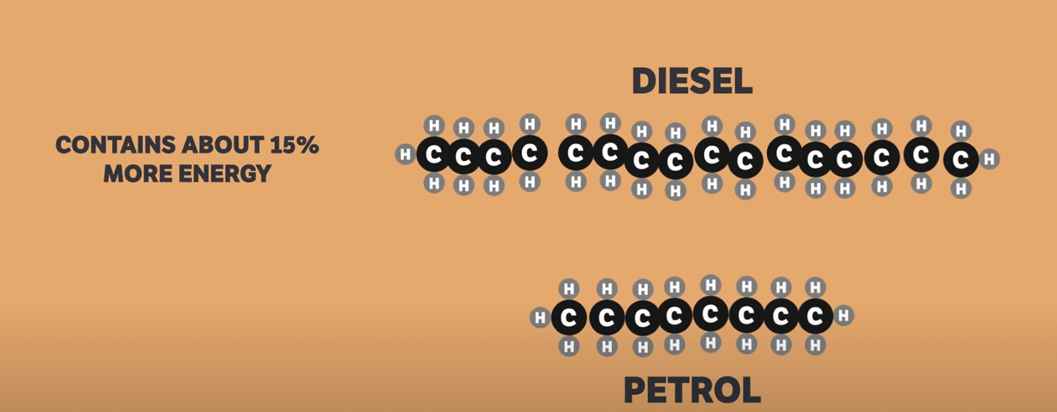
- Diesel fuel has more hydrocarbon molecules than does gasoline of any octane.
- A Gallon of gasoline has about 114,000 BTUs on energy per gallon, and diesel fuel has 129,000 BTUs per gallon. So, diesel fuel has 13% more energy to start with.
- Diesel engines are inherently more thermal efficient. See below.
2. Durability: Diesel engines are typically built to withstand more wear and tear than gasoline engines. This means their useful life is far longer than gas engines. Further, when they begin to show their age, they can have what is known as a “Major Overhaul” in which cylinder sleeves are changed, and other parts replaced, etc., for a fraction of the new engine cost.
3. Lower Maintenance: Diesel engines typically require less maintenance than gasoline engines. There are 5 major reasons:
- A simpler ignition system – No spark plugs, no coils, no timing chains, etc.
- Lower RPM Range – Typically, diesel engines run at 30% to 50% lower RPMs than gas engines, which means the piston runs up and down through the cylinder fewer times, and valves, connecting rods, valve lifters and the pistons themselves all work less and have less wear.
- Fuel lubrication – Diesel fuel itself has lubricating prosperities, which helps reduce friction on cylinder walls, piston rings, and on valve guides.
- Robust construction – Diesel blocks must endure compression ratios of 16:1, typically, which means they must be stronger and have more material between the cylinders, in addition to having large drive shafts, and gears to handle their prodigious torque.
- Fuel and filtration – 95% of the gasoline sold in the U.S. has 10% ethanol and phase separation introduces water into the engine which can cause rust. Further, diesel engines have a more extensive filtration system -- in order to remove impurities, water and sludge and biomass from the fuel -- than do gas engines.
4. Safety: Diesel fuel is less volatile than gasoline and therefore less likely to ignite in the event of an accident. Gas fumes are easy to ignite by a spark and cause a fire or an explosion.
5. Torque: Diesel engines are known for their high torque output, which can be particularly advantageous for powering heavy vessels, getting them on plane sooner and keeping them there, at lower RPM.
Why are Diesel Engines More Fuel Efficient?
There are 7 basic reasons why diesel engines are inherently more fuel-efficient than gasoline engines--
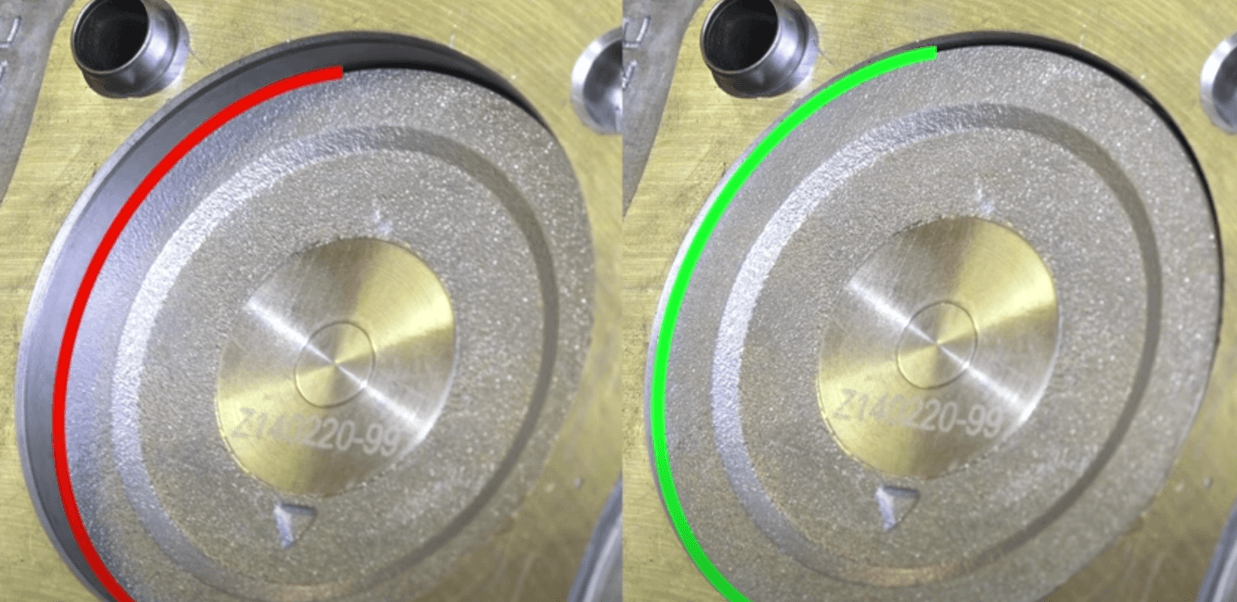
1. Higher Compression Ratio: Diesel engines have a much higher compression ratio compared to gasoline engines. The high compression ratio allows for better thermal efficiency as it leads to more complete combustion of the fuel-air mixture, and therefore more energy pushing down on the piston.
- Diesel engines typically have a compression ratio of 16:1 (as does the Cox diesel), and gas engines are about 10.4:1.
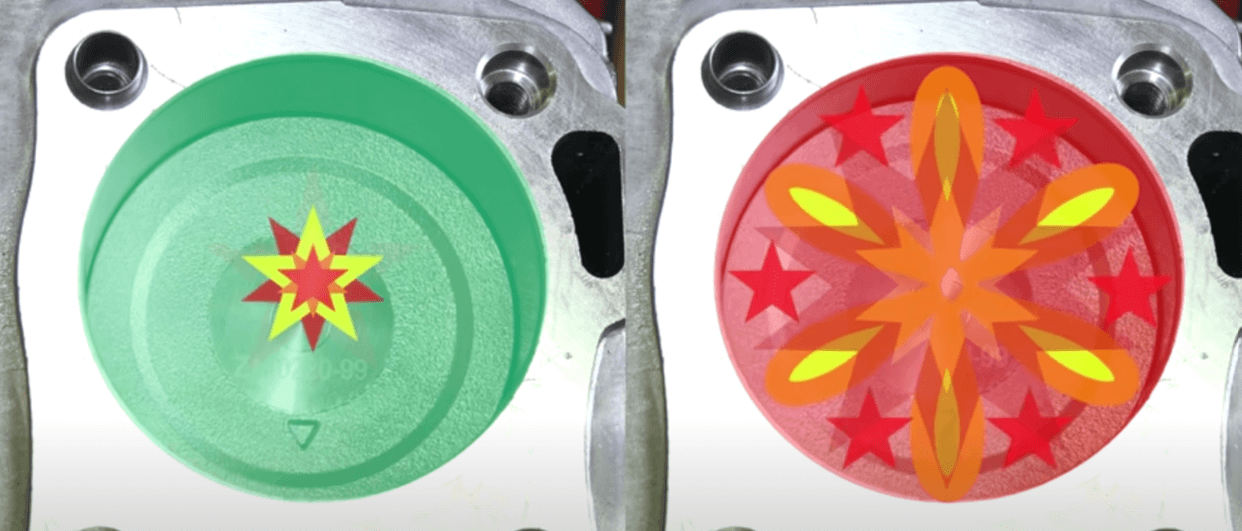
- Compression combustion means all of the fuel-air mix explodes at one instant, whereas spark ignition starts combustion at the plug and it spreads to the rest of the fuel-air mix over time (albeit, and very short time).
2. Fuel Properties: Diesel fuel has a higher energy density than gasoline. See above.
3. Leaner Fuel-to-Air Ratio: Naturally-aspirated gas engines rely on atmospheric pressure and a vacuum in the cylinder to inhale the air-fuel mix and has an optimal fuel air mix of 14:1. Diesel engines are now virtually all turbocharged, cramming lots of air into the cylinder at air-fuel mixtures ranging from 70:1 to 150:1. The additional air (which is 22% oxygen) makes diesel combustion more, therefor less wasted fuel.
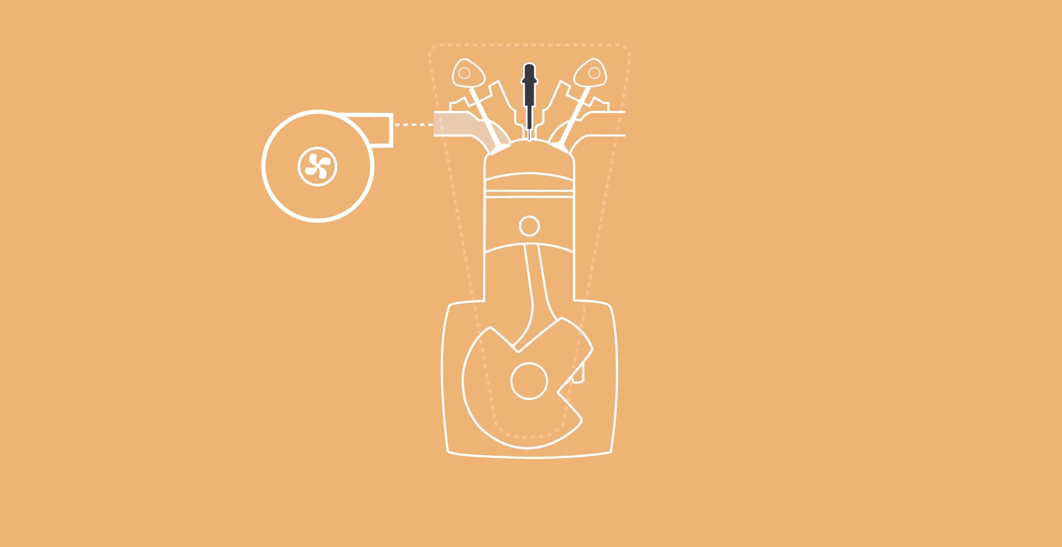
4. Direct Fuel Injection: By having diesel fuel injectors in the cylinder the amount of fuel and timing of its injection can be precisely calibrated by the ECM. Gas outboard engines all have MPI (Multi-Port Injection) which means that the fuel is injected into the intake manifold which is farther way from the combustion chamber and less controllable. (This is why modern gas automobile engines have direct fuel injection into the combustion chamber.)
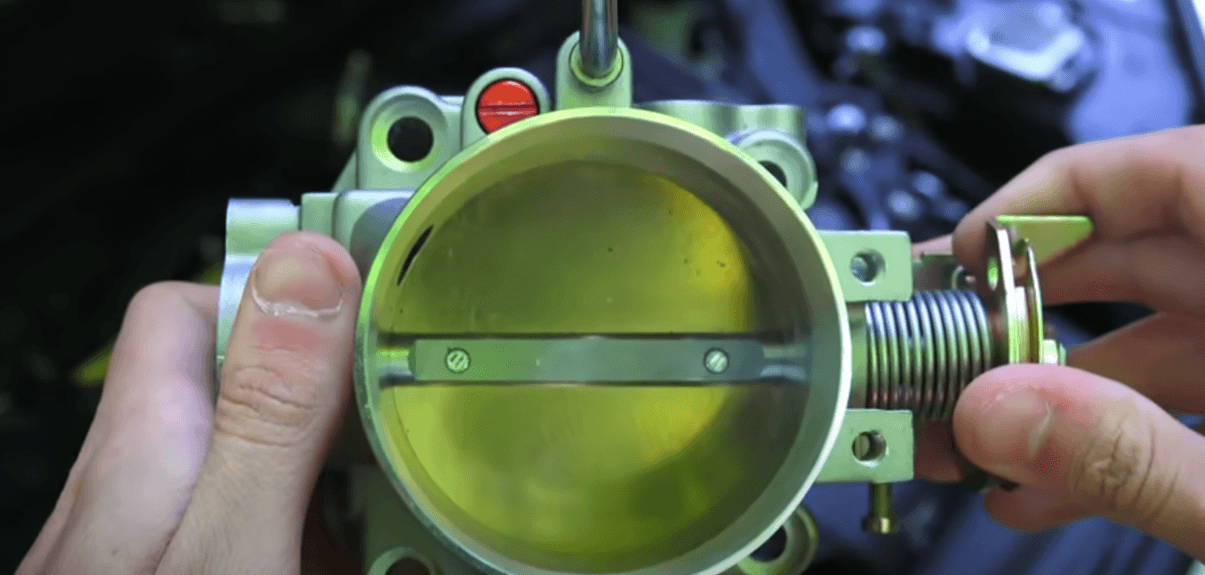
5. No Throttling Losses: Diesel engines do not rely on a throttle valve to regulate air intake, unlike gasoline engines. Throttling losses occur when the throttle restricts the airflow into the engine, causing pumping losses and reduced efficiency. Diesel engines operate without throttles.
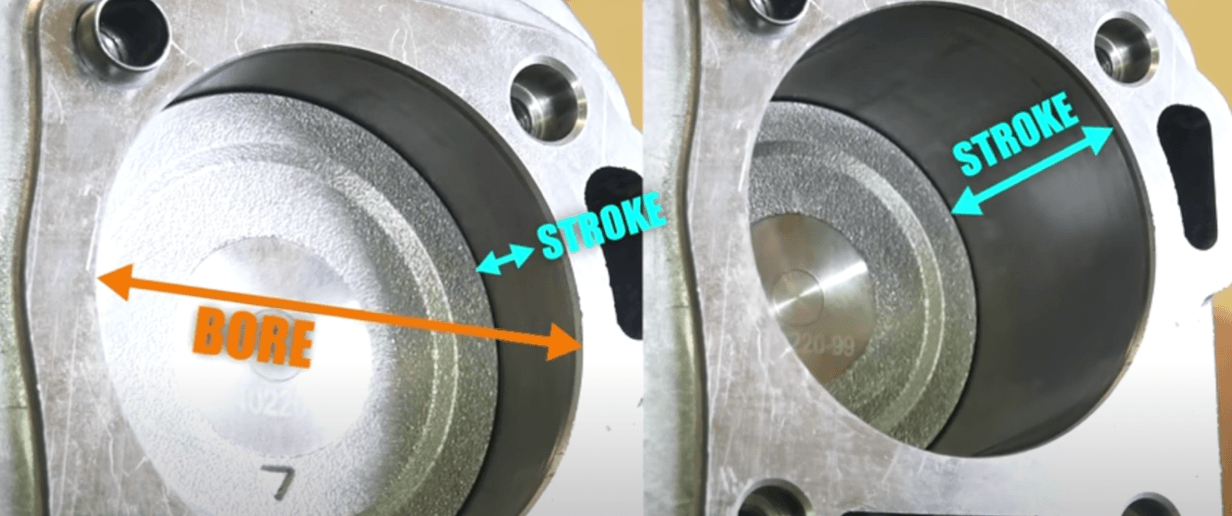
6. Longer Stroke Length: Diesel engines typically have a longer stroke length than gasoline engines. A longer stroke allows for a larger expansion ratio, which increases the engine's efficiency by extracting more energy from the combustion process. This longer stroke length also acts as a slightly longer lever on the crank shaft for added torque.
Conversely, because of the longer stroke length and greater lever arm the diesel engine can’t make as many revolutions per minute as can a gas engine whose piston does not have far to move. The result is that diesel engines usually cannot turn the high revs of a gas engine.
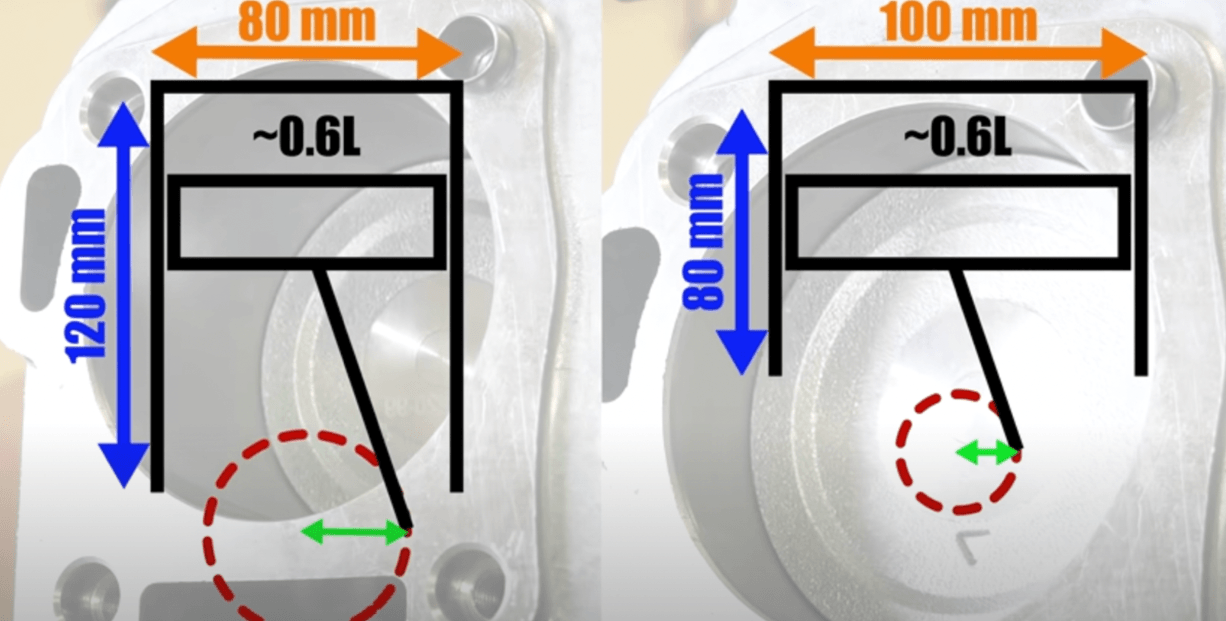
7. Lower RPM Range: Diesel engines typically operate at lower RPMs compared to gasoline engines. Lower RPM means reduced friction on all of the engine’s drive components and improved fuel efficiency.
What is Torque?
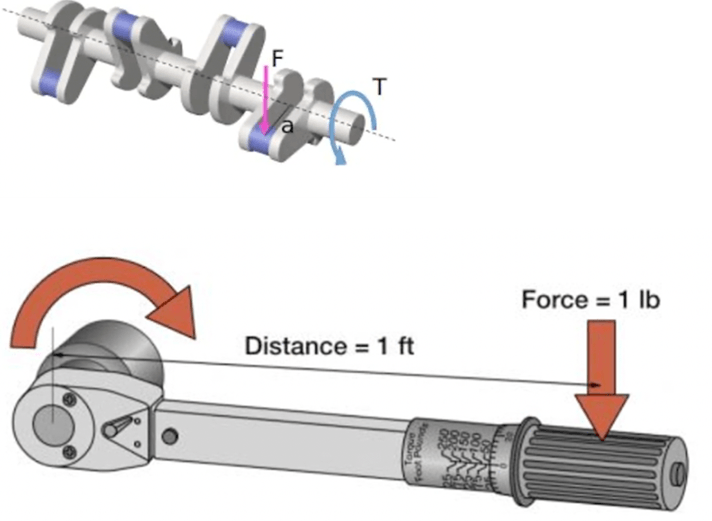
Torque is a measure of the rotational force or twisting force applied to an object, in the context of engines, at the crankshaft or at the prop shaft. In this report we will use it at the prop shaft.
Torque is measured generally in the U.S. in pound-feet or foot-pounds (lb/ft or ft/lb) which are the same thing. In the rest of the world, Newton-meters (Nm) is the metric measurement used. In this report we will use pound-feet to minimize confusion.
When measuring torque and horsepower in outboard engines, dynamometers are used. The higher the torque, the more power the engine exerts and the greater the propeller thrust.
Torque determines the engine's power output, acceleration capabilities, load handling ability, fuel efficiency, and overall driveability.
What is the difference between Torque and Horsepower?
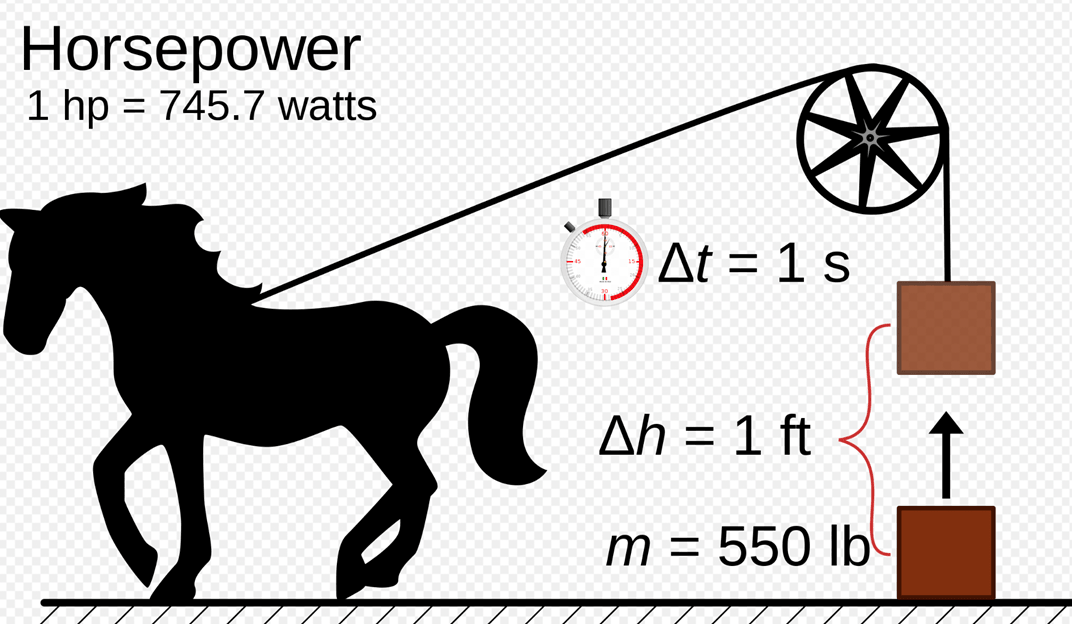
Horsepower combines torque and RPM to measure the engine's overall power output and performance capabilities. The mathematical definition of horsepower is: Horsepower = (Torque x RPM) / 5252. So, torque, along with RPM, is one component making up horsepower.
Torque is responsible for acceleration and low-end power at relative low RPM, while horsepower grows with RPM and relates to top speed and sustained performance.
Horsepower quantifies the power output and rate at which work is done by an engine. James Watt in 1783 created the term horsepower to measure the time it took a draft horse to raise 550-lbs (250 kgs.) one foot in one second.
Why is Torque so Important for Outboard Boats?
1. Power Output: Torque is directly related to the engine's power output. The greater the torque, the more force the engine can exert on the prop shaft, resulting in greater power and acceleration.
2. Acceleration: Torque plays a crucial role in accelerating a boat. It is responsible for overcoming the inertia of the boat at rest. Higher torque enables quicker acceleration and better low-end responsiveness.
3. Getting on Plane: Torque is essential for engines to handle various loads effectively. Getting a boat on plane, climbing up out of the hole and over the boat’s bow wave takes tremendous thrust possible because of torque.
4. Greater Load Handling: Once on plane, higher torque delivers the power keep a heavy boat, or a boat with a lots of passengers on plane and maintain performance under load.
5. Fuel Efficiency: By being able to haul the same load as a gas engine at fewer RPM, and fewer combustions, the diesel outboard engine naturally burns less fuel.
6. Driveability: Torque influences the engine's overall driveability and responsiveness. Higher torque provides a stronger and smoother acceleration, allowing the boat to get on plane faster without having to put the hammer down. It allows the operator to make sharp turns at high speed without ventilating the props and losing speed. And at the dock, the boat is more responsive to each little nudge of the throttle to move the boat in the desired direction without having to rev the engine, which can lead to loss of control.