World’s Largest Battery Ship Begins Sea Trials
The shipbuilder Incat Tasmania is conducting proving trials on the largest battery-powered ship to date, with a series of concept superyacht tenders in the pipeline.
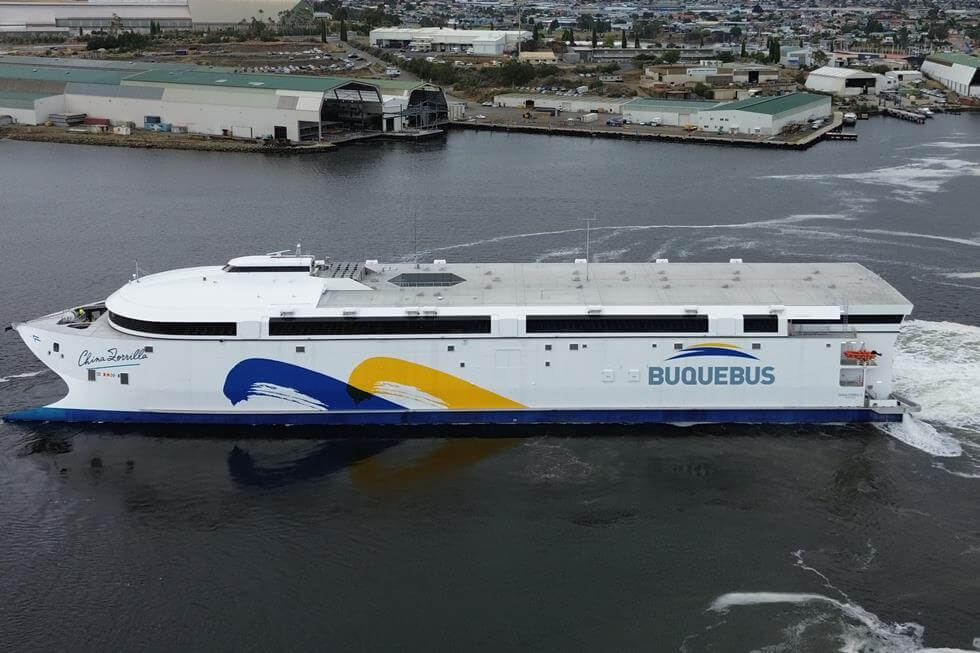
Incat Tasmania is setting new records with a programme of advanced aluminium electric shipbuilding, with five major projects under construction or already in proving trials. Of most interest is hull 096, the largest battery-powered vessel in the world to be launched to date. Once fully commissioned, the 130m electric ferry ‘China Zorilla’ will operate on the River Plate, carrying up to 2,100 passengers and 255 vehicles between Argentina and Uruguay.
World’s Largest Battery Ship
The technology being used is also available for the building of zero emissions superyachts, and Incat already has concept plans for three superyacht support vessels, of 80m, 98m and 112m respectively.
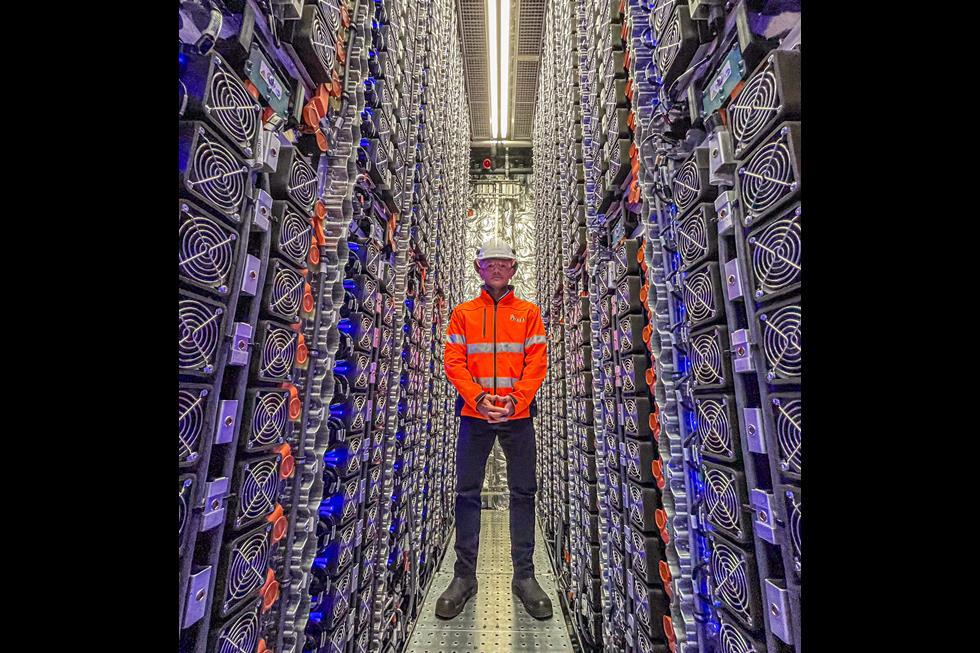
Judging by the engineering of hull 096, these yacht support vessels will be fast and either hybrid or zero emission battery powered. China Zorilla carries 250 tons of batteries in four separate battery rooms, designed to evenly distribute the weight of the 5,016 separate modules. Incat says that the ship’s Energy Storage System (ESS) delivers an installed capacity of more than 40 megawatt-hours, making it four times larger than any previous maritime installation in the world. The ESS is supplied and integrated through Incat’s technology partners Wärtsilä and Corvus Energy, and connected to eight electric-driven waterjets, setting what Incat describes as a new global benchmark for sustainable ship propulsion.
“To stand inside one of these battery rooms really brings home the scale of what’s being achieved here,” said Incat CEO Stephen Casey. “This vessel represents a step change for the global ferry industry – proof that large-scale, sustainable vessels are not only possible, but practical and commercially viable.”
Expanding Electric Fleet
The building of the vessel using entirely renewably sourced energy from the local grid has also won the company some accolades. In November 2025, for example, hull 096 was recognized with the Project of the Year Award for Tasmania at the 2025 Weld Australia Awards, celebrating the company’s outstanding achievement in the design and construction of the 25kt catamaran. More than 900-tonnes of marine grade aluminium were cut, formed and welded to create the structure. Aluminium is favored by Incat due to its light weight, low maintenance, and high strength, adding to the vessel’s sustainability credentials.
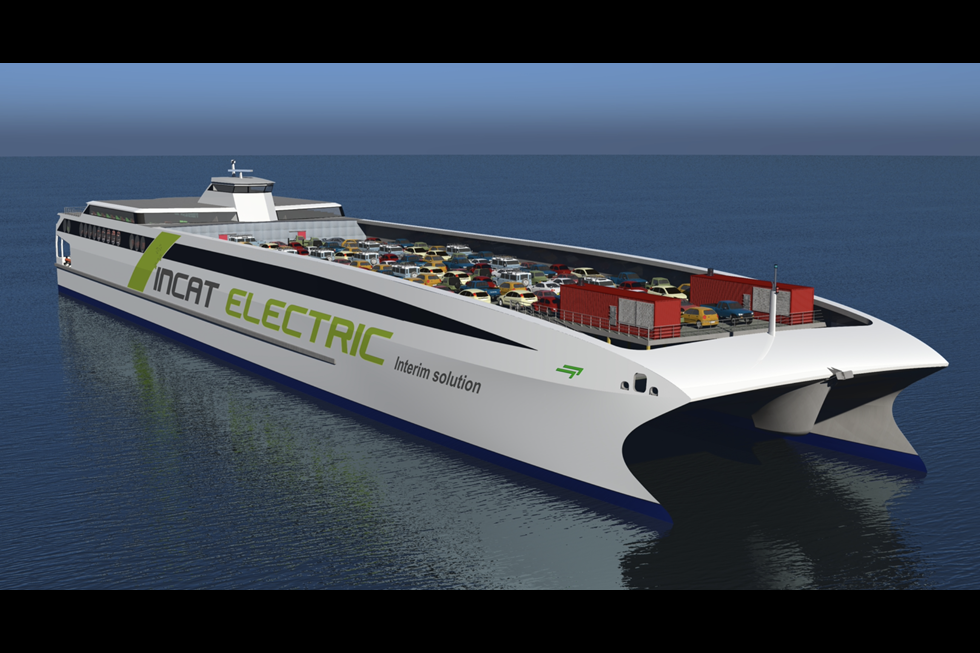
Also nearing completion are a pair of 78m hybrid electric ferries, and two 129m battery electric ferries for leading Danish operator Molslinjen. Once completed, the latter will be the largest zero-emission ferries in Europe.
“Nowhere else in the world is an aluminium shipyard building such a concentration of large electric and hybrid-electric vessels,” said Incat chairman Robert Clifford. “This program highlights our world-leading innovation and shipbuilding capability, and it’s why major operators are choosing Incat to deliver their future ferry fleets.”
Incat is also scaling up its workforce and expanding its shipyard capacity to meet growing global demand, which includes concept plans for a 148m electric ferry, a 130m gas turbine eco-ship, and a 30m military defense vessel.