Access More Boat Tests
Already have an account? Login
Ingenity 23E All-Electric Propulsion “Small Boat” Innovation Award Winner

Specifications
| Length Overall |
23' (7.01 m) 24' 1.5" (7.35 m) w/ platform |
|---|---|
| Beam |
102" 2.59 m |
| Draft Down |
39" 99 cm |
| Person Capacity | 11 |
by Jeff Hammond
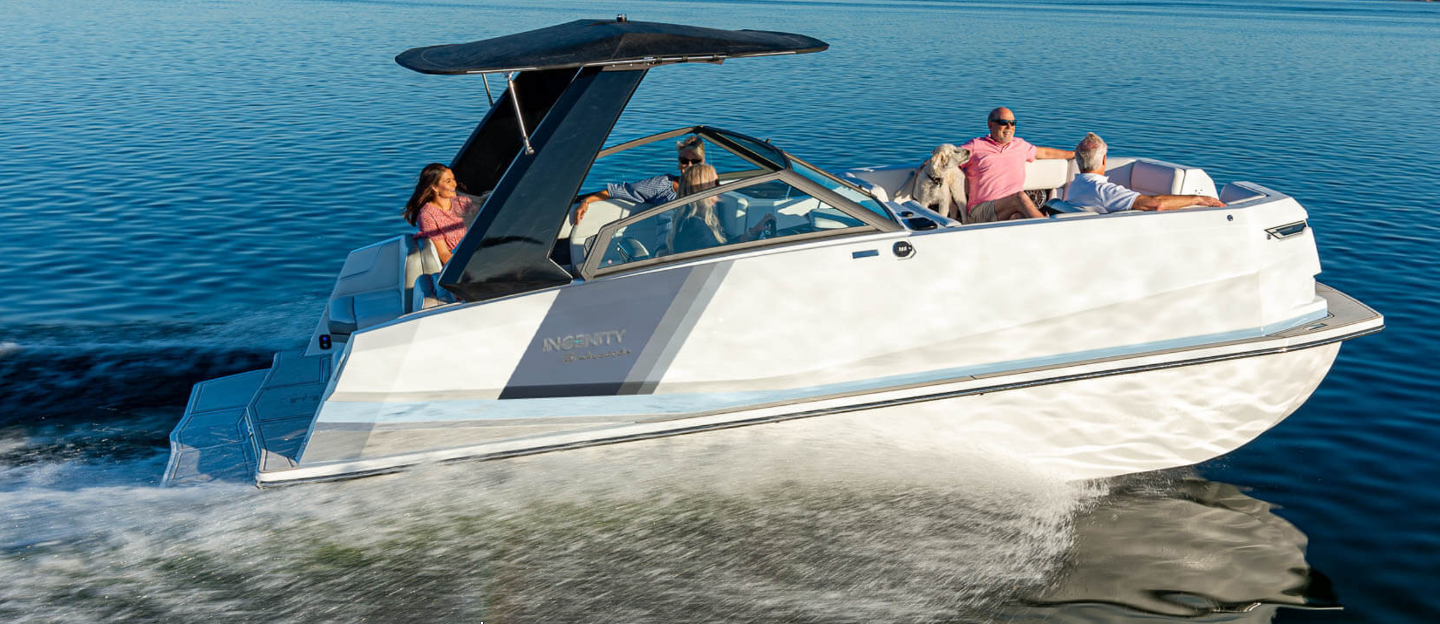
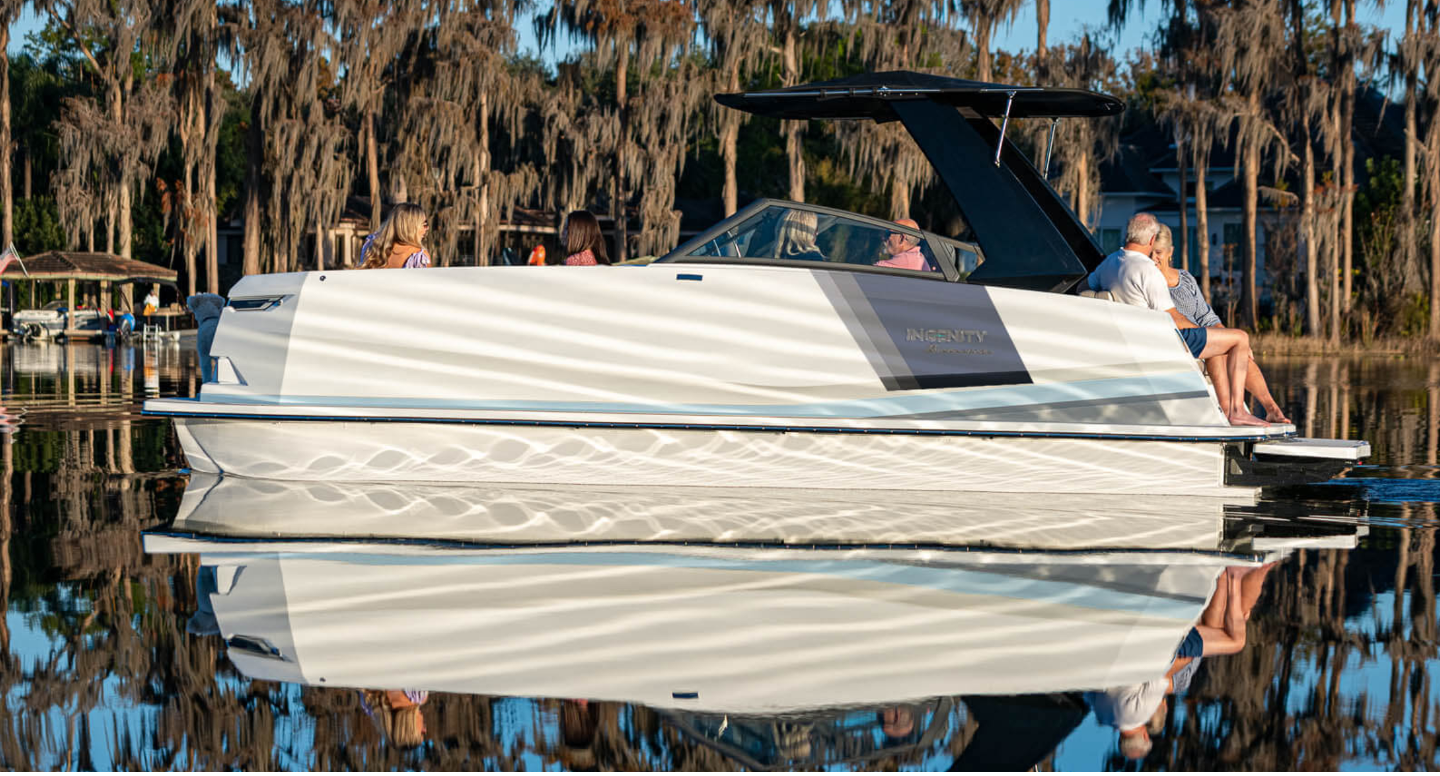
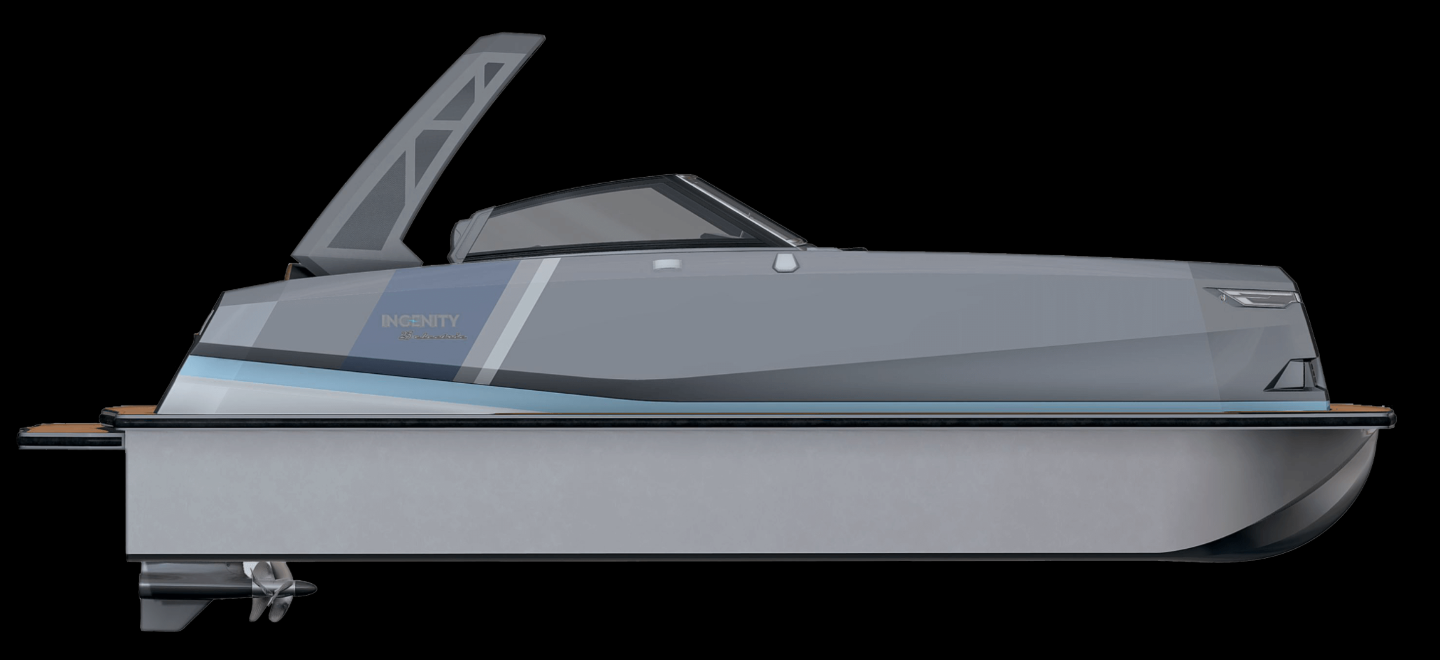
The Ingenity 23E is a new boat concept that marries an aluminum, catamaran-like hull platform with a fiberglass superstructure to create an electrically powered luxury, protected-water day boat. She has the stability of a catamaran, the interior room and comfort of a deluxe pontoon boat, the protective windshield of a dual console and the stern watersports functionality of a sterndrive bowrider.
Her 63 kW battery pack carries enough energy for all-day sedate cruising or several hours of planing-speed activities. Her 150 kW continuous (about 200-hp) electric motor drives a Mercury Bravo Four S forward-facing stern drive with counter-rotating dual propellers. But, that’s just the beginning.
Creating a New Concept Boat
The team at Ingenity was tasked by its parent, Correct Craft, to design and build a boat for the future that would appeal to the widest audience possible with only one condition — the boat had to be electrically powered. Otherwise, the Ingenity team started with a clean piece of paper.
The most popular type of boat for the last 10 years has been the pontoon boat — more than 60,000 were sold new in 2020. These boats check most of the boxes that American boaters have these days: most are relatively low cost; they can generally seat 10 to 12 people depending on size; they are extremely stable and they have comfortable plush sofa-like seating.
On the negative side, because virtually all are outboard-powered, they cannot be used for wake surfing, which is the hottest activity in towing watersports these days. Again, because of the outboard engine, or in many cases twin outboards, the valuable real estate for launching watersports in the stern is greatly encumbered.
Traditional toons are popular for putt-putting around the lake or up the river entertaining large groups of people in comfort. But when it comes to being a watersports platform, they can leave much be desired, despite the publicity pictures to the contrary.
Other types of boats, such as center consoles or bass boats, the next two high-unit movers, sold only 32,000 and 25,000 units respectively in 2020. The pontoon-boat market was more than twice as large as either of these types, so that is where the Ingenity team focused its attention.
The next question was what size of boat to build? Again, by looking at statistics, the sweet spot seemed to be between 21’ and 24’ (6.4 m – 7.3 m), a range that accounted for 25% of sales of outboard boats. That meshed with the need to keep the boat’s weight and wetted surface down for greater battery endurance. With the type and size worked out, it was then a matter of coming up with the design.
The “Skateboard” Design
Perhaps the most innovative aspect of this unusual new boat is what the builder calls a “skateboard” design. This is a term used in automotive circles to describe the concept of having a platform that holds the batteries and motors of an electric car that can have a variety of coaches put on top of it. (Back to the Future: The Fisher Body Company in 1910 made the “enclosed bodies” that were bolted on the frames built by Cadillac, Buick, Ford, GM and Studebaker. Skateboards had yet to be invented. In 1900, 38% of U.S. automobiles were electrically powered, 40% by steam and 22% by internal combustion engines.)
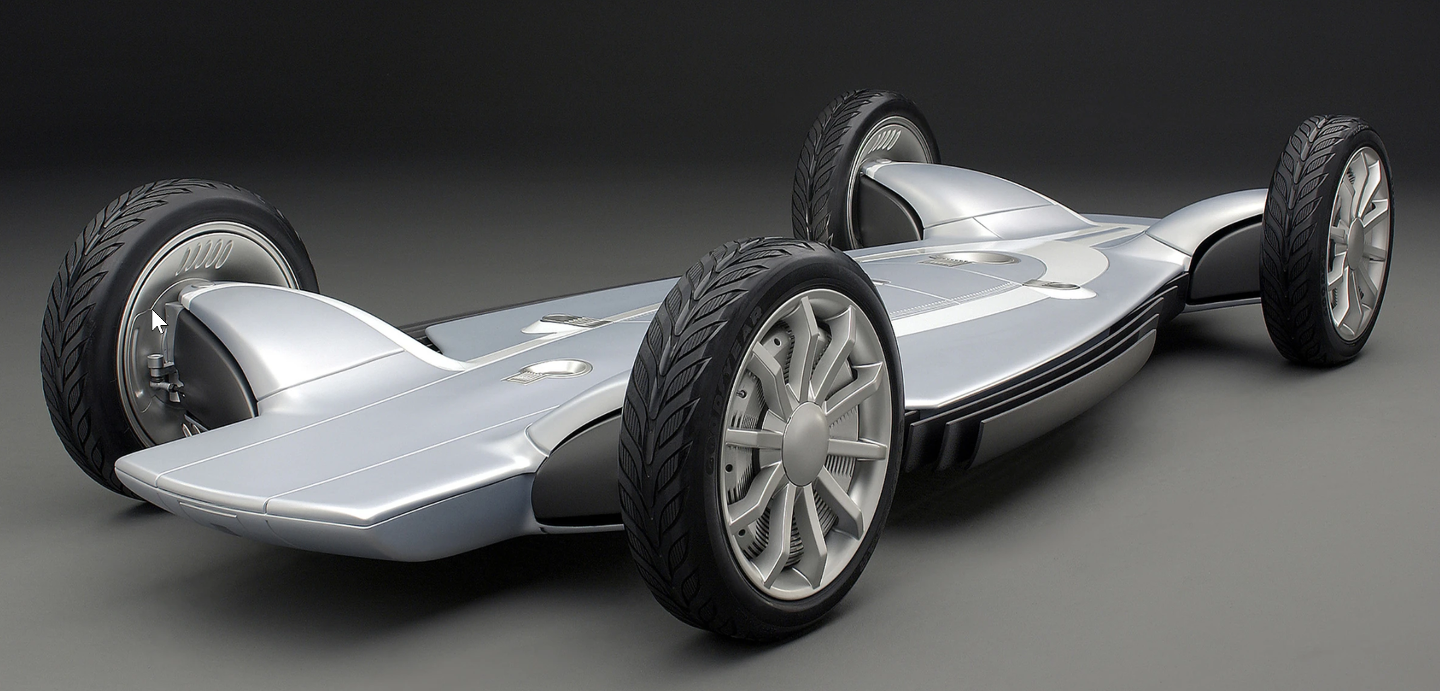
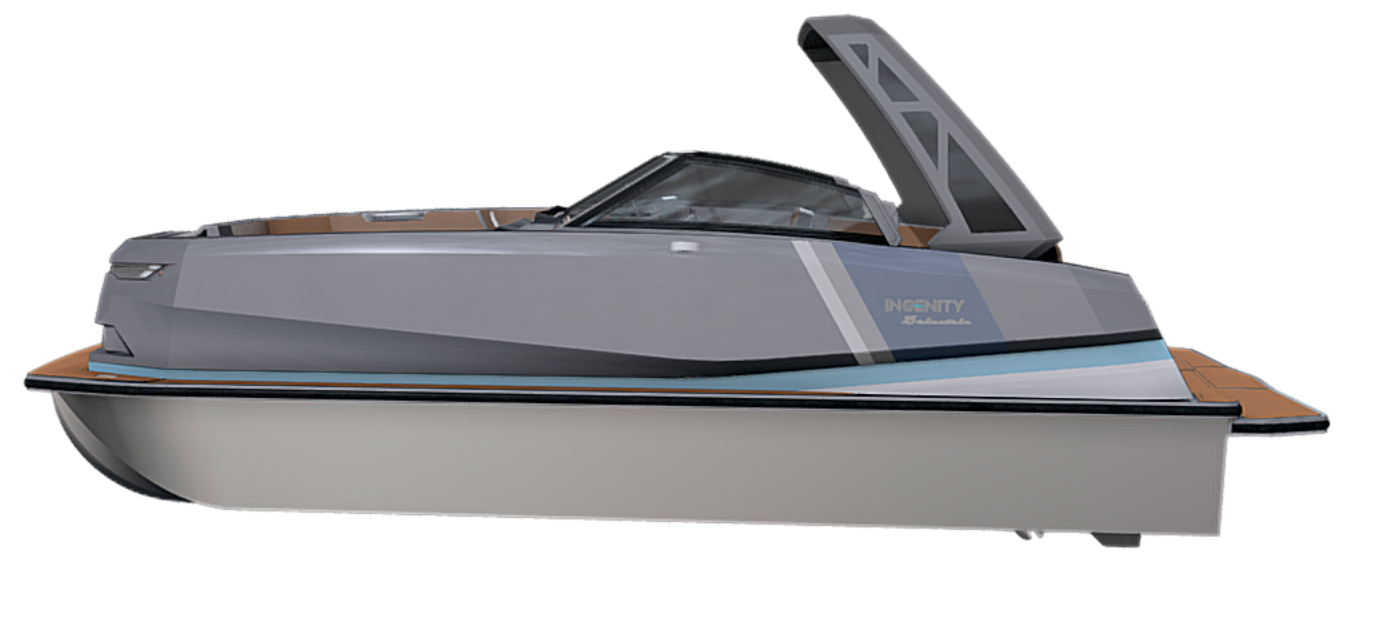
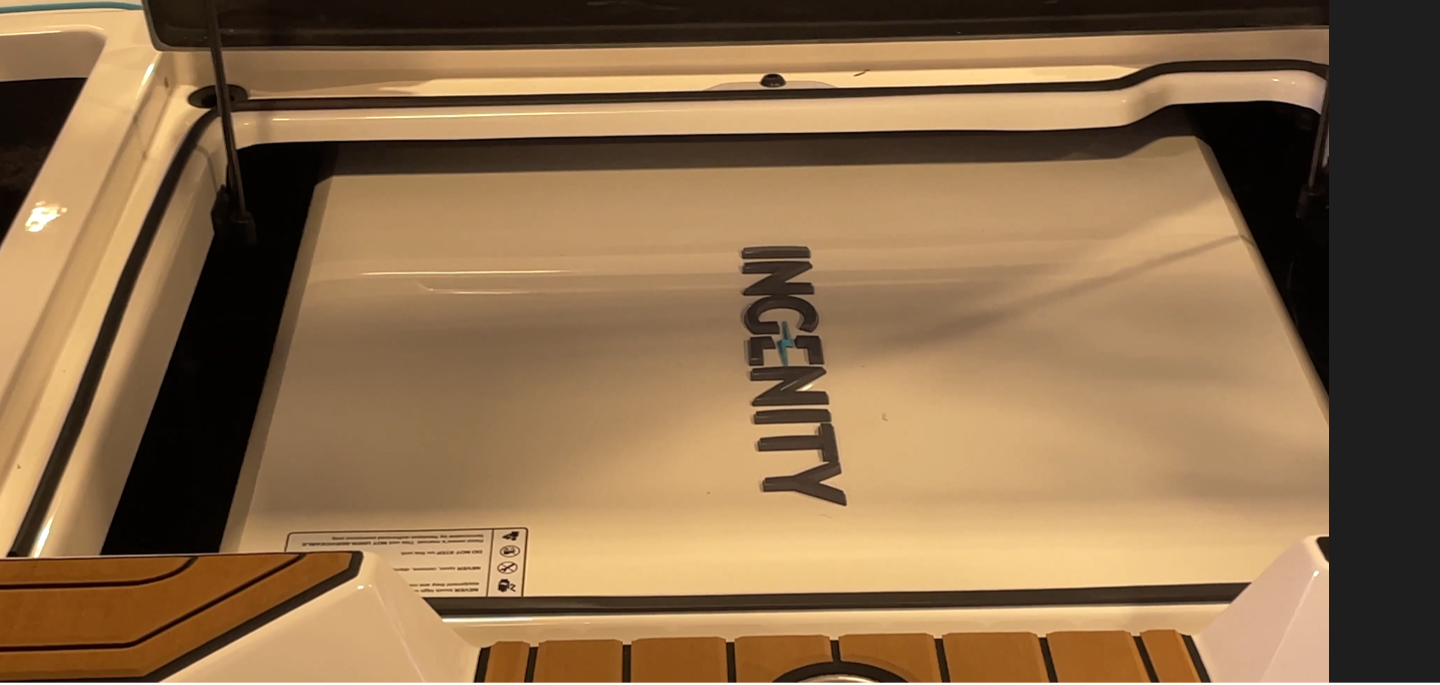
The Ingenity 23E is essentially built in two large parts: 1) The aluminum hull, stringers, bulkheads and substructure; this is the “skateboard.” 2) The fiberglass bulwarks, deck and support for seating. The “skateboard” hull contains the battery, electric motor, charger, converter, BMS and related equipment. The fiberglass superstructure is the “carriage” that can be easily mounted on, and married to, the aluminum hull.
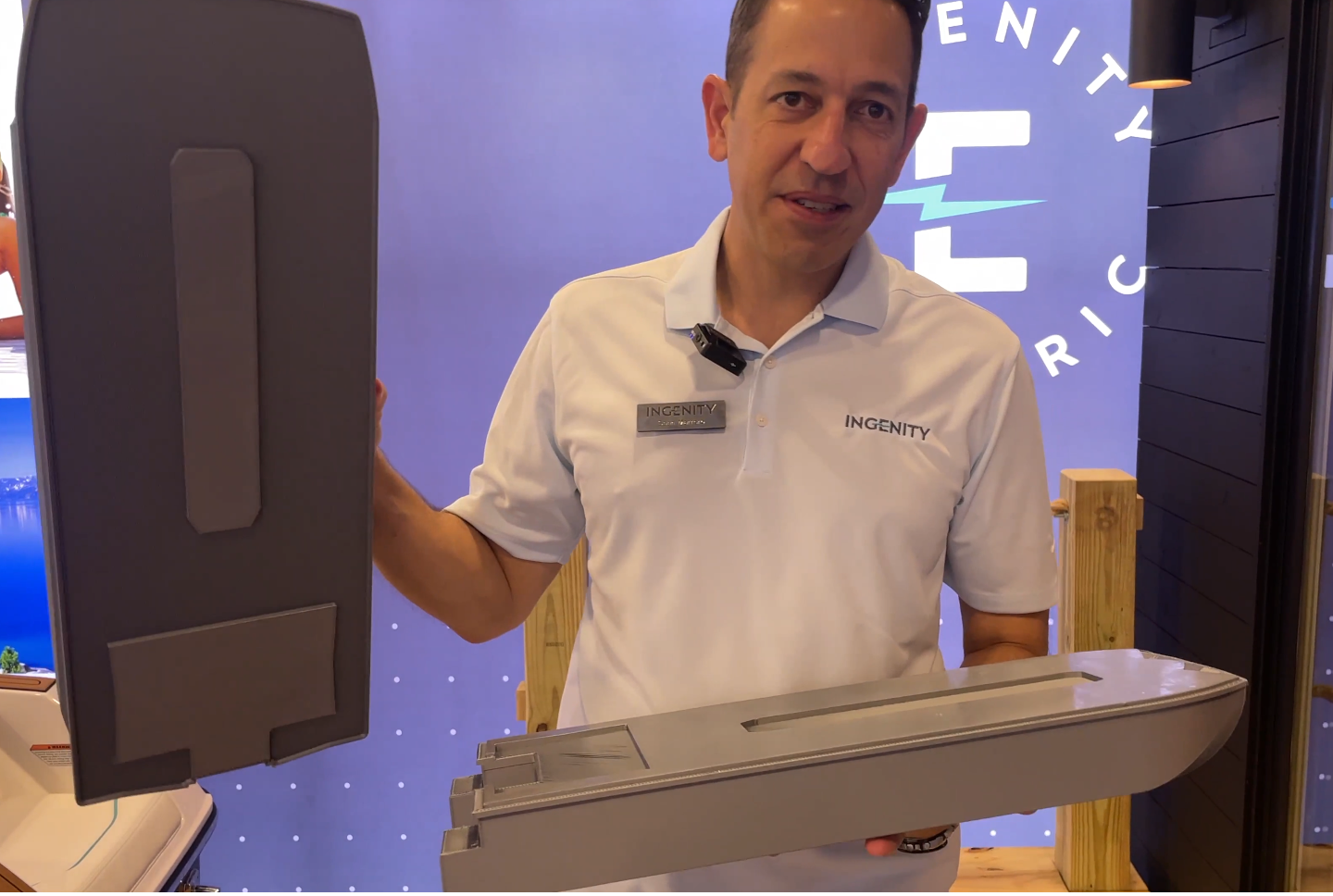
Using the skateboard concept, the accommodations plans can be changed to alternative configurations that Ingenity could tool in the future. Looking forward, it is not hard to imagine deck structures adapted for freshwater fishing, excursion sightseeing, a full-on swimming platform, a houseboat-type water camper or even a stable duck hunting vessel. With the aluminum hull and electric propulsion system already installed, hulls could be ready and waiting for orders to come in for models A, B, or C to be bolted on and quickly shipped.
Accommodations in the Model A
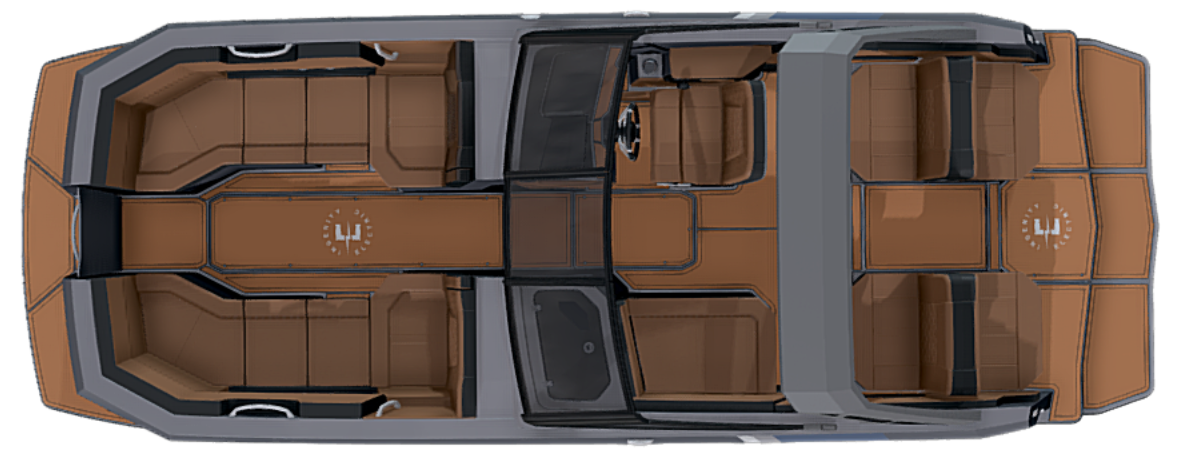
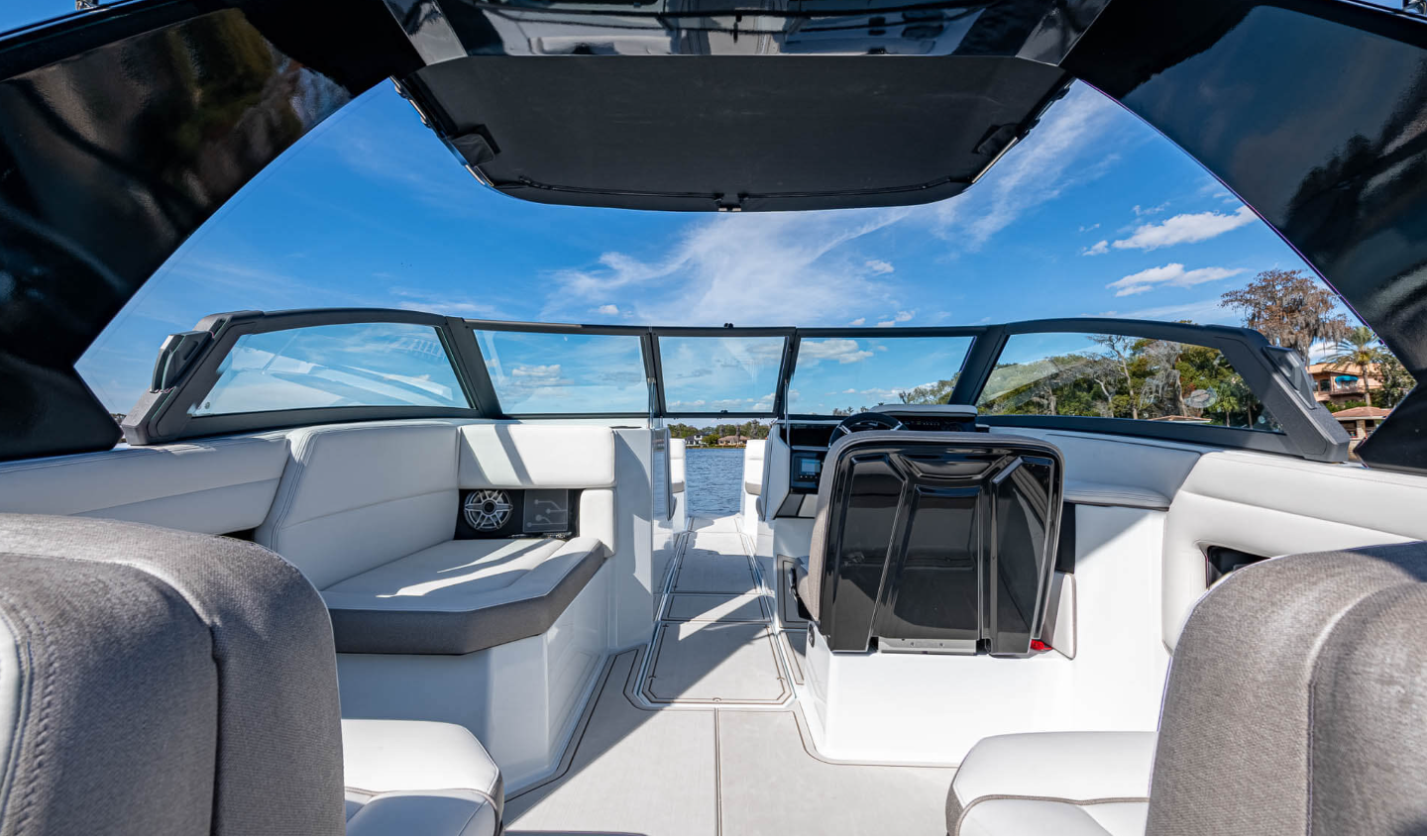
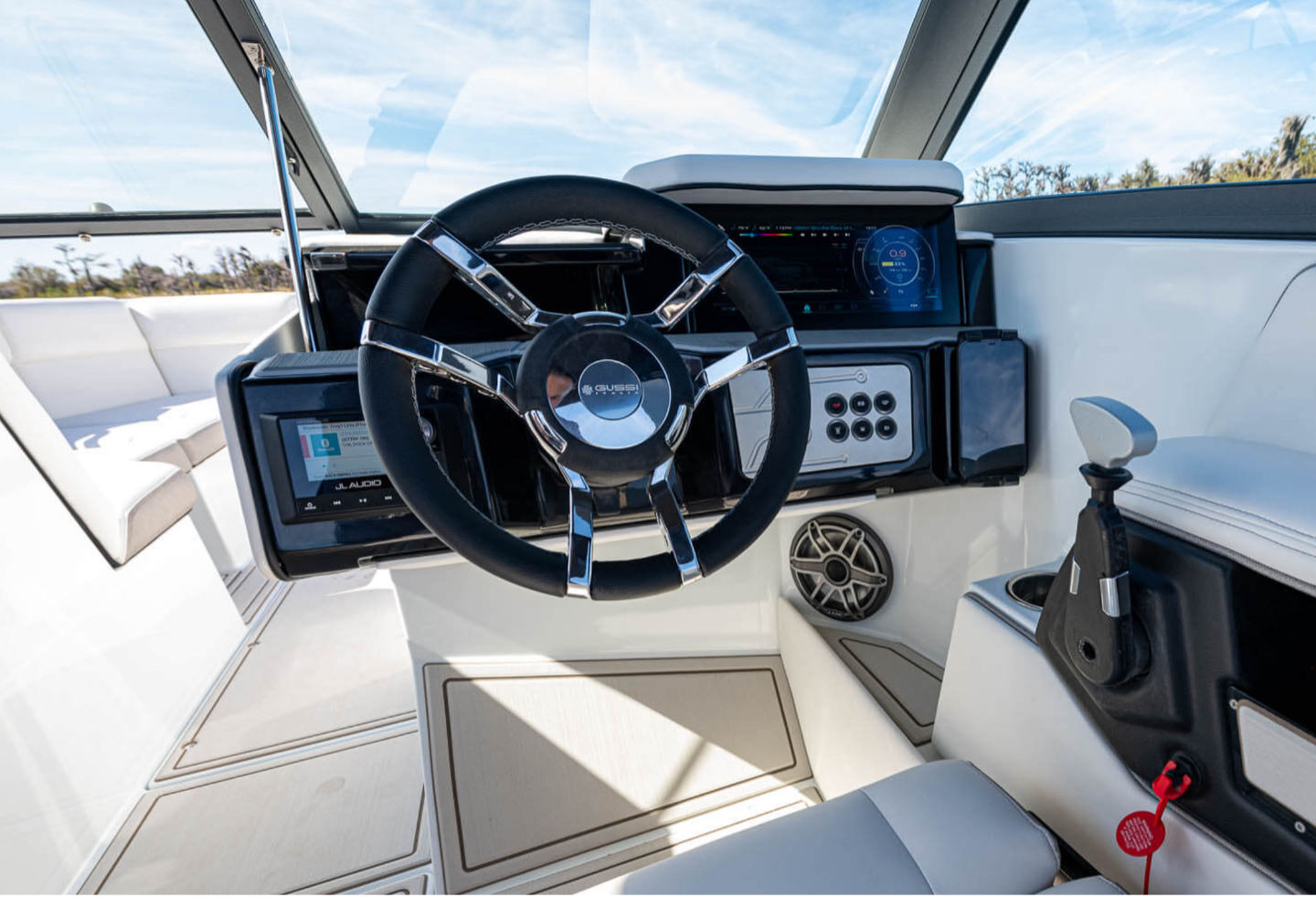
As the interior is currently configured, the boat is equal parts dual-console/bowrider with the glass windshield across nearly the width of the boat, almost exactly amidships. Forward are facing lounge seats to create a “living room” on the water experience. A side-mounted table can be fitted there.
Opposite the helm is a fore and aft bench seat where two people can keep the captain company. A large padded cushion on the port console provides the backrest for a watersports spotter.
Abaft this area are two seats that face forward and aft at the same time. They can also be lowered to create two sunpads. This is an old runabout idea, but still a good one. A center aisle goes from bow to swim platform. Clearly, the designers at Ingenity feel that this layout will appeal to their largest market because it is so versatile. The vessel is rated for 11 passengers.
The Propulsion System
The electric propulsion system begins with a 63 kW Lithium-ion battery pack made by Kreisel Electric, which is a respected German company that started in 2014. It was recently bought by John Deere. Ingenity president Sean Marrero told us that the John Deere purchase makes the partnership with Kreisel even more attractive because of Deere’s nationwide infrastructure and renewable energy plans.
Kreisel also makes the critical BMS (Battery Management System) that controls the 63 kW battery pack, or the optional 126 kW double battery pack. By comparison, the Tesla Model S currently is reported to have a 100 kW battery pack.
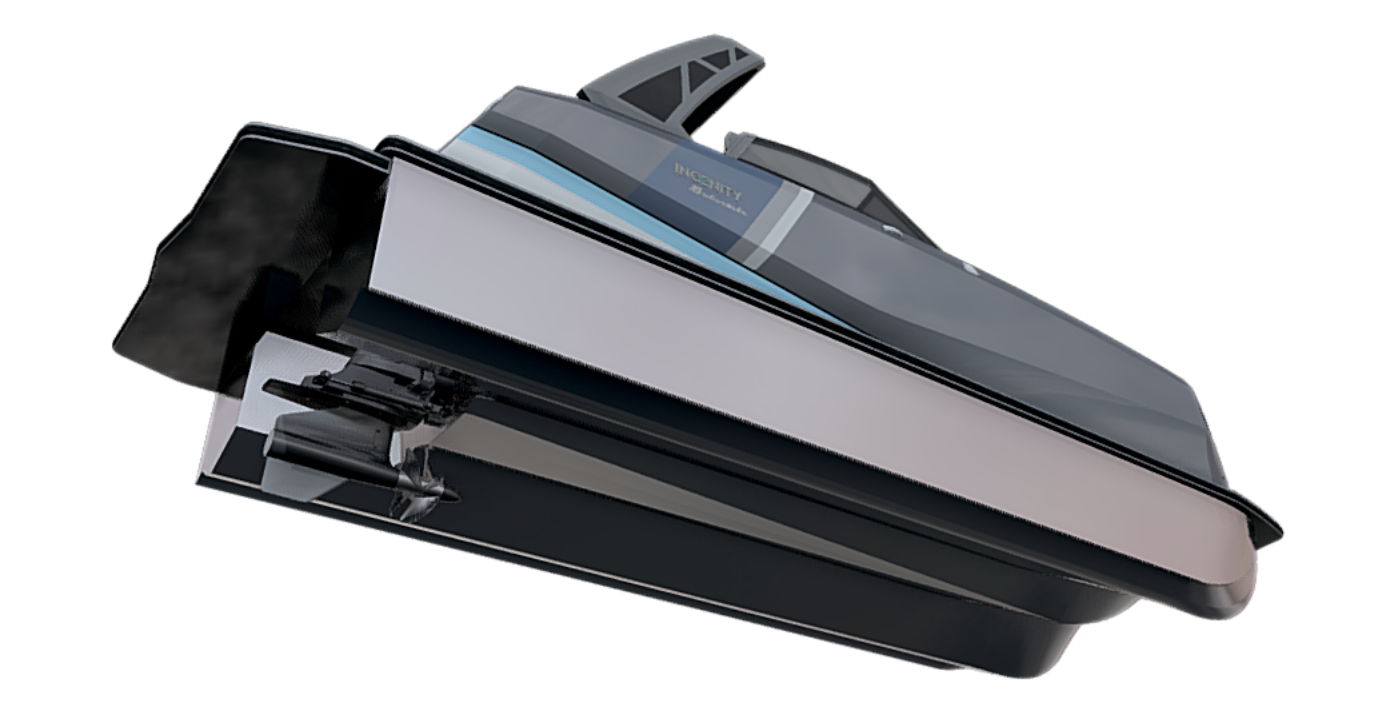
The whole system that will be installed in the Ingenity 23E will be virtually identical to the one used in the Nautique GS 22e that won the NMMA’s Innovation Award in 2020 for its venture into all-electric power. By using the same electrical propulsion components, Ingenity is using a proven system with trusted, reliable suppliers.
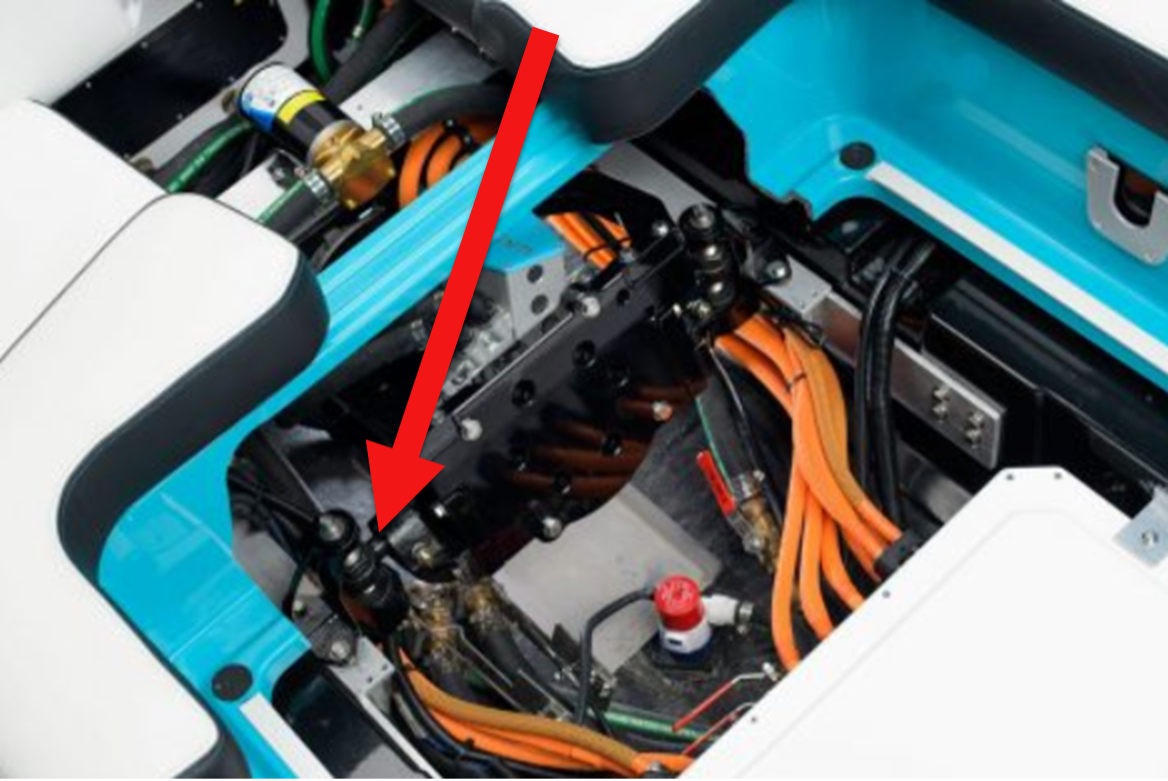
The Electric Motor. Marrero told us that the motor has a peak kW rating of 220 kW, which is equal to about 295-hp. But peak horsepower can only be maintained for 10 to 20 seconds before it quickly degrades down to its constant rating. Marrero points out, however, that the boat only needs a few seconds of peak power to get on plane. Once there, it takes less energy to propel the boat forward. He says that peak-power burst is an important aspect of the system.
The motor is rated at 150 kW continuous or about 200-hp. It is attached to a Mercury Bravo Four S lower unit that has counter-rotating dual props that face forward.
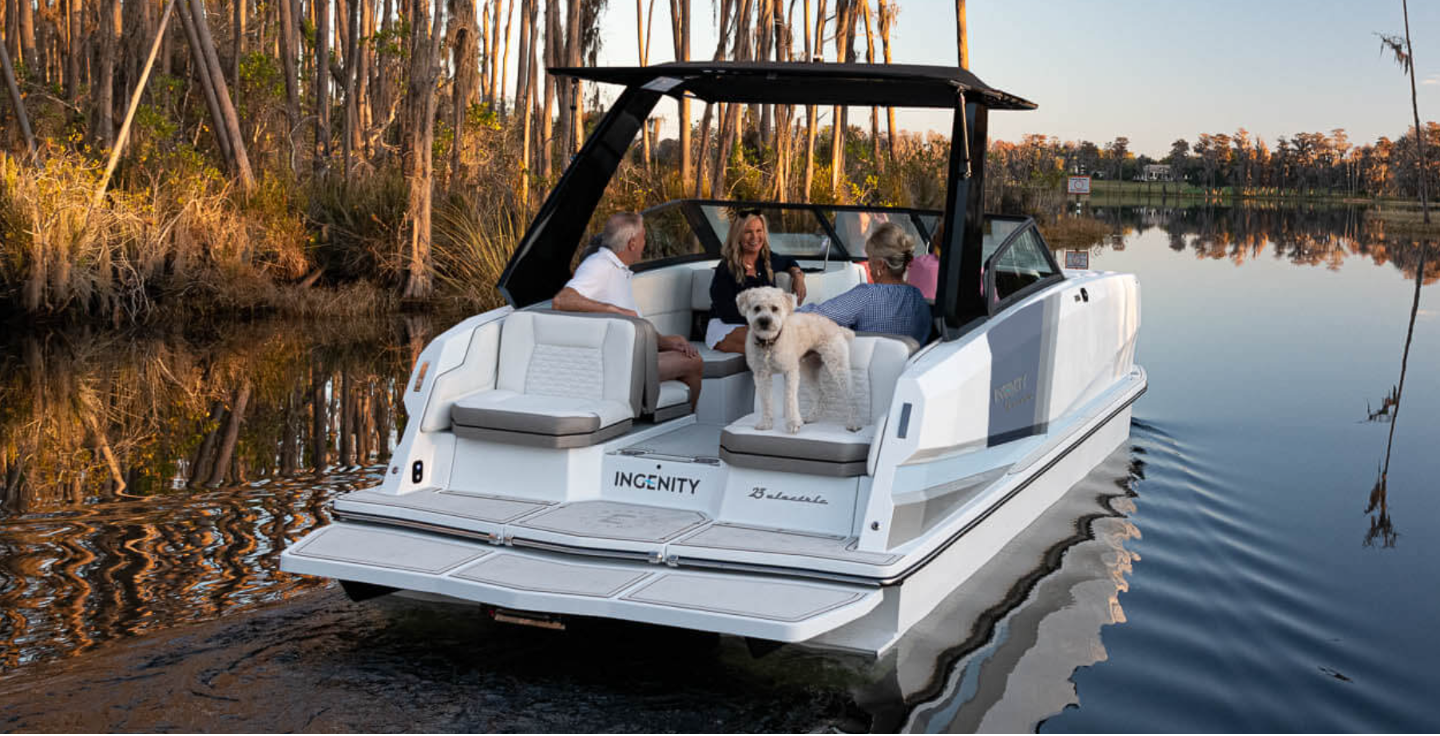
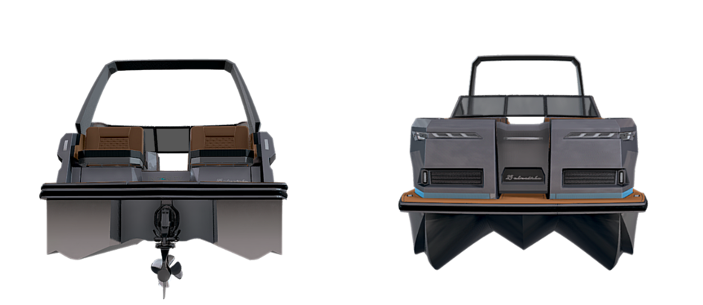
Swimming Safety. By moving the center part of the transom between the cat-like hulls forward of their transoms, Ingenity could get the sterndrive props safely tucked under the boat’s deck. By selecting the Mercury Bravo Four S forward-facing drive, an additional 26” (66 cm) of safety was added to the design. The props are in about the same location as they would be in an inboard-powered wake boat. The added swim platform extension provides even more distance between the props and a swimmer.
The twin counter-rotating props are pointed forward on a horizontal plane and have nearly twice the surface area of a conventional single prop. For those reasons, the electric motor’s prodigious torque can be applied more effectively to the water than with a standard inboard prop with a 6-degree, or so, down angle. Holeshot times and time to plane on the 23E should be impressive. She certainly won’t need 10 seconds to get on plane.
Maintenance
One of the strong selling points of all-electric boats is their low maintenance. The battery (Lithium-ion batteries are typically rated at 3,000 cycles), powers a brushless inductive electric AC motor that needs little if any maintenance.
Converters, battery chargers and the BMS are all solid-state and virtually maintenance-free. The battery, motor, and other equipment have closed-loop cooling systems, several of which interact with a raw water heat exchanger that has a pump, one of the few items of equipment that will need to be looked after.
There is no transmission or gearbox, as the motor simply runs the opposite direction when reverse is called for.
How Fast Does She Go?
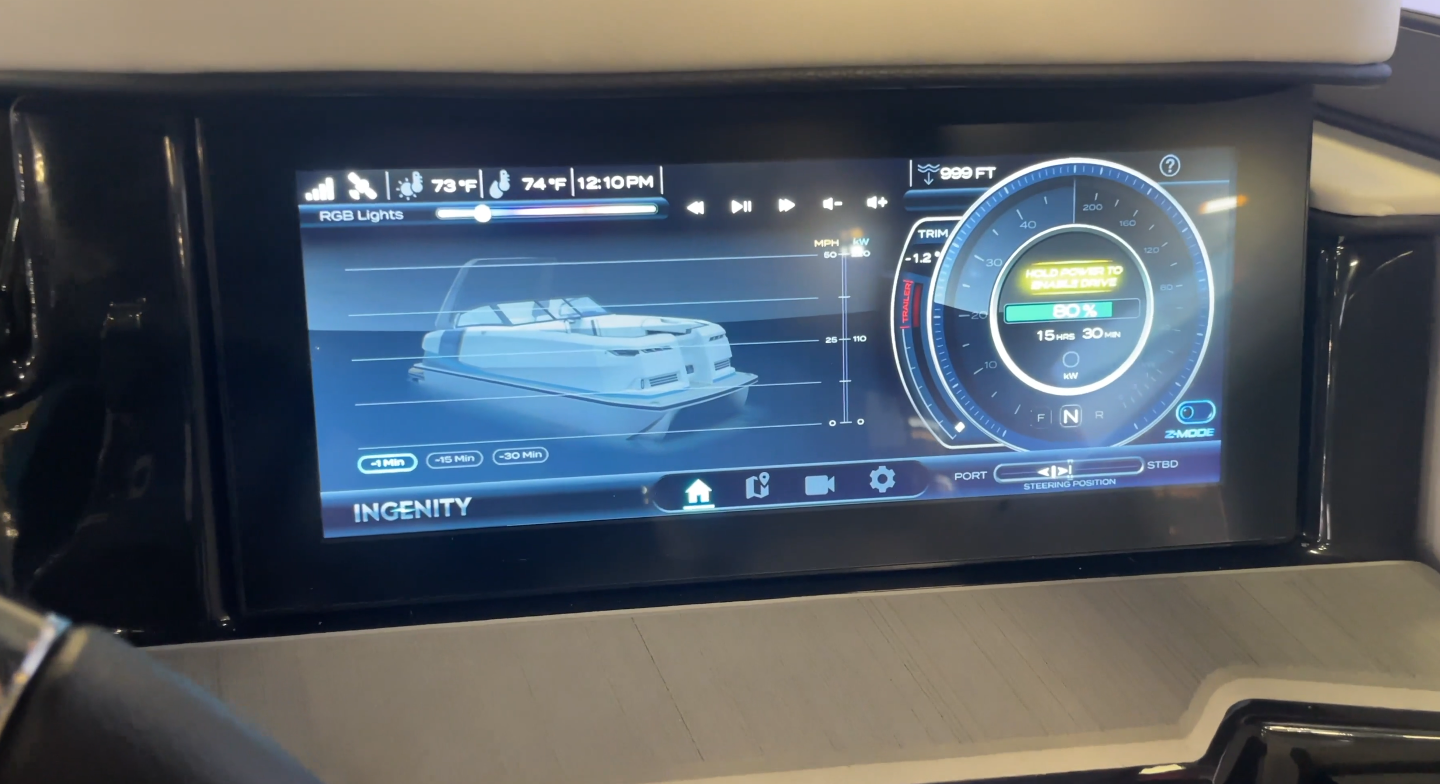
We have not tested the boat, so we don’t know anything about her performance. President Marrero is quick to point out that the 23E was not built to be a speedster. Information on the builder’s website indicates that her top speed is 30 mph, but, of course, that will depend on her load.
The Nautique GS 22e reportedly has a top speed of 39 mph with the same propulsion system, but it is a monohull with a wide, ski-like bottom. That is why she draws only 27”, compared to the Ingenity 23E’s 39” even though both boats are about the same weight.
The website says her “cruising” speed is 20 mph, which means that she is planing. And we’re told she can maintain that speed for two hours, or a bit more.
How Long Will the Batteries Last?
Wake surfing is typically done at 11 mph and wakeboarding at 20-22 mph. Wakeboarders will have about 2 hours of charge at 22 mph, we’re told. It is good to remember that people usually don’t surf or wakeboard for a solid two or three hours. People fall off the board, get tired, want to stop to see their latest trick on video, and take a pause to picnic or just chill for a while. The total elapsed time on a battery charge is a matter of personal operating rhythm.
We will not have a firm idea of the actual battery life at different activities until we test the boat ourselves.
But for those who just want to take the kids out for some tubing, interspersed with swimming at anchor and lunch, the battery can last most of the day. A peaceful evening cruise around the lake, at say, 5 mph, should not require a second thought about range. We’re told by the folks at Ingenity that at 5 mph she has an endurance of 7 hours with one battery pack and nearly twice that with two.
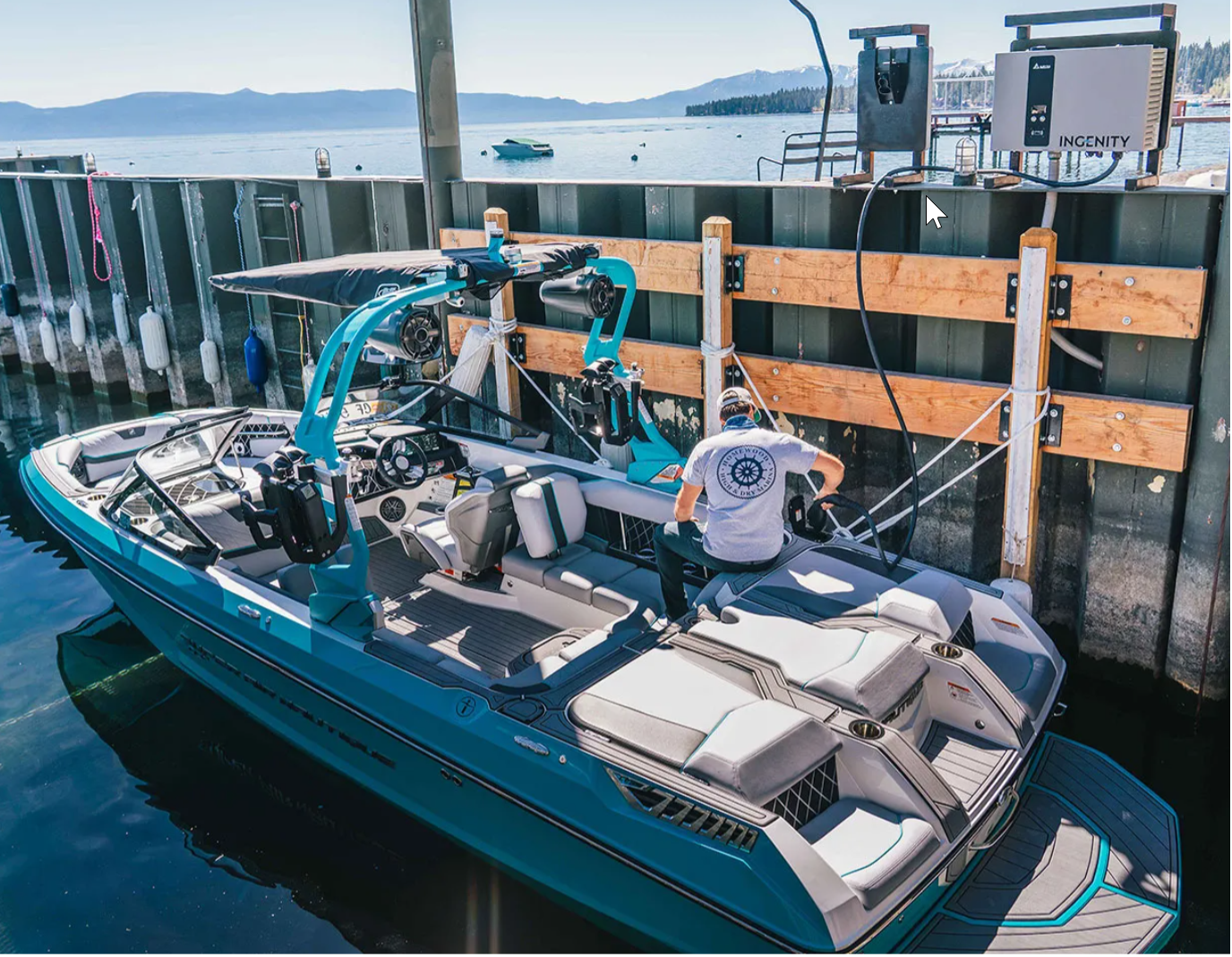
Times to Recharge
Ingenity has a terrific explanation of anticipated recharging times on its website. We present them here with the caveat that typically electric boat batteries are recharged with from 20% to 30% of the charge still in the battery. That means that charging times may be faster than what is shown (which are from 0 to 100%).
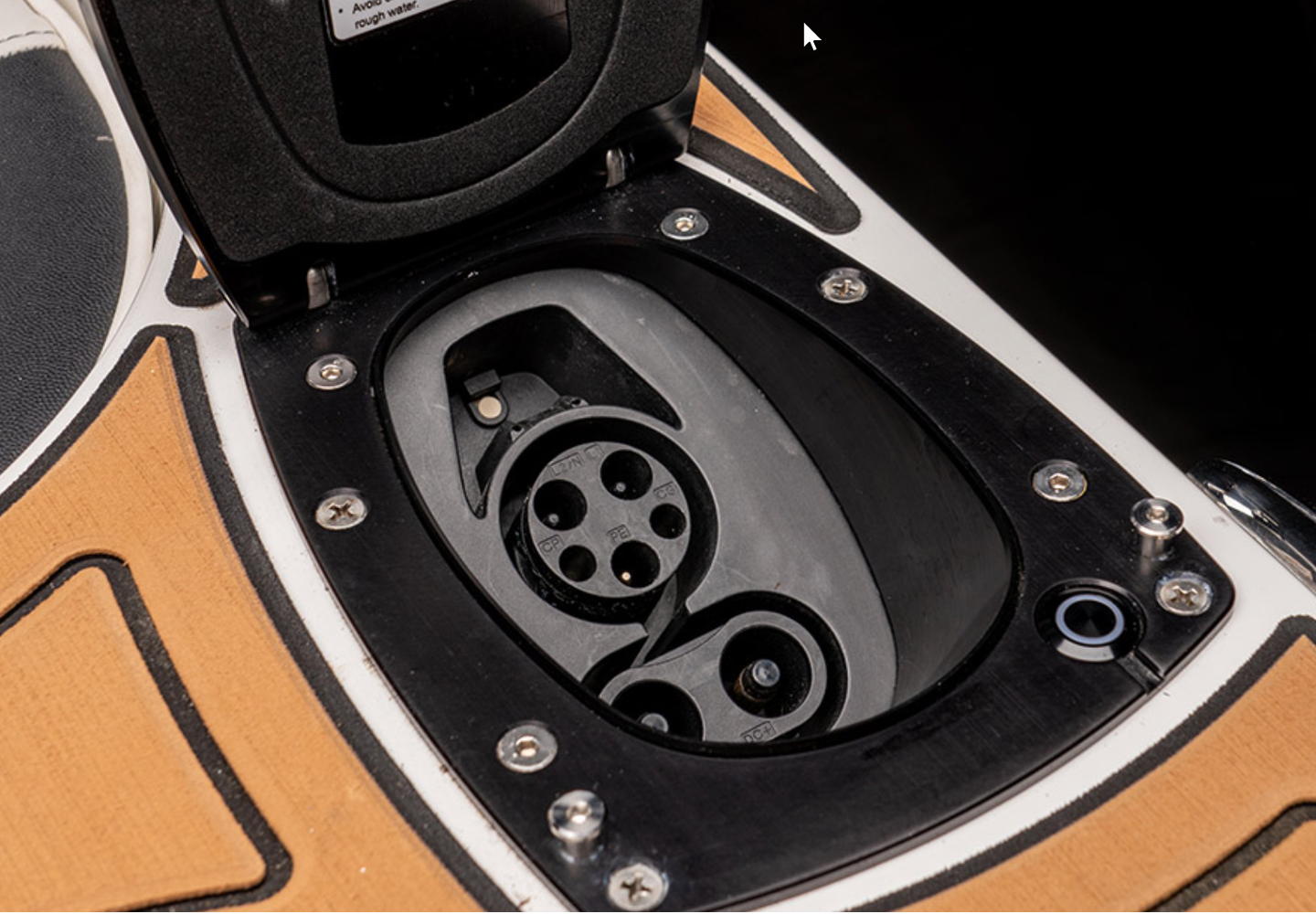
The charging connectors used by Ingenity follow the automotive standards so the boats can be recharged anywhere facilities are found with either AC or DC.
1. Commercial Grade/480 VAC/85 kW/132 Amp 3 Phase
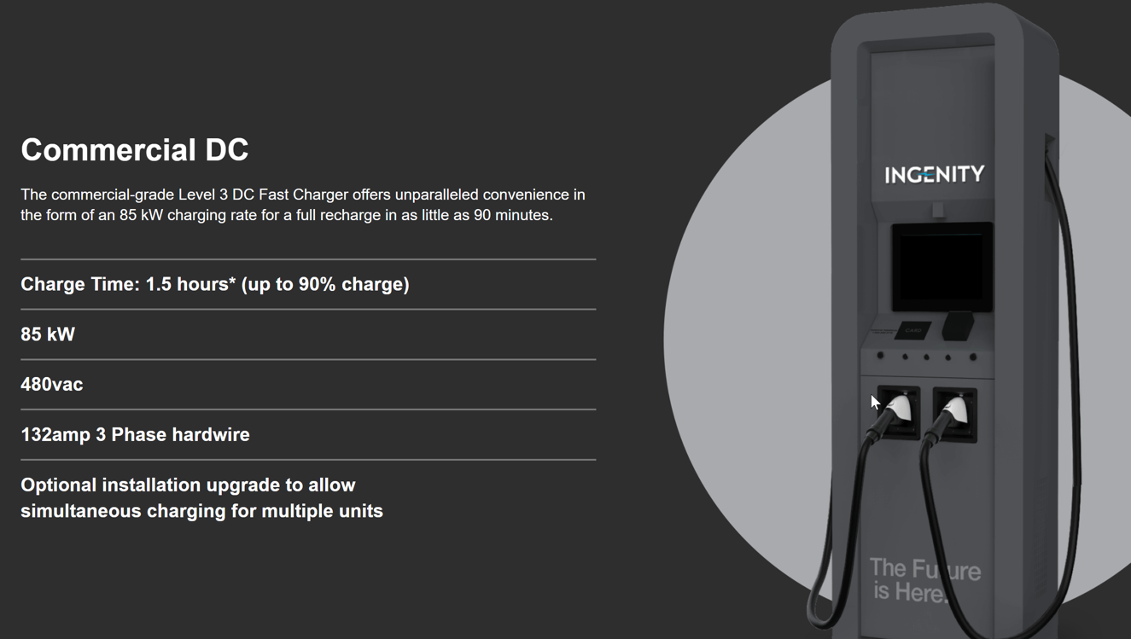
These are the power sources that we typically see on Interstate highways and other locations where Tesla, other operators or local governments have installed them. They are quite expensive to install.
2. “Residential” DC/240V/ 25kW/175 Amp
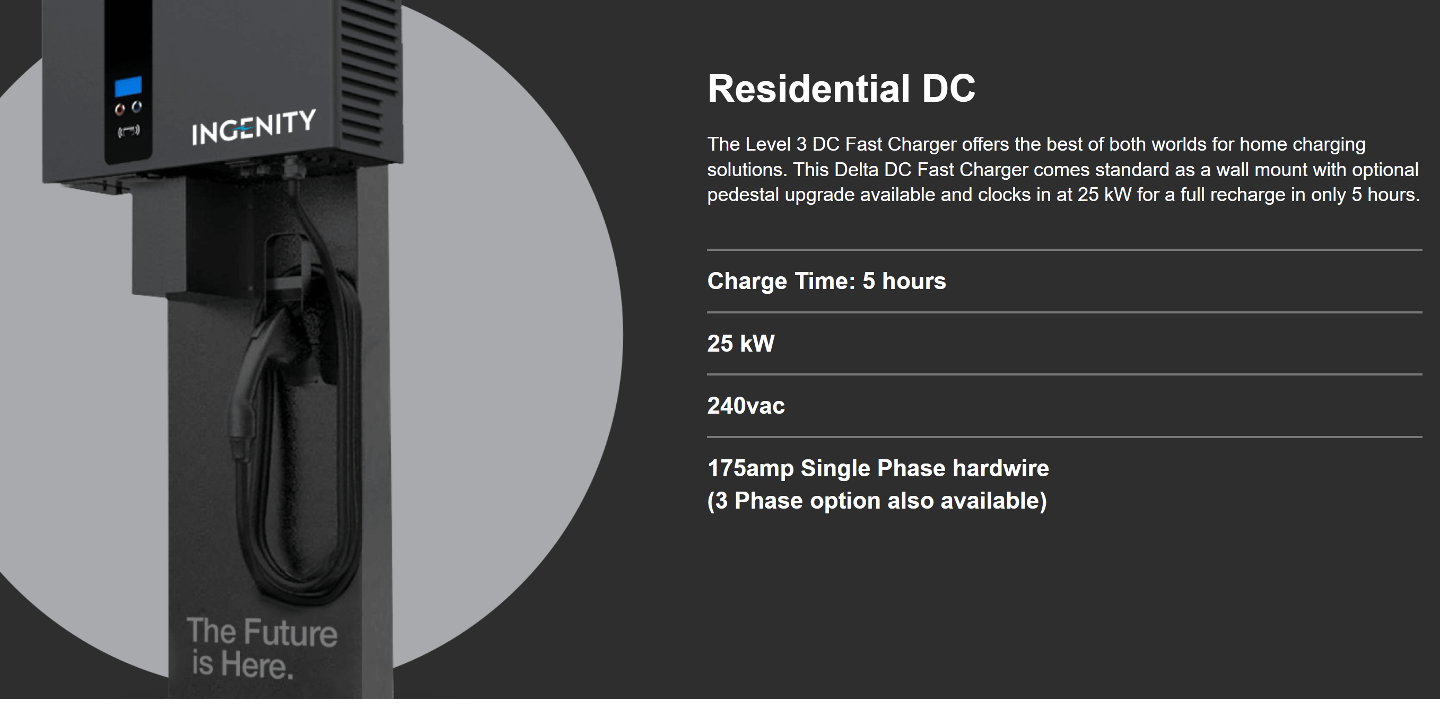
These are quickly becoming the most numerous charging stations. Most American houses have two 240V (nominal) receptacles: one for the kitchen range (NEMA 14–50) that requires a 50A dedicated circuit and one for the clothes dryer (NEMA 14–30), which requires a 30A dedicated circuit.
These are usually located behind the appliances, so they are difficult to reach. To install this charger convenient to the boat, a licensed electrician should be hired. You will have to decide if you want 1 phase or 3 phase hookups. We recommend going for the 3 phase upgrade, which will be faster. Check with your marina to find what they have available.
3. 240VAC/10 kW/60Amp
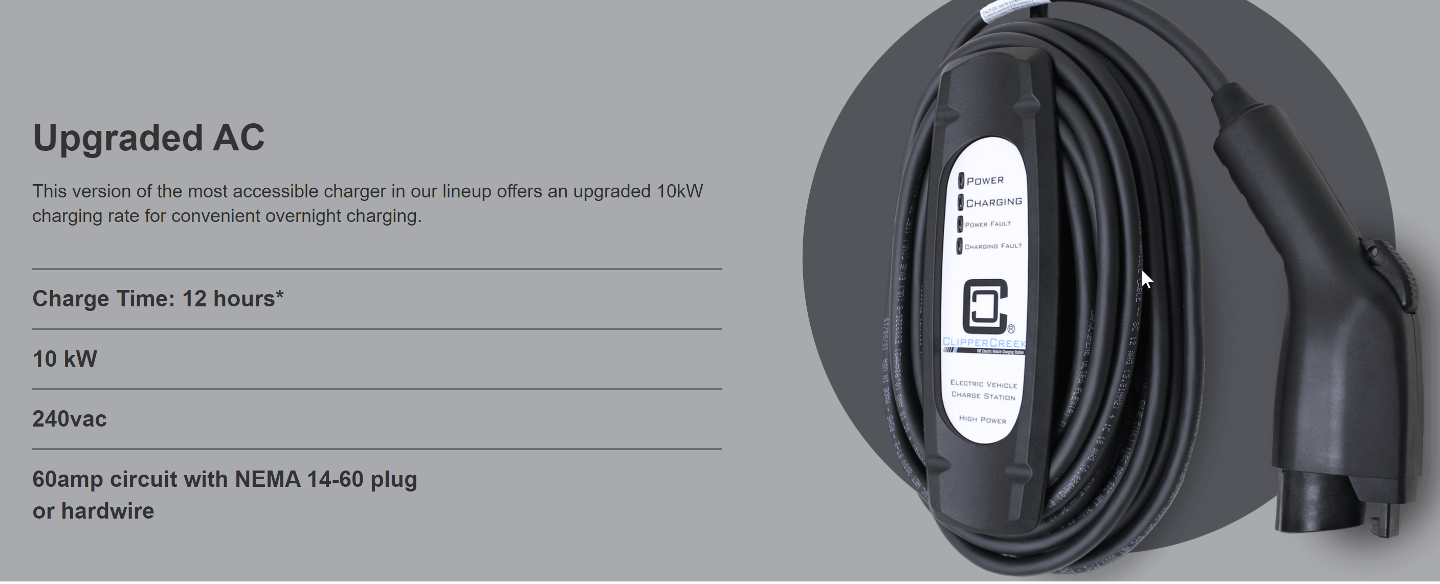
Same as above but with less than half of the charging capacity per hour, but suitable for most applications where the boat is used for several hours, then put away until the next day. This is the most widely used charging connection.
4. 240VAC/5.8 kW/30 Amp
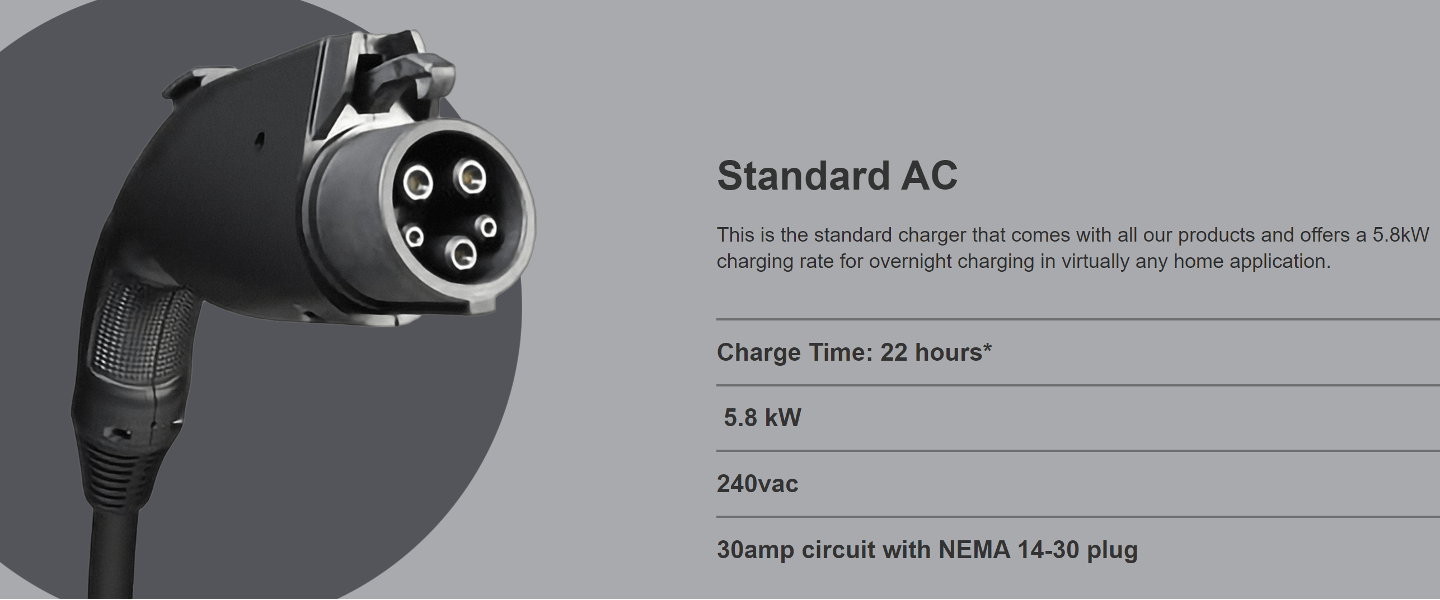
While this is the most basic and least expensive, charging is slow. But remember that you will only be topping off the battery. If you’ve only used 50% of your battery capacity, your charging time will be cut in half.
Ingenity Telematics
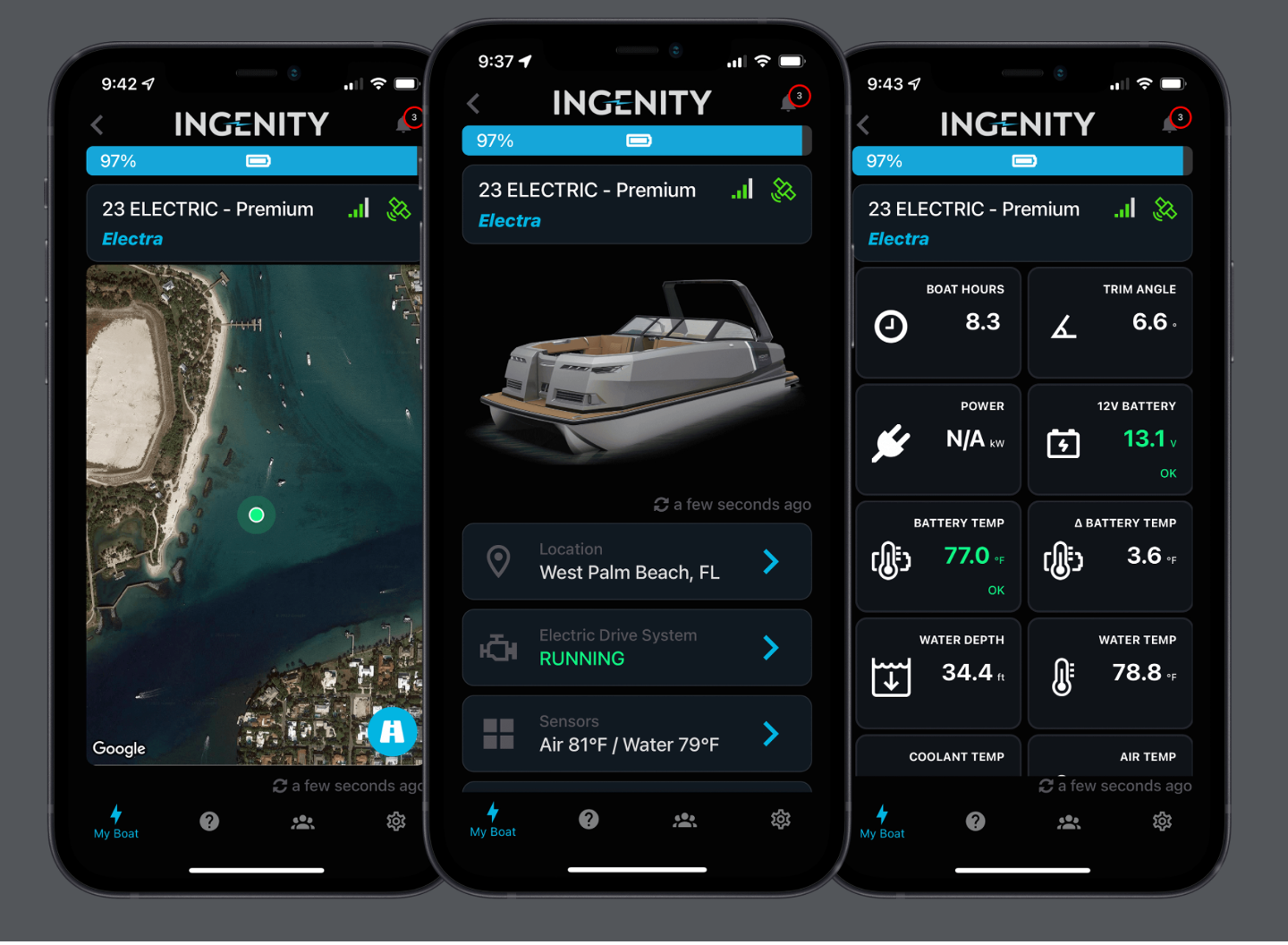
No discussion of the new Ingenity 23E would be complete without mention of the company’s Telematics. Ingenity and its parent Correct Craft are the only boat builders we know that monitor all of their current customers’ boats’ vital signs through a mobile app. Its system tracks the state of battery charge, voltage, the position of the vessel, high water and many other things. The folks at Correct Craft also monitor all of the boats in their fleet and have done this for several years.
This service comes standard with every Correct Craft Nautique boat sold and once the Ingenity 23E starts shipping, it will be included. This product offers great peace of mind for the owners when they are not on the boat. Five years of communication subscription is paid by the builder.
The Price
The MSRP of the Ingenity 23E is $234,999 for the basic model with one 63 kW battery. A second 63kW battery raises the price of the boat to $300,000.
We’re told that the company will start shipping production units in May 2022. It is currently taking $500 refundable deposits, so customers can reserve their 23E for summer delivery. Pre-order here…
Observations
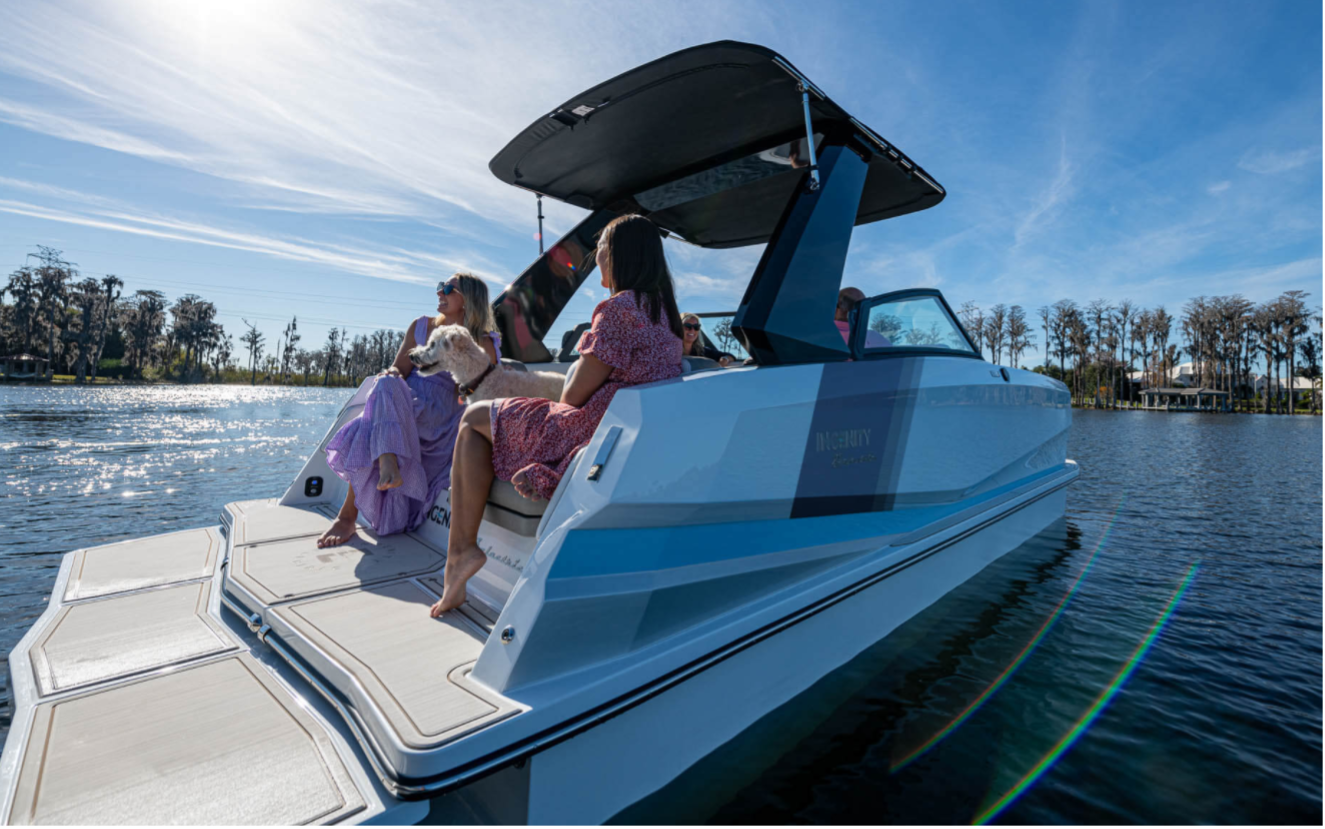
The Ingenity 23E is a boat designed for the luxury-dayboat market on lakes, rivers and protected waterways. Entry-level boaters, early adopters and people who like to entertain and converse without having to yell over the noise of an ICE motor should put this boat on their list of vessels to consider. The 23E is for genteel, comfortable cruising at slow and moderate speeds and for watersports for people who care about the environment.
The hull comes in a variety of painted colors. That together with its sculpted topsides is intended to signal that the owner is at the forefront of the movement to renewable energy and good planet stewardship.