Access More Boat Tests
Already have an account? Login
Aquila 42 Coupe (2025-)
2 x 400-hp Mercury Verado

Brief Summary
The Aquila 42 Coupe Power Cat is the natural pathway between the company’s Sport and Yacht lines. Presenting a low profile, sleek exterior is only a prelude of what awaits inside. With a spacious interior, a pair of staterooms with ensuite heads taking full advantage of a wide beam carried fully forward, and the option of twin Mercury outboard or Volvo Penta inboard, sterndrive diesel power, and paired with double stepped hulls and a carbon-fiber foil, the Aquila 42 Coupe is at home for day trips, extended weekend travel, or long distance voyages.
Test Results
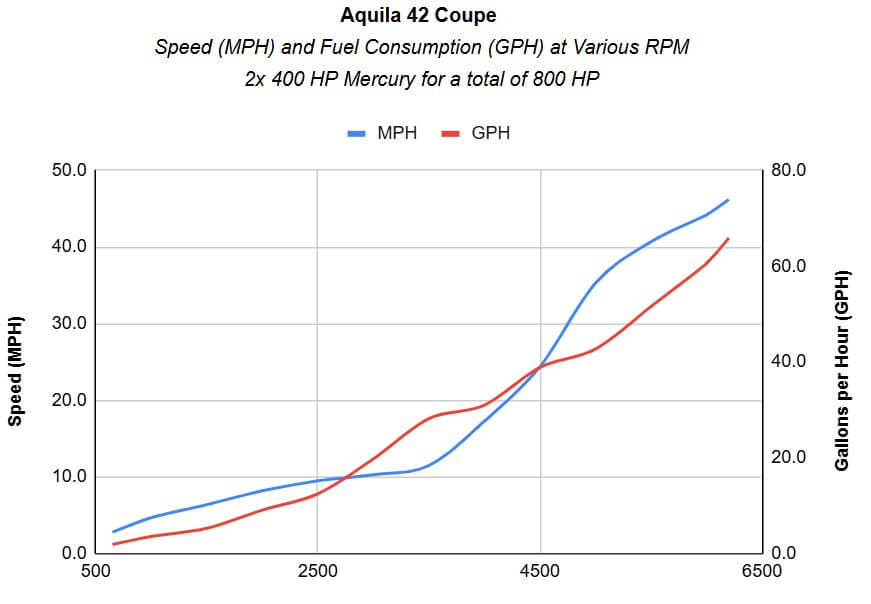
| RPM | MPH | Knots | GPH | MPG | NMPG | SM | NM | dBa |
|---|---|---|---|---|---|---|---|---|
| 600 | 2.8 | 2.4 | 1.9 | 1.5 | 1.3 | 604.2 | 525.1 | 62 |
| 1000 | 4.7 | 4 | 3.6 | 1.3 | 1.1 | 537 | 466.7 | 62 |
| 1500 | 6.4 | 5.6 | 5.3 | 1.2 | 1 | 495.1 | 430.2 | 64 |
| 2000 | 8.2 | 7.1 | 9.1 | 0.9 | 0.8 | 367.2 | 319.1 | 69 |
| 2500 | 9.5 | 8.2 | 12.5 | 0.8 | 0.7 | 310 | 269.4 | 71 |
| 3000 | 10.3 | 8.9 | 19.8 | 0.5 | 0.4 | 212.2 | 184.4 | 73 |
| 3500 | 11.5 | 9.9 | 28.2 | 0.4 | 0.4 | 166.5 | 144.7 | 78 |
| 4000 | 17.3 | 15 | 31 | 0.6 | 0.5 | 229.2 | 199.2 | 81 |
| 4500 | 24.4 | 21.2 | 38.9 | 0.6 | 0.5 | 257.5 | 223.8 | 83 |
| 5000 | 35.3 | 30.6 | 42.7 | 0.8 | 0.7 | 338.5 | 294.1 | 85 |
| 5500 | 40.7 | 35.4 | 51.6 | 0.8 | 0.7 | 323.7 | 281.3 | 86 |
| 6000 | 44.2 | 38.4 | 60.6 | 0.7 | 0.6 | 299 | 259.8 | 86 |
| 6200 | 46.2 | 40.1 | 65.9 | 0.7 | 0.6 | 287.7 | 250 | 88 |
Specifications
| Length Overall |
42' 10" 13.06 m |
|---|---|
| Beam |
15' 11" 4.85 m |
| Dry Weight |
18,740 lbs 8,500 kg |
| Draft Up |
2' 10" 0.86 m |
| Draft Down |
2' 11" 0.89 m |
| Fuel Capacity |
410 gal 1,552 L |
| Water Capacity |
52 gal 197 L |
Acceleration Times & Conditions
| 0 to 30 | 21.4 |
|---|---|
| Props | Merc Rev X |
| Load | Persons & Gear: 600 lbs/272 kg; Fuel: 1,924 lbs/873 kg; Water: 167 lbs/76 kg |
| Climate | 76°; 68% humidity; wind: 5-10 mph; wave: .5-1'; salt |
Engine Options
| Tested Engine |
2 x 400-hp Mercury Verado |
|---|---|
| Std. Power |
2 x 400-hp Mercury Verado |
A Cat for All the Right Reasons
Captain's Report
Aquila 42 Coupe Power Cat
by Capt. Ken Kreisler
Always a trend setter in this sector of the marine industry, Aquila has led the way in the design and engineering of power catamarans to such a degree as to take the worldwide lead featuring a wide variety and range of cruising boats and yachts.
Regardless of size, each Aquila Power Cat represents the company’s innovative approach to providing a wide, stable, seaworthy and fuel efficient platform, and with its Coupe lineup, you have a textbook representation of this concept.
Major Features
- Double stepped hull design
- Carbon fiber Aquila Hydro Glide semi-foiling system
- Galvanic isolator protection system
- Mastervolt 200A/3500W inverter/battery charger
- C-Zone DC digital switching system
- 2 x 400-hp Black Mercury Verado V10 outboards with JPO
- Port and starboard cockpit boarding doors; safety gates aft
- Electrically operated forward door between bow and salon
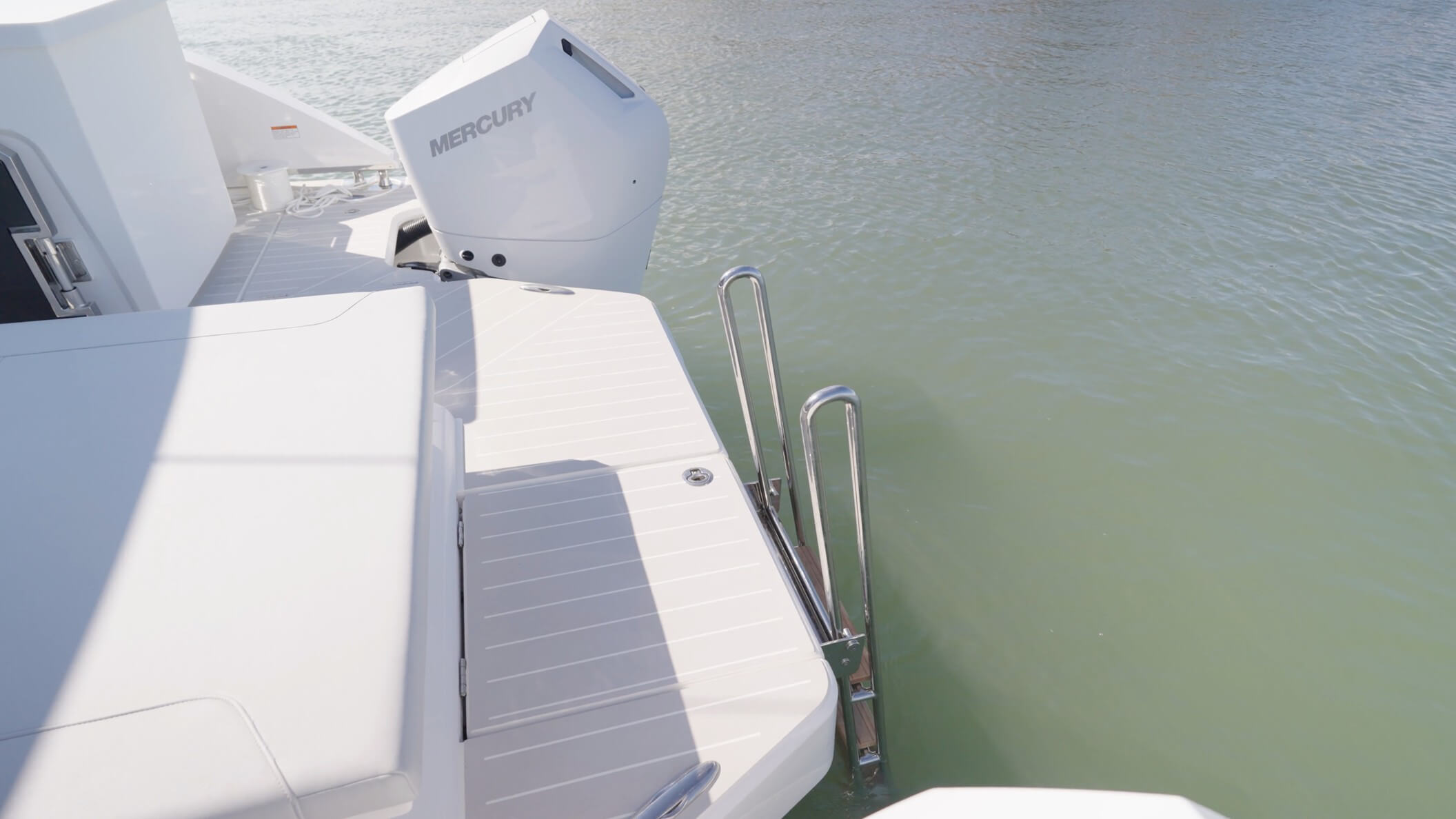
- Custom stainless steel retractable swim ladder with teak steps at aft deck swim platform
- Manual hi/low table w/fold out sections convert to sleeping area w/fill in cushion
- Electric windlass (12v-1000W) w/hard wired hand-held control in anchor locker
- Two way, three panel sliding glass door aft
- Flip down/up fiberglass engine well covers
Notable Options
- Synthetic teak decking
- 2 x Volvo Penta D6-440hp DPI sterndrive diesel engines
- Electrically operated sunroof
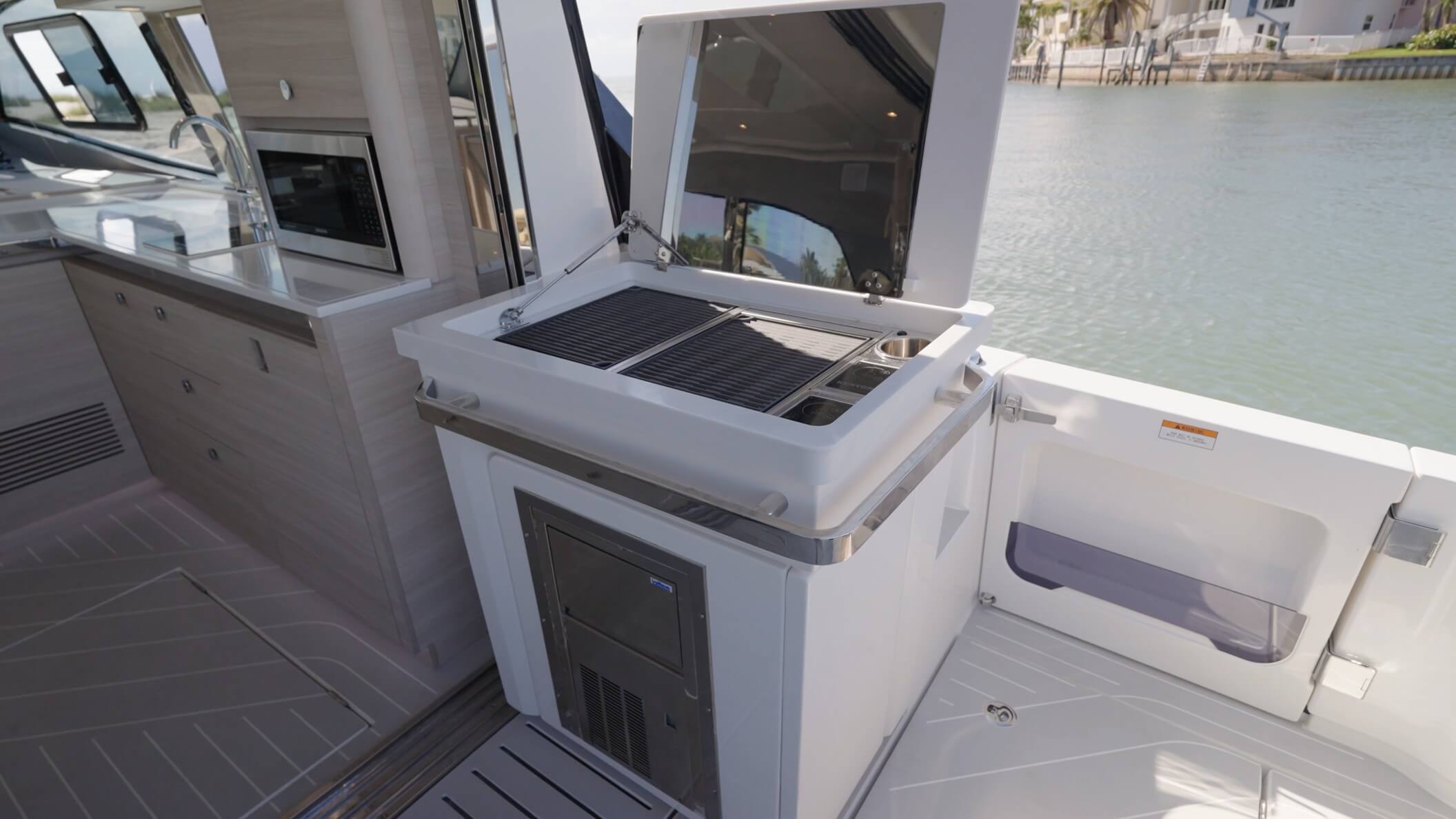
- Electric aft bbq w/refrigerator freezer combo
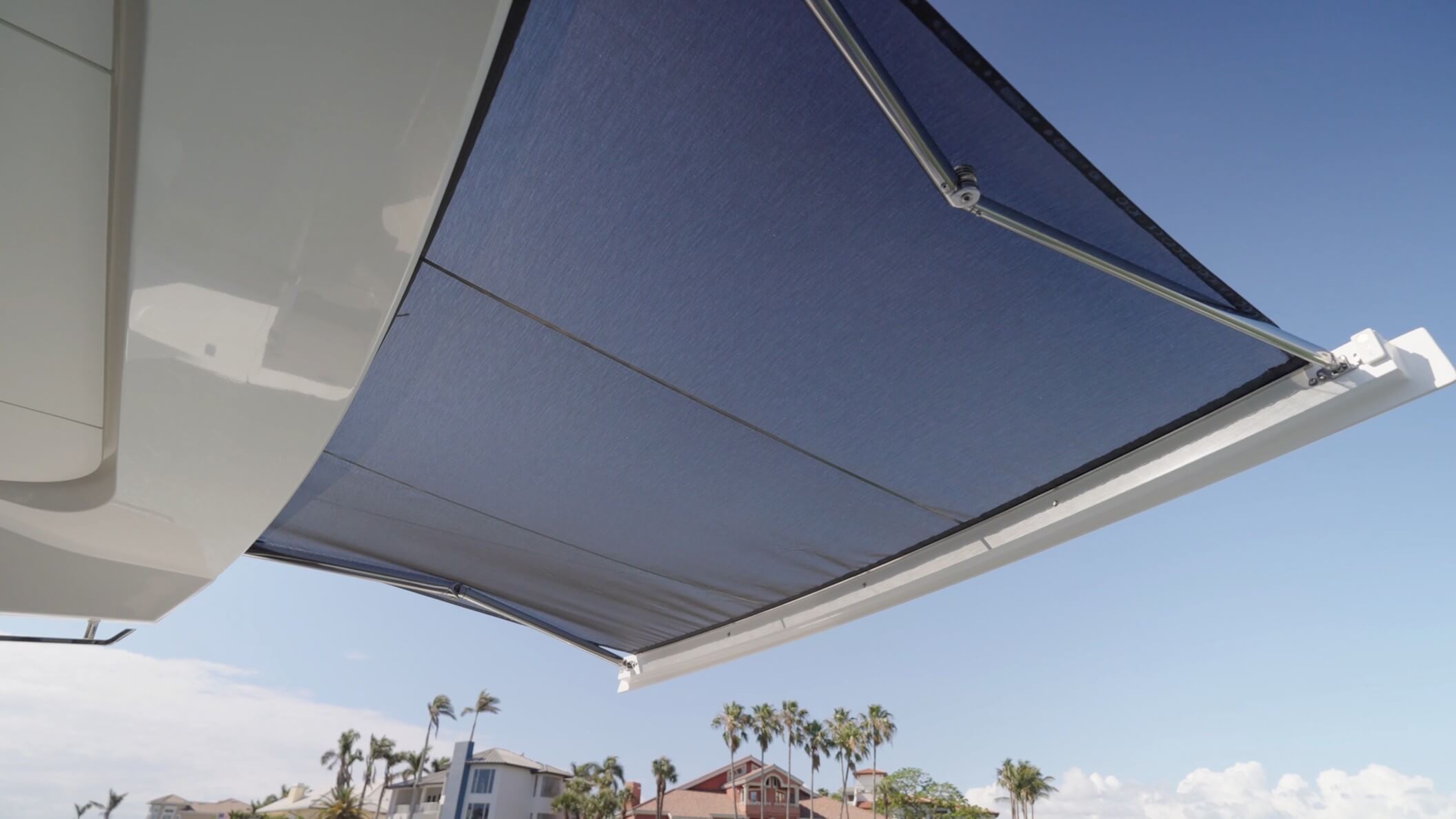
- Retractable canvas sunshade system
- Drop down television in salon
- 9-kW Fischer Panda diesel generator
- Lithium ion battery bank
Vessel Inspection
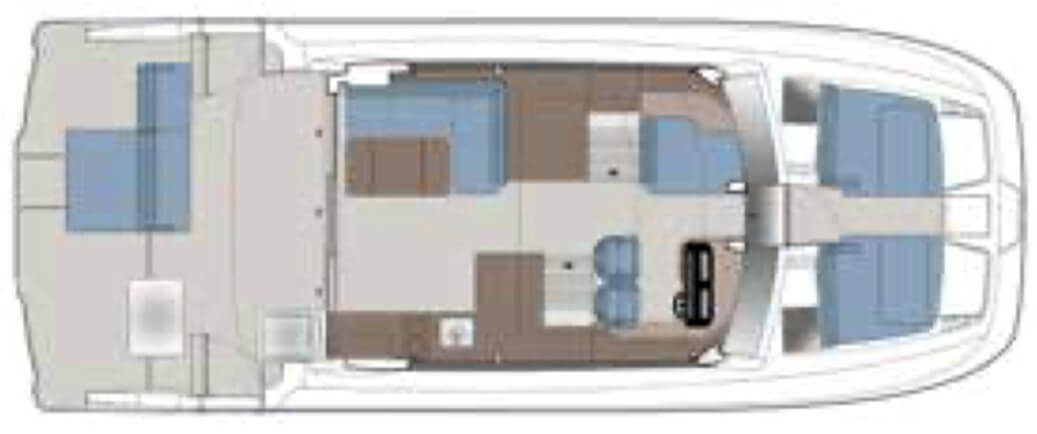
Cat designed hulls are known for utilizing the beam from bow to stern and aboard the Aquila 42 Coupe, this favorable use of space, both inside and out, is quite apparent.
Bow
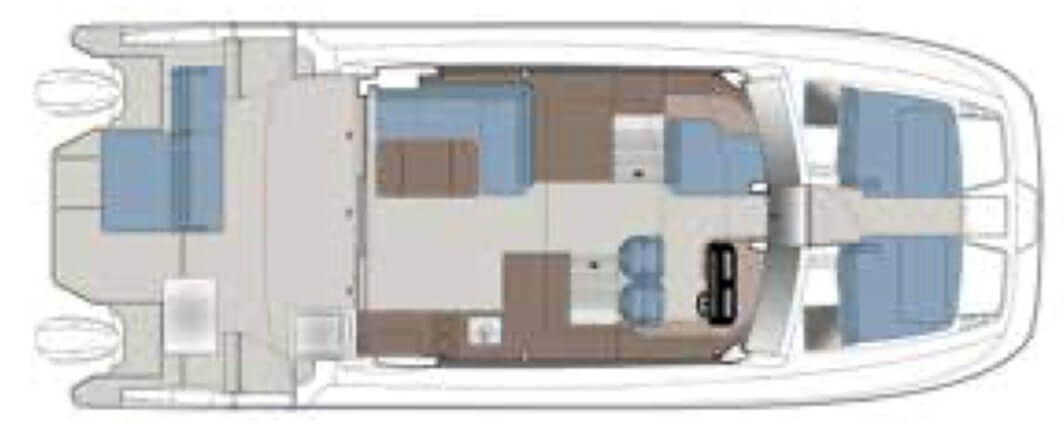
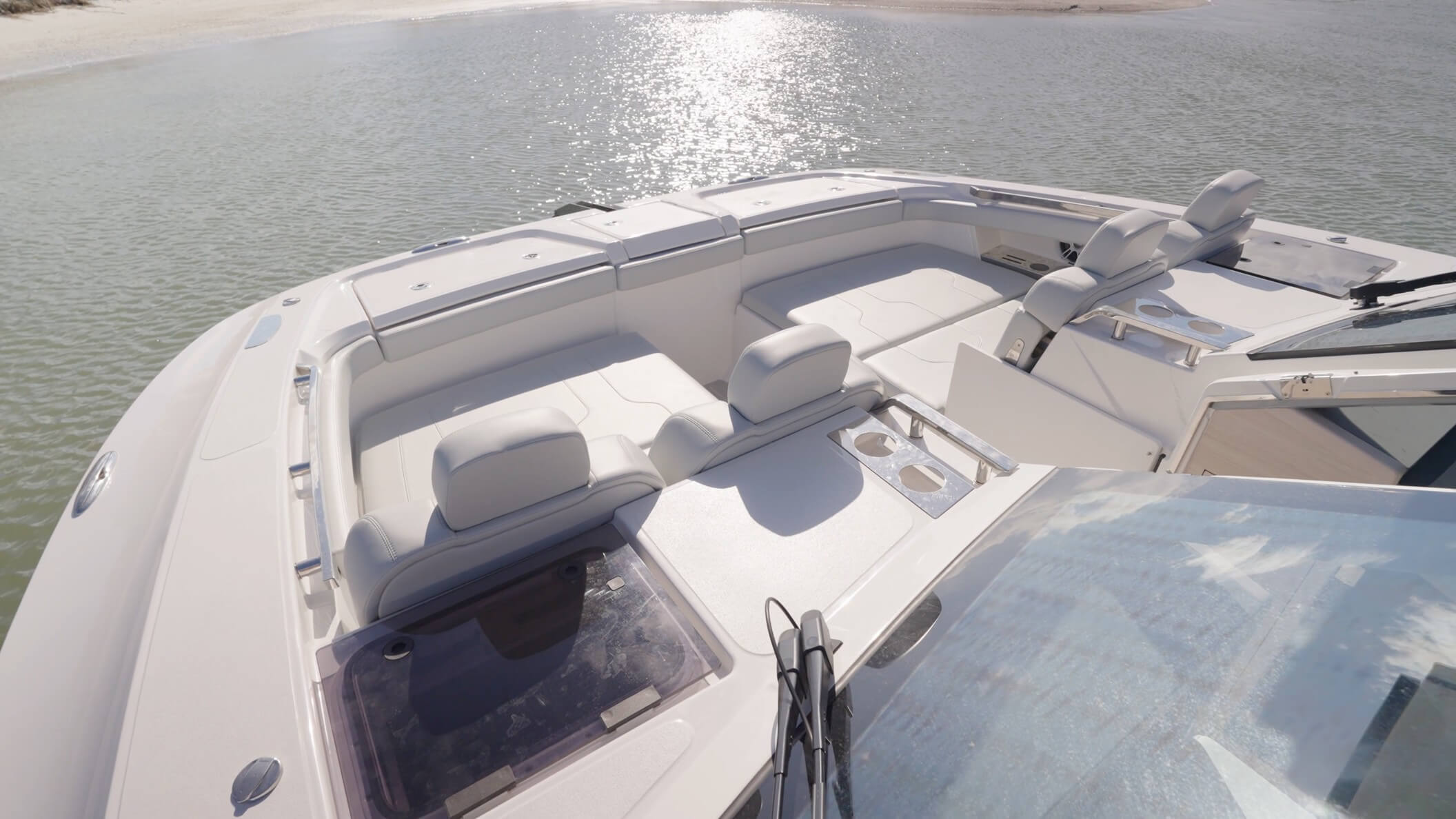
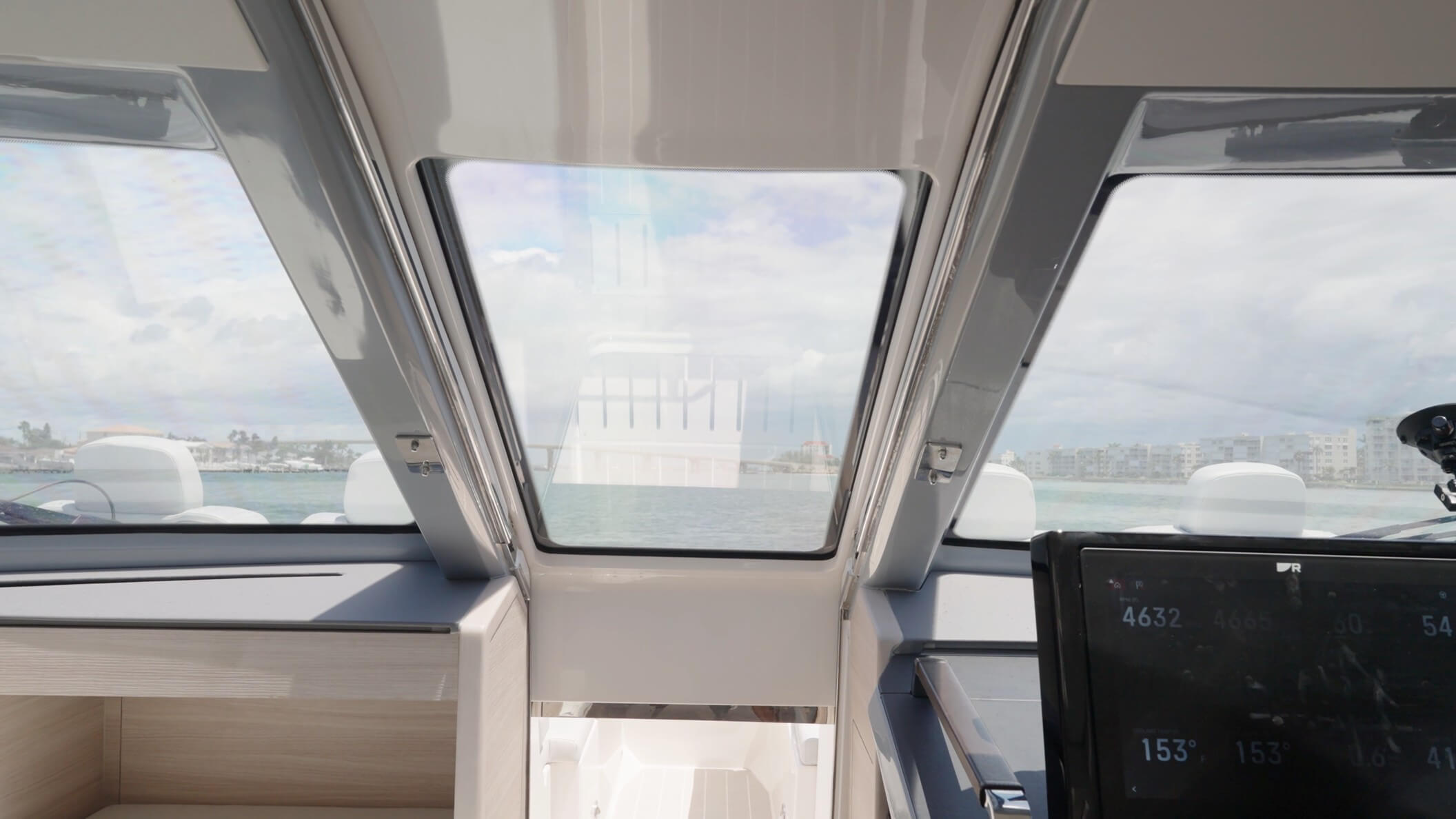
With the 15’11” beam carried fully forward, the bow space aboard the Aquila 42 Coupe is maxed out to the fullest for creating an exceptional seating area.

Interior
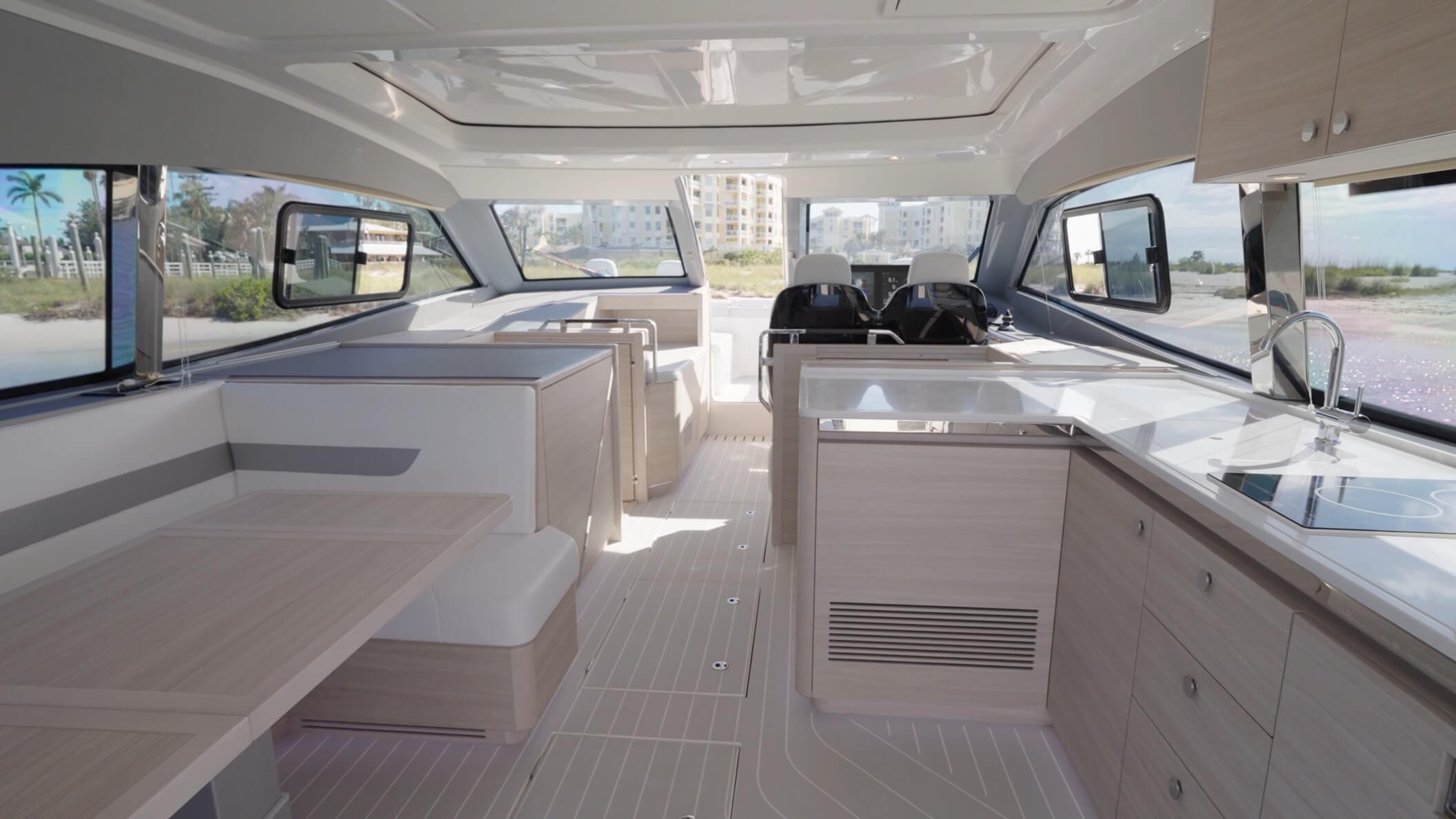
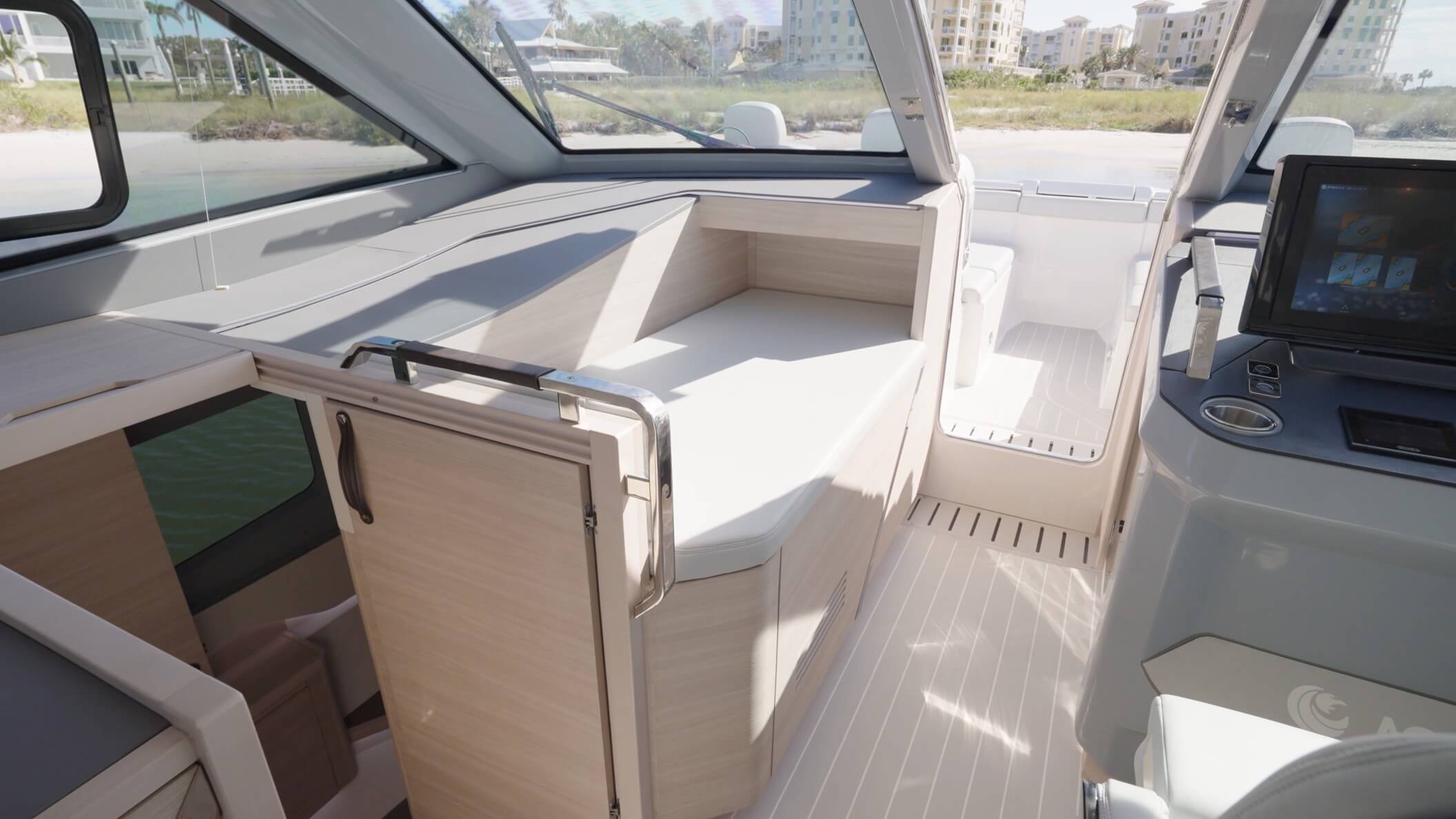
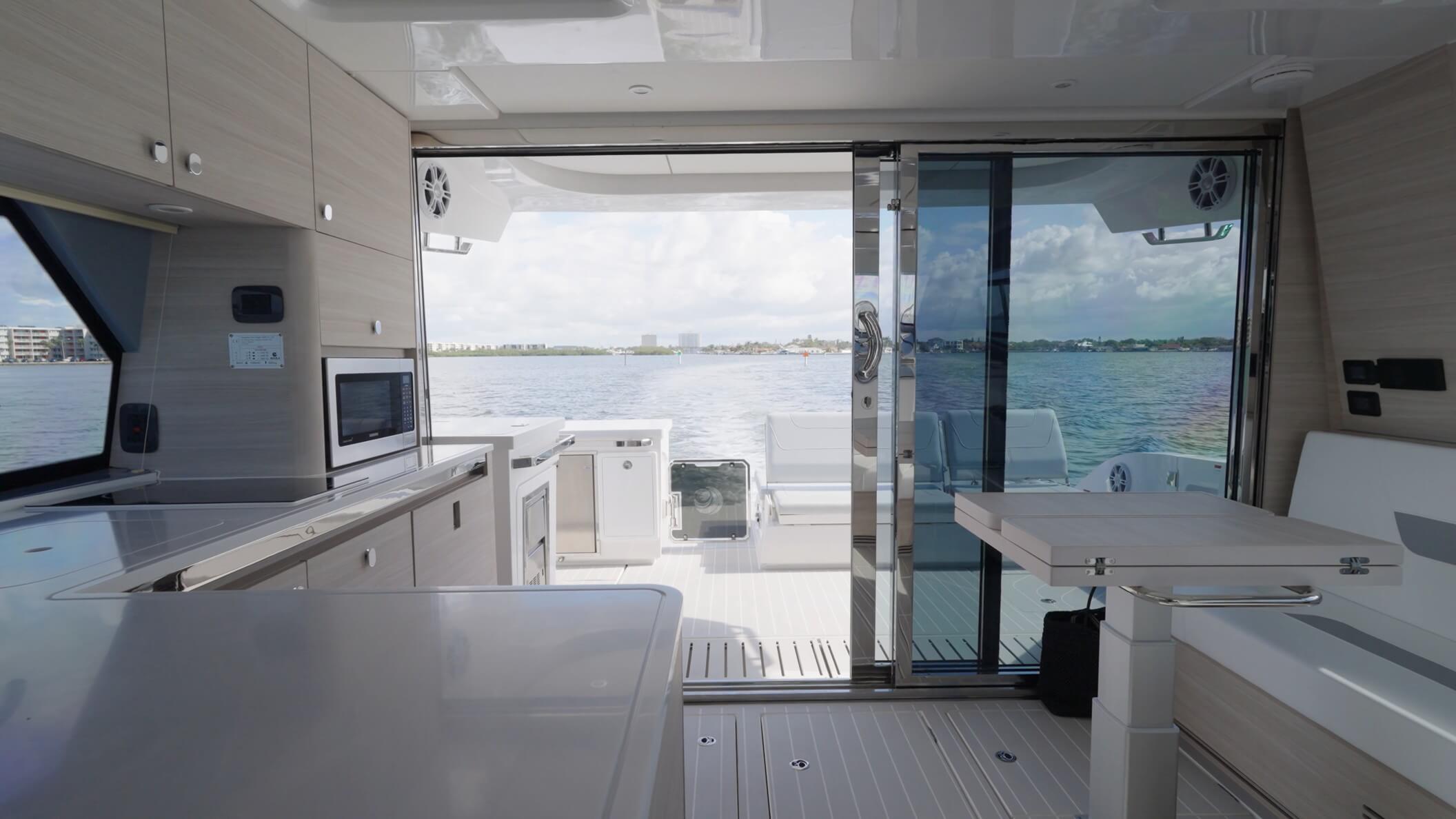
With its focus trained on cat design, and utilizing all available space to its full potential, the Aquila teams outfitted the 42 Coupe with the kind of spacious interior usually found on much larger vessels.




Cockpit & Aft Section
As we’ve seen, the cat design affords lots of room to spread out, sit, and entertain, and that same theme continues here in the cockpit and aft section.
Living Accommodations
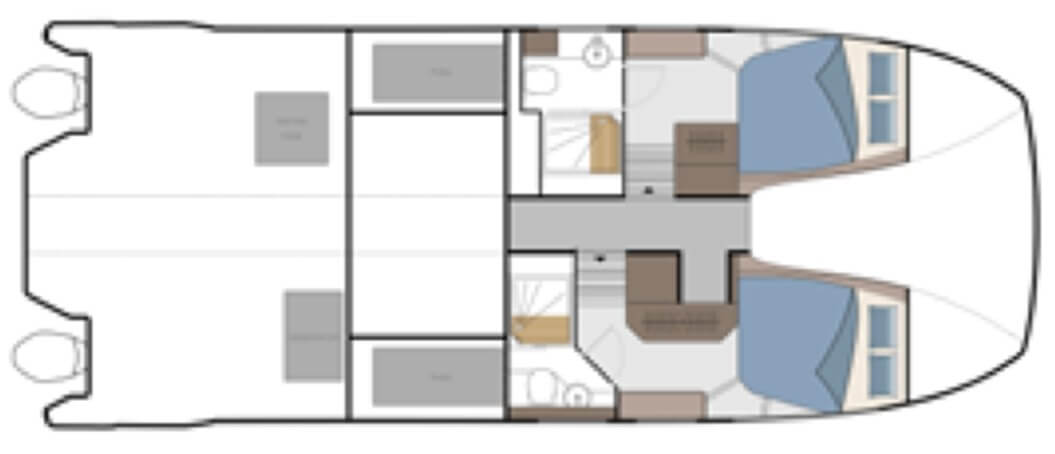
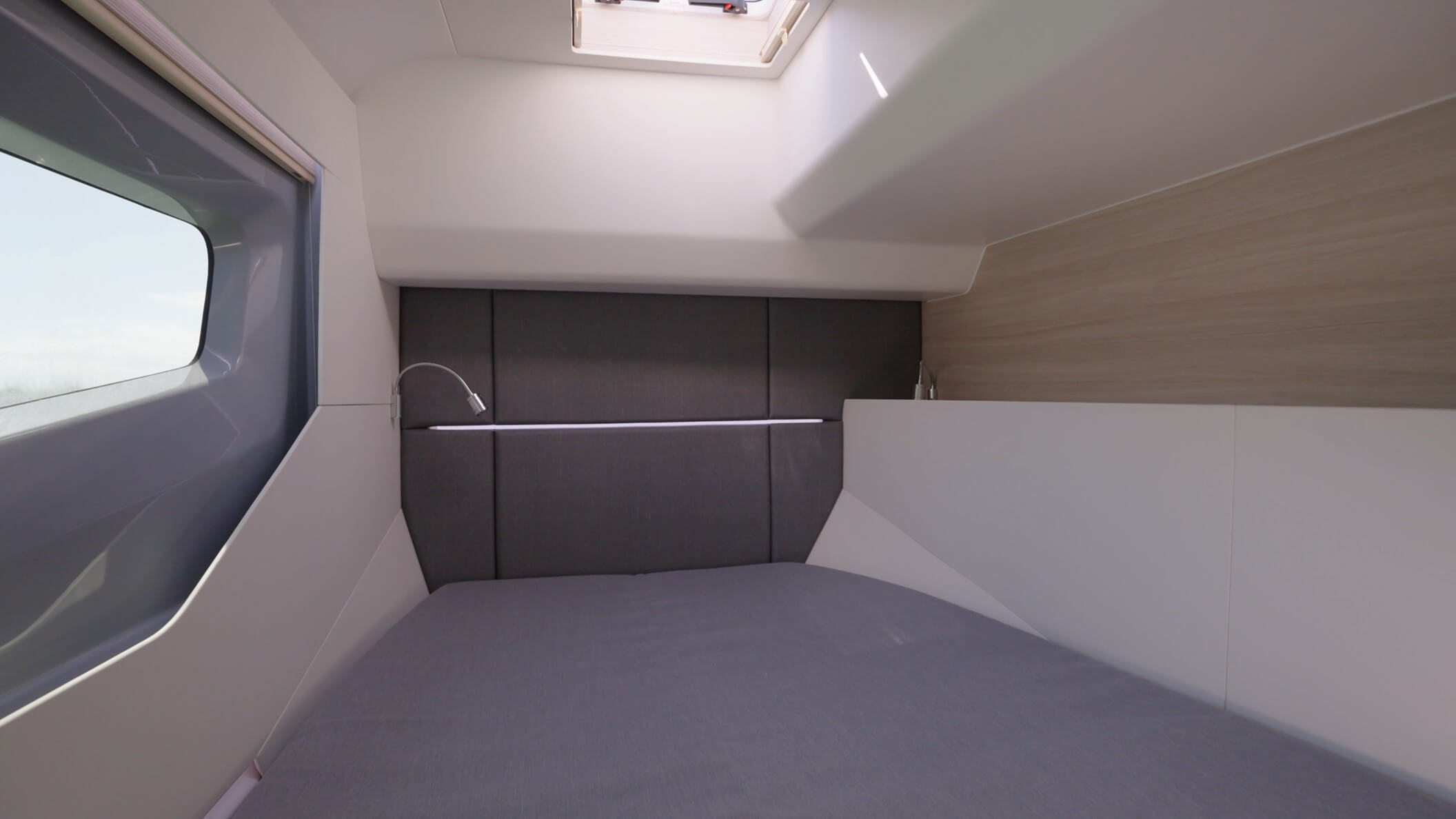
While both the bow and salon spaces take full advantage of the Aquila 42 Coupe’s 15’11” beam, so do the forward staterooms. The guest quarters are to port and owners to starboard, with each having ensuite heads and stand-up showers.


A Word About Performance
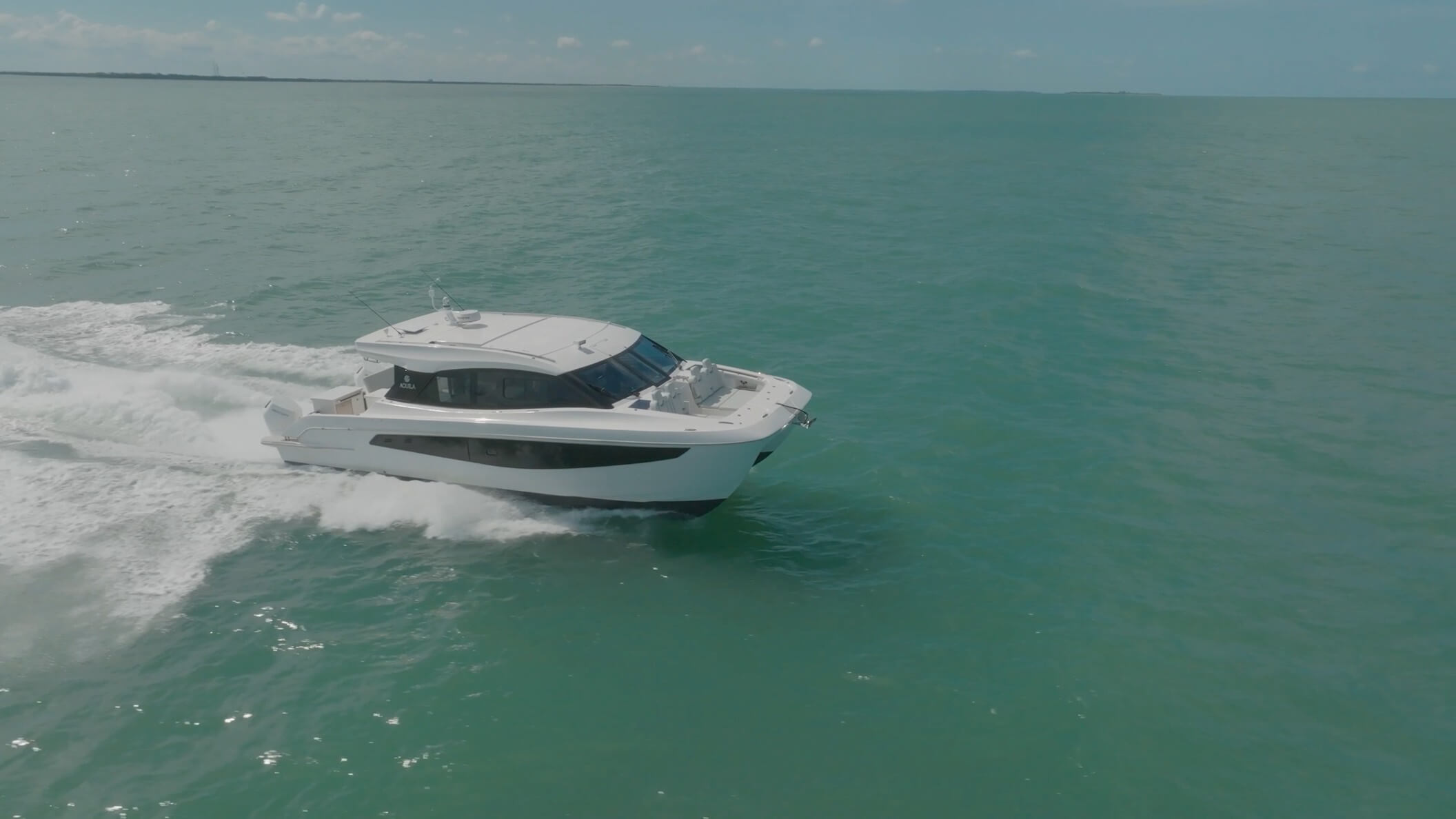
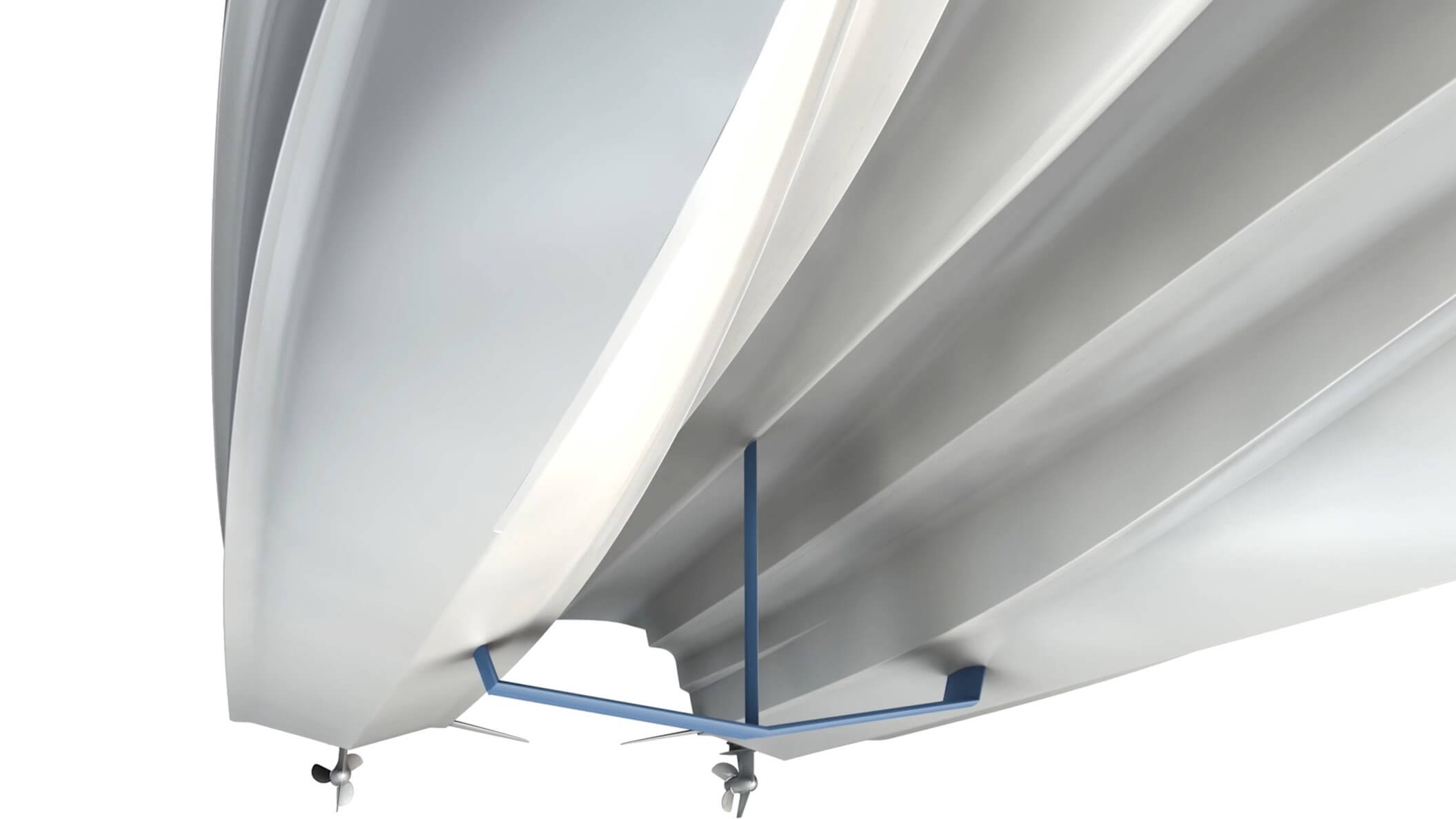
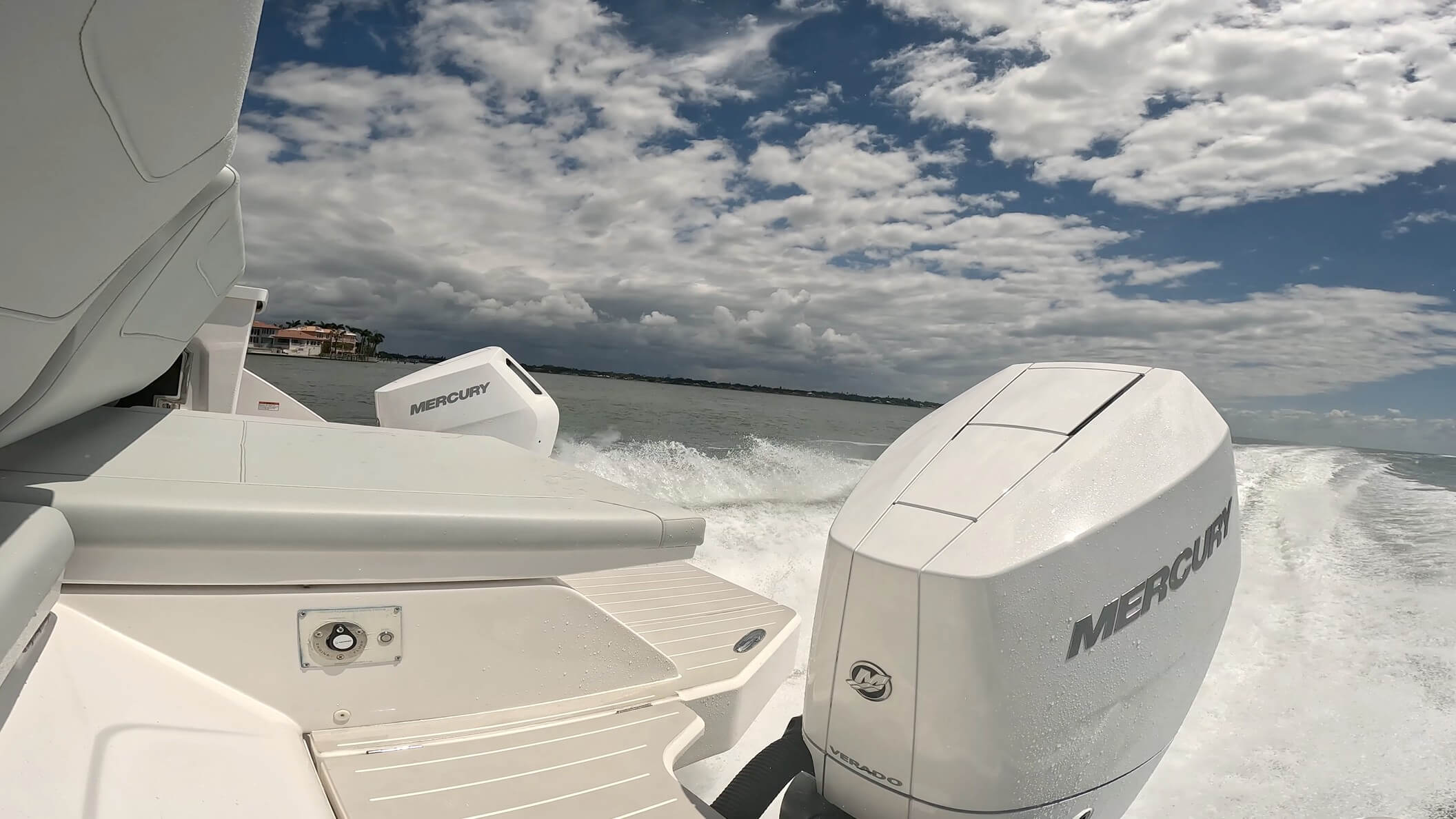
Just as with her big sister 46 Coupe, the carbon-fiber foil is standard on the 42 Coupe, and offers advanced performance and handling while underway. With her double-stepped hulls perfectly matched with a pair of 400-hp V10 Mercury outboards, or optional twin Volvo Penta D6-440hp DPI sterndrive diesel engines, exciting seaworthiness, handling and fuel efficiency also comes standard.
Our test day saw air temps at 76°, relative humidity of 68%, with wind at 5-10 mph. The Aquila 42 Coupe we were on had an approximate weight of 21,430 pounds with 66% of the 410 gallons of fuel on board and three passengers.
Our top speed came in at 46.2 mph at 6200 rpm and we found the best cruise speed at 5000 rpm and 35.3 mph. At that rate, we calculated an approximate range of 339.0 sm with a 10% fuel reserve. Our out-of-the-hole shots saw our Aquila 42 Coupe reach 10 mph in 3.3 seconds, 20 mph in 11.8 seconds, and 30 mph in 21.4 seconds. More impressive was her handling, first offshore where we encountered some rougher water and noticed how the foil, supplying the necessary lift, eased our coming off a wave with no pounding or drag, before the boat met another head on. With our running inshore, and once we had the boat trimmed properly, we noticed how, and especially during hard-over maneuvers including a series of turns to port and starboard, how she kept her rpm and speed without any noticeable change. And, sitting back and enjoying the ride, she tracked straight and true. While each day out can and will present different sea and wind conditions, the Aquila 42 Coupe proved to be a reliable performer.
Summary
The Aquila 42 Coupe successfully spans the gap between am outboard powered cruising sport cat and, given her impressive beam that is carried fully forward, a much larger yacht. This added space allows the design and engineering teams to focus on outfitting her with creature comforts and amenities to make her quite comfortable and able to spend her days on the water with nearby trips, long, extended weekends away, and quite capable of making longer voyages such as Great Looping and island hopping for example.
Her design includes double stepped hulls and a foil, enabling The Aquila 42 Coupe to require use less horsepower to get the job done. The result is better fuel economy and superior handling under a wide variety of conditions. And with long lists of both standard and premium optional equipment, your 42 Coupe will be a personal statement of ownership.
With a company leading the way in worldwide catamaran production, and proven, sea-worthy designs, should a boat like the Aquila 42 Coupe be lighting up your radar screen, and whether you will be new to cat ownership, or have had your hands on the wheel of a smaller vessel and are ready to move up in size, set up a visit and sea trial. You will not be disappointed.

Remember, life is better on a boat!
Features Walkthrough Transcript
Overview
Captain Tripp's framing: "This is a new line for Aquila, and I see this boat as bridging the gap between a sport boat and a yacht. It's a sport boat because it's only 42 foot and it's powered by outboards, so it's gonna be a nimble boat, and something really special is there's a foil between these hulls, which makes the boat really efficient." He referenced a separate performance video for more on the foil.
"Yacht" characteristics: A 15-foot, 11-inch beam, providing space for a massive cockpit, a large climate-conditioned space, a salon inside, and two cabins below.
Cockpit
Captain Tripp's first observation: the catamaran width provides substantial space for entertaining and amenities.
Starboard side, under the countertop: Dual Kenyon grills, with an ice maker hidden just beneath. A lift-up section provides an additional prep surface.
Optional galley configuration: This countertop area can be optioned with a galley-style setup including another fridge/freezer combo and dedicated trash storage.
Side boarding door (starboard): Positioned right underneath this area — Captain Tripp: "This is fantastic when you come up to the dock, easy on and off the boat without much hassle."
Port side: A matching side boarding gate, allowing convenient boarding regardless of which side the dock is on.
Hardtop sunshade: A "Make Fast" sunshade deploys from the hardtop, with controls along the cabin top — Captain Tripp noted this is "fantastic in this Florida sun."
Additional cockpit features: Grab rails, a Fusion audio system throughout the cockpit, and courtesy lighting both overhead and below.
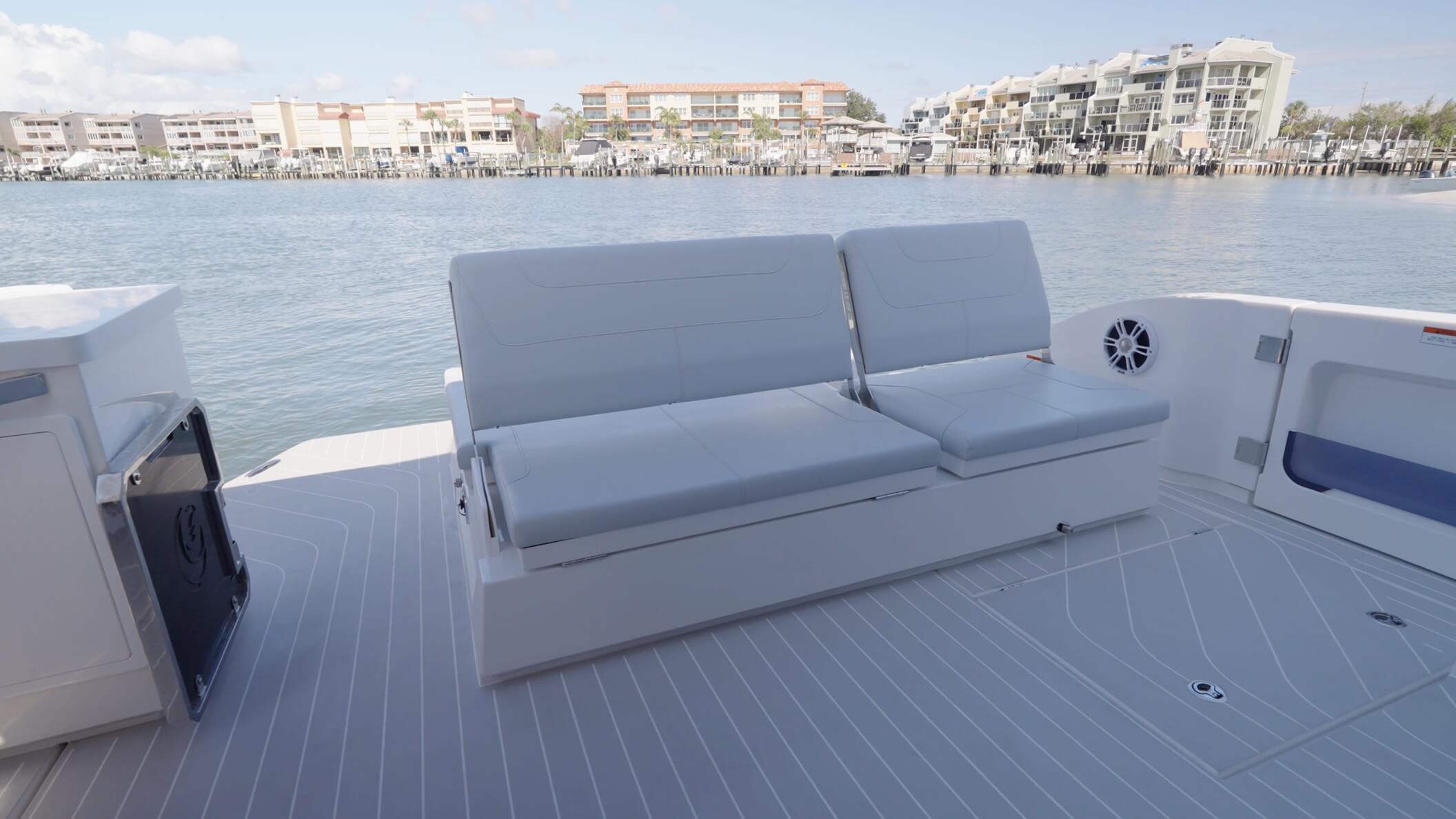
Seating: Three forward-facing loungers along the sides, with one reversible to face aft. Storage is located underneath.
Transom safety: A locking transom gate keeps kids and pets from going overboard. Also located here: a city water connection, a freshwater washdown outlet, and a hot-and-cold freshwater shower at the transom.
Swim Platform / Swim Ladder
Captain Tripp praised the swim ladder specifically: "It's almost a feat of engineering in itself, but certainly something to be proud of that Aquila has patented. This swim ladder is very beefy, large, and comfortable to come aboard on, I would say, and it's easy to deploy." He noted large treads for the feet and plenty of hand grab points, making it safe for all passengers.
Side Decks
Non-skid walkway on the cabin top, both port and starboard, with an integrated stainless steel grab handle running the full length forward to the bow.
Bow
Beam is carried far forward, providing seating for four to lounge comfortably. Bolsters run the full perimeter for additional seating capacity, with a grab rail, cup holders, and small stainless steel slits sized for cell phones. Storage is located underneath the seats.
Sunshade provisions: Pole receptacles at the bow allow rigging a shaded space over the entire bow area.
Cabin Entry Door
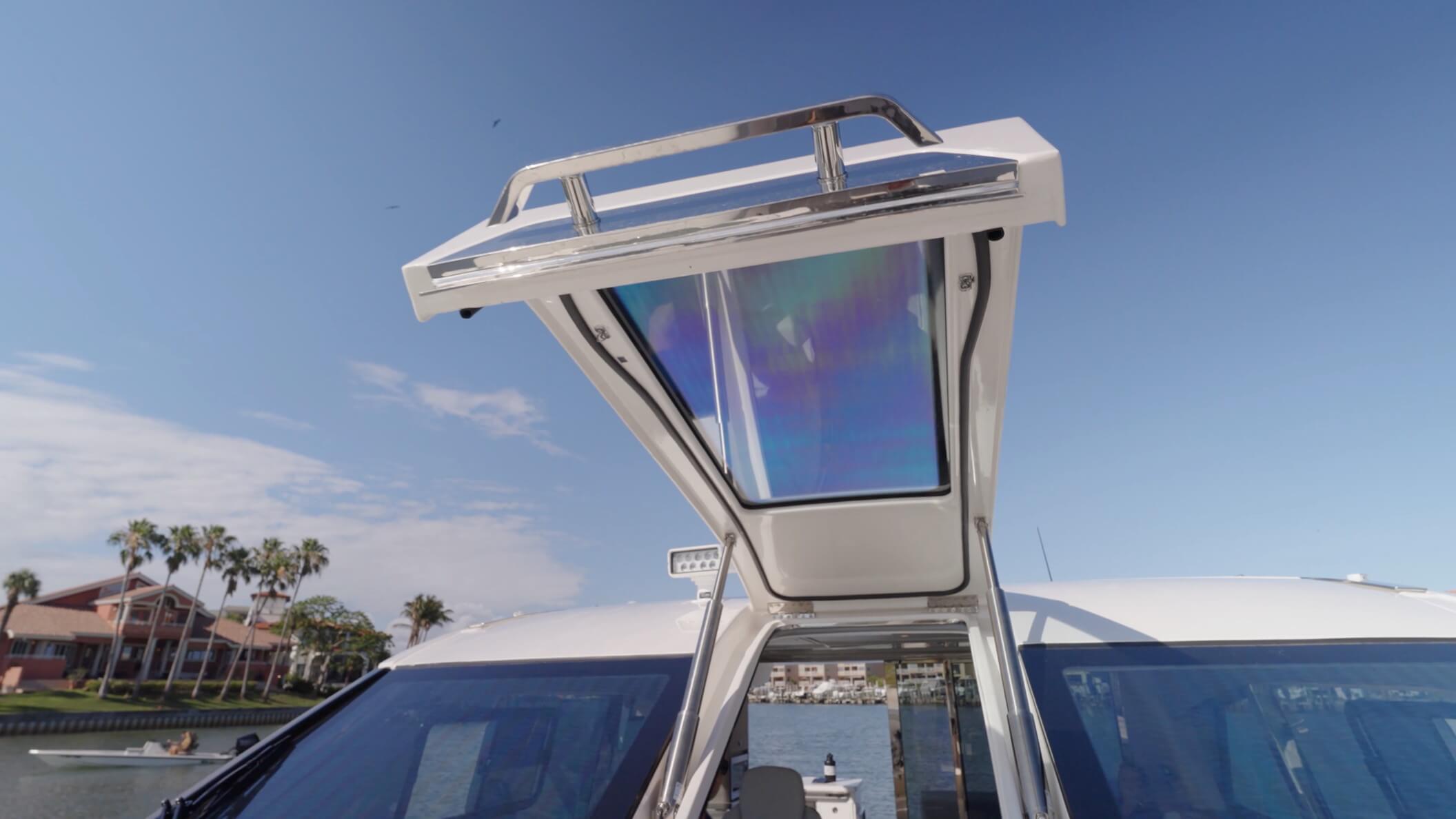
An electrically actuated door (push-button activated at the helm) closes to form a watertight seal when in the down position. The bottom half of the door is held open and secured closed via magnets for easy operation.
Deck Hatches / Drainage
Hatches along the cabin top lead down into the cabin, with additional cup holders and grab rails positioned for moving through this area. A drained void is located forward, designed to quickly evacuate water taken over the bow or from heavy rain. Captain Tripp noted this is unlikely to be needed based on testing: "We were running this boat earlier in some rough stuff, and it handled really well. No one got wet."
Natural Light / Ventilation
A large overhead sunroof opens for natural light. Sliding glass windows on both port and starboard provide additional ventilation.
Galley (Starboard)
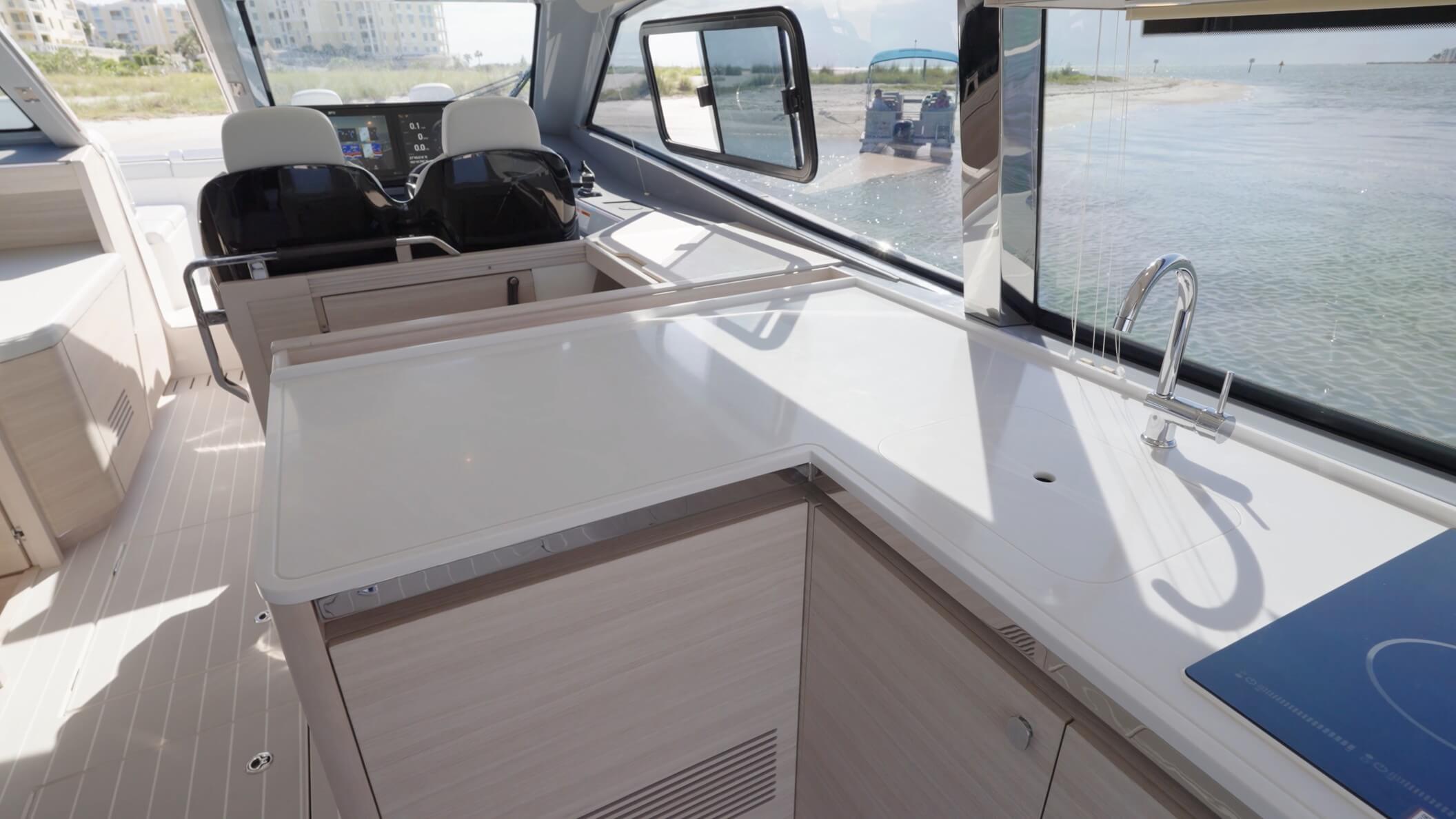
Countertop: 28 inches deep, 53 inches wide — Captain Tripp noted: "You could prep plenty of meals up here."
Additional features: Sink, induction cooktop, overhead storage, additional storage in two cabinets above the microwave, and a 110-volt outlet — Captain Tripp noted this is "great and mandatory if you have to have a coffee maker or a margarita mixer on board." Dedicated trash bin storage is located beneath, along with three drawers (soft-close slides) and a fridge/freezer combo.
Salon
TV: A flat-screen TV is tucked into the overhead, positioned for viewing from the L-shaped dinette.
Table: Leafed for expansion with additional guests, and mounted on a high-low pedestal — lowering it with filler cushions added creates an additional berth for extra guests.
Enclosure door: A robust stainless steel three-panel door slides to port or starboard, sealing the cabin from the elements — useful for retaining air conditioning in hot climates or heat in cold climates.
Port-side lounger: Generously sized, offering good views around the boat while allowing the occupant to remain engaged with the operator while underway.
Cabin Access
Entries to the port and starboard cabins are passed while moving aft.
Port Cabin
Windows: Double hull-side windows, admitting substantial natural light and scenic views at anchor.
Climate control: Air conditioning noted as appreciated in this space.
Berth (forward): Ample headroom, with a skylight above. Two reading lights, accent lighting, and upholstery finish this area. A shelf on the inboard side includes a 110-volt outlet and USB port for charging.
Storage: Substantial storage beneath the berth, suited to luggage or larger, less-frequently-accessed items. A hanging locker is located just inboard, with a drawer at the bottom and two small cabinets.
Port Cabin Head
Generous shower size with plenty of room to move, plus a few shelves. Electric flush toilet, vessel sink, overhead cabinet storage, and underneath storage. A hull-side window provides natural light, along with a ventilation port.
Starboard Cabin
The layout is nearly a mirror image of the port cabin, with a smaller head.
Performance Review Transcript
Overview
Captain Tripp's introduction: "This is a new line for Aquila, and one of the things that make it interesting is it has a foil between the hulls, and that comes with a lot of upsides, like increased performance and comfort."
Power
Twin Mercury V10 Verados. Captain Tripp addressed a potential concern directly: "You may think at initial glance that maybe that's not enough horsepower for this boat. Well, I can assure you, I've been running the boat — she does almost 50 miles an hour, which is plenty for a boat like this." He explained the design tradeoff: "When you have this hull design and with the foil incorporated into it, you can get away with less horsepower, which means better fuel economy."
Engine flushing: Reverso engine flush system fitted. The rear deck flips up so the engines can trim fully up and out of the water.
Foil Design
Located midships between the hulls, U-shaped, protruding below the keels but sitting about one inch higher than the skegs. The hull also features a double-step design for additional efficiency.
Sea Trial — Foil Activation
Trimmed fully down initially, the boat plowed somewhat coming onto plane, as Captain Tripp noted is typical for most boats. Trimming up: "Put about 1.8 on the trim is where she likes to run." At approximately 20 mph, he described the foil's effect: "You can feel that hydrofoil, that wing, kind of activate and lift the boat outta the water. Things start running smoother. I can back off on my throttles because now, as the foil is working, it lifts the boat higher outta the water, so there's less wetted surface, less drag. So you need less engine and less RPM to get the boat running."
Settled cruise: At approximately 5,000 RPM, running 37 mph, Captain Tripp reported: "Now the boat's running perfect."
Offshore / Rough Water Observation
Captain Tripp described conditions encountered earlier in the test, offshore in waves: "A few times we would bring that foil out of the water and coming down onto the next wave... everything was comfortable... the only thing I would notice is that we would come up, and as we came down on the next wave, the foil would catch the boat before it felt like the hulls were impacting the wave. So there wasn't a pound, there wasn't a big splash, or you didn't feel a lot of drag suddenly on the boat, because that wing was constantly providing lift."
Turning Behavior
"As you do turn on this boat, you don't notice any drop in speed. The boat doesn't come off of the foil, you don't get any sudden jarring or anything." Captain Tripp addressed a common concern about foil-equipped boats directly: "A lot of times when people are thinking about a foil boat, they may think, okay, but whenever the boat turns, if it comes off a foil, the hulls are gonna drop back down in the water, and it's gonna create drag and a jolt, maybe a drop in speed drastically. But this boat does not do any of that."
Lean characteristic: "This boat really doesn't lean [like] a lot of cats — you'll find that they'll kinda lean outboard. Well, this one actually leans a little inboard, and that is because of that foil down in the water. It's really hooking up... it gives the boat some lean, which makes it feel better in the corners than a cat without a foil."
Slide vs. hook in turns: "Whenever I do turn, I almost feel a slight slide in the boat, and not a hook, which I think is actually a good thing... sometimes if you turn a cat abruptly, it can really catch and kind of throw everybody to the side. Well, I'm not finding that on this Aquila, and I really like that."
Foil Structural / Practical Considerations
Captain Tripp addressed practical ownership questions directly: the boat can still go on a boat lift; it can still operate in shallow water and be beached, even with the foil fitted. Regarding a related Aquila 36 model, he noted the foil uses a dihedral carbon fiber design, described as stronger than steel, with no issue when hauling the boat out. His overall assessment: "I initially thought that having a foil on a boat might be questionable, and I might be concerned with it, but after seeing how it's designed, I think it's really tough, and it's just [a] solid part of the boat, which is a good thing to see."
Foil function: Shaped like an airplane wing to create lift; Captain Tripp stated it raises the boat approximately 6 inches.
Specifications (Test Boat)
- Length overall: 42 feet, 10 inches
- Beam: 15 feet, 11 inches
- Draft: 2 feet, 11 inches
- Test weight: 21,130 pounds, with 66% of the 410-gallon fuel capacity aboard and three passengers
- Engines: twin Mercury 400s, turning RevX props
Performance Numbers
- Top speed: 46.2 mph at 6,200 RPM
- Best cruise: 35.3 mph at 5,000 RPM, achieving 0.8 miles per gallon
- Range at best cruise: approximately 339 statute miles, with a 10% fuel reserve
- Hole shot 0–10 mph: 3.3 seconds
- 0–20 mph: 11.8 seconds
- 0–30 mph: 21.4 seconds
Comparative Efficiency Assessment
Captain Tripp's stated comparison against class competitors: "When I compared the performance of the Aquila 42 with several monohulls in class, I found that she's more fuel efficient than most at best cruise. She goes faster, and she continues to be relatively more fuel efficient than monohulls because of her foil."
Anchor System / Draft Demonstration
Captain Tripp noted the boat's relatively shallow draft allows beaching despite carrying the foil, demonstrated at an anchorage where the boat was run up near the beach.
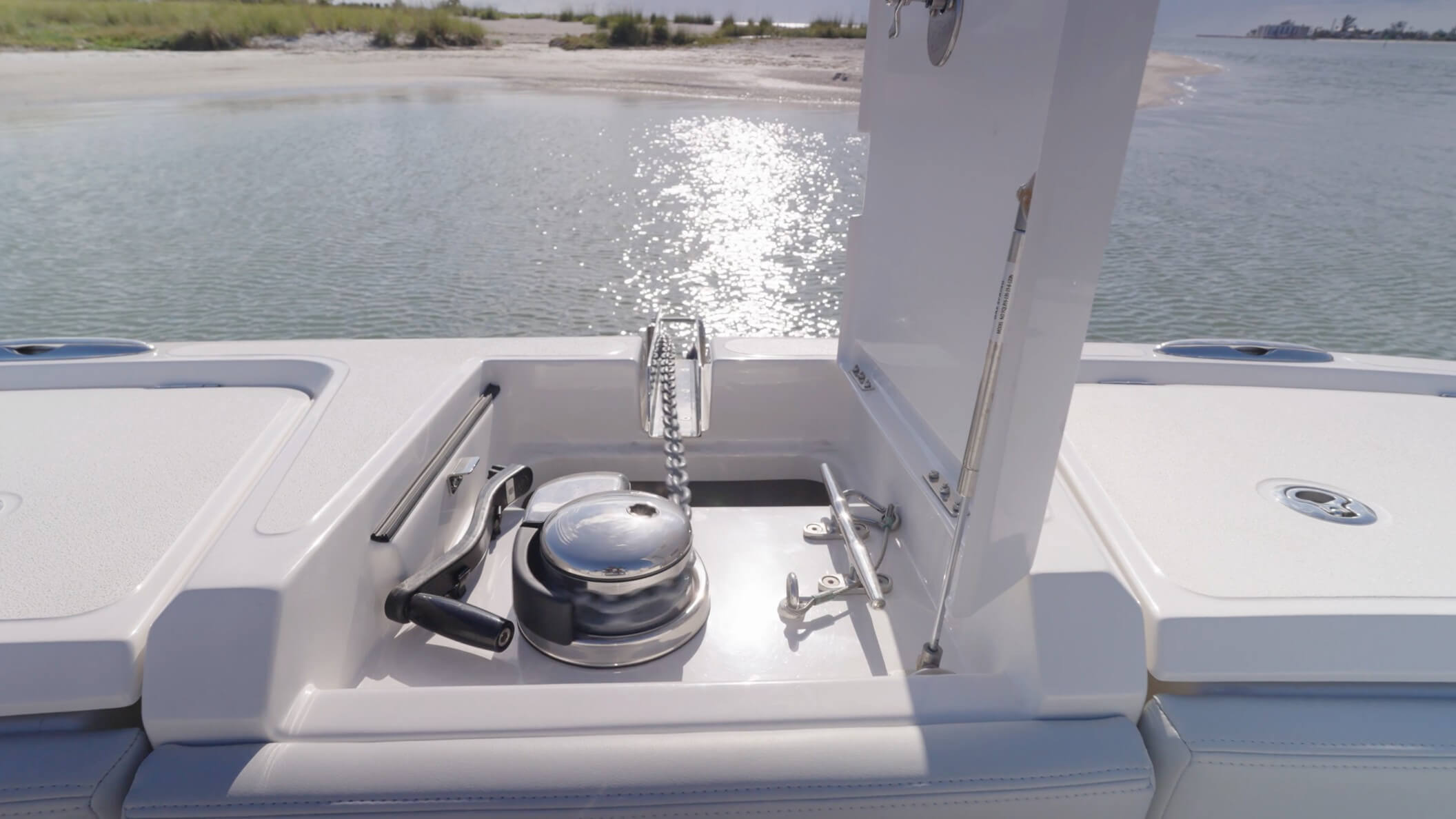
Bow features: Centerline anchor roller; centerline access to the windlass and rode storage; a cleat under a hatch for tie-offs; a large storage compartment; and a remote for the windlass.
Bow Mechanical Space
Opening the forward hatch revealed substantial room — Captain Tripp noted this is because the test boat is optioned without inboards (where inboards would otherwise be located here). Also found in this space: the fresh water tank, a grab handle for entry, the hot water heater, and electrical systems throughout, all labeled. Captain Tripp: "If you come down here and need to troubleshoot something, you can do so with ease, and you know what you're looking at."
Sea chest: Present, described as important for maintaining constant raw-water-intake pressure while underway in rough seas or while on foil: "If you didn't have that, you may get some fluctuation in pressures, and that's not always good."
Generator: 9 kW Fischer Panda diesel generator, with its own fuel tank, located in this same compartment alongside a second sea chest.
Salon-Area Mechanical Space
Located further aft, under the salon floor. Starboard side houses the black water tank and electrical components throughout. The test boat was upgraded to a lithium battery system (AGM is standard). Captain Tripp again noted the labeling throughout: "I also like seeing more labels everywhere throughout. Just makes it easy to know what you're doing when you're down there trying to fix something."
Overall Handling Assessment
"I was pleasantly surprised with how this boat ran, handled, and performed with that foil. Truly a joy to run this boat."
Helm
Seating: Twin captain's seats with bolsters, sliding back via a simple lever. At 5'8", Captain Tripp reported good 360-degree visibility while standing, with a large post present but not significantly obstructive.
Noted visibility issue: Headrests on the bow seating created a slight hindrance to visibility (e.g., for spotting crab pots while running) — Captain Tripp noted Aquila is aware of this and plans to change the design in future versions.
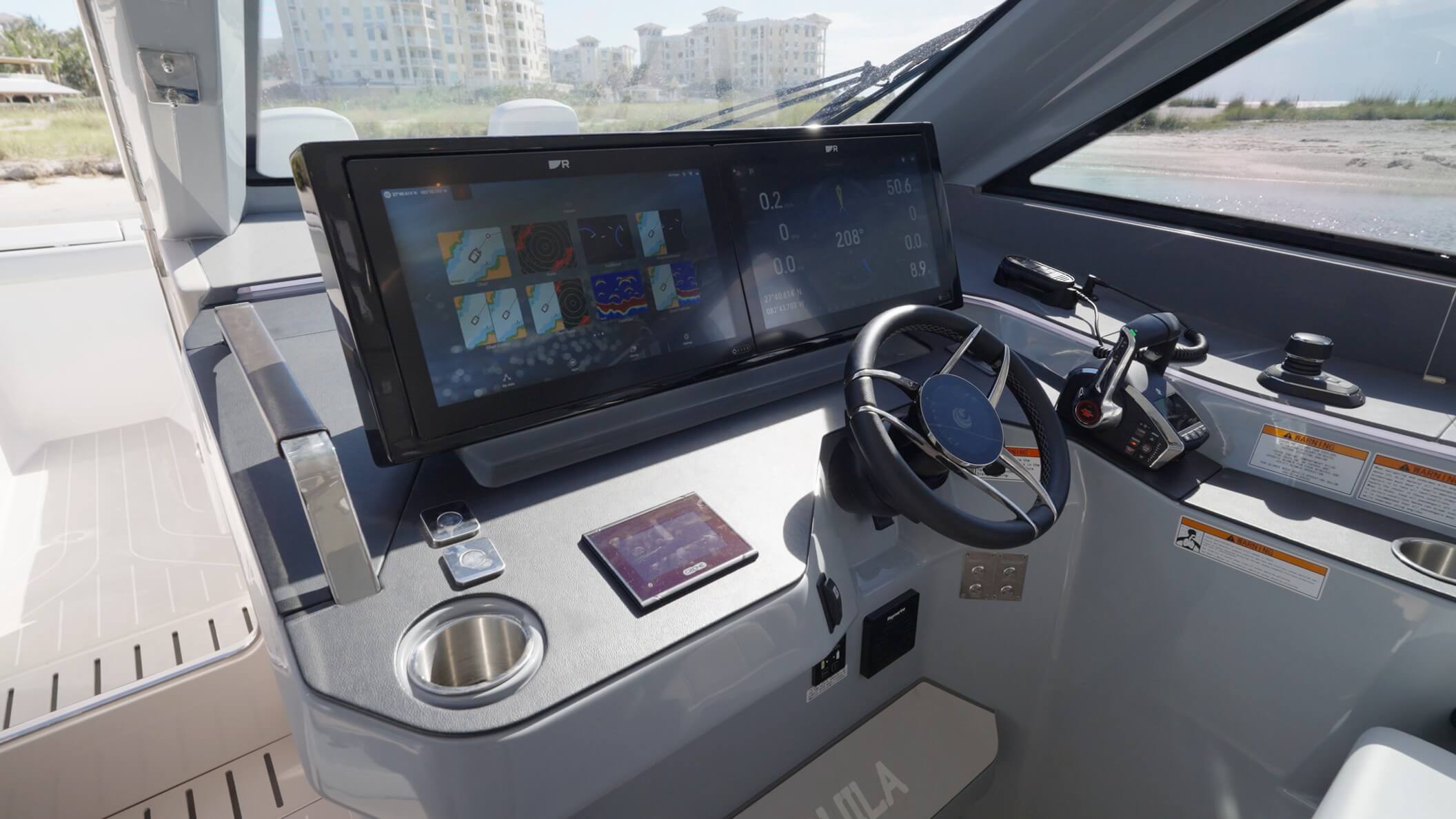
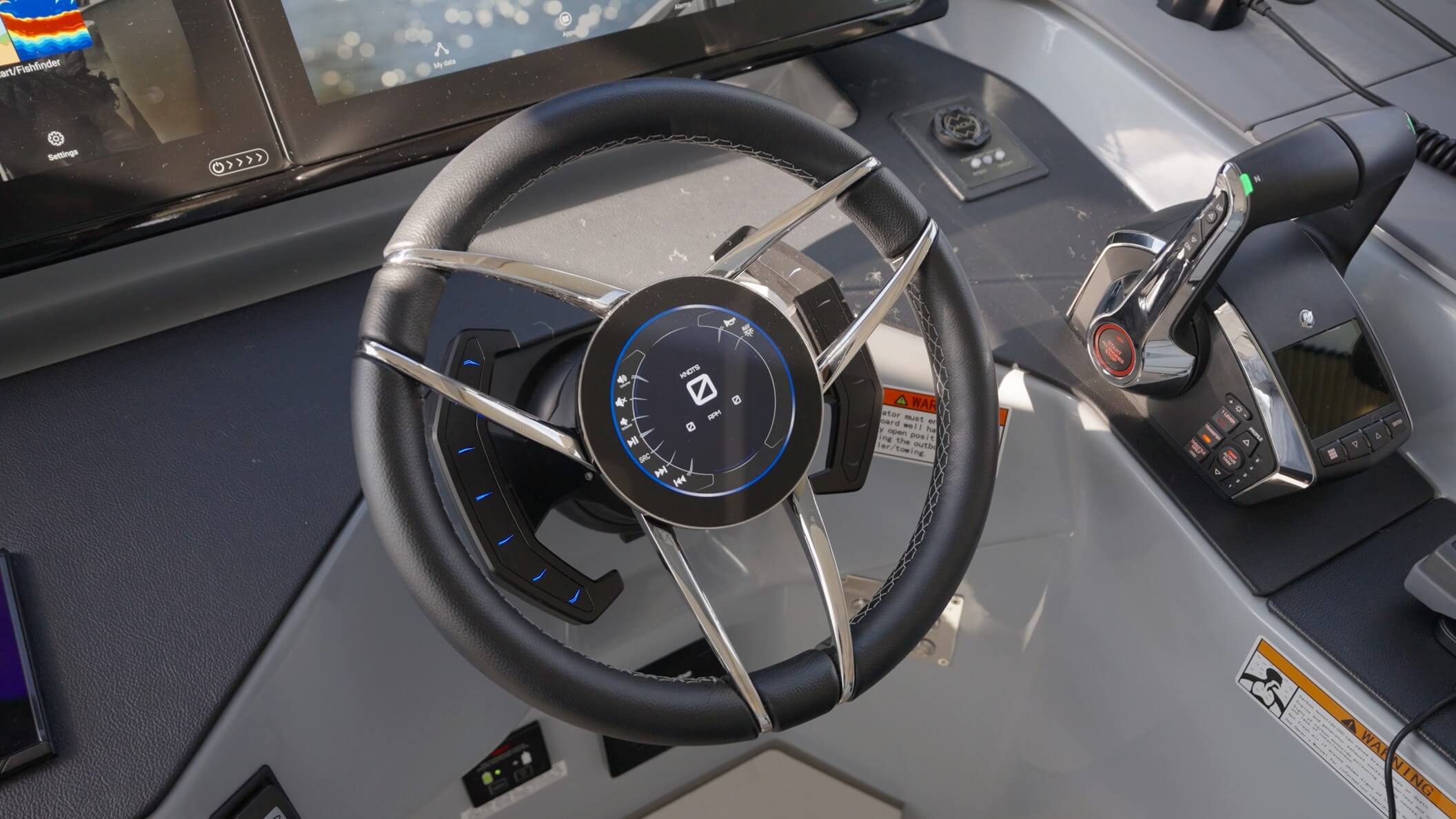
Dash equipment: Two 19-inch Raymarine screens. Two buttons on the left electrically lift/lower a door providing bow access; cup holder; CZone controller; windshield wiper controls.
Steering wheel: A center screen with programmable paddle-back buttons, allowing owner customization for functions such as autopilot control, lighting, or radio volume — Captain Tripp noted this would quickly become second nature: "It would just become natural."
Additional helm controls: Windlass and sunroof controls; engine controls; spotlight control; VHF radio (praised for easy access); joystick. To the right: wireless induction phone charger, another cup holder, a small cubby, and USB ports.
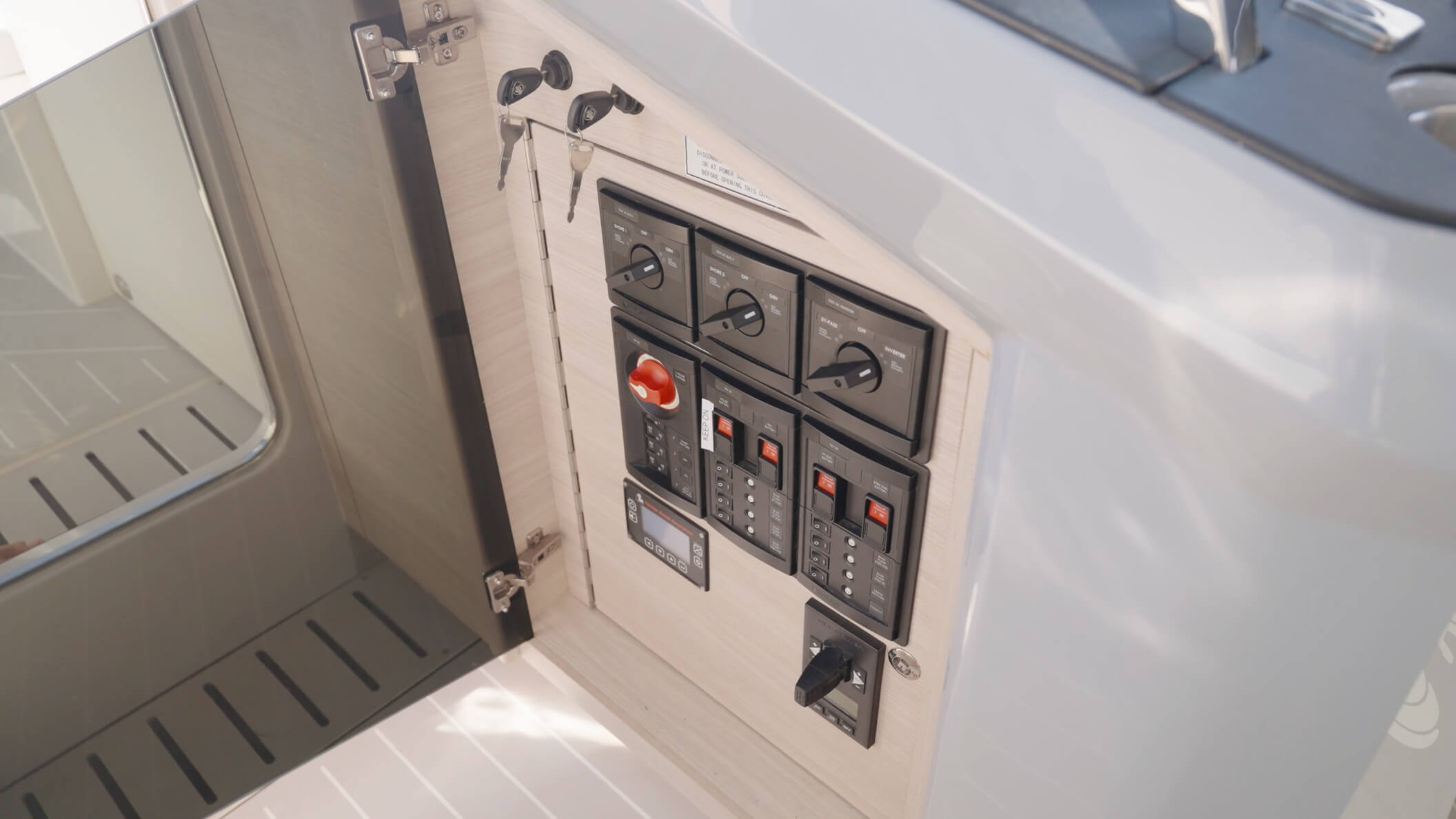
Electrical panel: Located just forward and below the helm — 120-volt distribution, a 12-volt panel with breakers, and Fischer Panda generator controls.
Closing Assessment
Captain Tripp's summary: "A multi-use boat that serves as a day boat, weekender, or distance cruiser." A companion features inspection video was referenced for further detail.
Related Boats
Aquila 44 (2018-)
2 x 300-hp Volvo Penta D4 V-Drive
Aquila 48 (2016-)
Currently no test numbers
Aquila 36 (2018-)
2 x 350-hp Mercury Verados
Aquila 32 (2019-)
2 x 250-hp Mercury Verados