Access More Boat Tests
Already have an account? Login
Bavaria R40 Fly (2017-)
370-hp Volvo Penta D6

Brief Summary
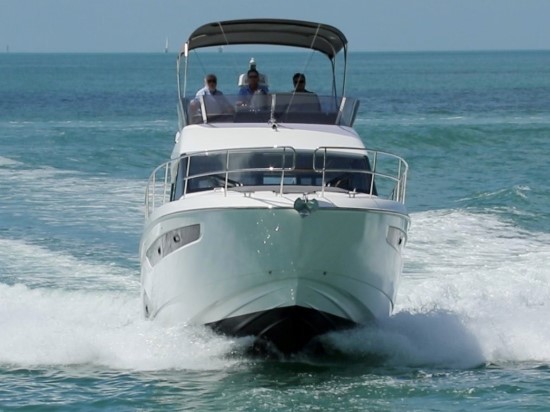
The salon and aft deck of the Bavaria R40 Fly are set up for entertaining and, below, the accommodations are roomy and comfortable for two couples or a small family weekending or coastal cruising. Both cabins are ensuite. She's powered by twin 370-hp diesel sterndrives, giving the fuel efficiency and slow-speed handling of pod drives, without the expense.
Test Results
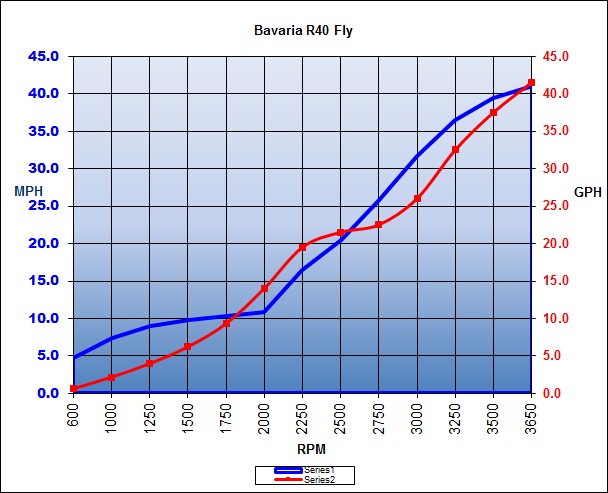
| RPM | MPH | Knots | GPH | MPG | NMPG | SM | NM | dBa |
|---|---|---|---|---|---|---|---|---|
| 600 | 4.7 | 4.1 | 0.6 | 7.8 | 6.8 | 1678 | 1459 | 70 |
| 1000 | 7.4 | 6.4 | 2.2 | 3.4 | 3 | 737 | 641.1 | 70 |
| 1250 | 9 | 7.8 | 4 | 2.3 | 2 | 485 | 422 | 72 |
| 1500 | 9.8 | 8.5 | 6.2 | 1.6 | 1.4 | 337 | 292.9 | 73 |
| 1750 | 10.4 | 9 | 9.3 | 1.1 | 1 | 238 | 207.3 | 74 |
| 2000 | 10.9 | 9.5 | 14 | 0.8 | 0.7 | 167 | 145 | 75 |
| 2250 | 16.5 | 14.3 | 19.5 | 0.8 | 0.7 | 181 | 157.1 | 79 |
| 2500 | 20.5 | 17.8 | 21.5 | 1 | 0.8 | 204 | 177.2 | 79 |
| 2750 | 25.8 | 22.4 | 22.5 | 1.1 | 1 | 246 | 213.6 | 82 |
| 3000 | 31.8 | 27.6 | 26 | 1.2 | 1.1 | 262 | 227.5 | 82 |
| 3250 | 36.5 | 31.7 | 32.5 | 1.1 | 1 | 241 | 209.2 | 83 |
| 3500 | 39.5 | 34.3 | 37.5 | 1.1 | 0.9 | 225 | 195.9 | 84 |
| 3650 | 41.1 | 35.7 | 41.5 | 1 | 0.9 | 212 | 184.5 | 85 |
Specifications
| Length Overall |
41' 6" 12.65 m |
|---|---|
| Beam |
13' 1" 3.99 m |
| Dry Weight |
21,164 lbs. 9,600 kg |
| Tested Weight |
22,529 lbs. 10,218 kg |
| Draft |
3' 6" 1.07 m |
| Max Headroom |
6' 5" 1.96 m |
| Bridge Clearance |
15' 7" 4.57 m |
| Person Capacity | 12 |
| Fuel Capacity |
238 gal. 901 L |
| Water Capacity |
92 gal. 348 L |
| Total Weight |
22,529 lbs. 10,218 kg |
Acceleration Times & Conditions
| Time to Plane | 9.0 sec. |
|---|---|
| 0 to 30 | 17.6 sec. |
| Load | 4 persons, 3/10 fuel, 1/6 water, 50 lbs. of gear |
| Climate | 78 deg.; wind: 3-6 mph; seas: light chop |
Engine Options
| Tested Engine |
370-hp Volvo Penta D6 |
|---|
Mission Statement
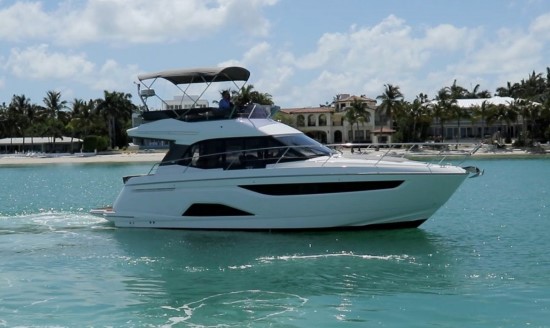
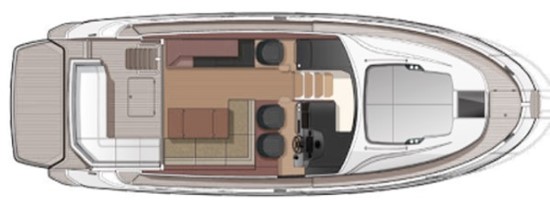
The Bavaria R40 Fly’s design has four main focuses: Performance, Handling, Entertainment and Accommodations. She is a mid-range cruiser that runs like a sport boat but has the size and amenities of a yacht. The salon and aft deck are set up for entertaining and, below, the accommodations are roomy and should be comfortable for two couples or a small family for weekending or short-hop coastal cruising.
With a height above the waterline of 13’1” (4 m), she can navigate most of the rivers and some of the canals of Europe. Check before going.
Overview
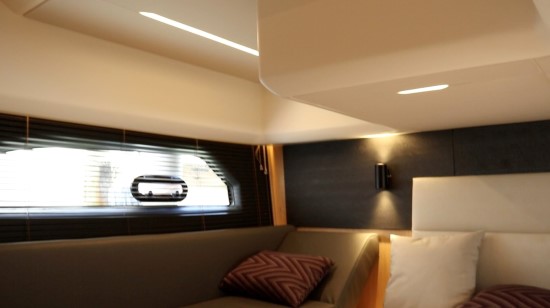
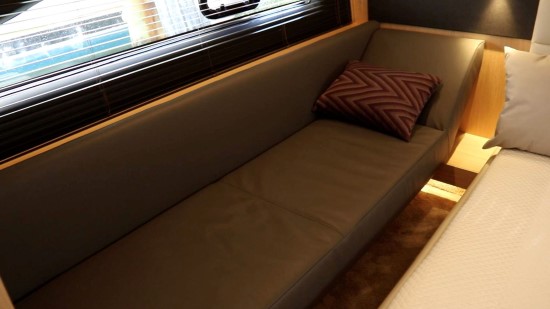
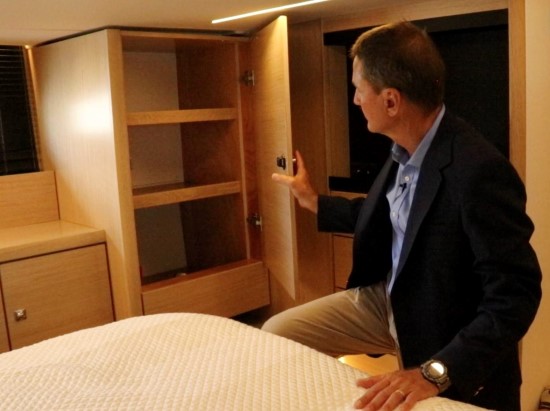
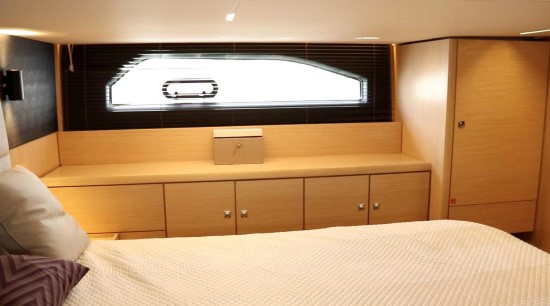
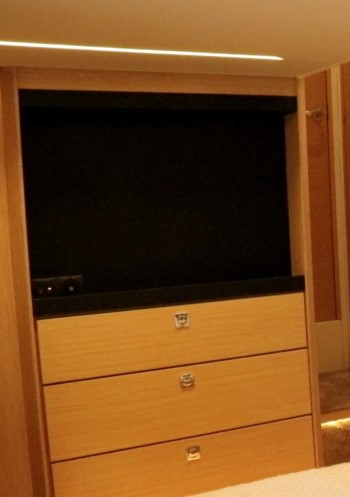
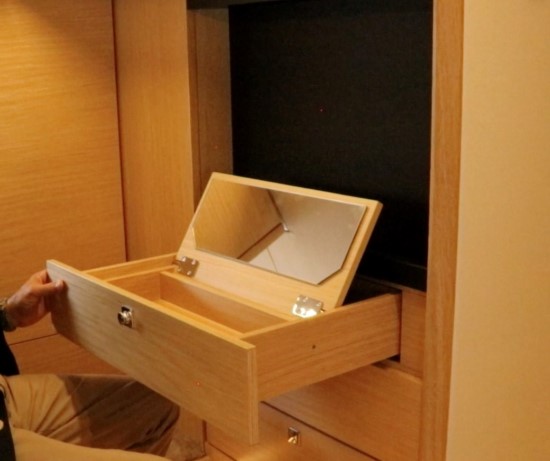
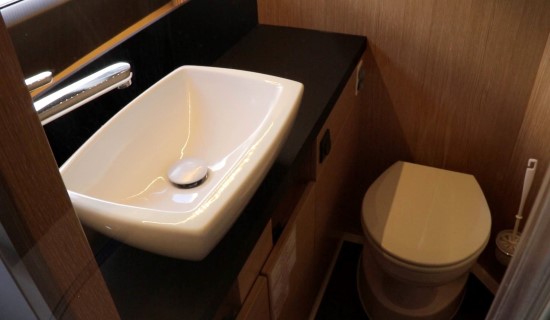
Both forward and mid cabins include separate heads and have island berths with an abundance of cabinet storage. This makes the R40 ideal for two-couple cruising because each has privacy; an important consideration when buying a boat this size.
All of this room is made possible because sterndrive propulsion is used, which moves the engines back to the transom, freeing up space forward. Twin Volvo diesels, coupled to Duoprop sterndrives, give this boat the feel of being much more agile when compared to similar boats with straight inboard power or even pod drive power. Because she is a sterndrive, she has the fuel efficiency of a pod drive without the drawbacks.
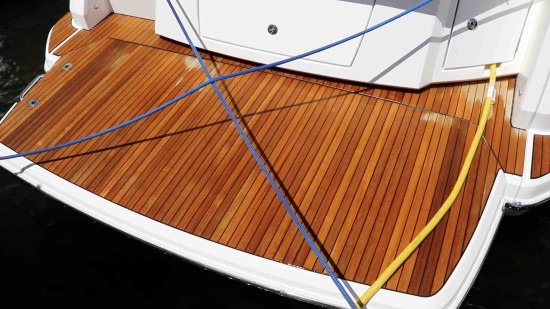
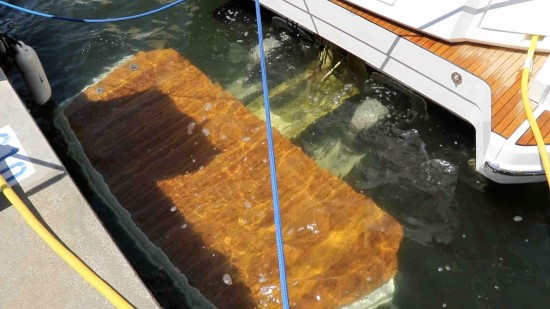
A major option that should be considered is a hydraulic swim platform that can create a private “beach” on the stern as well as carry a tender.
Major Features
- Twin Volvo Penta D6-370/DP engines. Our test boat was powered with the optional twin Volvo Penta D6 370 DP diesel engines. They are rated at 370 horsepower each, at the crankshaft, and are connected to Volvo Penta Duoprop outdrives.
- Flying Bridge. The advantages of having a flybridge boat are the fun of operating it from the upper station and the elevated position allows for better all-around vision for both the skipper and the guests.
- Twin Master Staterooms. Below are a pair of staterooms so similar in size and layout that the owner may have a hard time choosing which one to designate as the master suite. Island berths with en suite heads feature separate stand-up showers.
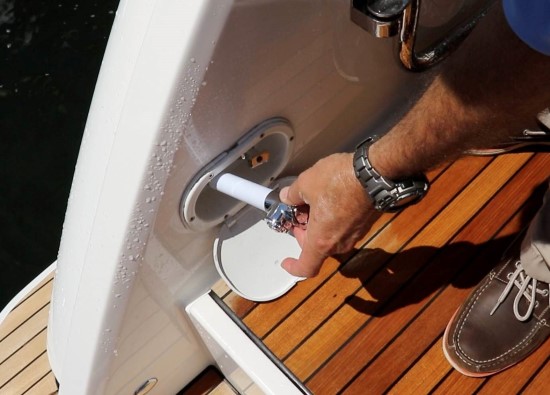
- Optional Hydraulic Swim Platform. The aft swim platform measures 9’ (2.74 m) wide and 62” (1.58 m) fore and aft. It covers the outdrives and has an optional feature that allows it to be lowered into the water 12” (30.5 cm) deep to be used as a sandbar beach or a tender lift that can support up to 880 lbs. (400 kg)
- 12V TV System. The boat is wired for 12V TV sets, and one was installed in the master cabin of the boat we tested. This means that videos can be watched without the generator running.
Performance
The Bavaria R40 Fly has an LOA of 41’6” (12.65 m), a beam of 13’1” (4 m), and a draft of 3’6” (1.07 m). With an empty weight of 21,164 lbs. (9,600 kg), 76 gallons (288 L) of fuel, and four people onboard, we had an estimated test weight of 22,529 lbs. (10,219 kg).
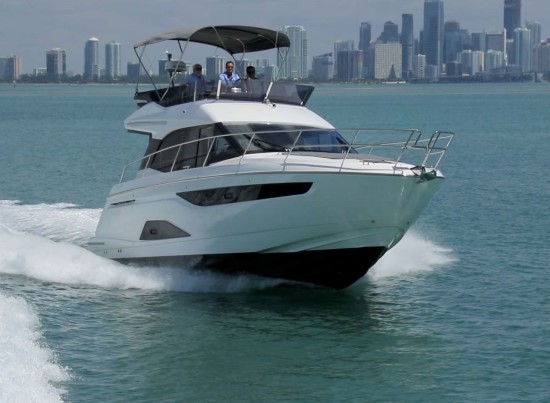
With twin 370-hp Volvo Penta D6 370 DP diesel engines powering our test boat, we recorded a top speed of 35.7 knots (41.1 mph) at 3650 rpm. Best cruise came at 3000 rpm where the boat ran 27.6 knots (31.8 mph), burned 26 gph, getting 1.1 nmpg, giving her a range of 227.5 nautical miles with a 10% fuel reserve of the boat’s 238-gallon (901 L) fuel capacity.
In acceleration tests, our test boat went from 0 to 20 mph in 9.6 seconds and to 30 mph in 17.6 seconds.
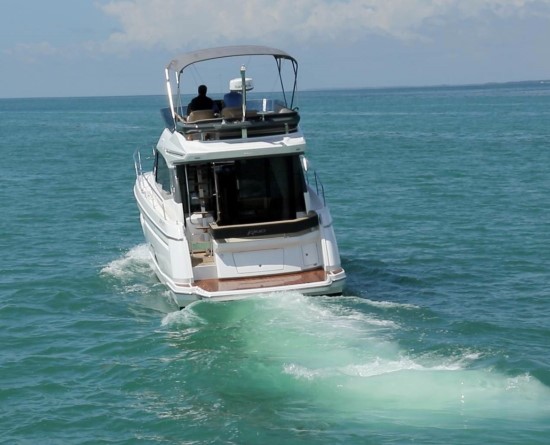
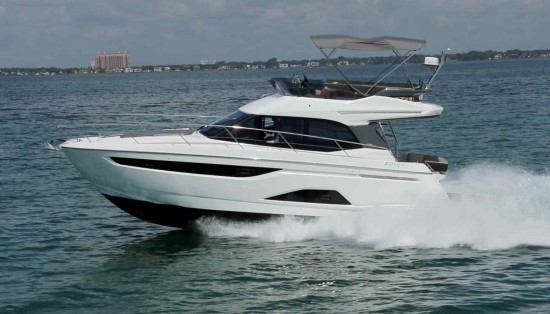
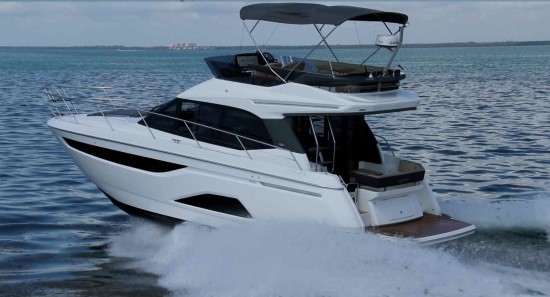
Maximum bow rise on acceleration was 10 degrees, and, once on plane, the boat rode at a perfect 3-degree bow-up angle with zero trim. Just to find out how fast we could go on a single engine, we put one in neutral, and recorded a speed of about nine knots; this is a good number to know if one engine fails.
Handling
For her size, we were impressed by how agile the handling of the R40 Fly was. The added weight of four people on the flybridge did not seem to reduce stability, nor did we lean excessively in turns and at nearly full speed.
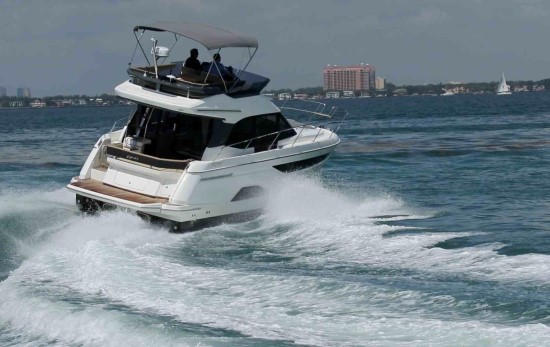
Through a series of aggressive turns, the sport-boat feel of the Bavaria R40 Fly really shined. There was not the slightest bit of slide, and the outdrives powered the boat through the relatively tight turns, which straight inboards or a pod drive system would not have been able to do.
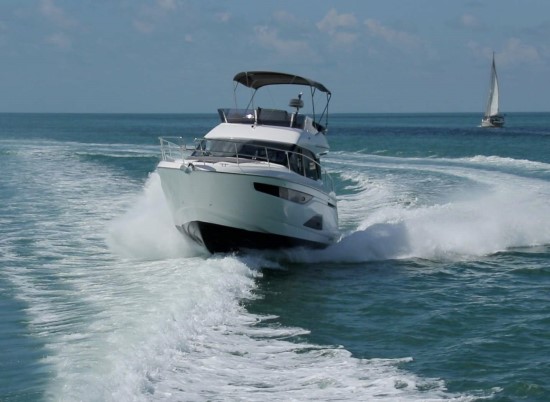
The boat was also remarkably quiet, and, once again, we think that the through-hub exhaust was part of the reason. Also, there is sound-deadening material in the engine room and under the hatch. Our highest sound reading taken inside the cabin with the doors closed was 84.5 dbA at full throttle.
No Fumes. Underway, the through-hub exhaust never let a hint of diesel fumes enter the open salon door and underway, so she didn’t have a “station wagon effect,” where the vacuum of the cabin going through air pulls fumes over the transom. The generator exhausts it above the waterline to port.
Features Inspection
Lower Helm
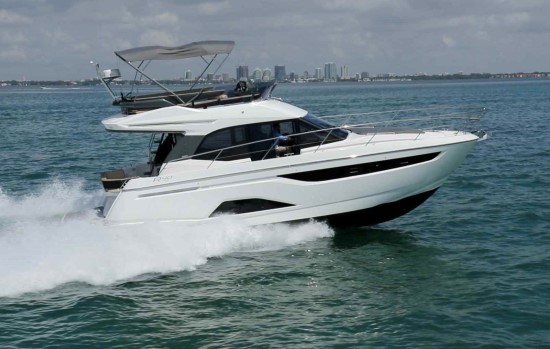
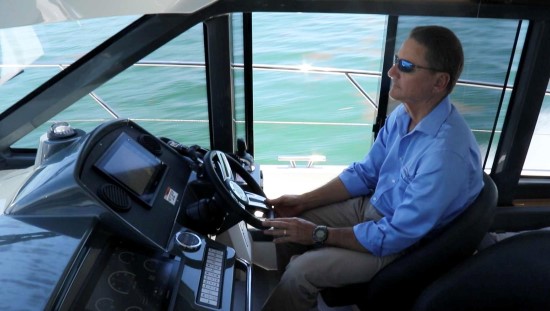
From the lower station, the 10-degree bow rise never obscured the horizon. Our captain felt in complete control operating this boat from this position and sitting, which is how this helm was designed to be used. You cannot stand at the helm because there is a raised platform here.
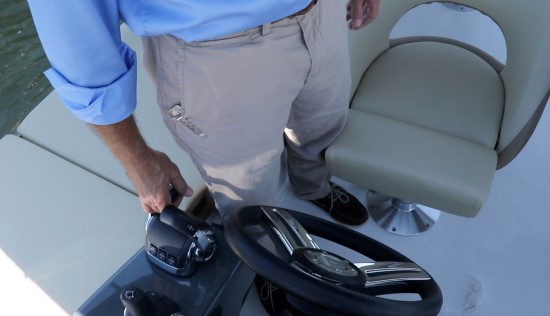
Engine controls consist of digital electronic shift and throttle, along with joystick control for low-speed maneuvering.
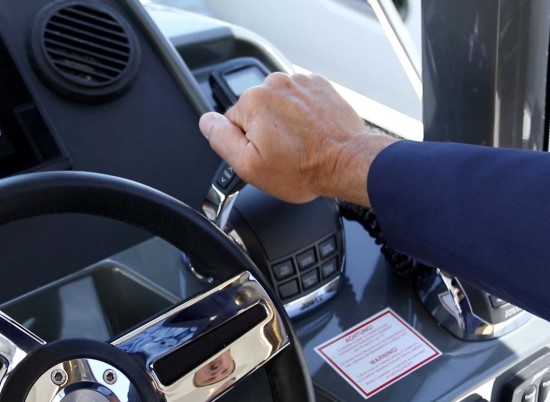
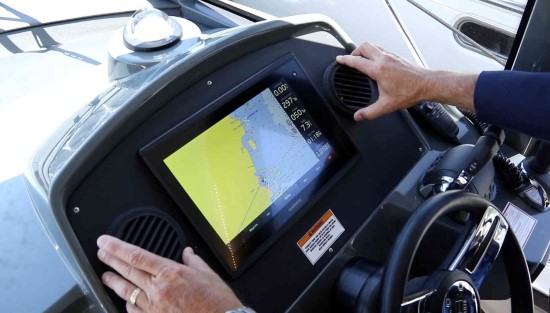
Below the throttle are switches for the engine start and stop as well as trim tab control. Bavaria also chose to use a switch panel to control frequently used systems. Each function can be easily recognized and activated, which in our opinion is better than having to scroll through a touchscreen menu on the display.
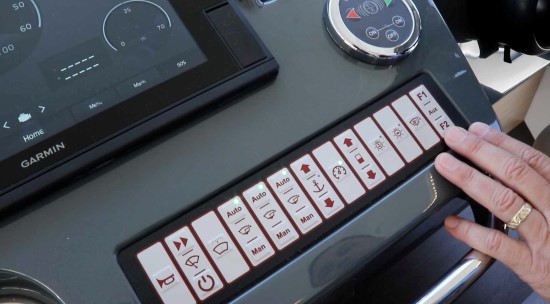
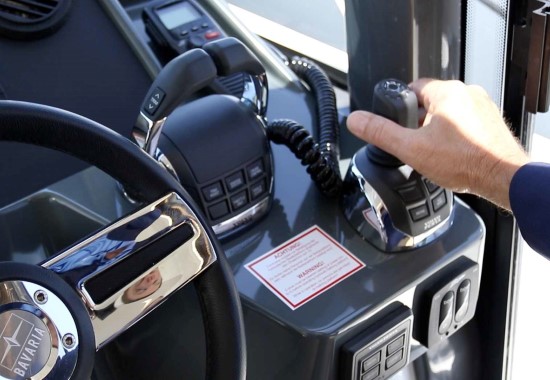
Control position is vital when maneuvering in and around docks. The captain needs to be able to quickly transition from one set of controls to the other, as wind and current affect the boat.
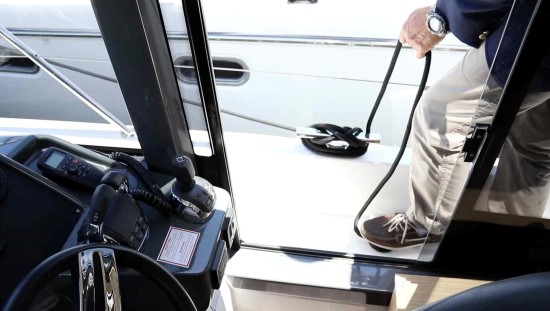
Side Door. Because of the side door, the skipper has a particularly good view of the starboard side of the boat. It also allows fresh air and aids the captain in one-handed operation of the vessel. This is an important feature some boats in class don’t have.
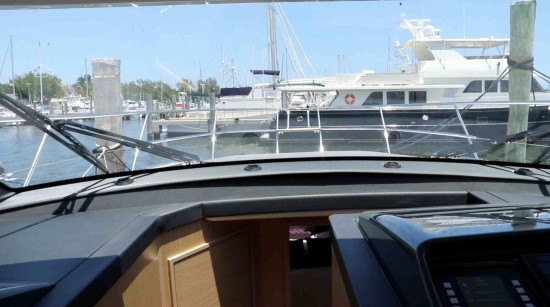
At the base of the windshield are four defogger vents, and the windshield is kept clear by a pair of large wipers with dual pantograph arms. The wipers also have a washer feature, which helps remove salt spray.
Three bucket seats with wraparound backrests face forward, one to port and two to starboard. They do a good job of holding in the captain and companions. Remember that one of the features of this boat is “sporty” handling, so the bucket seats help keep everyone in place. This is somewhat unusual in this size boat.
We particularly like the second companion seat to port. Like the two helm seats, it is on a raised platform, giving good forward visibility. Directly in front of it is a tray for a laptop computer or tablet. The window outboard slides open to let in fresh air.
Upper Helm
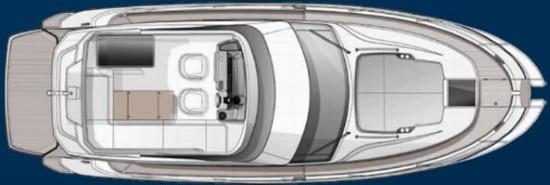
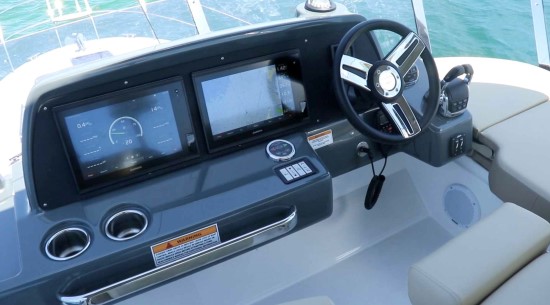
Twin bucket seats, on the fly bridge, lock passengers in with wraparound backrests. This is a welcome feature on a boat that performs as nimble as this one.
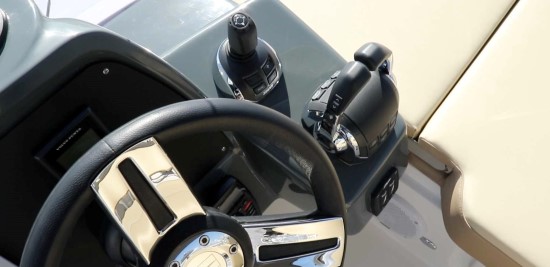
The Joystick. Twisting the control knob spins the boat on its own axis. Tilting the knob in any direction makes the boat move in that direction. We found the system easy to use once we realized there is a delay from the time we moved the joystick until the system engaged. With that in mind, it is simply a matter of anticipating the boat’s next move.
Anchor Locker
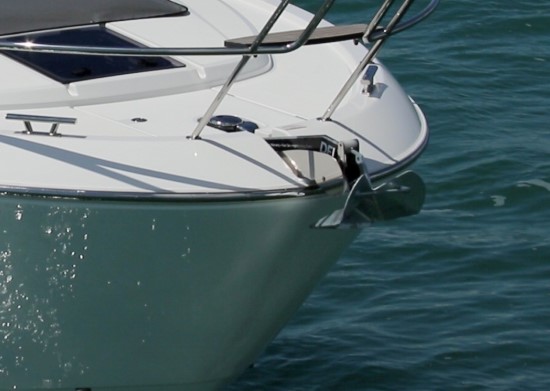
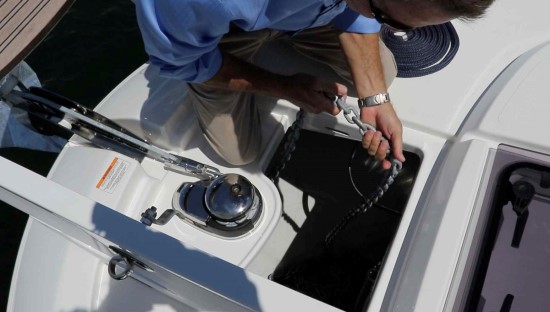
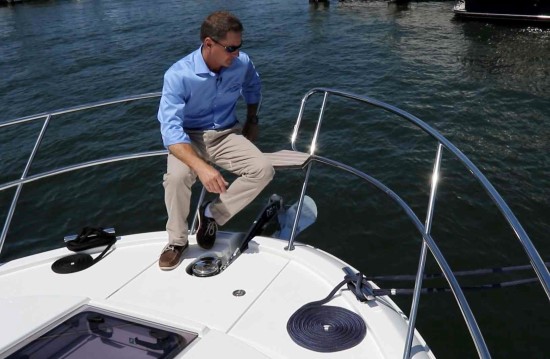
At the bow is a built-in anchor windlass. The anchor stows on a roller davit and the locker below the windlass is very large, which is a good thing. Having a large locker for the anchor chain is important for two reasons: it can hold plenty of chain and, more importantly, it’s large enough to allow a person to get inside, if necessary, to untangle the chain. In rough water, anchor chain can get tossed around like cloths in a washing machine and become tightly tangled.
Engine Room
The engine room is accessed through a hatch in the cockpit sole. Insulation on the hatch helps keep noise and heat to a minimum. Once below, the ladder can be unhinged to aid in getting outboard of the starboard engine.
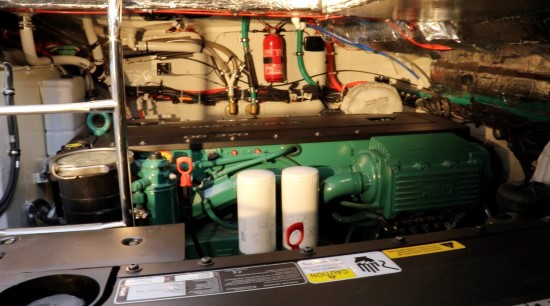
Forward is an 11 kW Kohler genset. Flanking both port and starboard sides of the genset are the fuel filters for each diesel engine, and just below the generator shelf are the main engine start batteries.
Raw Water Cooling. Cooling water for the generator goes overboard with the exhaust after passing through the muffler. A separator sends exhaust out the side of the boat and the separated water overboard through a large seacock. Raw water for main engines is picked up through the outdrives, thus eliminating two additional holes in the bottom, and engine exhaust also goes through the outdrives.
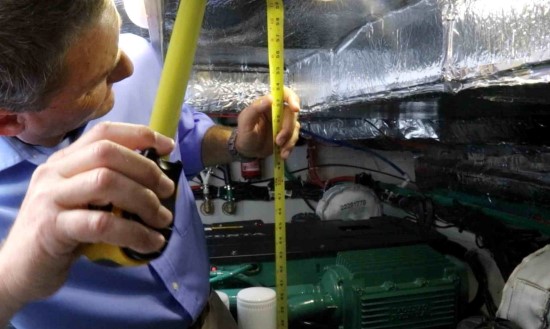
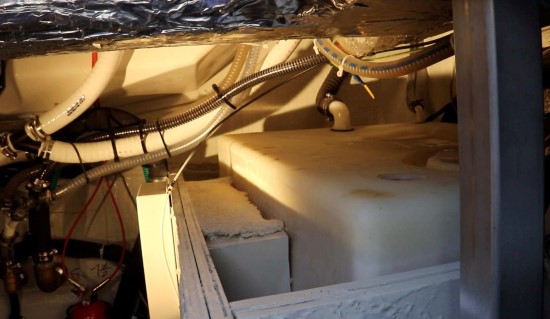
For convenience, Bavaria located both engine dipsticks in the center walkway. There’s also 16” (40.6 cm) forward clearance from the front of the engine to the generator, providing room to change the serpentine belt, if necessary. To starboard is the hot water tank, and just forward of the tank is a raw water pickup for the four on-board air conditioning units scattered around the boat.
Entertaining
Aft Deck
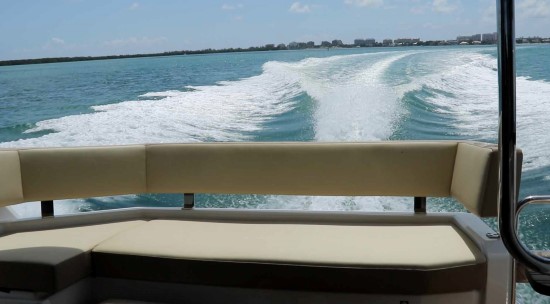
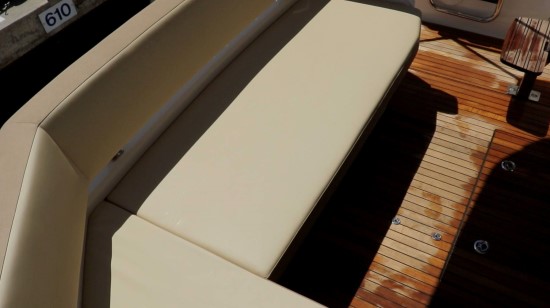
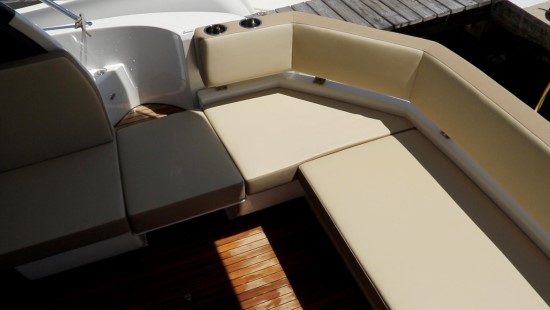
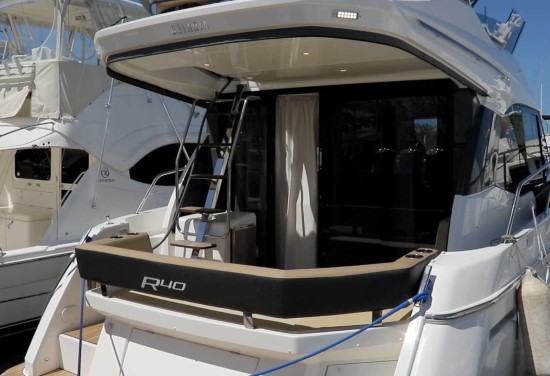
The aft deck features a U-shaped lounge. The backrests have thick padding with built-in stainless steel drink holders. The step that leads from the cockpit up to the side decks has a filler cushion to extend the lounge.
Bow Lounge
Under a canvas cover, on the bow deck, is a sun pad. It has a half Bimini top, for partial shade, and the aft section of the cushion tilts up and locks into place to form a forward-facing lounge. The width of this pad is 70.4” (179 cm) and, when flat, it is 78” (198 cm) fore and aft.
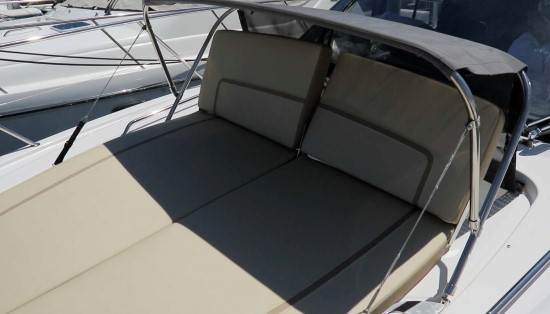
Fly Bridge
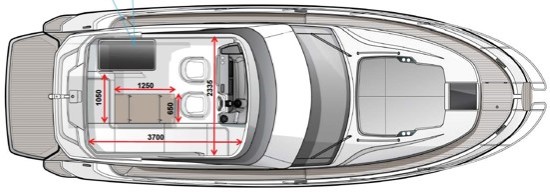
Going up to the flybridge, to port is a stainless steel ladder with teak steps, which leads to a large smoked glass deck hatch — which is important to keep closed when guests are on the flybridge.
Like most Euro designs, the seats on this flying bridge are made low and the bulwarks are minimal. On the starboard side, the actual fiberglass structure is just 9” (22.9 cm) above the deck. On top of that is Plexiglas, which rises to 28” (71 cm). On the port side, the fiberglass rises to 18” (45.7 cm) off the deck. This keeps both the look and the reality of the boat’s superstructure low. At 13’1” (4 m) bridge clearance with the radar mast and Bimini down, the R40 can get under most bridges on major European rivers.
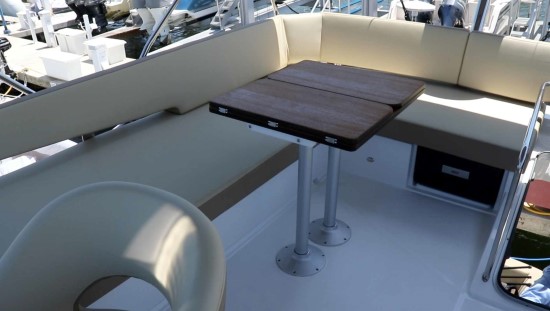
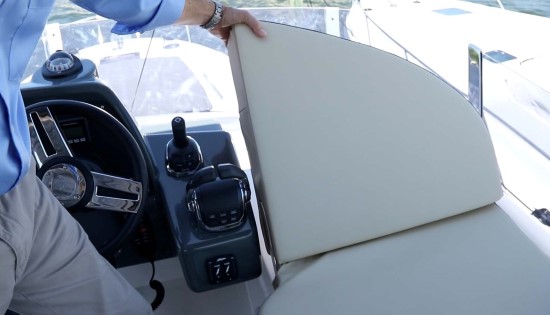
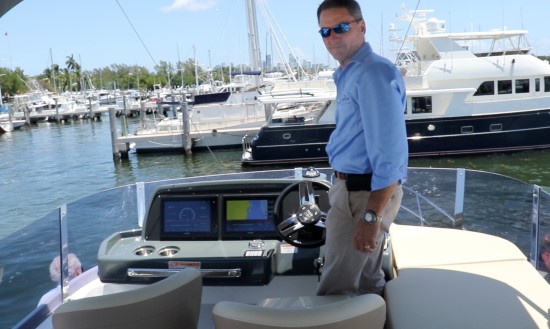
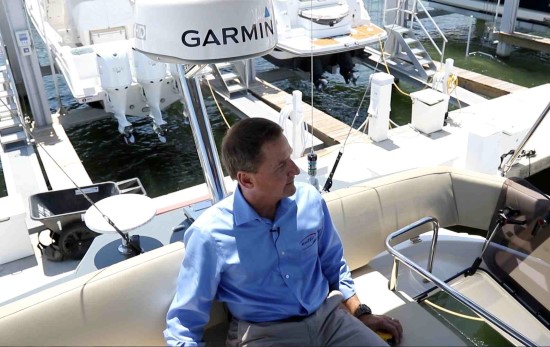
Mounted atop this stainless steel pedestal is a closed-array antenna for the radar. Its fixed height is only 3’9” (1.14 m) above the aft lounge seat and 5’1” (1.55 m) above the deck. We’d like to see it mounted 2’ (0.6 m) higher.
Salon
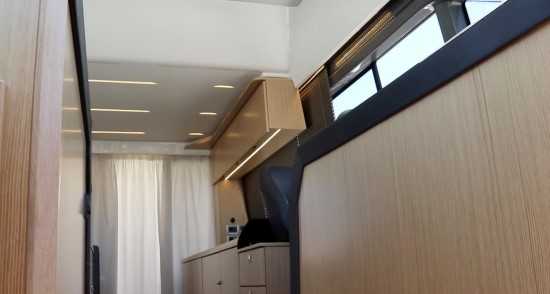
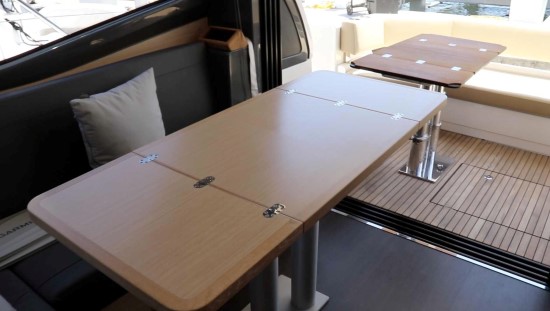
Galley
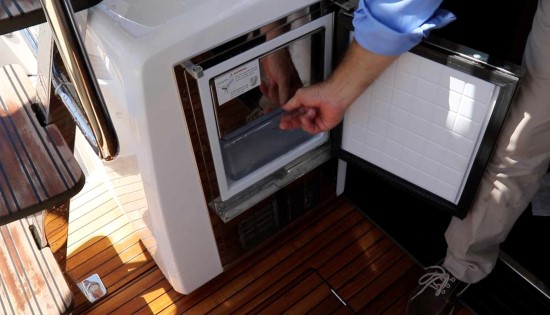
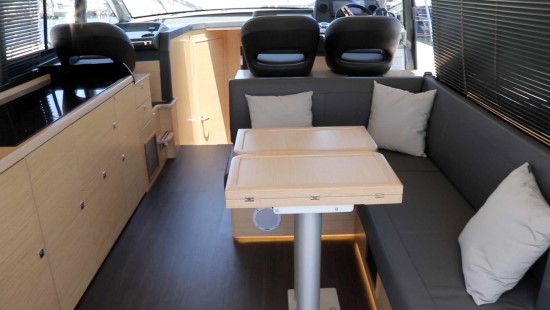
The galley has all of the conveniences of home but is hidden out of view by the countertop and doors.
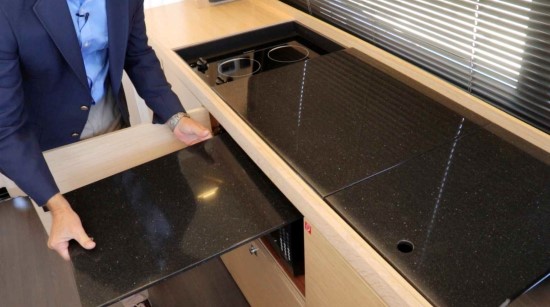
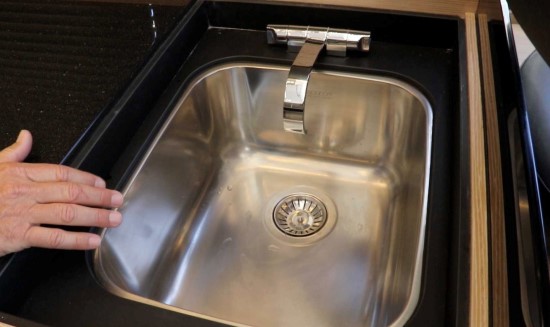
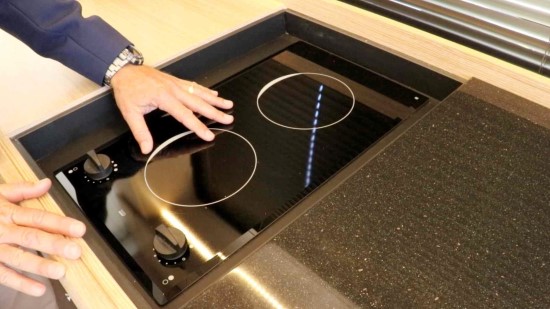
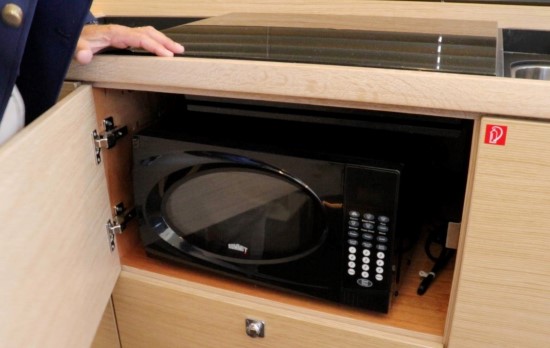
Additional features of the galley are an optional dishwasher drawer, cabinet storage, and drawers for cutlery and utensils. Above the galley are three upper cabinets; the doors are held open by stainless steel shocks. Just forward of the galley is an additional passenger seat, like the pair behind the lower helm.
Accommodations
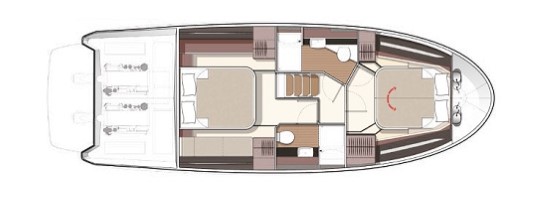
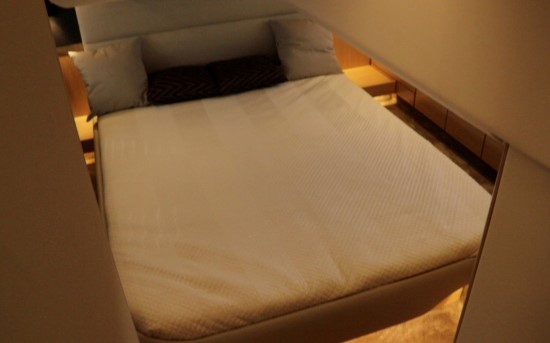
The forward cabin may have more movement in rough conditions, plus there will be a bit more hull noise from waves slapping against the hull. The mid-cabin should be more stable, being further aft, but there will be some noise from the generator to contend with when it’s running.
But that is why Bavaria has installed 12V flatscreen TV sets in the boat — the generator need not be working to watch videos.
Forward Stateroom
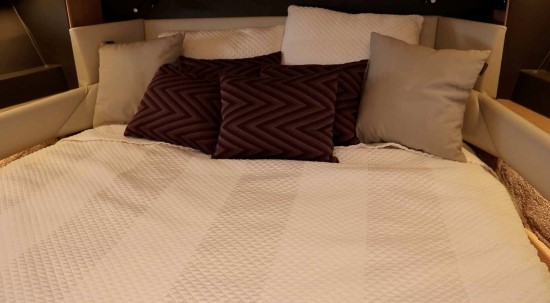
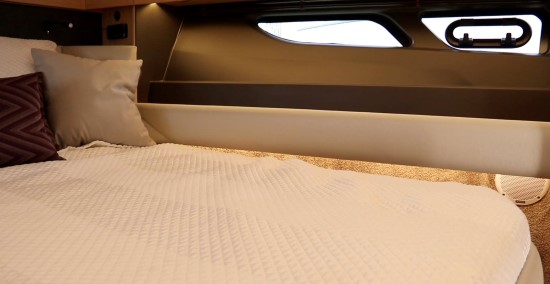
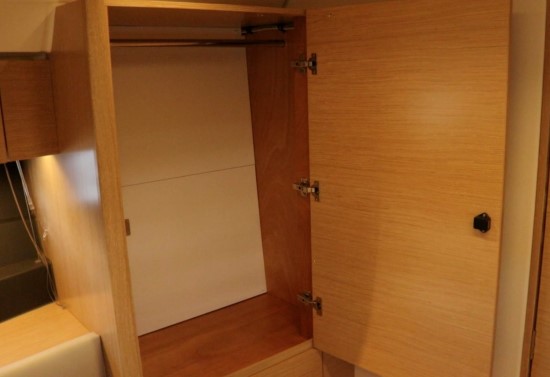
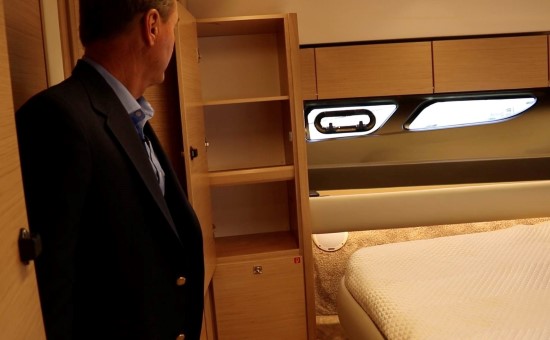
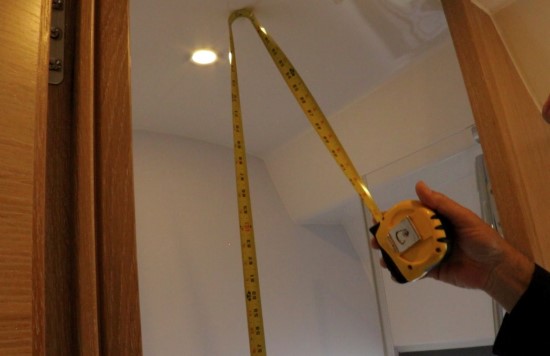
Above the forward berth is a deck hatch to let in natural light and fresh air; it is also an emergency exit. Below the berth are additional pullout drawers. Headroom in this cabin is 76” (1.93 m).
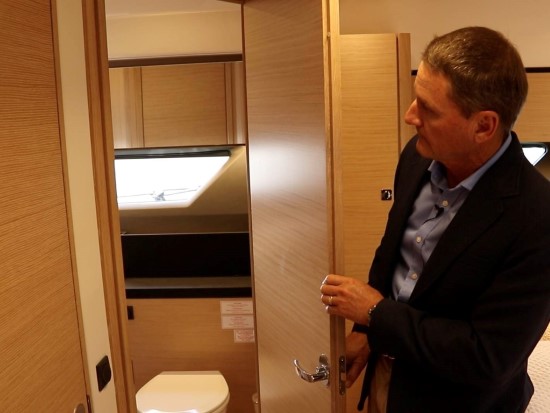
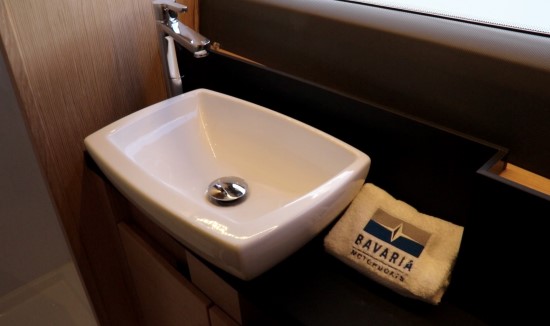
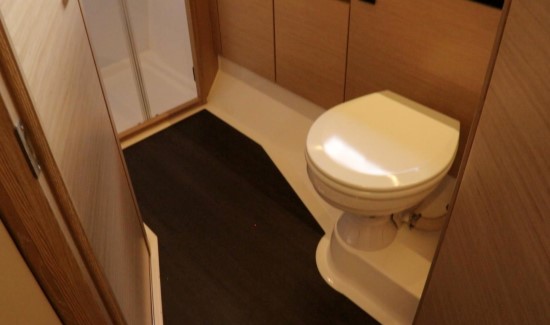
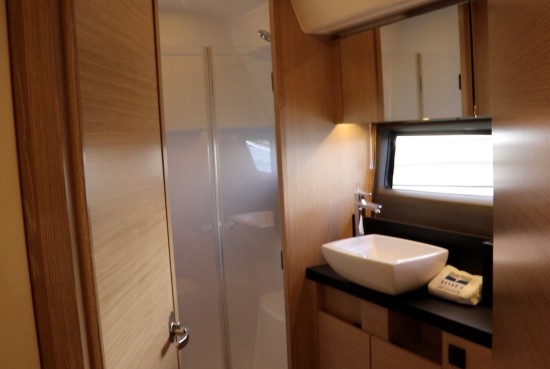
In the head, above the sink, are cabinets, one with a mirrored door, complete with a ground fault 110 plug inside. Below there is more storage. The head has a walk-in separate shower stall and the port light opens for a little ventilation. We’d like to see an exhaust fan in the head.
Mid Cabin
Swim Platform
Price
Our test boat had an MSRP of $660,000, which included a hefty list of options like the teak decking and hydraulic swim platform.
Observations
Bavaria has figured out how to pack a lot of features in a length of only 40 feet. Diesel power gives the boat reliability and efficiency. The Duoprop outdrives enhance the racy feel at the helm and allow for a shallow draft. Sterndrives are just as efficient as pod drives and are a lot less money the buy and considerably easier to maintain; replacement, if necessary, is much less money.
Guests will like the flying bridge, and two couples can cruise in privacy with the en suite staterooms.
For people looking for a weekender and mid-range cruiser, the Bavaria R40 might be just the ticket.
Related Boats
Bavaria E40 Sedan (2018-)
1 x 300-hp Volvo Penta D4