Access More Boat Tests
Already have an account? Login
Prestige Yachts 46 (2010-)

Brief Summary
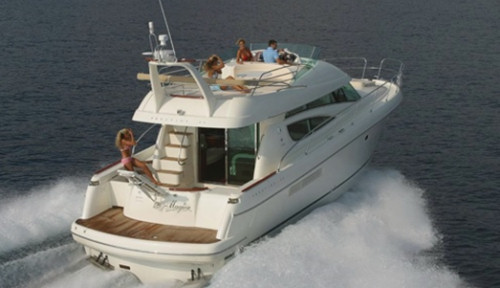
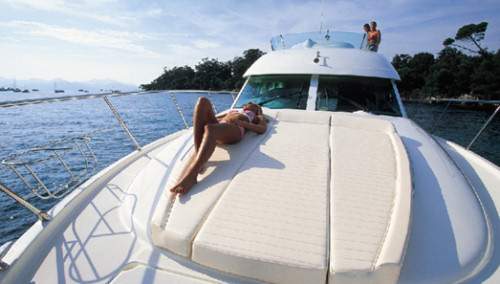
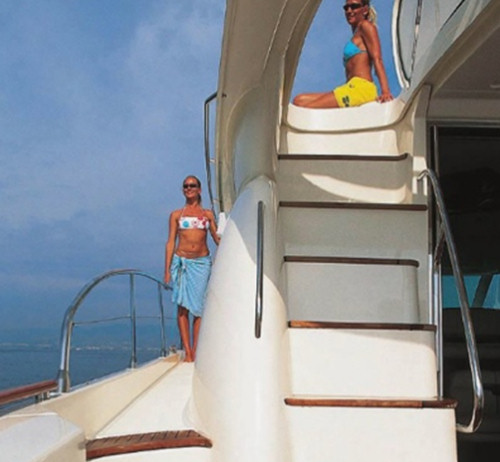
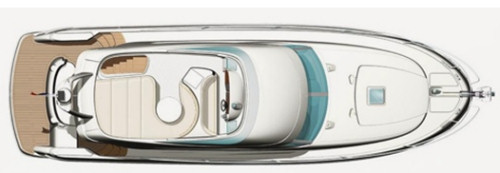
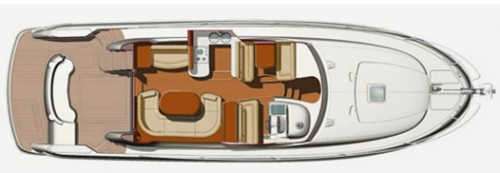
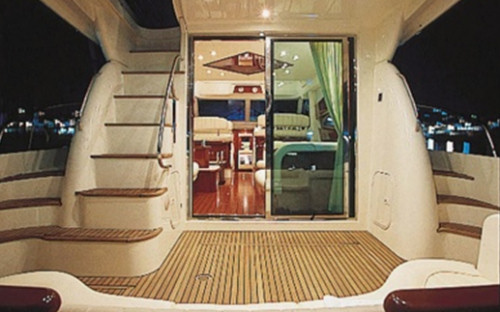
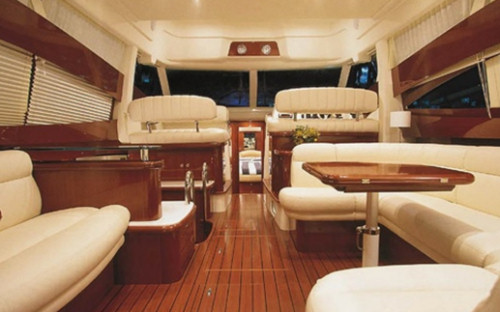
We used to make fun of the French, but now we’ve changed our minds: They have the right ideas about lots of things, including how to have fun on a boat. Or maybe more accurately, how to design a boat for having fun aboard. The Prestige 46 FB is a case in point: It combines a comfortable flying bridge with a spacious saloon and a nearly beach-sized cockpit and swim platform to create a floating playpen for adults. Oh, there are three cabins, too, in case you tire of the outdoors.
Specifications
| Length Overall | 47' 8'' / 14.55 m |
|---|---|
| Beam |
14' 3'' 4.36 m |
| Dry Weight |
27,972 lbs. 12,688 kg |
| Draft |
3' 11'' 1.20 m |
| Deadrise/Transom | N/A |
| Bridge Clearance | N/A |
| Fuel Capacity |
1,404 gal. 1,530 L |
| Water Capacity |
151 gal. 570 L |
Engine Options
| Tested Engine |
Currently no test numbers |
|---|---|
| Std. Power |
2 x 500-hp Cummins QSC 8.3 |
| Opt. Power |
Not Available |
The Jeanneau Story
Jeanneau is one of France’s most prestigious yacht builders, and has been for more than 50 years. Henri Jeanneau, an automobile and airplane enthusiast, became enthralled with powerboating in the late 1950s. He built a wooden raceboat, won the 6-hour Paris motorboat race and decided to start his own boatbuilding company.
When Jeanneau started building in fiberglass in 1961, he tested his boats on nearby Lake Tricherie – by running them at top speed over a wooden ramp, through the air and across a road to land in an adjacent field. If the boat and the driver, always Jeanneau himself, survived, the boat went into production. Today, Jeanneau uses more sophisticated testing methods, but their boats – the company builds both sail and power -- are still well-built and highly regarded by folks who know about such things.
Environmental Leader
Henri Jeanneau’s first employees were a handful of canoe builders, but today the company employs more than 2,000 in its vast shipyard in Les Herbiers, France. It’s one of the world’s largest yards certified to meet ISO 9001 quality and ISO 14001 environmental standards. In keeping with their concern for ecology (the French are leaders in the environmental movement – remember Jacques Cousteau?), Jeanneau builds their boats using resin-injected molding to trap irritating and sometimes harmful solvents before they escape into the atmosphere – not only is this ecologically sound, but it makes for a better laminate as well. The company goes so far as to use a varnishing technique requiring low levels of solvents and “drying” by UV light rather than evaporation.
Mediterranean Prestige
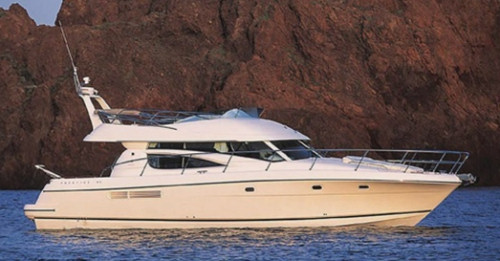
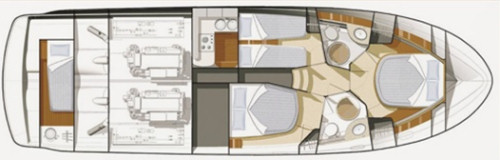
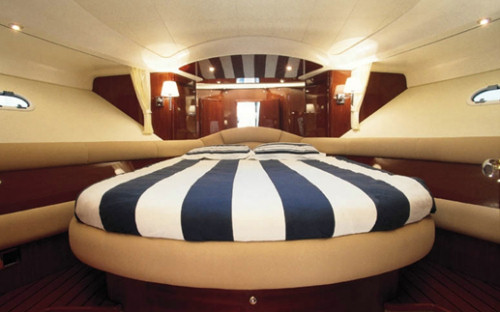
The Prestige line includes yachts from 32 to 50 feet, each one designed and styled in the Mediterranean manner. The Presige 46 FB is a prime example of the genre, combining lots of sporting, sunning and entertainment potential with ample accommodations for spending a few days aboard. There are two staterooms with double berths and a third with twins; aft is an optional crew’s cabin, in the Euro style suitable for anyone willing to live in a cave. We expect American owners will pass on that one.
Performance
Powered by twin Cummins QSC 8.3 500-hp diesels, its top speed is a shade over 32 knots, according to Jeanneau test figures, with an economical cruise around 25. We did not test this boat, so don’t hold us to these figures. But that’s a typical top speed for a boat like this – nobody would buy a Med-style cruiser that failed to break 30 knots. Fuel burn at WOT is, again according to the builder, 184 liters/hr (48.6 U.S. gallons); at cruise, 121 l/hr (32 gals.).
Aside from the curvy styling, especially evident in deckhouse windows, Med-style yachts have a few quirks that Americans sometimes find unnerving. The first is their low-profile flying bridges, better suited to sitting than standing – a trait that makes some Americans, including some of us here at BoatTEST.com, worry about being pitched overboard by an unexpected wake. Jeanneau must agree, since the Prestige 46 FB’s bridge is nicely protected by tall stainless rails port and starboard. Although we still wouldn’t wander around on the bridge while underway, the rails would make us feel more comfortable when moving.
A radar arch holds scanner and antennas; we’d like it a bit higher to keep microwaves from tickling our brains, but there’s a lower station for use when the weather closes in and you need radar.
Related Boats
Prestige Yachts 38 S (Not in Production)
Currently no test numbers
Prestige Yachts 50 (2010-)
Currently no test numbers
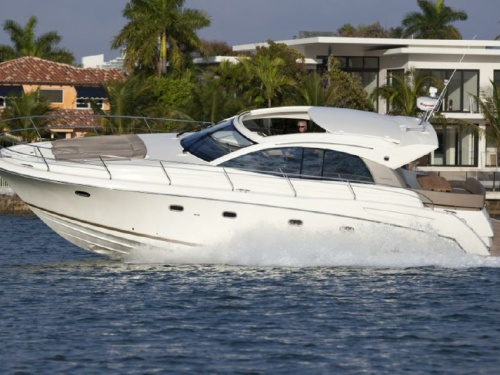
Prestige Yachts 440S (2011-)
2 x 370-hp Volvo Penta IPS500
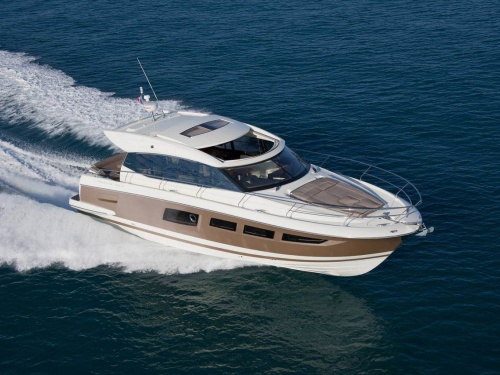
Prestige Yachts 500S (2011-)
2 x 435-hp Volvo Penta IPS600