Access More Boat Tests
Already have an account? Login
Sanlorenzo SD90 (2025-)
2 x 1200-hp V8 MAN

Brief Summary
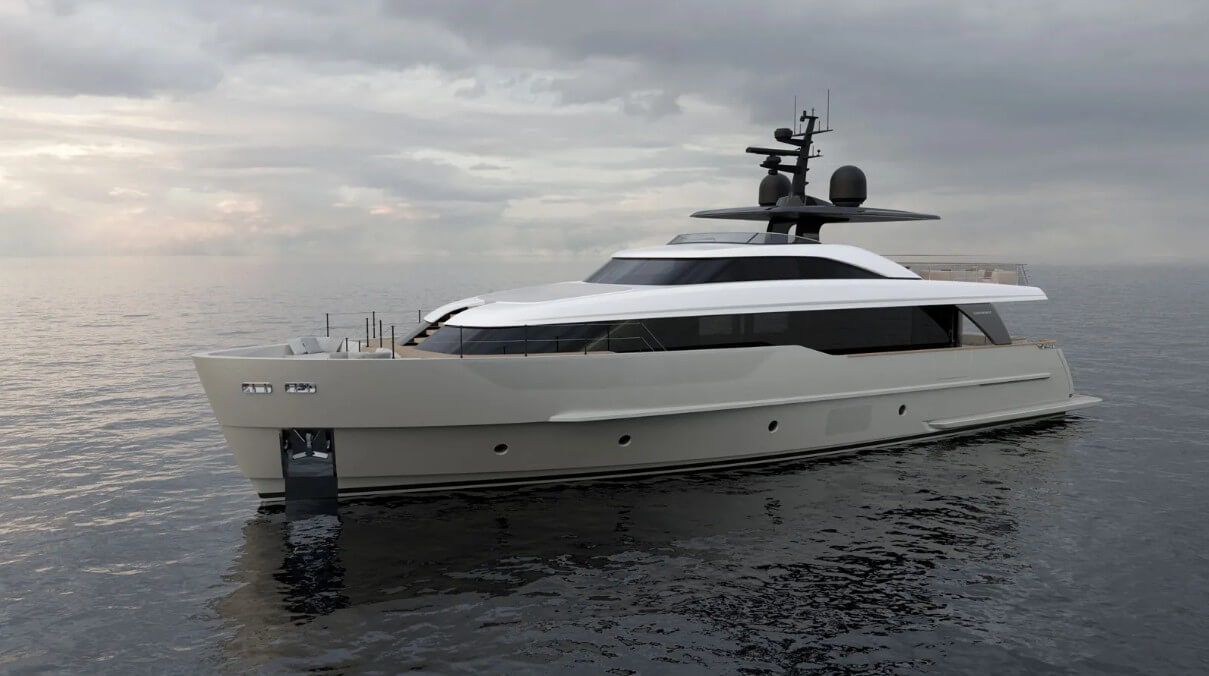
When considering a large motoryacht, buyers need all of the friends they can get who will give them unbiased, 3rd-party advice. That’s hard to find because most people in the boating business have a vested interest in one brand or another, or one dealer/broker or another. That’s why BoatTEST has an on-going editorial program of explaining details of large motoryachts that buyers of the ultimate yachts of their dreams need to know.
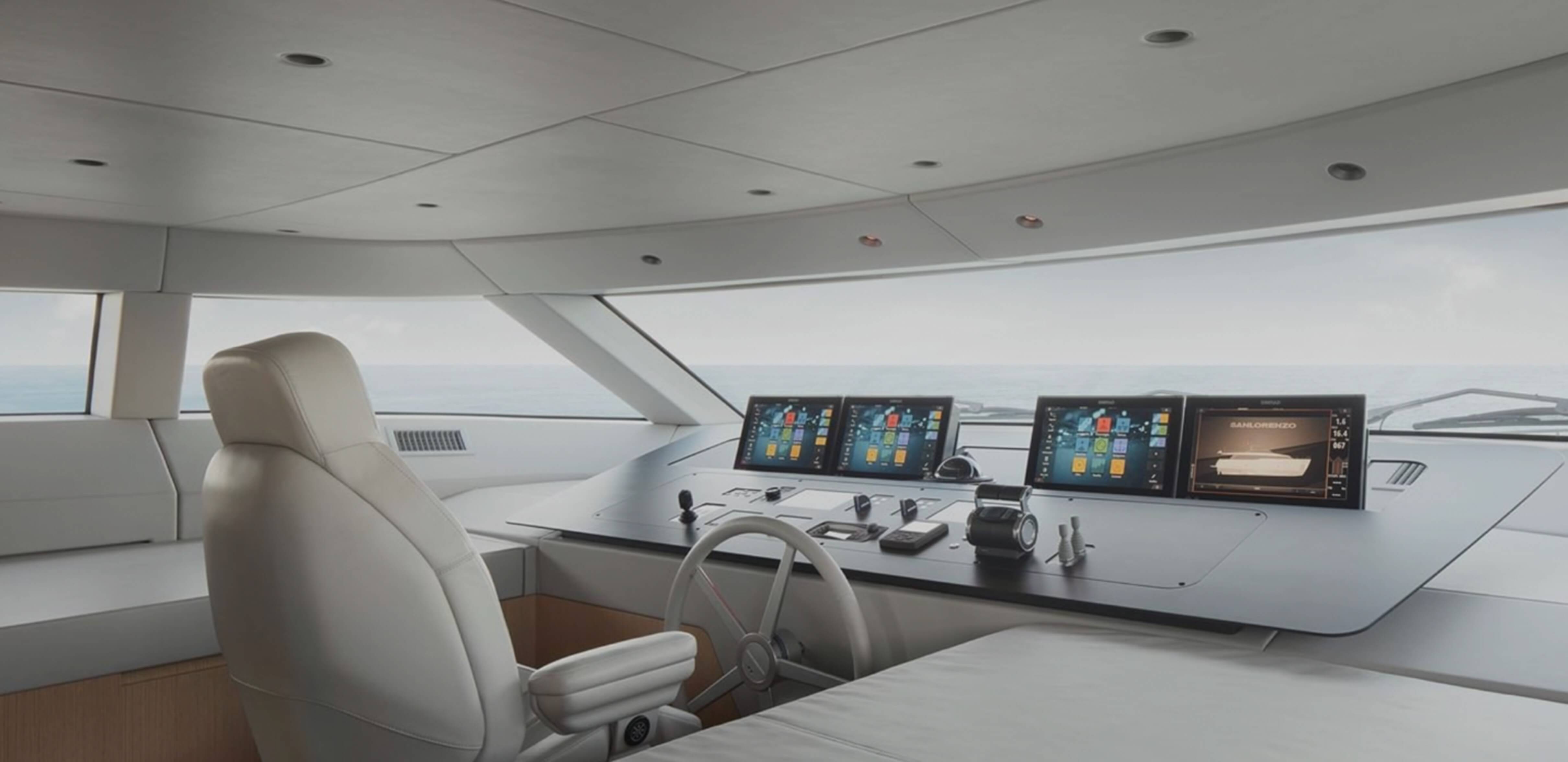
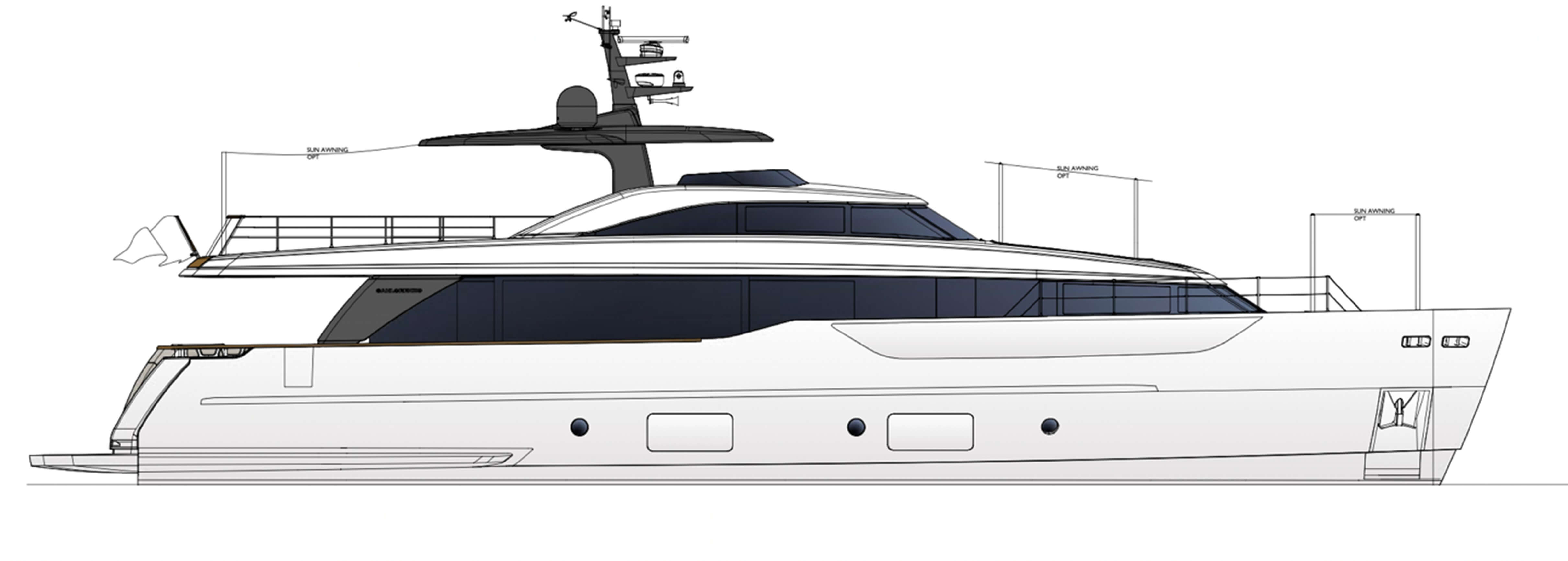
Recently, we toured a new 90’ (27.43m) Sanlorenzo SD90 motoryacht, seen above, that arrived at Newport, RI, the home base for BoatTEST. What follows are our observations about a 90’ megayacht is the “sweet spot” for large motoryacht ownership, as well as our thoughts to how the Sanlorenzo SD90 stacks up in this rarified category of vessel.
Specifications
| Length Overall |
90' 27.43 m |
|---|---|
| Beam |
22' 11" 7.0 m |
| Draft |
6' 2" / 1.87 m @ half load 6' 3" / 1.91 m @ full load |
| Fuel Capacity |
3,434 gal 13,000 L |
| Water Capacity |
528 gal 2,000 L |
Engine Options
| Std. Power |
2 x 1200-hp V8 MAN |
|---|
A 90’ Megayacht that Makes Sense & Considerations for Prospective Buyers
by Jeff Hammond, Co-Founder of BoatTEST
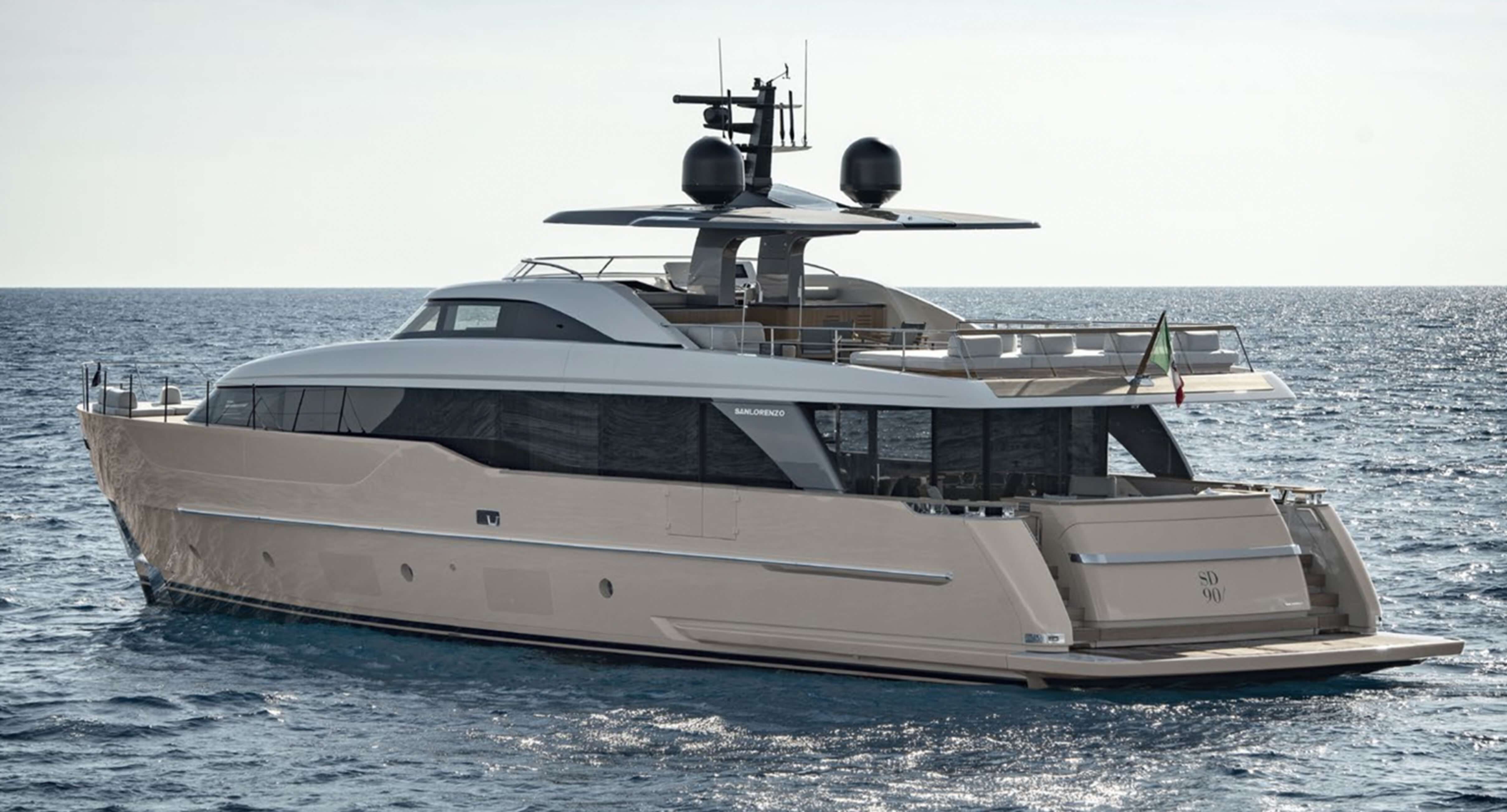
One of the Magnificent 8
There are 8 major brands that have 88’ to 92’ fiberglass conventional motoryachts, so the observations made here will hold true for the others as well, and they vary significantly in terms of displacement, beam, mission and exterior styling. The Sanlorenzo SD90 stands out when comparing this because it has the greatest displacement, the greatest fuel capacity, the penultimate widest beam -- but also has the smallest engines.
Those four major factoids set the stage for the mission of SD90: She is designed for serious distance cruising at a reasonable speed for long range. The “SD” is the giveaway: It stands for “Semi Displacement.” That means while all of the others are designed to be able to consume prodigious amounts of hydrocarbons to produce the horsepower necessary force their hulls through saltwater (generally), at speeds up to 25-knots and more.
Size Matters
From our perspective, 90’ (27.43 m) is an inflection point for a large motoryacht. Smaller is good but just can’t check all of the boxes an owner with means who wants to maximize the use of a large yacht might want. Larger is in the ego-boosting category, where people who have so much money, or which pours in with such rapidity they don’t care about costs, and rather enjoy showing off what they can afford.
Here’s why we think of this size as ideal –
90’ (27.43 m) is a good balance among important considerations such as luxury, room, manageability, and cost to buy and maintain. A 90-footer has three times the volume of a 60’ yacht, so that catapults a motoryacht from being merely a yacht, into the “megayacht” category. (Megayachts, as quantified by the person who coined the word back in 1981, Bonnie O’Boyle, start at 80’ and go to 149’, whereupon Superyachts take over.)
It’s large enough to have 4 staterooms, that can handle 8 guests (including the owning couple) each with decent-sized en suite staterooms. This is large enough to accommodate most families, extended families, or intimate friends.
Can smaller yachts have 4 staterooms? Yes, but they’re smaller because the boat doesn’t have the beam and length to carry it off in grand style, and one stateroom is notoriously small and usually has to share a head – which may also double/triple as a day head.
Better Than the Ritz
A yacht for four couples, each with similar-sized luxurious staterooms, is the ideal size for chartering. Depending on where the yacht is chartered, the typical cost is about $100k per week, or a bit less. To put that in perspective, be advised that a junior suite at the Retz Hotel in Paris cost $15,000 per week, and the deluxe junior suit costs $31,000. So, a week’s say for 8 friends can run from $65k to $124k per week simply for the rooms and clean sheets every day.
That divided by 4 couples is $25,000 each, which is a bargain when it comes to experiences on the order of what a large motoryacht can provide in the Caribbean, the Med, or in Asia (which is a new and growing market for yacht charters).
Larger yachts must demand a much higher charter fee to make sense for the owner, making them harder to charter, which reduces the attraction of a yacht as a charter business for the tax benefits that are derived.
Smaller yachts, say 75’, will be tight on space for 8 people, plus crew of 4 is problematical. A boat 120’ or more, is simply a lot of material that has to be paid for, and lugged around, but does not add appreciably to the to the “Luxury/Expense Curve.” Like most things in life, there is a law of diminishing returns. 90’ is one of those inflection points.
The Sanlorenzo SD90 can accommodate a crew of four – captain, chef, stew, engine er/mate -- can be for charters, and three when the family is aboard.
Other Considerations
To Big for Daddy. While insurance companies will not allow the owner to operate a boat this size, with sea-time, certified by the captain, an owner can put in the required days of sea-time, read a book, memorize a list of rules, sound and light signals, become proficient at docking the boat, and earn a 100-Ton license in a year or two, depending on sea time. Truth be told, large boats are really no harder to dock than small ones, but there are many, many more things to be calculating in one’s head when doing it.
For buyers who want to skipper their own boat, we suggest that you check with your insurance company. It will decide how big a boat you can handle (based on the largest boat you’ve handled before). That will be a good place to start, and it will be something less than 80’ in most cases.
What Are You Going to Do with the Boat?
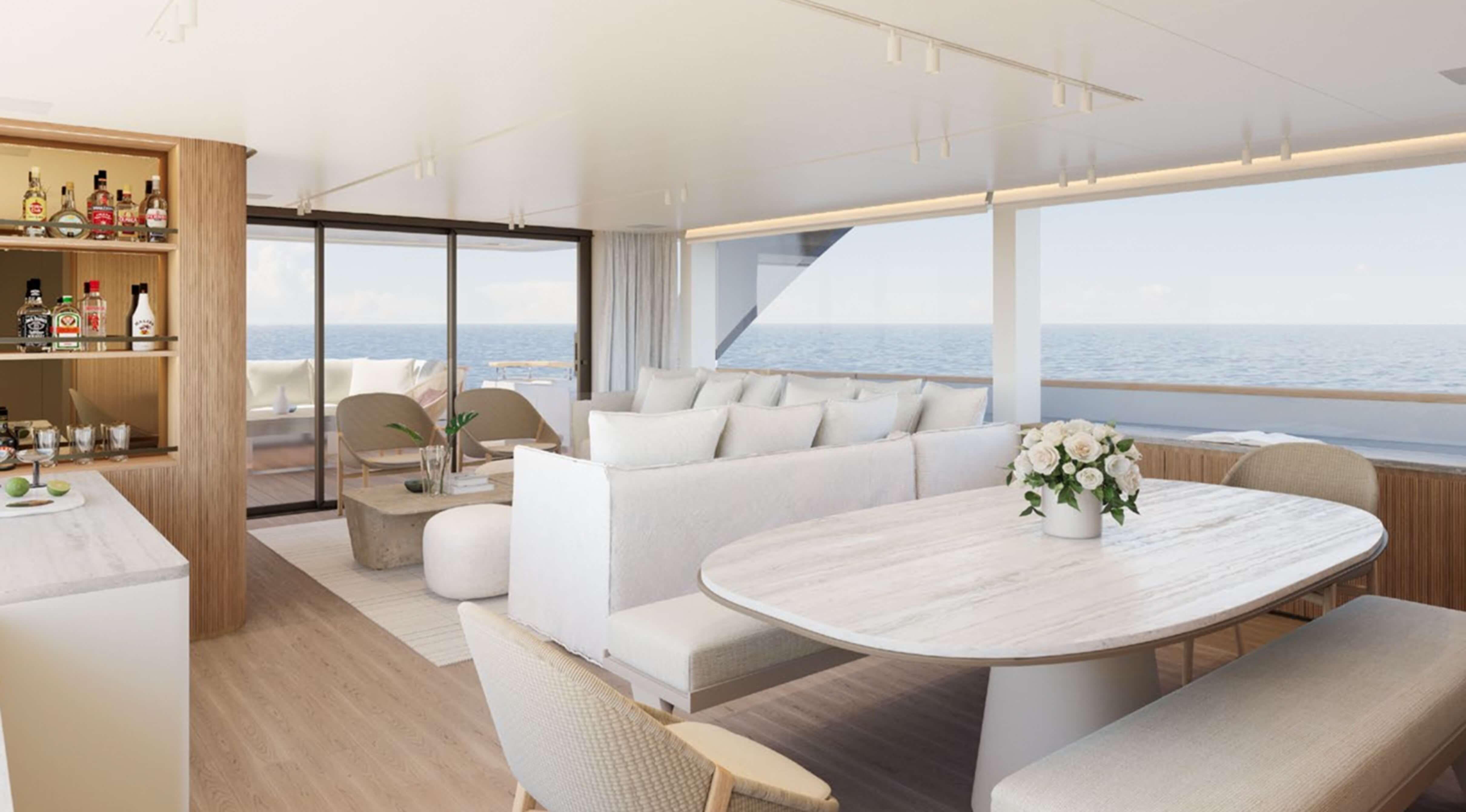
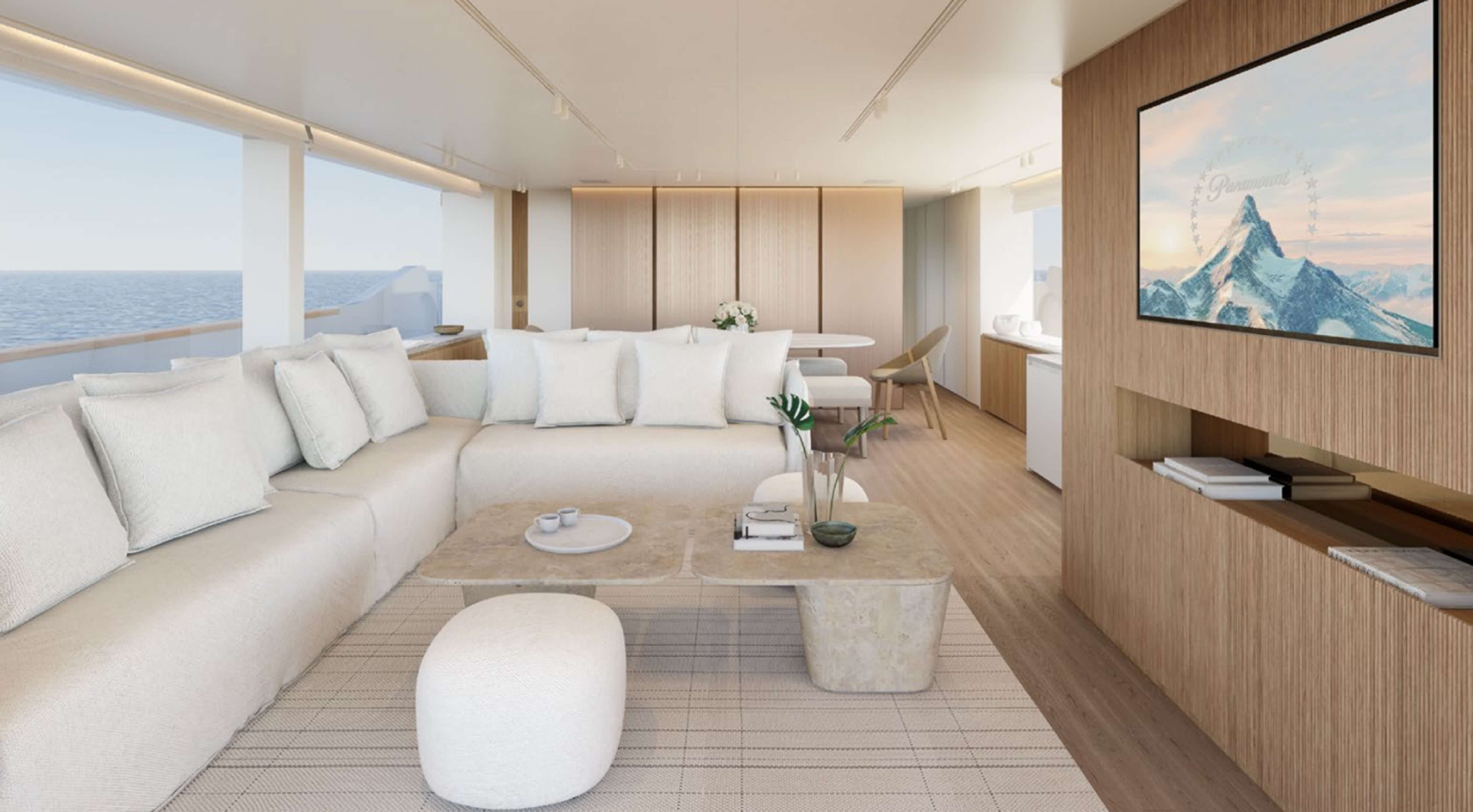
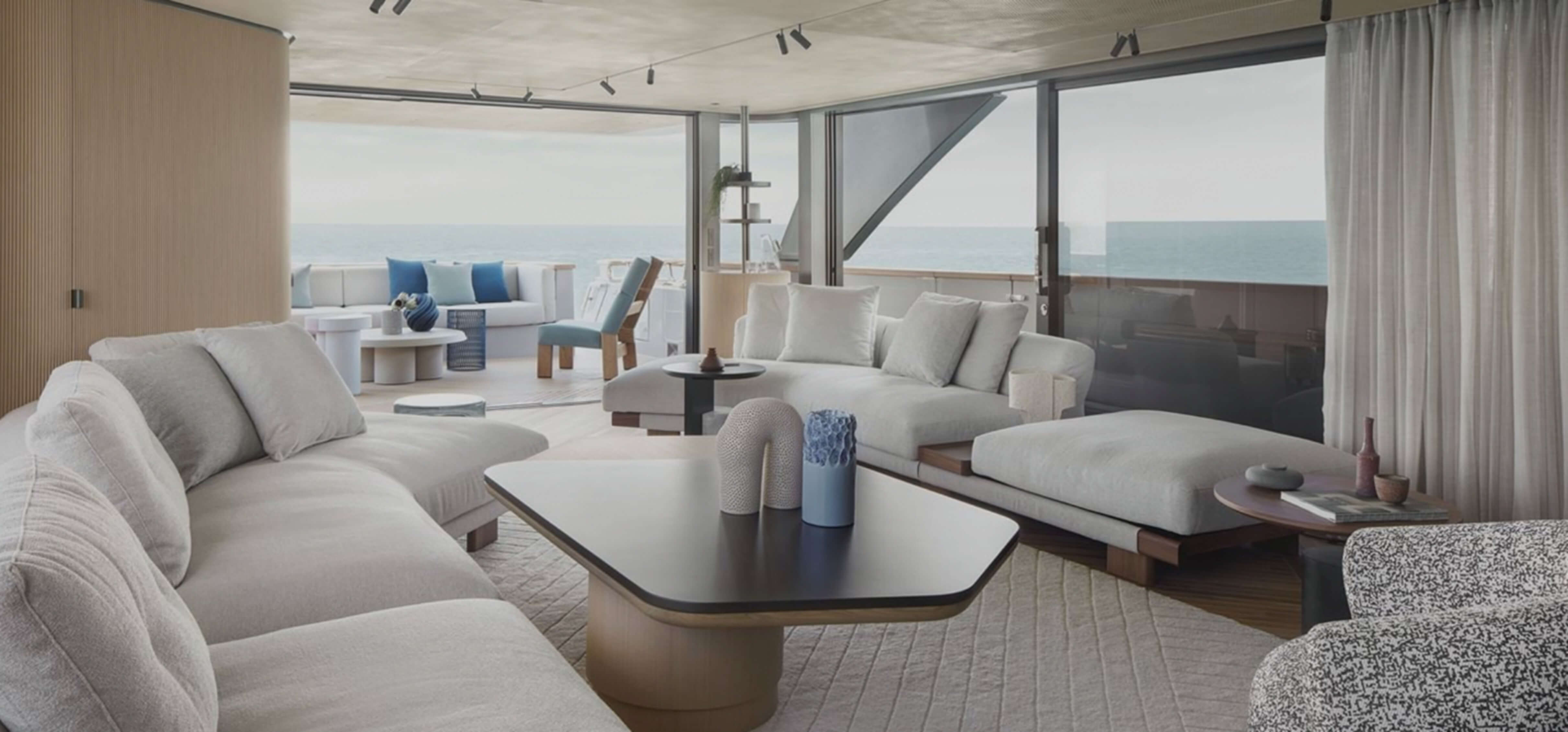
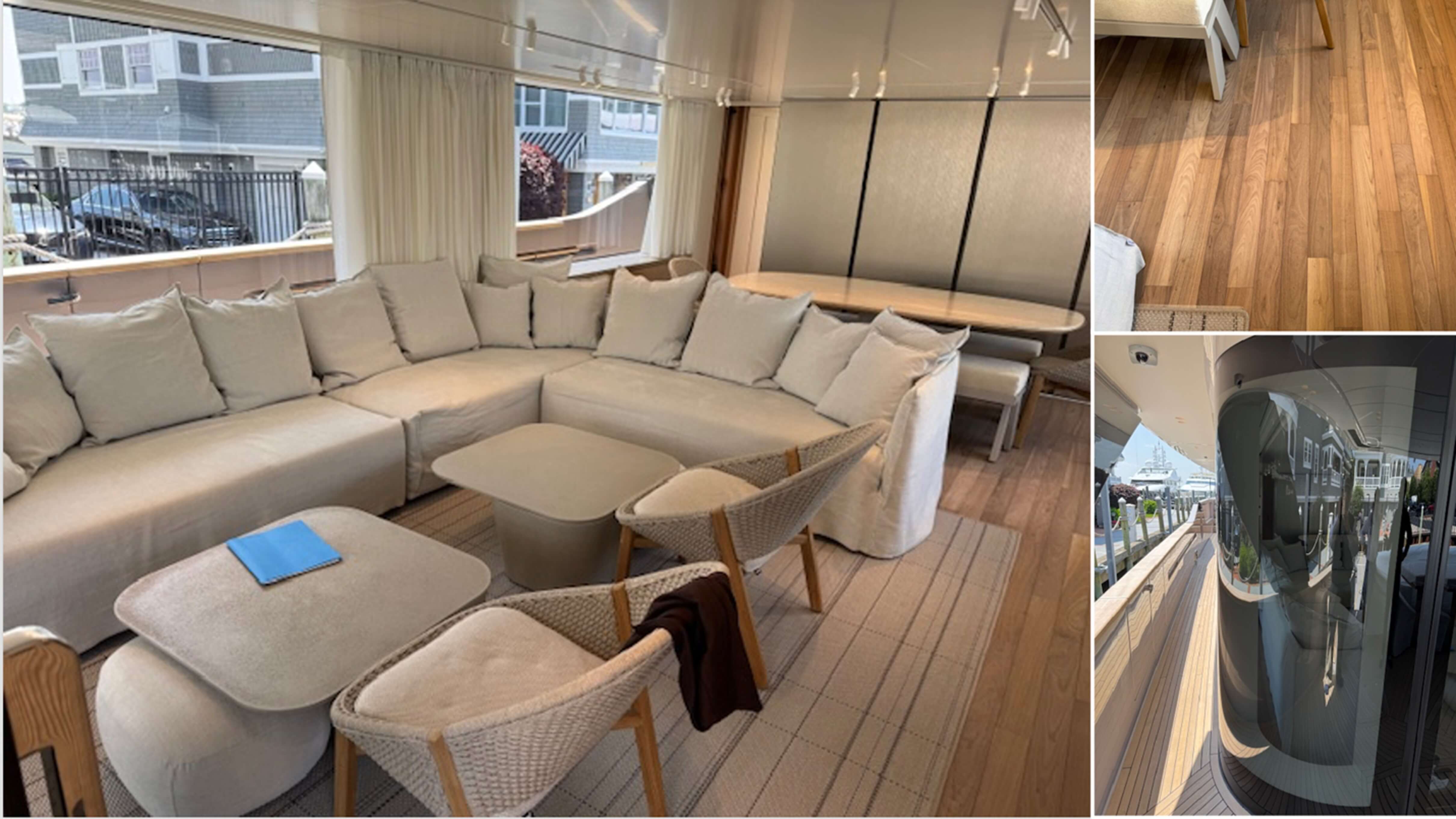
That’s Entertainment! Virtually everyone with a large motoryacht is going to entertain. So, decide how you want to do it. This maybe a good place to introduce your significant other into the process, because she will likely be the hostess. Here, the Sanlorenzo SD90 is instructive: There is nothing particularly unusual about the yacht’s main deck layout, which means it has passed the test of time.
In fact, most motoryachts from 80’ to 150’ have the same basic layout on the main deck abaft the galley. There is only so much that can be done in arranging furniture into a formal dining area and salon “living room” area.
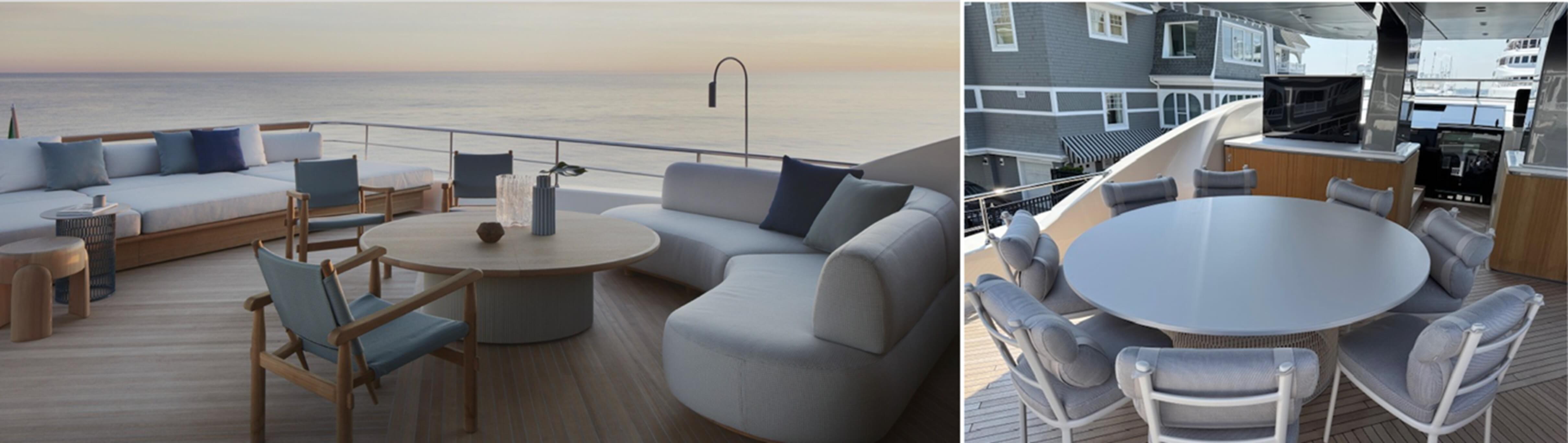
Note that there is a formal dining table as well as a large salon. The aft deck is larger than most and has a conventional transom bench seat facing the curved doorway to the house, with a large table in between. The first question I would ask a Sanlorenzo dealer is can the traditional transom bench seat be replaced by two facing fore and aft all-weather sofas with a high-low table in between.
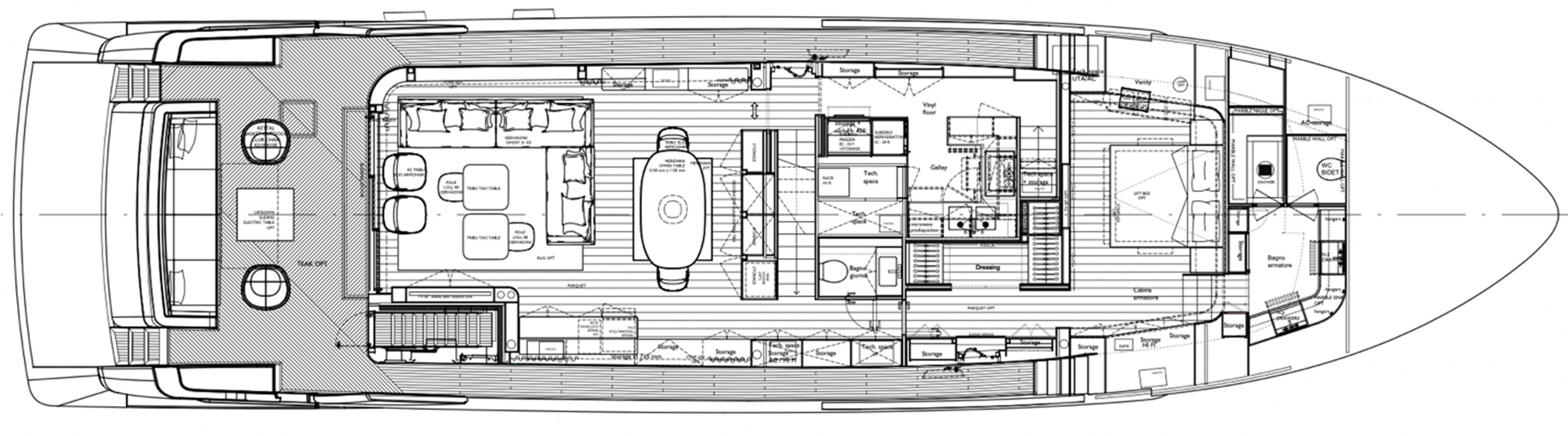
View of the main deck of the Sanlorenzo SD90
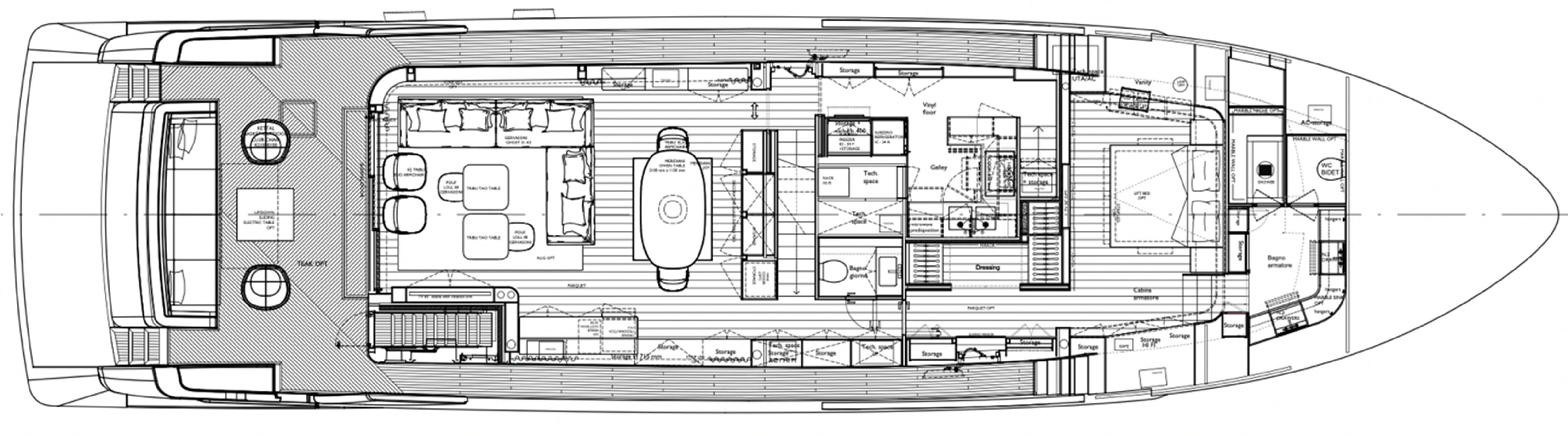
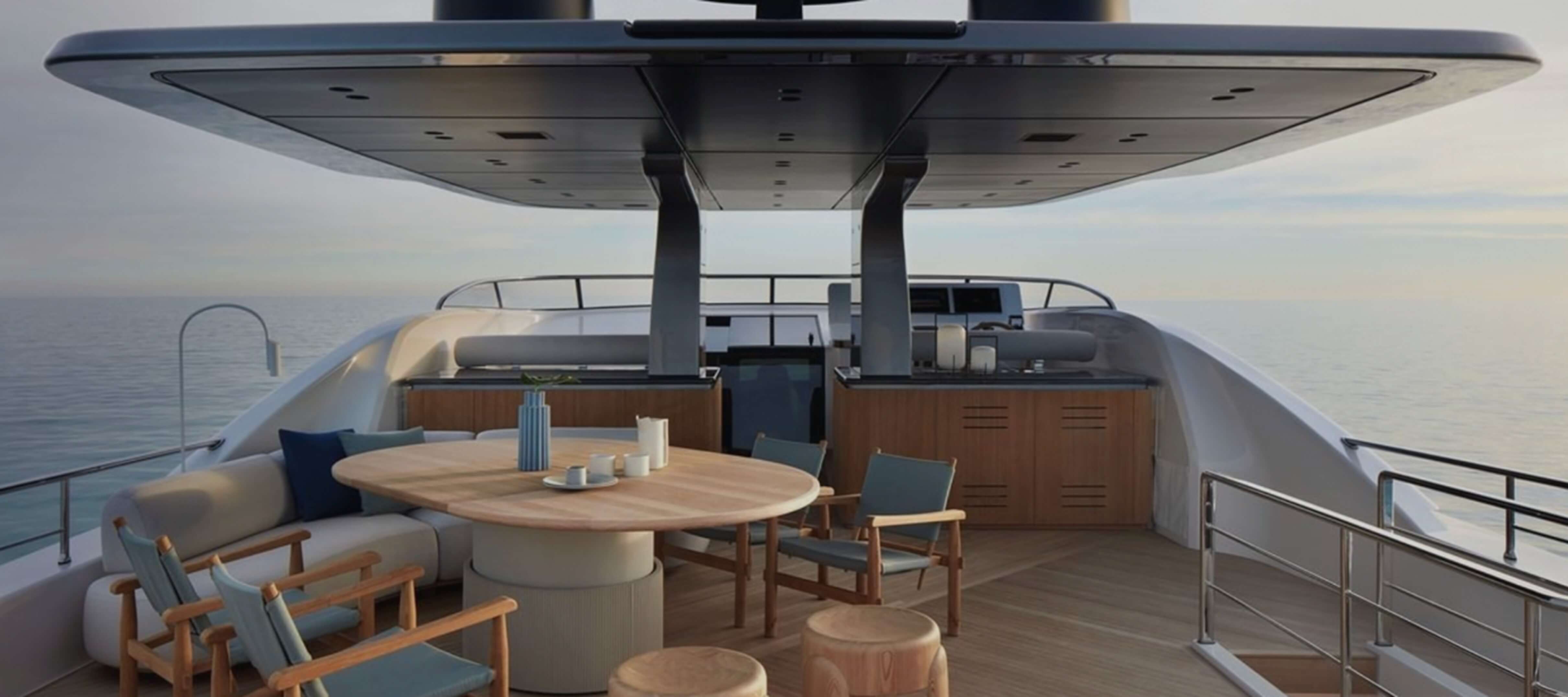
Social areas on the flying bridge will be the center of daytime activity on the SD90.
We like a round table on boats with dinner parties because it is conducive to good conversation – no one is left at the “wrong end” of the table. As can be seen the aft area of the flying bridge has installed seating for lounging and multiple activities. We call this area the “Boat Deck” because here is where motor yachts of this size carried their tenders when underway. Since the SD90 has its own tender garage that can hold a 14’ tender weighing up to 1,300 lbs. (600kg).
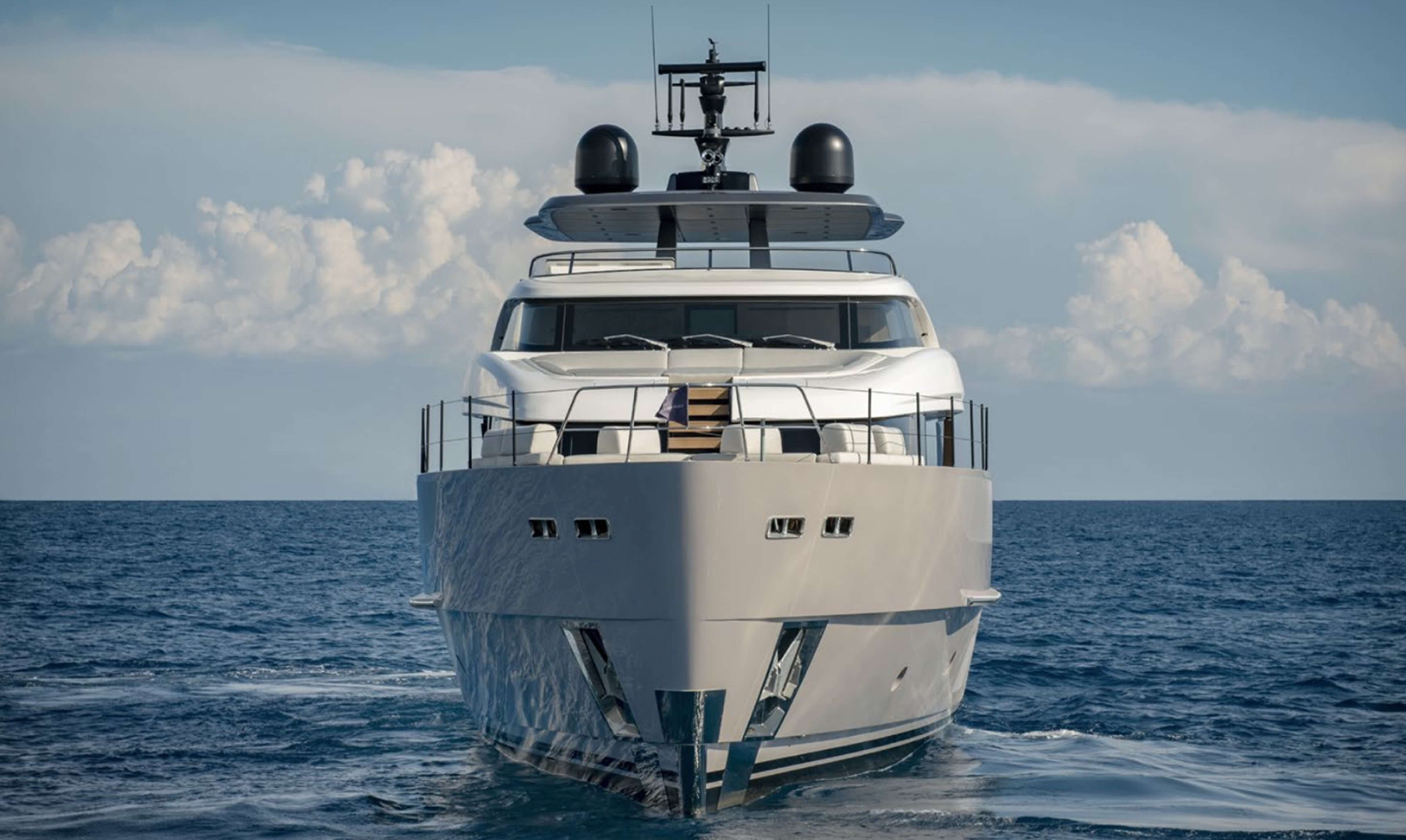
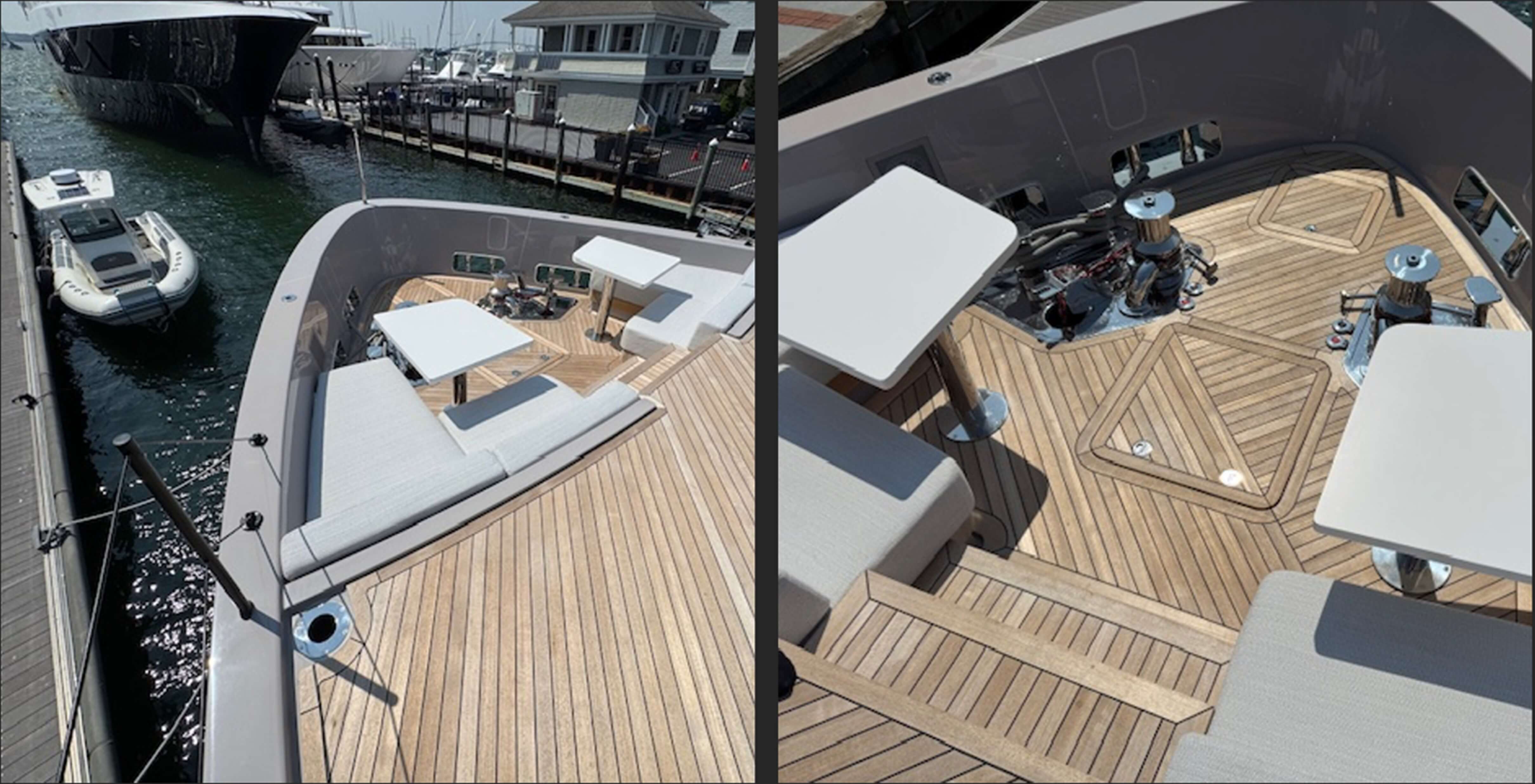
At the bow, the deck is sunken so that the mess of raised ground tackle doesn’t make a mess that sweeps over the decks. It also creates a place for cool and unusual port and starboard L-shaped banquettes for two. They drop down to make sunning areas by day. By night they become a hidden retreat for a romantic encounter complete with café table.
Long-Range Cruising
There are 12 main aspects that any 90’ motor yacht should have if you are planning on long range cruising. While most owners will leave this up to their captains, it is the owner’s responsibility to make sure these things are aboard, and virtually all should be on the build list.
- Prodigious fuel capacity
- Efficient power generation
- A high bow
- Electronics w/Starlink and SSB
- Liferafts, EPIRPs, Fire Suppression
- Spare Parts, Props & Tools
- High GPD Watermaker
- Fuel polisher
- Heavy-Duty Ground Tackle
- Stabilizer System
- Redundant Generators
- High Communication Batteries
The Sanlorenzo SD90 has virtually all the indicated features. For example, her fuel capacity is 3,434 gal. (13,000 L)

Power Generation. This is the most important element of any megayachts purchase, and it is one that owners need to carefully consider. The Sanlorenzo SD90 is, as its name implies (SD), a semi-displacement vessel. Boats this size generally do not plane, and if they do, it takes a tremendous amount of power and is simply not practical.
Sanlorenzo offers twin 1200-hp V8 MAN 16.2 L diesels, the most powerful V8 diesels on the market. MAN engines are known for their advantageous power-to-weight ratio. (All put one of the Magnificent 7 use MAN engines as standard.) The engines drive through ZF V-drives with a 2.96:1 gear ratio. This is a relatively high gear ratio, and it is designed, along with its 5-blade prop to transfer a tremendous amount of torque to the water to move the 246,000 lb-boat fully laden in the mid-teens.
Most boats in class have V12 diesels rated at 1500-hp or more, but for yachts going on long cruises, most of this horsepower will not be called upon, because the boat will be run at reasonable speeds, say, from 8 to 11 knots.
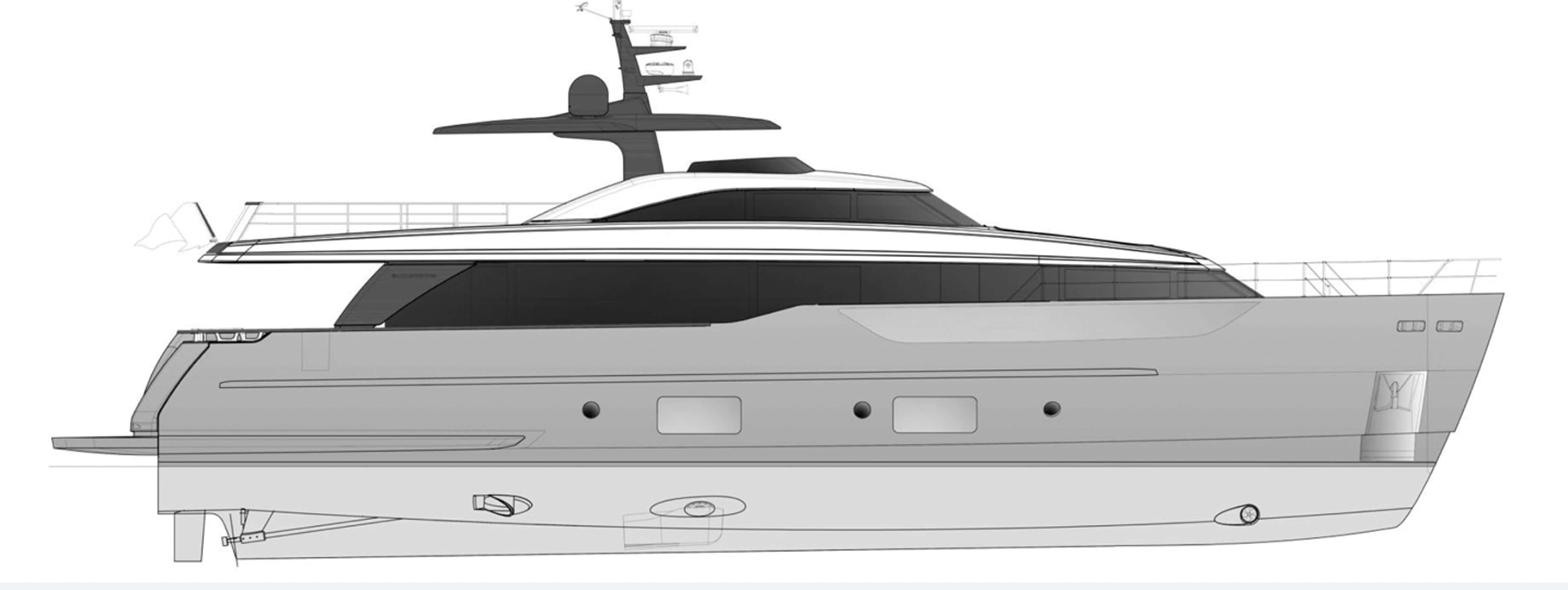
High Bow. A distinguishing feature of the SD90 is its high bow. This serves three primary purposes:
- It makes the boat more seaworthy in challenging offshore conditions.
- It provides more interior volume forward, allowing the main-deck master, the sunken head for the master, and crew quarters below.
- It produces a recognizable signature profile that is carried out on the other three Sanlorenzo SD models that go up to 132’.
No Cheating Allowed
Even though a 70’ or 80’ vessel sounds big – and it is – designers still must “cheat” on details to cram in all of the accommodations wanted. (This is another reason why we like 90=footers – they don’t need so many “cheats.”) Typically, the areas trimmed back are:
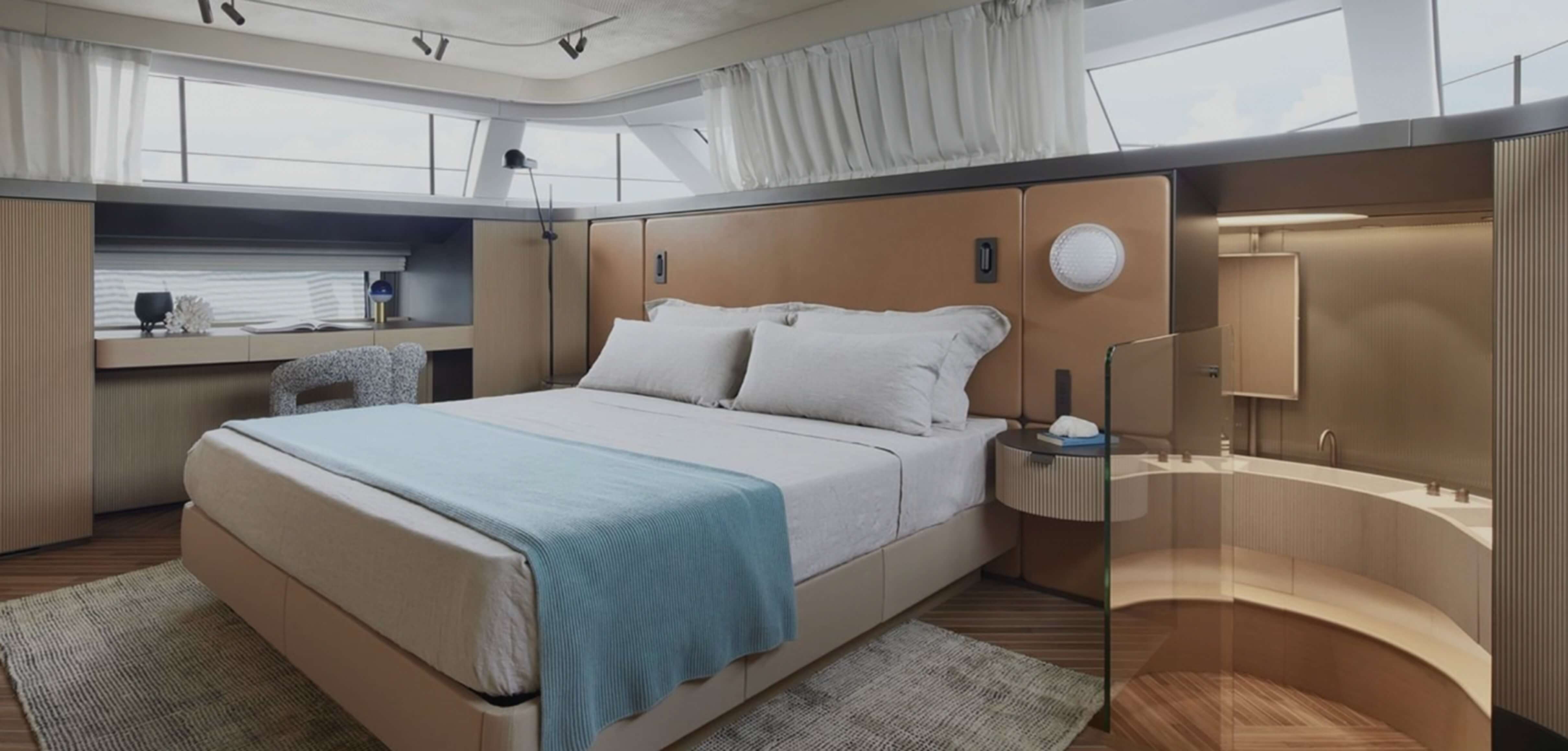
- Width and length of guest beds. Builders typically call their beds king size or queen size when, in reality, they are not 60” x 80” for a queen, or 75” x 80” for a king. That’s why BoatTEST gives the measurements of all beds in its motoryacht reviews. The 90’ Sanlorenzo meets the criteria to call its guest stateroom beds queens and the master bed a true king.
- Width of hanging lockers for all staterooms. This important aspect of yachts, even large ones, is often given short shrift. On the Sanlorenzo, more of them appear double wide, than single. And because the boat is custom, you can have cedar bulkheads in the closets, something that many builders are now moving away from.
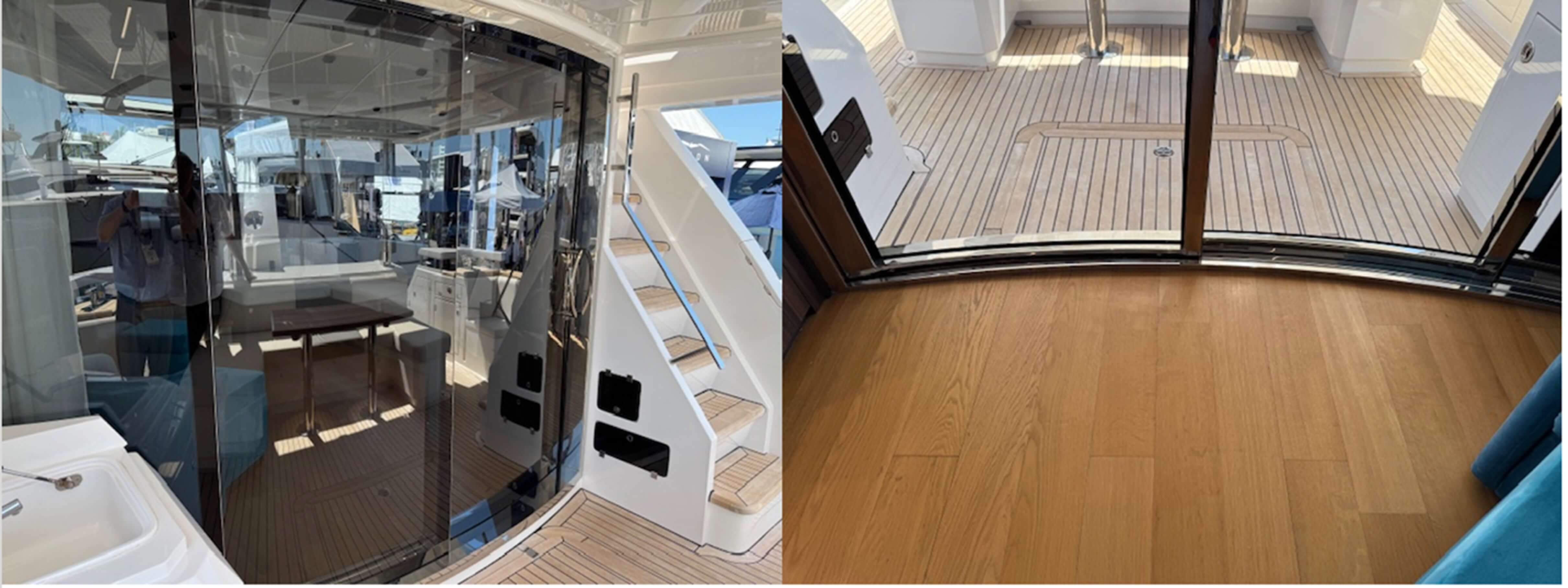
- The width and reach of a staircase. This is an important safety detail. The International Residential Code (IRC) suggests that household stair risers be 7-3/4” high, and the variation from step to step not be more than ¾” because that is within the tolerance of normal “muscle memory.” Most steps in large motoryachts are 8” to 9” and the top and bottom steps should aways be the same as the rest, otherwise they are a trip hazard.
The reason that boats – even 90-footers – don’t strictly conform to the IRC standards is because space is tight, so typically the risers are 9”. ABYC standards limit risers to 12” so builders can do pretty much whatever they want, so this “cheating’ is not against marine specifications, but rather what people are used to in their homes.
But here is a place where some designers “cheat” by making the top or bottom riser a bit higher, putting that out of step with the other risers, and thereby causing a trip hazard.
- Shrink the aft deck, galley and heads, make side decks narrow, etc. You get the idea. There are dozens of places that a designer can “cheat’ to make the yacht seem larger, or to squeeze in more “living” area, but make sure that these “cheats” don’t reduce safety or reduce functionality that you care about.
Americans may find the galley “small” on the SD90 on the small side, but it isn’t by European standards. The same can be said of the crew quarters, but again, Europeans don’t typically lavish space on the crew. In both cases, those are choices made by the buyers, not the boat yard. Because Sanlorenzo builds custom and semi-custom boats, buyers can have galleys, crew quarters and nearly anything else as large or small as they wish.
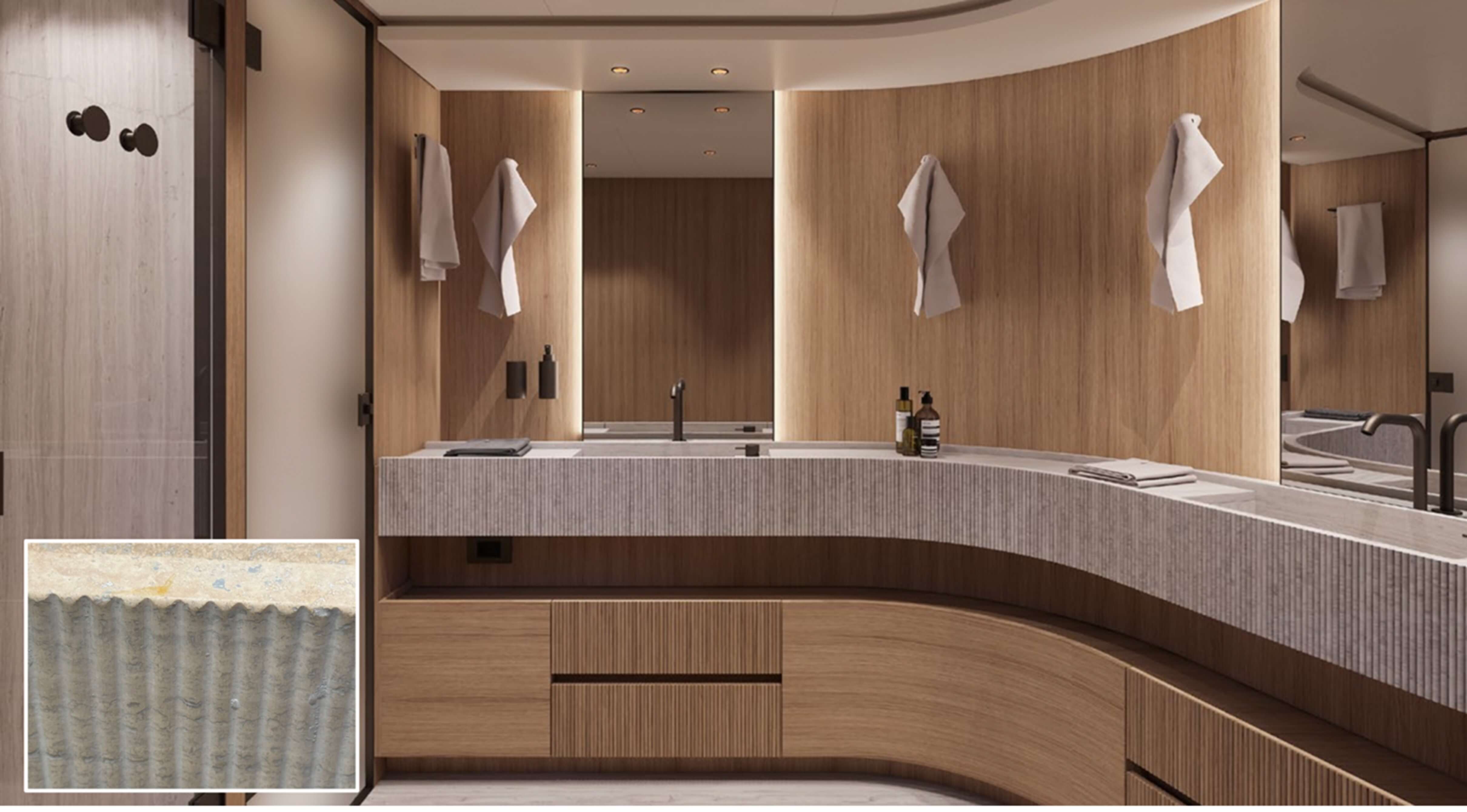
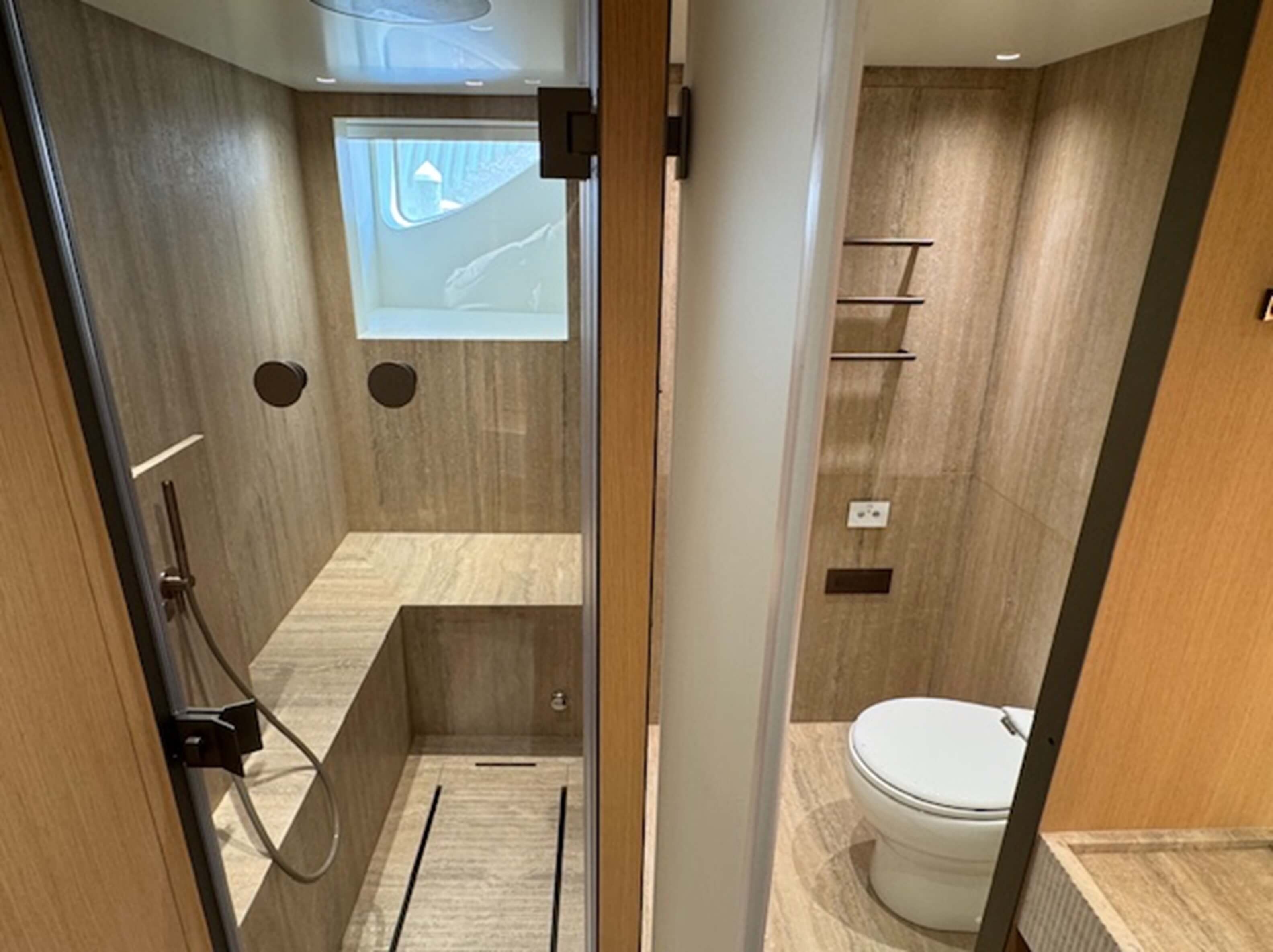
Smart Design to Gain Space
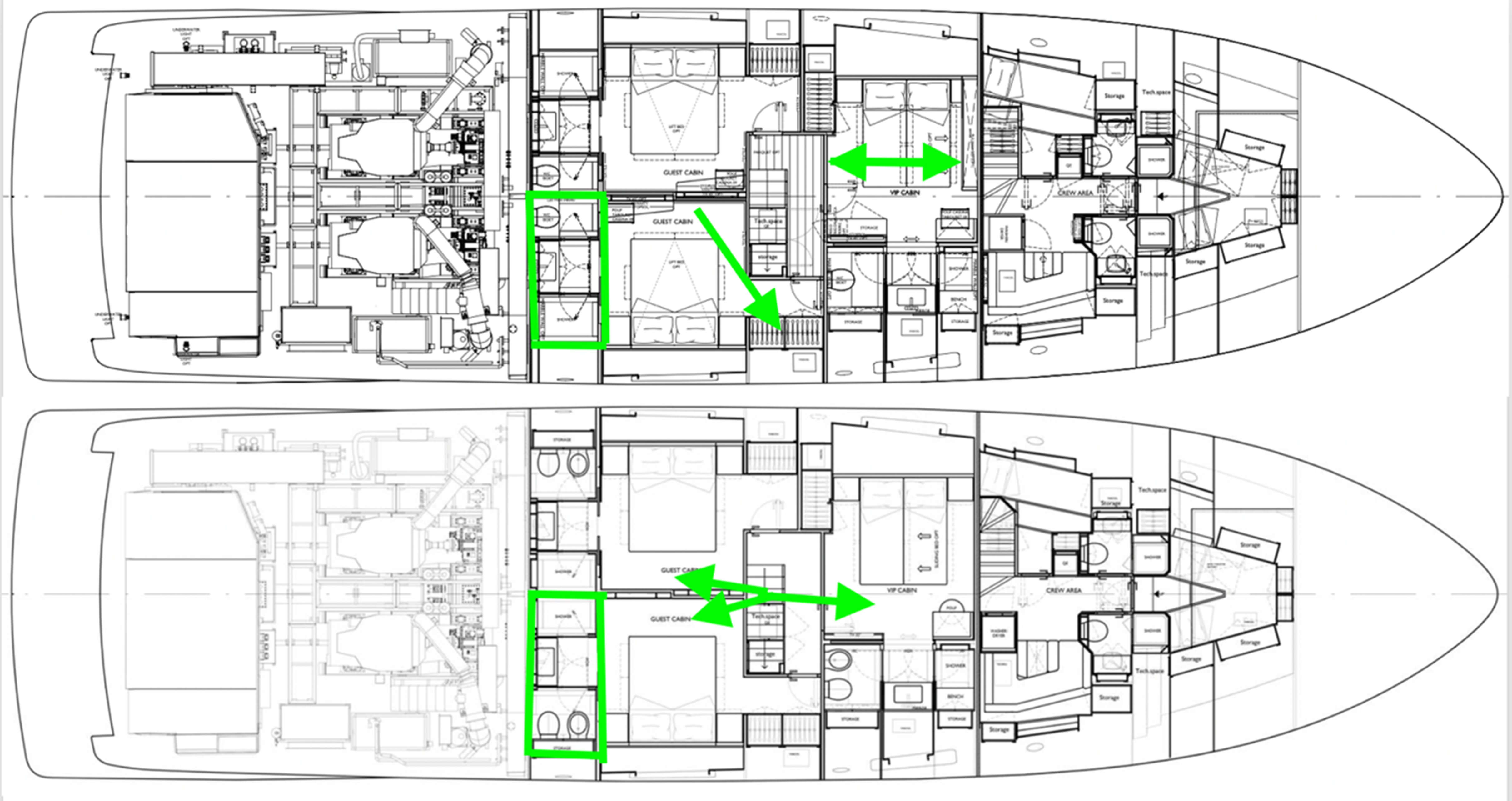
There are several places that Sanlorenzo has purposely designed in “more space” without reducing safety or functionality -- and have actually made the boat better by doing so. There are two good examples of this:
- The decision to power with a twin V8 MAN V-Drive diesels, instead of V12 MAN straight shaft power, saves space and weight. This checks several boxes, in addition to providing more living area. By deciding that SD90 won’t be a 20-knot+ vessel, but rather have a more reasonable 8 to 17 knot cruising speed range, the builder has made a conscious decision not to over-power the boat with a longer engine block required for higher horsepower and higher speeds that will rarely be used.
The smaller V8, combined with the V-Drive ZF transmission saves longitudinal space permitting both more living area forward, but also a larger tender garage. There is a surprising about of space in the SD90 engine room and it’s easy to get all around the boat. To reach the through hulls and sea strainers, one need only lift up the diamond-pattern aluminum deck plates.
- By raising the foredeck nearly 4’ above the main deck level, Sanlorenzo can place the master head forward and down and still nestle-in crew quarters. By making this area high vertically, it has effectively created more usable horizontal space. This design has not only made the boat more seaworthy, but also maximizes the size of the en suite Master Stateroom.
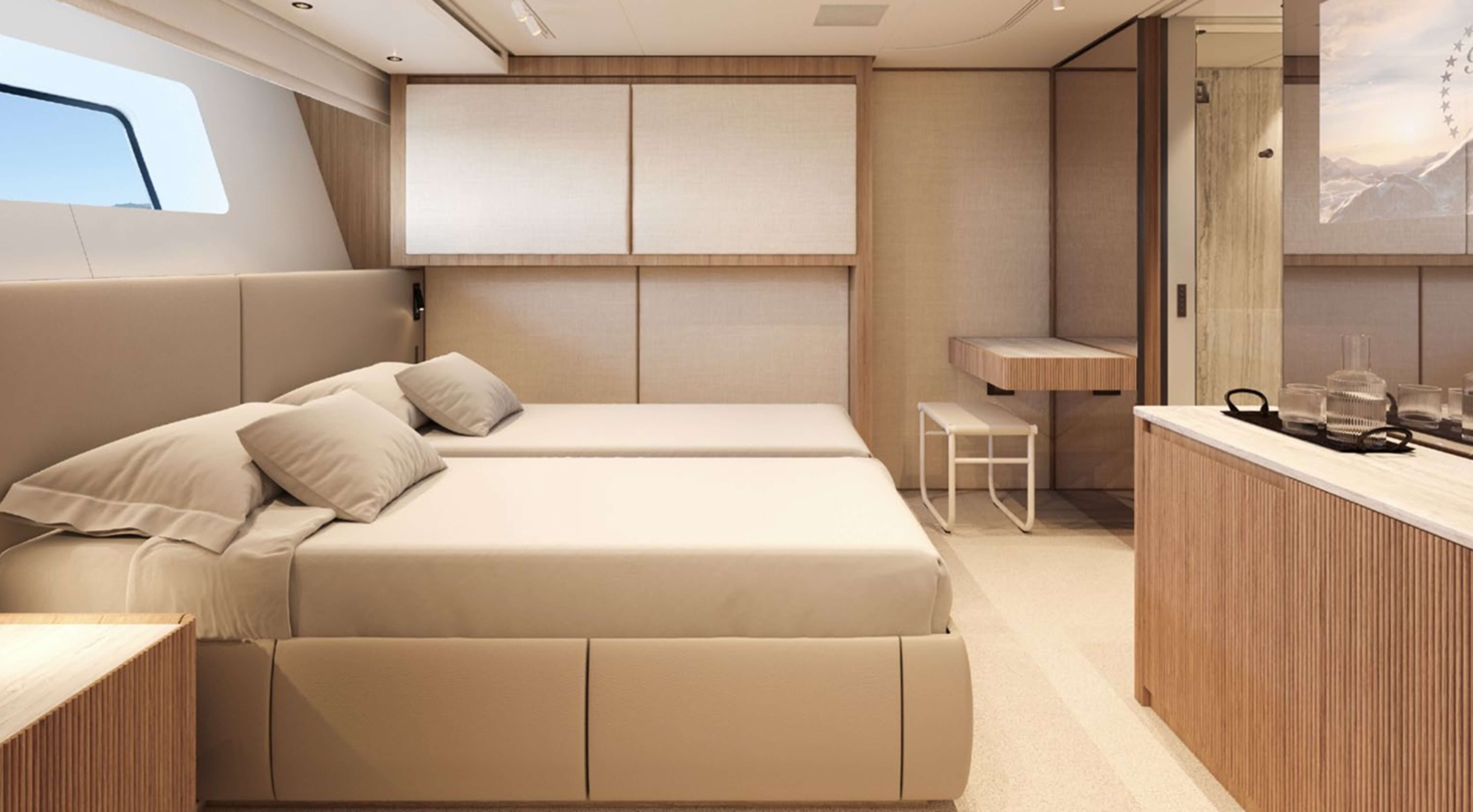
Other Advantages of a 90-Footer
A 90’ yacht is small enough to fit into most premium marinas. Dock space is at a premium, worldwide, and the larger the yacht, the harder it is to find space. A beam under 24’ fits into most slips for large yachts in both the U.S. and the Med. Also, many people have waterfront homes with 100’ of waterfront on canals, and their pride and joy can be a handy conversation-starter.
A smaller the yacht the lower the annual operating costs. The industry rule of thumb is annual operating costs should be estimated at 10% of the cost of the boat. But they can be lower percentage with careful planning a budget. Being able to moor the yacht in back of a waterfront home can save a lot of money. Eight-cylinder engines are cheaper to buy, maintain and overhaul, than are V12s, and they have fewer parts to go wrong.
The “Luxury-to-Satisfaction-Yield-Curve” of a well-designed yacht hits its apogee at about 90” to 100’, in our opinion. We think that the luxury and thrill of being on a magnificent yacht tops out where joy meets a rational investment. In fact, we think that the fun of going yachting diminishes as the yacht grows over 100’ because the vessel simply is more like a small cruise ship. Moorage and water depth restricts super yachts more than most people realize.
During the summer, every other day there is a superyacht anchored in the east passage of Narragansett Bay, rather than tied up at a dock because there’s no space, or the boat draws too much water. These yacht anchor where to visiting cruise ship anchor, and their guest must take the tender is, just like the folks on the cruise ship. Super large yachts also become more like running a business than “yachting.”
Disadvantages of a 90-Footer
Let us add that to keep up appearances, the size of one’s purse might require a larger yacht. In that case, a 90-footer just won’t do. What would we think of David Geffin (Rising Sun, 453’), Jeff Bezos (Koru, 417’), Steven Spielberg (Seven Seas, 358’) if they pulled up at a dock with a boat smaller than the one owned by the local automobile dealer? (Herb Chambers, a Boston Car Dealer owns Vibrant Curiosity, 280’), and John Stallupi, a long island car dealer (Quantum of Solace, 238’), or his car-dealer buddy, John Rosatti (Victory, 213’).
More 90’ Considerations
A 90-footer has triple the interior volume of a 60-footer, and a 120-footer has only about twice the volume of a 90-footer, but much of those extra cubic feet are in places not used by the guests, so the functionality does not double.
Maximizing Range. The SD90’s ability to carry 3,434 gal. – the greatest of any production fiberglass 90’ yacht on the market – tells us she means business and is not intended as a marina-to-beach dayboat. With a 10% reserve this vessel can travel transatlantic, but not Trans-Pacific without addition fuel. At 10 knots, we estimate the boat will burn about 20 gph, giving her 1,500+ nm range.
When it comes to resale, a 90-footer will appeal to a greater audience than a larger boat, and is therefore more likely to sell faster, and at an amount closer to the asking price.
Plan Your Exit Before You Buy
No one buys a boat to make money, or even to breakeven in inflated dollars. Rather, those of us who choose to spend their time and treasure on the world’s most expensive activity, are buying an experience on this earth that few people are lucky enough to enjoy.
A day will come in every boat-owner’s life when it’s time to move up, move down, or move on. When that day comes several things will dictate how much you will be able to sell the boat for. That’s why you must consider your exit even before you write the check for your new dream boat. Of course, the condition of the boat is the most important thing, and that means her topsides must be glossy, her interiors fresh and new looking, her engine hours not to high, unless there has been a major overhaul.
Everything must be in good working order, because the boat will be surveyed by an accredited professional who will write a report noting deficiencies, which will then be the buyer’s negotiating levers to get a lower price. That is why you must stay on top of maintenance while you own the boat and keep all maintenance receipts. One-owner boats with meticulous maintenance will make your boat as more desirable than poorly maintained sisterships.
Thinking About the Next Owner
Planning you exit strategy also means thinking about what the next owner will want. Make sure you buy a boat that has an enduring style and is not flavor of the month. Even though the builder will let you customize the boat to a great degree, that doesn’t mean it is smart to go too far off the rails – unless you are prepared to pay the price at resale time. Remember, the builder knows better than you do what will sell.
Unique, or unusual features will help distinguish a vessel come resale time – but leave that up to the builder. Every one of the Magnificent 7 90’ motoryacht brands on the market has carefully developed distinguishing features, that the builders will set if apart – without making it an outcast.
We can think of megayachts that had owners hell-bent on personalizing a multi-million dollar to fit their unique personality, that at resale time, no one would touch. You’ve seen them: boats that are always in the classified listings, and which return to boat show after boat show. One broker after another will fall on their swords until the owner lowers his price drastically, and a buyer who doesn’t know any better comes along.
What Does Sanlorenzo SD90 Cost?
In case you haven’t heard, there is an unusual tariff war going on right now. The SD90 we inspected is not for sale and is only available for demonstration. Because the current tariff situation is unprecedented, there is no playbook for builders and dealers to refer to. Builders, dealers and customers, too, are all waiting for the dust to settle on the tariff issues. So, prices can’t be quoted with any assuredness.
However, boats in this category, size range and displacement were priced in the $10 to $12 million range before “Liberation Day.” We would suggest that those seriously interested in price look at what boats in this size range are selling for, to get a rough idea. Also, pay attention to yacht’s dry displacement. That will give you an idea of the relative amount of material in one boat vis-à-vis another. All builders use essentially the same materials and equipment. So, the big apples-to-apples variables are:
- Labor cost,
- Corporate debt or lack of it,
- Marketing costs,
- Design, décor and engineering costs,
- Corporate G&A charge,
- Sales commission.
Then there is the matter of the value of the U.S. dollar. Be aware that the U.S. dollar has devalued 15% as of this writing with compared with the Euro, since January 1, 2025. Five of the eight major builders of 90’ fiberglass megayachts are European, one comes from Turkey, and the other two are Asian.
For more information about the Sanlorenzo SD90, please contact the dealer below--
Tim Kohl
Yacht Sales-Project Management-
New Boat Construction
J Boats - Extensive Brokerage
203.233.9709 - [email protected]
Taityacht.com
Newport Rhode Island Office
About the Author

Author Jeff Hammond has been in the boating business since 1968 and has traveled all over the world reporting on boats of all types and sizes. In 2004 he built a 90’ motoryacht and was deeply involved in specifying all equipment and the layout of nearly every aspect of the boat. That experience, plus a lifetime of owning vessels of all sizes, has given him his insight into motoryachts from the perspective of a consumer and owner/operator. Both daughters are involved with BoatTEST. [email protected]