Access More Boat Tests
Already have an account? Login
YOT Power Catamarans 41 (2026-)
2 x 300-hp Mercury V8

Brief Summary
If you can recall your high school French, the above phrase in the title of this report, and often repeated in English, is used to express a cheerful enjoyment of life, a celebration of spirit, and a general feeling of happiness. And that is just what the France-based Catana Group, with more than 40 years of boat design and construction in its wake, has built into its YOT 41, a power catamaran with the kind of features making it a comfortable, stable platform with roominess for its owners and guests a priority.
Test Results
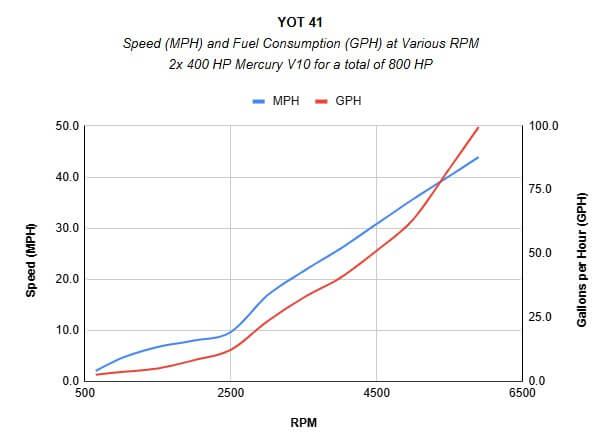
| RPM | MPH | Knots | GPH | MPG | NMPG | SM | NM | dBa |
|---|---|---|---|---|---|---|---|---|
| 650 | 2.1 | 1.8 | 2.6 | 0.8 | 0.7 | 318.6 | 276.9 | 62 |
| 1000 | 4.6 | 4 | 3.7 | 1.2 | 1.1 | 496.9 | 431.8 | 63 |
| 1500 | 6.8 | 5.9 | 5.1 | 1.3 | 1.2 | 534.8 | 464.8 | 65 |
| 2000 | 8 | 7 | 8.4 | 1 | 0.8 | 387.2 | 336.4 | 67 |
| 2500 | 9.7 | 8.4 | 12.4 | 0.8 | 0.7 | 315.8 | 274.4 | 69 |
| 3000 | 16.8 | 14.6 | 23.5 | 0.7 | 0.6 | 289.5 | 251.6 | 74 |
| 3500 | 21.6 | 18.8 | 32.9 | 0.7 | 0.6 | 265.7 | 230.9 | 75 |
| 4000 | 26 | 22.6 | 40.5 | 0.6 | 0.6 | 258.9 | 225 | 76 |
| 4500 | 30.8 | 26.8 | 51.2 | 0.6 | 0.5 | 243.3 | 211.5 | 79 |
| 5000 | 35.7 | 31 | 63.4 | 0.6 | 0.5 | 227.4 | 197.6 | 80 |
| 5500 | 40.2 | 34.9 | 83.4 | 0.5 | 0.4 | 194.9 | 169.4 | 83 |
| 5900 | 43.9 | 38.1 | 99.5 | 0.4 | 0.4 | 178.3 | 154.9 | 86 |
Specifications
| Length Overall |
41' 2" 12.57 m |
|---|---|
| Beam |
14' 7" 4.49 m |
| Draft |
3' 7" 1.13 m |
| Person Capacity | 12 |
| Fuel Capacity |
449 gal 1,700 L |
| Water Capacity |
105.7 gal 400 L |
Acceleration Times & Conditions
| 0 to 30 | 11.9 sec |
|---|---|
| Load | Persons & Gear: 555 lbs (252 kg); Fuel: 2,160 gal (980 kg) |
| Climate | 78°; 68% humidity; wind: 5-10; wave: .5'; salt |
Engine Options
| Tested Engine |
2 x 400-hp Mercury V10 |
|---|---|
| Std. Power |
2 x 300-hp Mercury V8 |
| Opt. Power |
2 x 400-hp Mercury V10 2 x 600-hp Mercury V12 |
YOT 41
Nautical Joie de Vivre
By Capt. Ken Kreisler
Major Features
• Full beam hard top
• Full height front windshield
• 2 stateroom w/ensuite heads and private companionway access
• Starboard and portside electric terraces
• 2 extendable telescoping cockpit tables
• 4 modular cockpit seating benches
• 4 forward facing pilot seats with lifting bolster
• Swim ladder w/pop up handles
• 4 stainless aft access gates
• 4 Clarion speakers
• Fixed aft platform
• Electric windlass w/chain
• 7” Mercury Vesselview display
• 10 quick release fender system
• 6 pop up cleats
Notable Options
• 2 x V10-400 HP, or 2 x 12V 600-hp Mercury outboards, w/JPO joystick, autopilot, Skyhook, Auto trim, moving prop alert
• Premium JL Audio system (6 loudspeakers, 2 Subwoofers)
• Zipwake Interceptors
• Luxe Maglia Artic upholstery with custom quilting
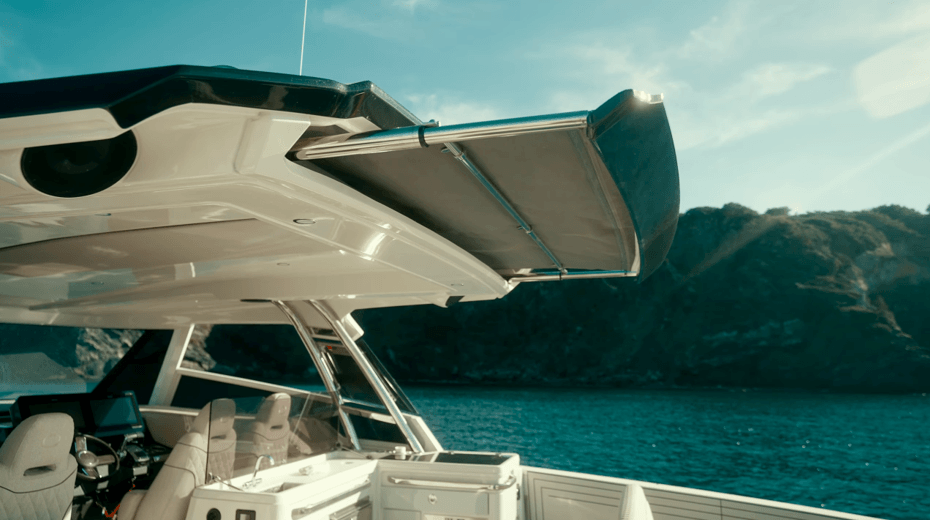
• Aft electrical Sureshade awning in Hard-top
• Bow sun pad sun shade
• Aft electric up/down platform
• Removable side swim ladder
• Helm station enclosure
• 900-W Solbian solar panels
• LED searchlight
• Underwater lights
• Navigation Pack includes 2 x 16” MFD Simrad NSX (in place of 7" screen), Simrad VHF and AIS, transducer, and Simrad 20 nm radar
• 6 kVA 220 V generator
• Air conditioning 220V 2 x 6000BTU w/Cockpit air conditioning 1 x 13000BTU
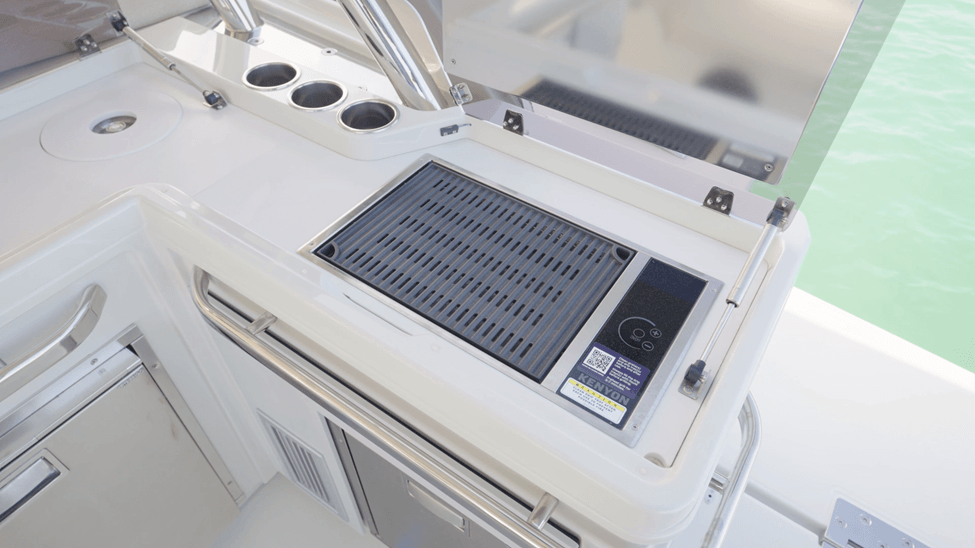
• 2 exterior drawer refrigerators, ice maker, Kenyon electric grill
Vessel Inspection
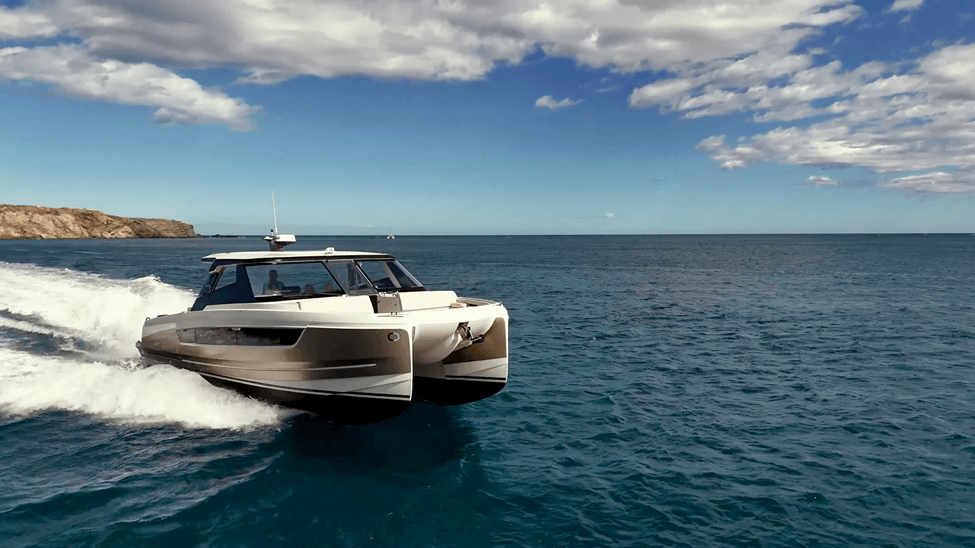
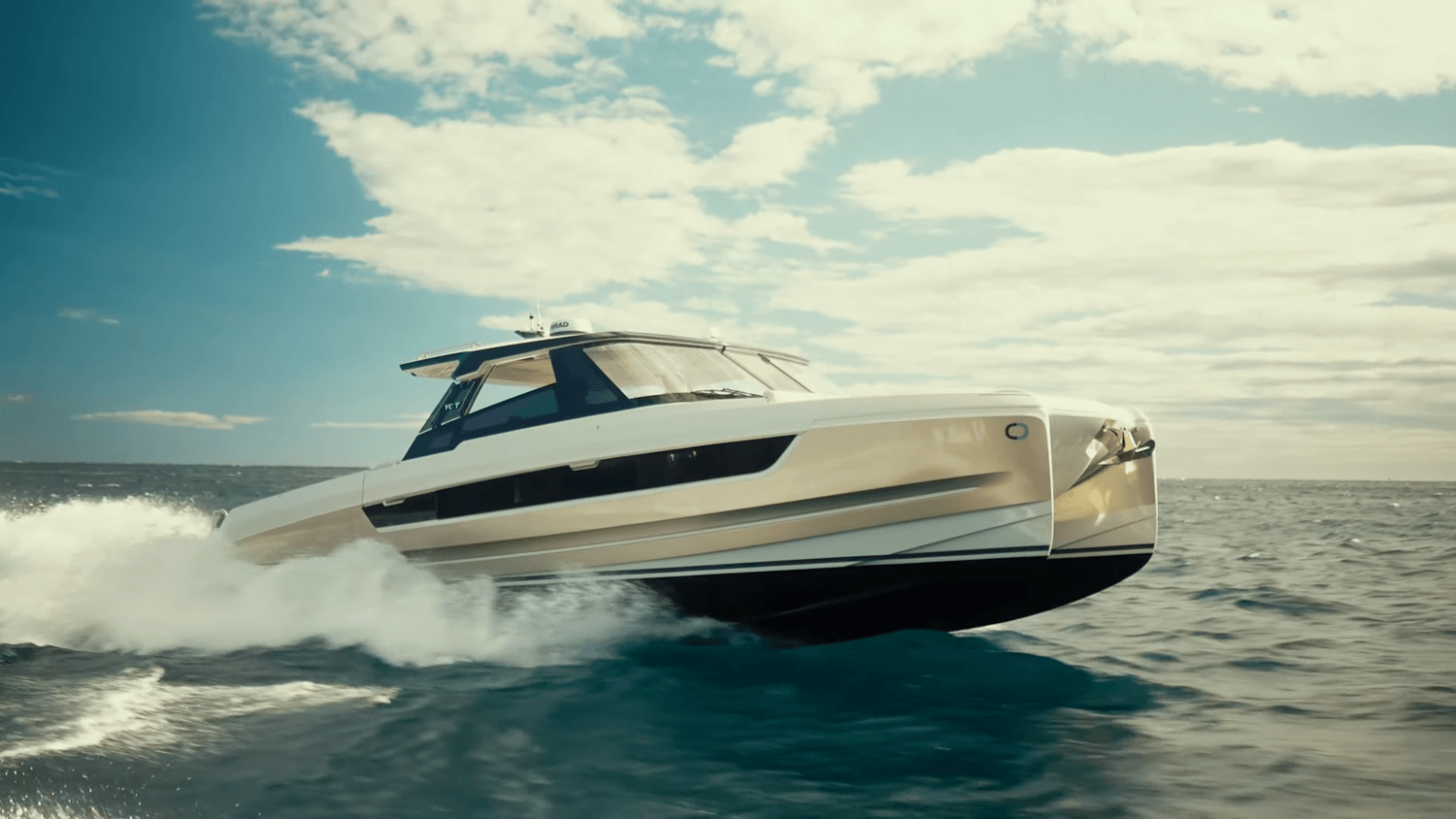
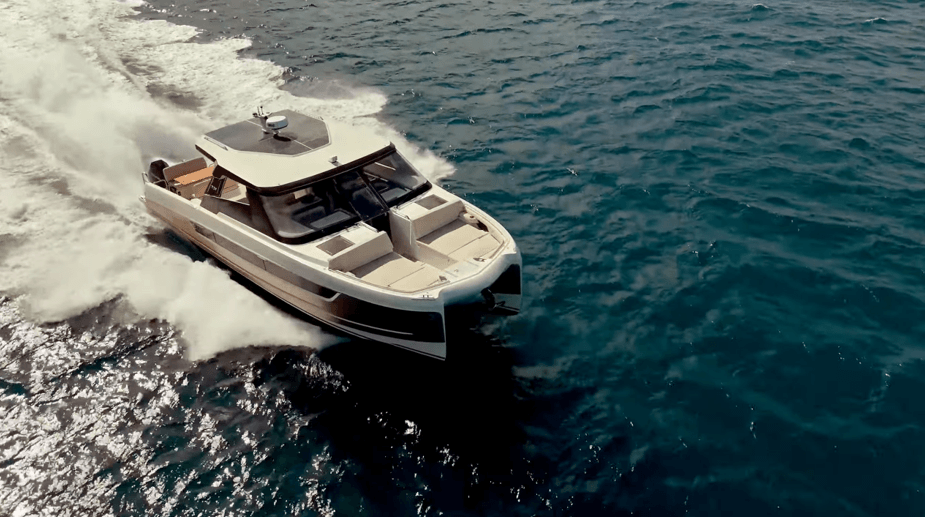
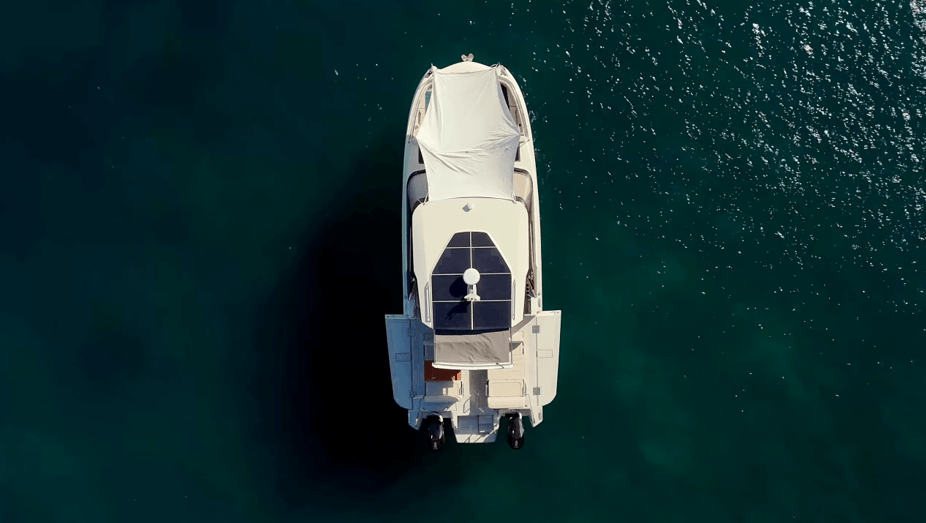
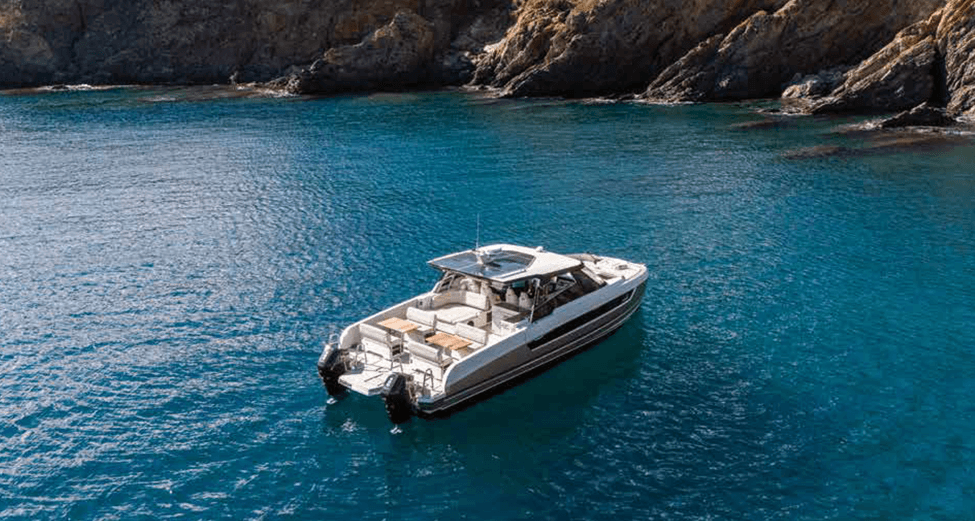
With a 41’2” LOA, and a 14’7” beam carried fully forward, the YOT 41 power catamaran offers a stable, spacious flatform featuring convertible seating and dining areas, numerous gathering and entertaining spaces, as well as roomy quarters and accommodations below decks for long weekends and extended time away. In addition, her modern exterior styling presents head turning good looks, separating her profile from many others.
Bow
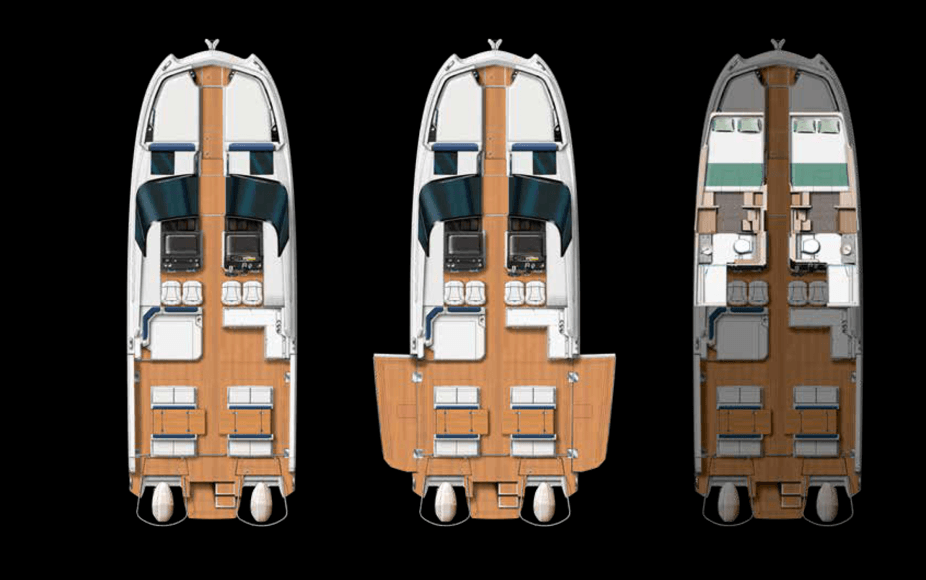
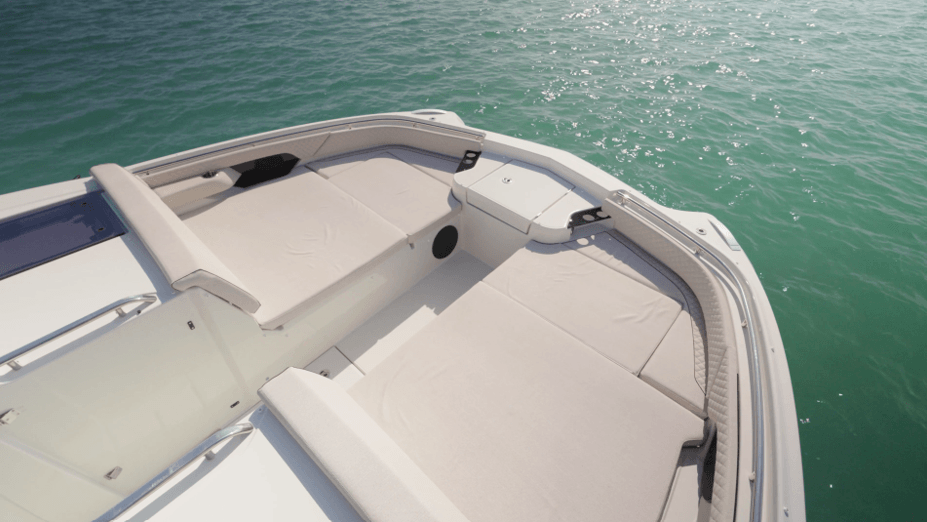
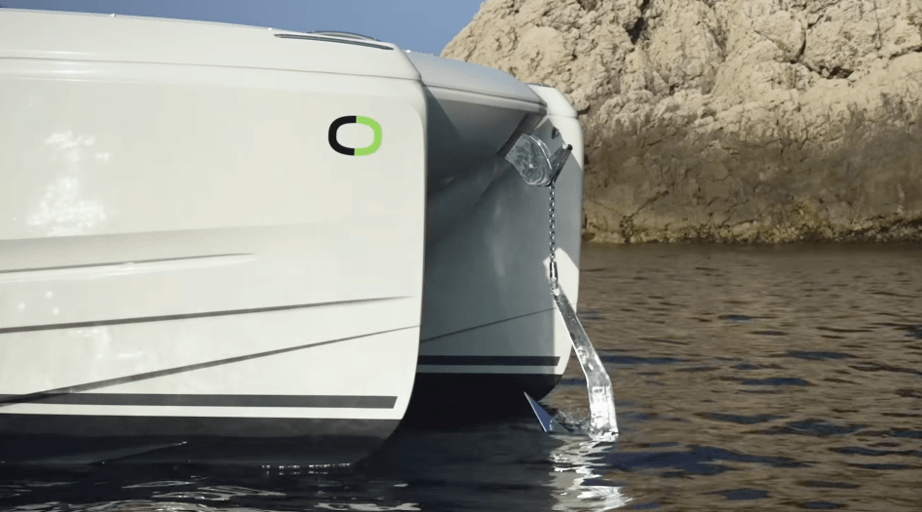
As with all areas aboard a catamaran hull, the bow space greatly benefits from the beam being carried fully forward.
Helm
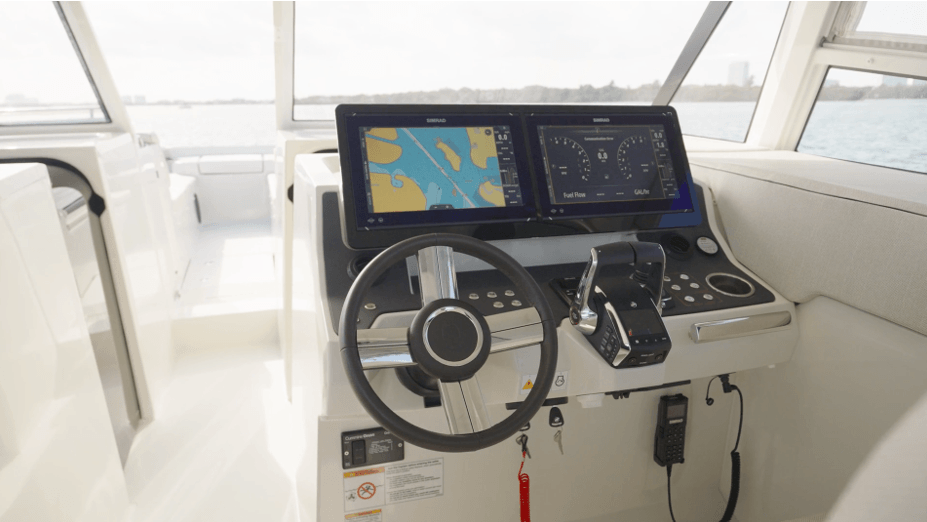
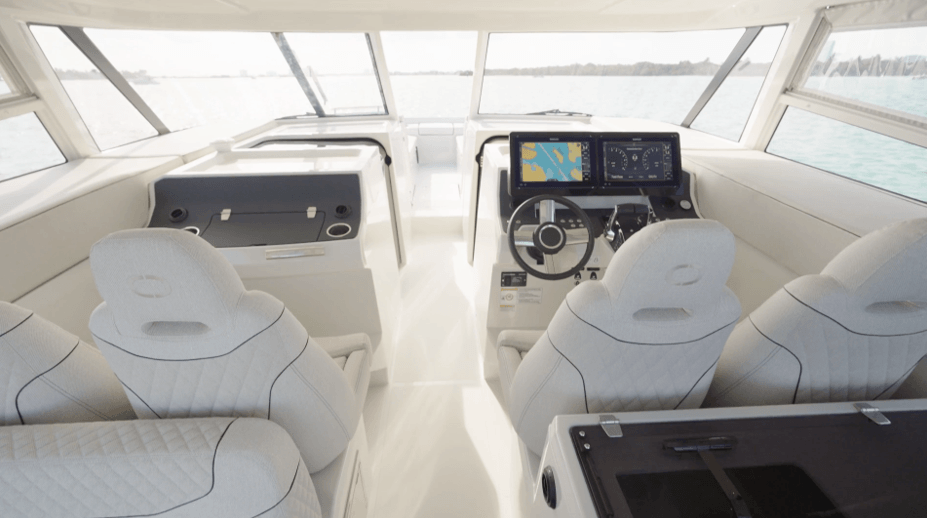
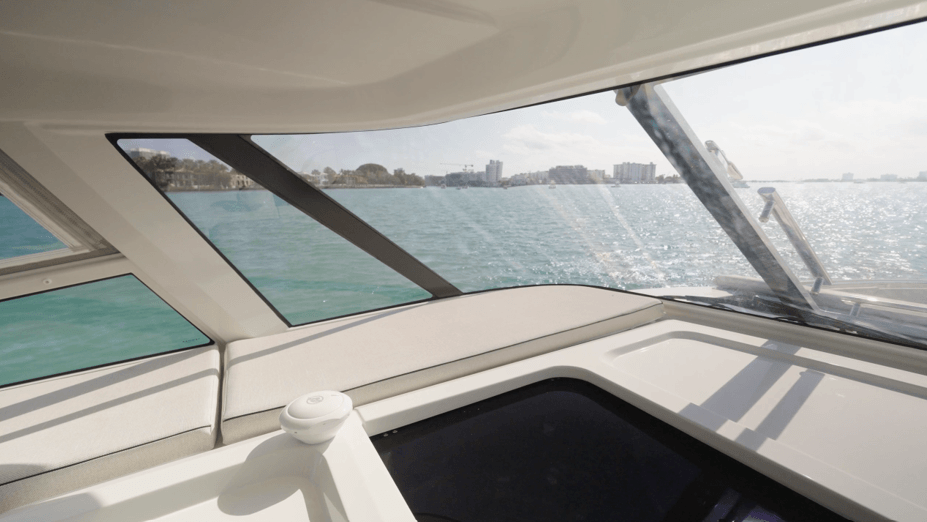
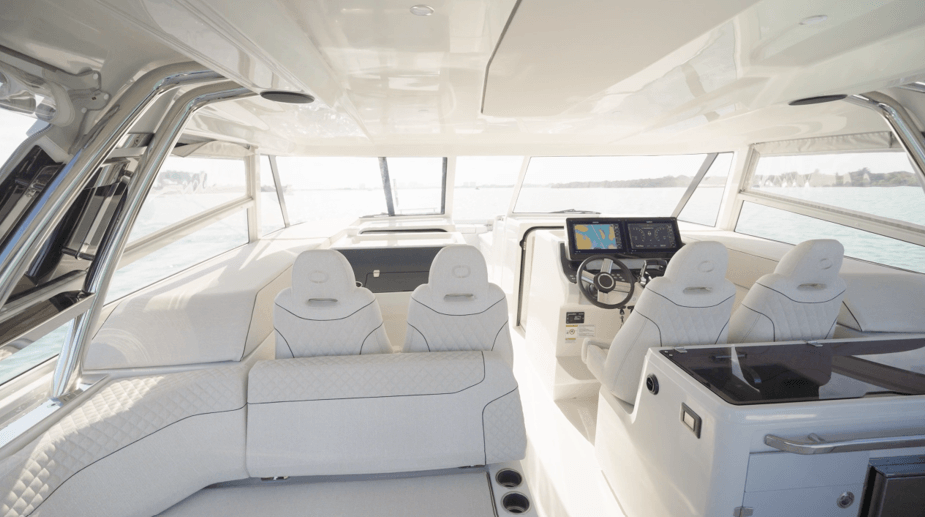
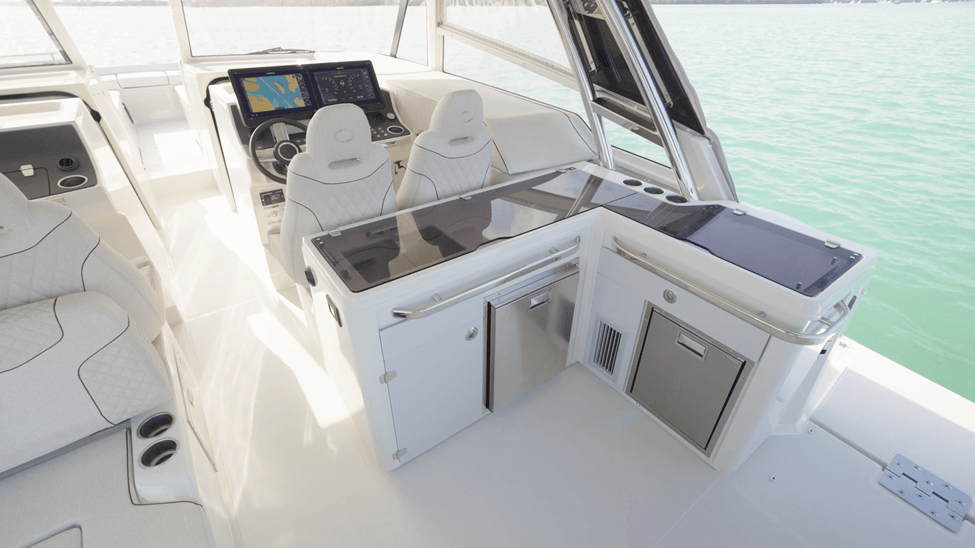
Wide windows all around, with 4 x 2 seats across on each side, makes for optimal viewing while underway and provides excellent sightlines into the seaway for the starboard driver.
Cabin
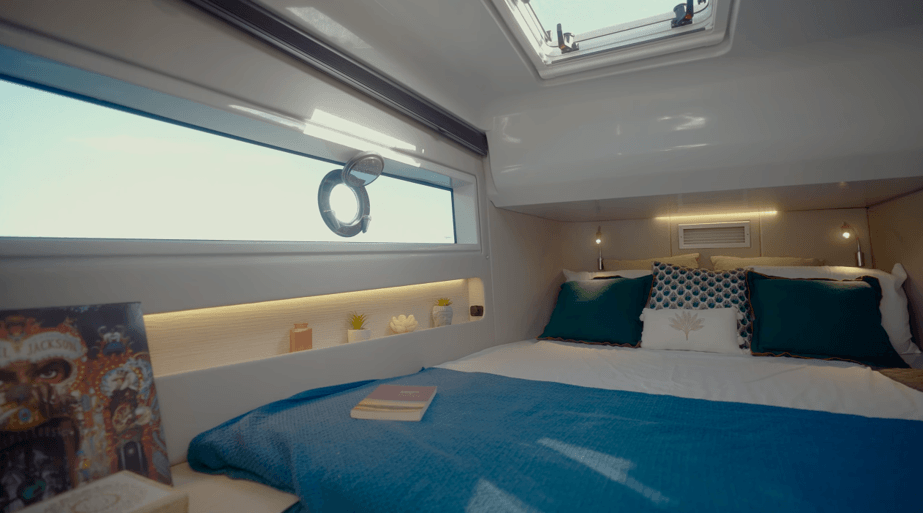
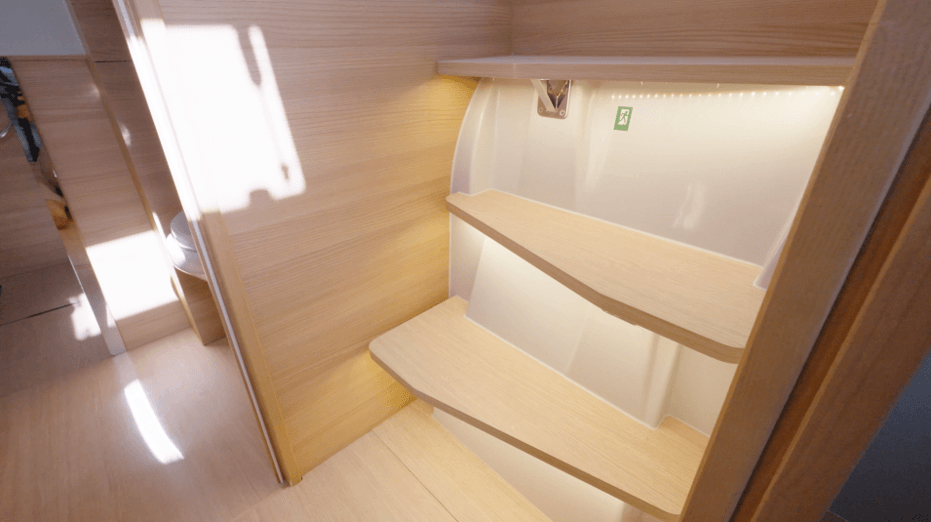
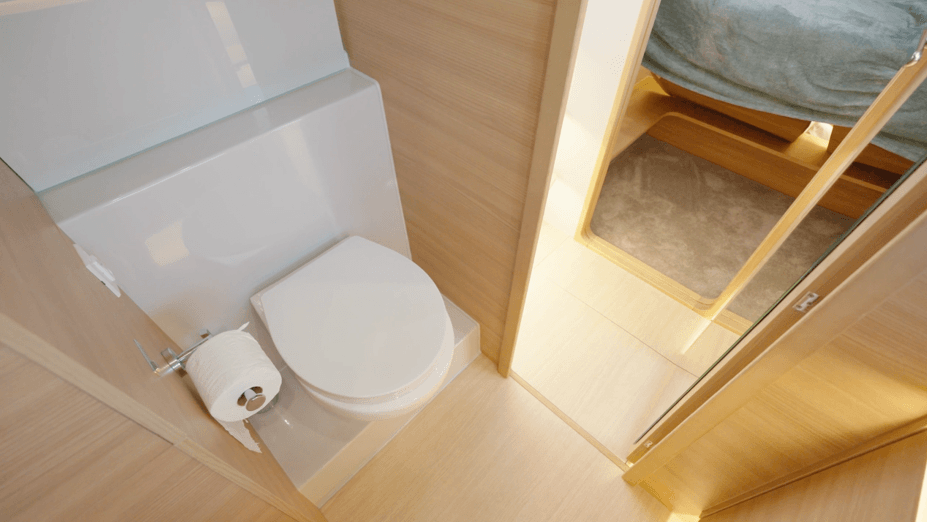
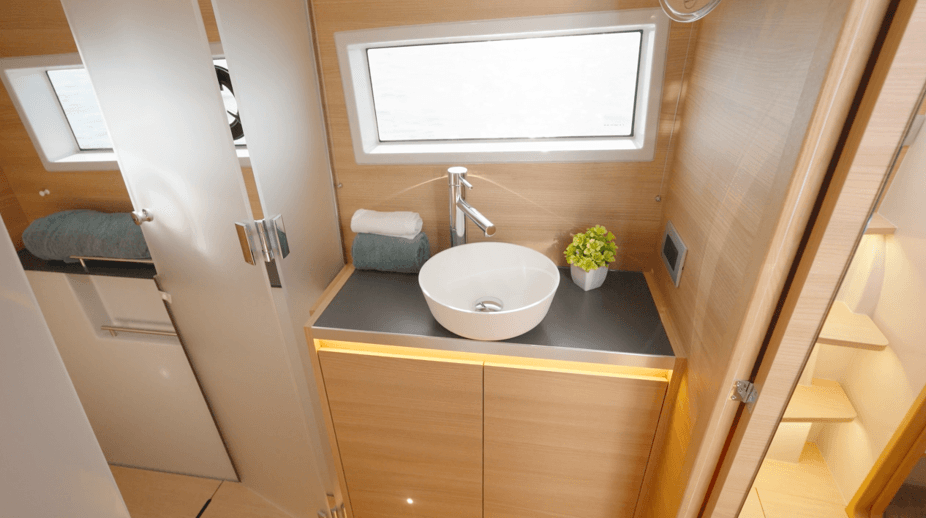
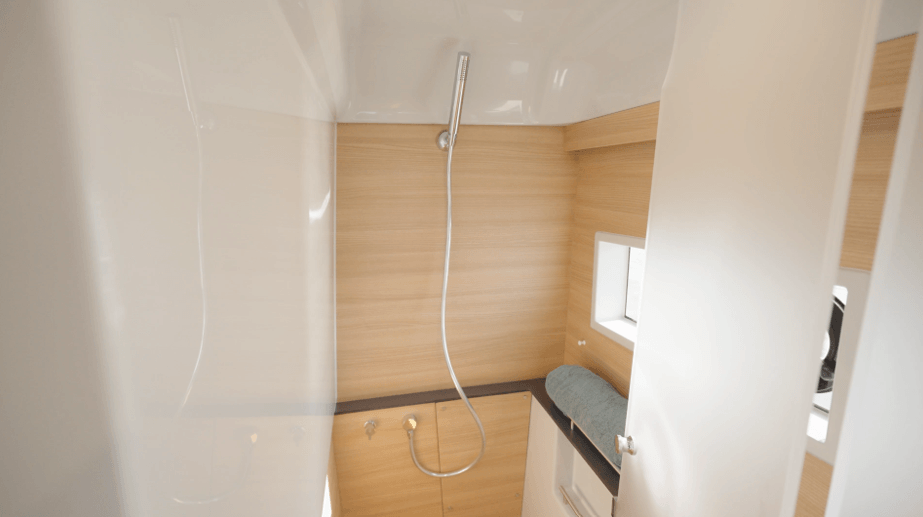
Utilizing all the beam carried forward, the two stateroom, two head layout offers owners and guests comfortable and spacious accommodations.
Cockpit and Aft
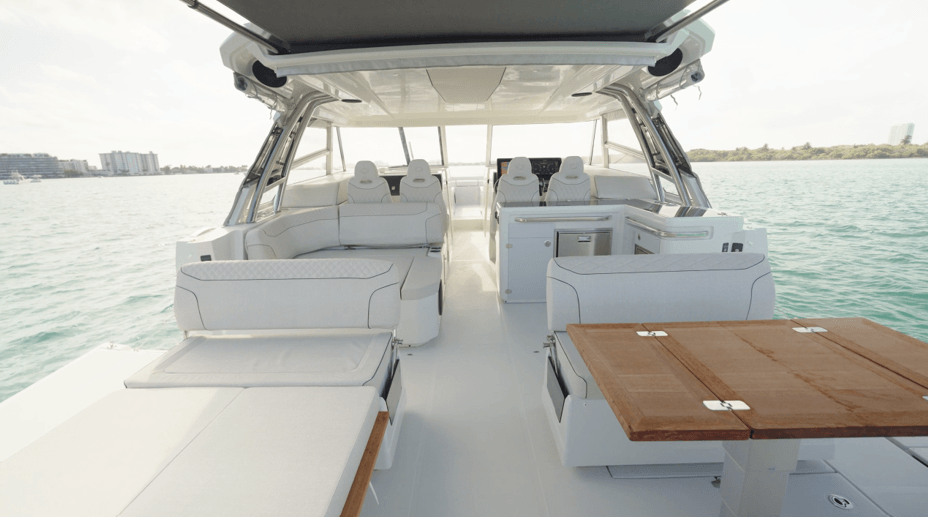
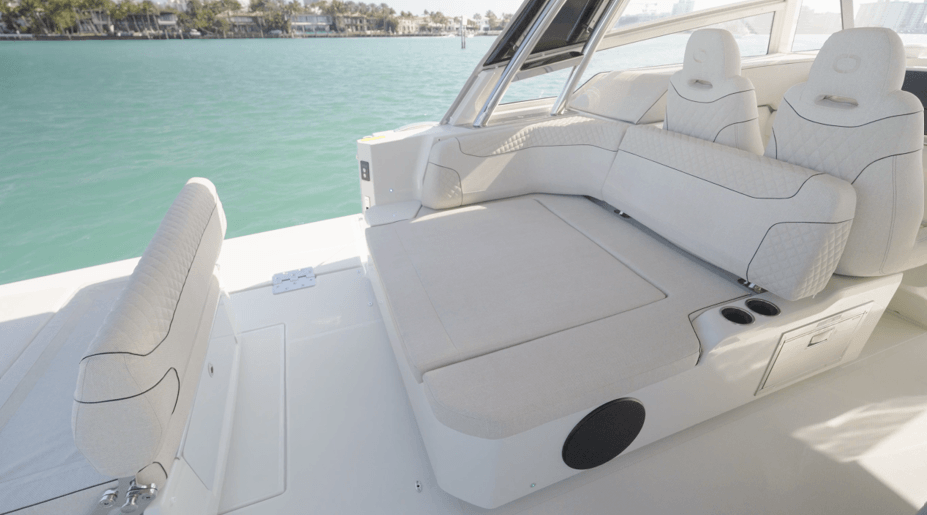
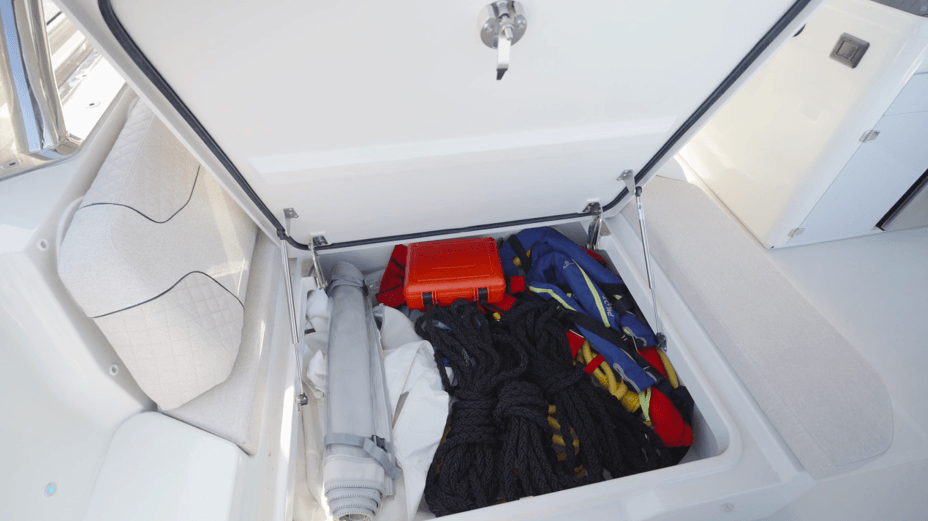
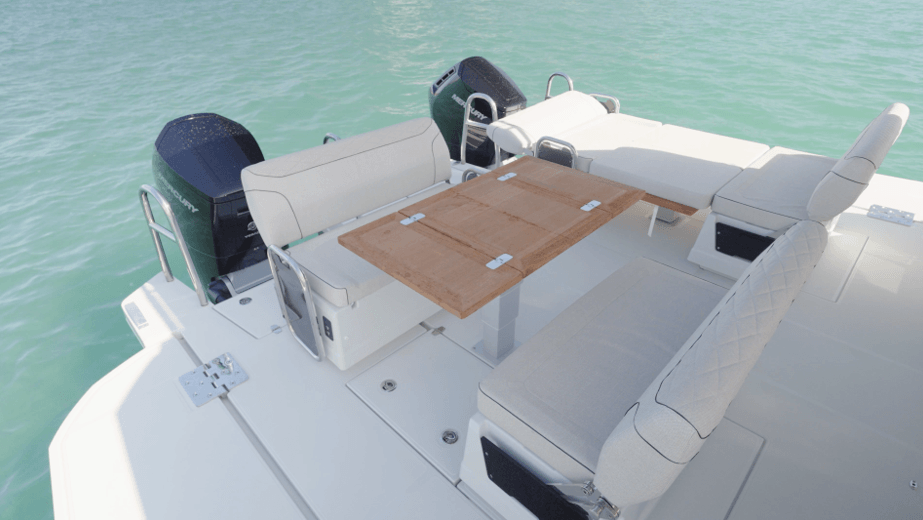
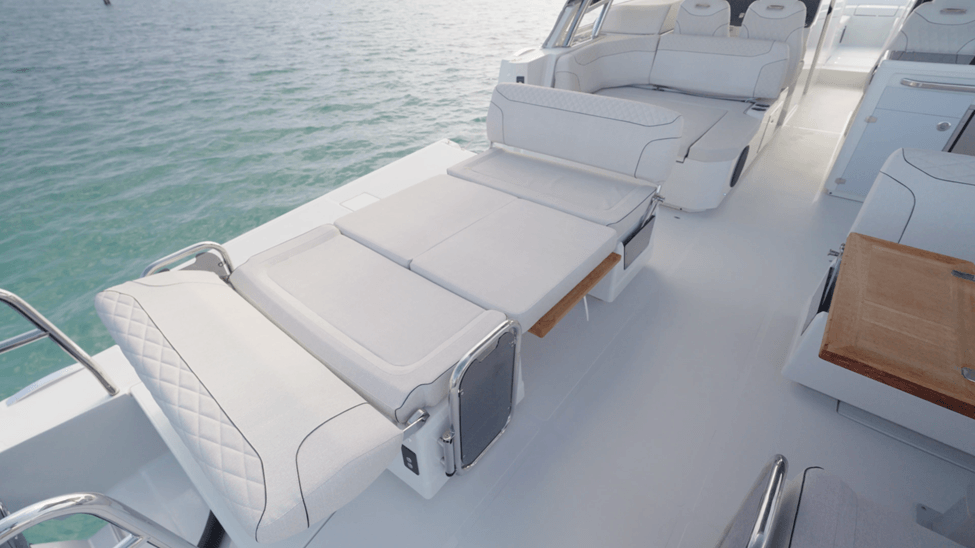
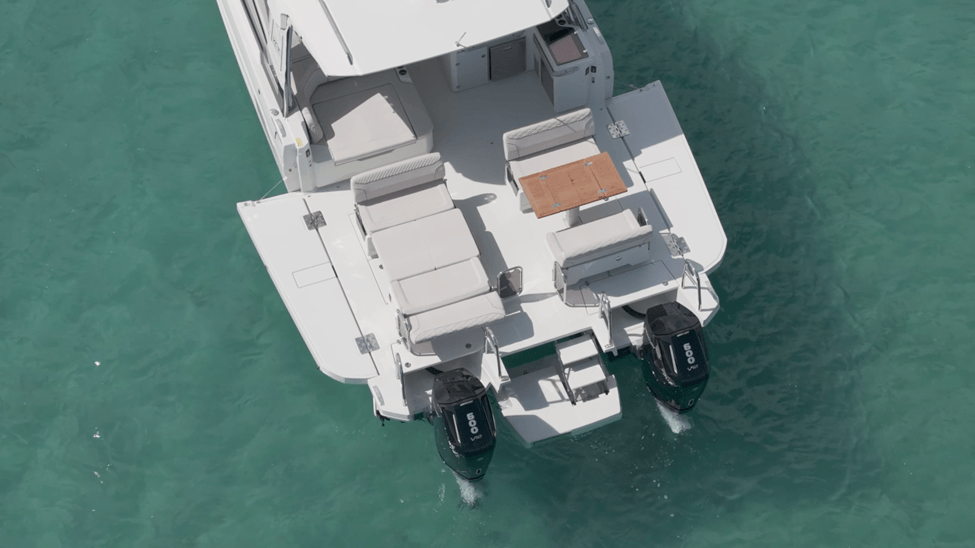
The cockpit area, combined with the aft section, easily provides enough gathering and entertaining space for 12 in several dedicated and convertible seating and dining zones.
A Word About Performance
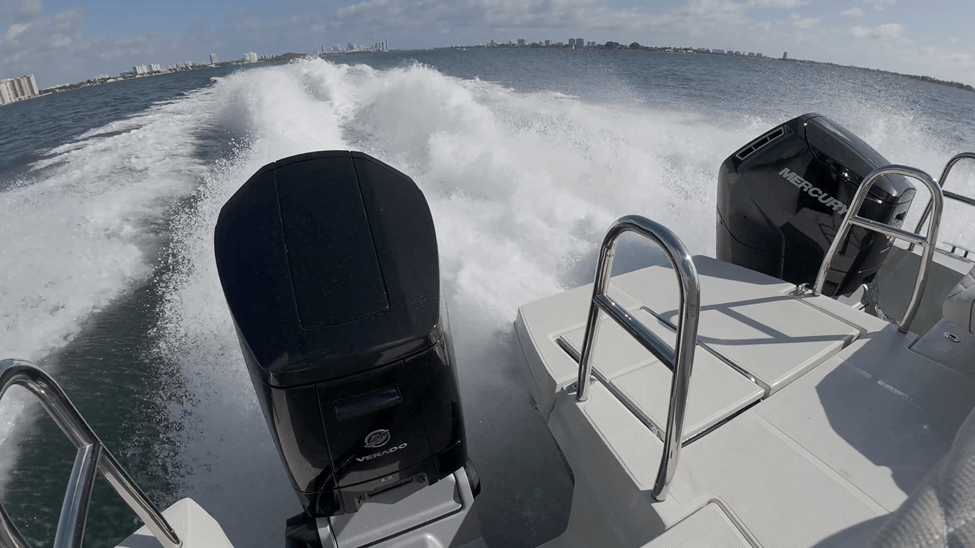
Our test YOT 41 was equipped with a pair of optional Mercury V12 600-hp Verado outboards turning Rev12 props with 21.5” of pitch. Standard power is a pair of V8 300-hp V8 Mercury’s with an additional option including twin V10 400-hp Mercury’s. The air temperature that day was 78° and the relative humidity was 68%. The wind registered between 5-10 knots and the sea state was about .5’. There were three people on board, 50 gallons of water and 360 gallons of fuel of the 449 gallon capacity. Test weight was 18,930 pounds.
Our WOT speed was 43.9 mph at 5900 rpm. We found our best cruise settled in at 4000 rpm with a 26.0 mph turn of speed and a range of about 259 statute miles with a 10% fuel reserve. On hole shots, our test boat reached 10 mph in 3.5 seconds, 20 mph in 6.5, and 0-30 in 10.5 seconds. We found her handling characteristics to be quite excellent and once up on plane, put her through a series of maneuvers including hard over and S-turns, and straight runs. We noticed she did not lose much speed on tight turns, provided a smooth and stable catamaran ride, and whether taking the seas on the bow, astern, and abeam, always under control and riding well with no slamming or sliding.
Summary
There are solid reasons why the YOT 41 was the recipient of the 2025 European Power Boat of The Year. Its modular, wide open seating and dining spaces, one level deck with bowrider design forward and galley aft to starboard, standard electrically operated aft terraces to either side, a pair of private staterooms with ensuite heads, ample storage areas, long list of premium options, and sparkling performance provided by a choice of Mercury outboard power up to 1200-hp, area among the many features found aboard. Along with the Catana Group’s 40 years of design and engineering, the YOT 41 Power Catamaran delivers a safe, modern, exciting yacht more than capable of fulfilling the needs of its owners whether it be day tripping, coastal cruising, or extended time away.
REMEMBER, LIFE IS BETTER ON A BOAT!
About the Reporting Captains
Experts and Boat Owners
What has set BoatTEST apart from the many video-makers currently on the Internet and Social Media is the fact that for 26 years, only USCG-Licensed captains and experienced boat owners have tested and written our reports and made our videos. We believe that to provide boat owners the information they deserve, only other boat owners – who know the challenges of ownership -- can accurately report on it. It is that level of expertise and ownership experience that goes into every video and Captain’s Report that we publish. Because we know what it is like owning and operating a boat, we can pass-on the information that prospective boat buyers need to know.
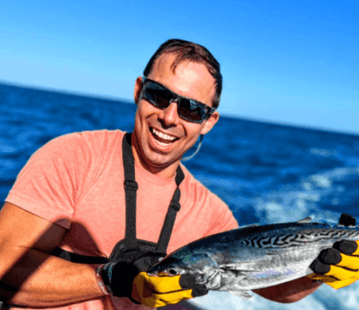
Capt. Trip Smith holds a USCG 100-Ton license and has 22 years of experience navigating various types of boats, such as center consoles, runabouts, wake boats, and cruisers. He now owns a 22’ C-Dory. At 36 years old, he is living the dream of escaping the typical 9 to 5 job and has become a popular boat adventure video creator with over 75,000 YouTube subscribers. Capt. Trip Smith's expertise is evident in his 434 videos, where he shares his experiences spearfishing, collecting scallops, cooking fresh grouper on his boat’s grill, and planning his next adventure. Capt. Trip has an impressive background as a firefighter, outboard engine mechanic, boat rigger, fiberglass repair and restoration expert, and kayak safety teacher.
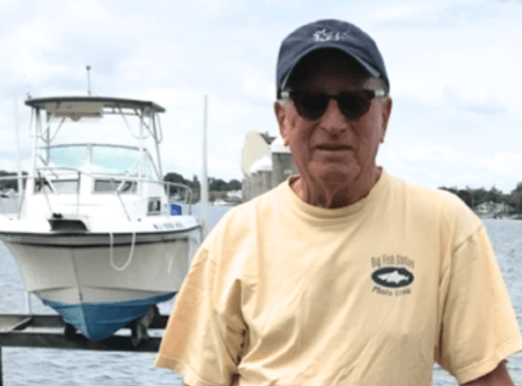
Capt. Ken Kreisler is a well-known figure in the marine industry, with extensive experience testing boats for major boating magazines. He has held USCG 100-Ton License for 40 years and has served as a delivery and charter fishboat captain, project manager for two small passenger ferry catamarans, making sure every details met USCG build standards. Capt. Ken is an accomplished writer, having received several BWI awards and the John Burroughs Association certificate of commendation for his children's book, "NATURE SPY," published by Macmillan. He resides with his family on the Shrewsbury River in Monmouth Beach, NJ, where he enjoys boating on his 24-foot Grady White Exp
Features Video Transcript
Overview
The Yacht 41 is built by the Catana Group, a 40-year-old family-owned yacht builder headquartered in France. Captain Tripp's characterization of the boat's defining feature: "She's the first cat we've seen that turns the whole aft end into a floating terrace with twin wings and two side-by-side tables."
Drawing on his professional experience as a chase boat captain, Captain Tripp offered his initial reaction to the design: "When I first saw this boat, I initially thought, 'Wow, that design looks like a wonderful platform to entertain a lot of guests, and it won't become crowded with all them on board. They won't be in each other's way.'" He also noted the boat's suitability for short weekend trips.
Aft Deck
Captain Tripp's assessment: "In my opinion, the aft deck of this boat is the most impressive area on board. You can easily seat 12 adults here, and no one is in anyone's way."
Configurability: The starboard side, shown in dining mode, sits beneath an electric awning that stows within the hardtop. With table leaves closed, cup holders and grab handles remain accessible for safe movement while underway. In lounging/sunning mode, this area converts into a large sun pad.
Storage: Beneath the forward seats, accessed via pull-out drawers (rather than requiring cushion removal).
Convertible seat backs: Convert to forward-facing seating while underway. Combined with open terrace doors, Captain Tripp noted the resulting sense of space: "It really just opens things up and makes you feel like you're on the beach."
Forward-facing capacity underway: With aft deck seat backs facing aft, plus bridge deck and bow seating combined, Captain Tripp stated 16 to 20 people can face forward while running offshore (e.g., to an island beach party), adding: "Few, if any, boats in class can do that."
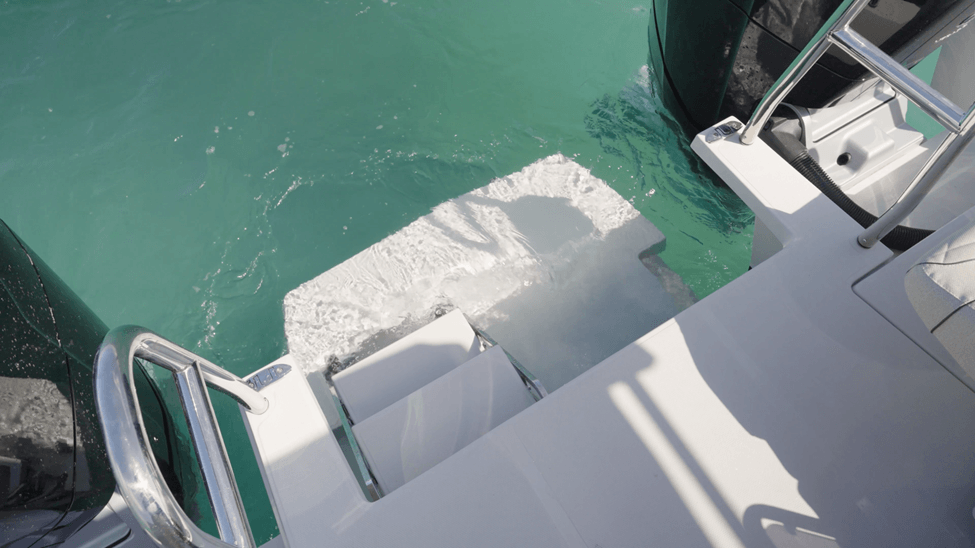
Swim platform: Can be lowered to water level, which Captain Tripp noted eases entry/exit — particularly useful with children aboard. Features include grab rails on either side, small cleats suited to tying off a toy line for people floating behind the boat, and a telescopic swim ladder concealed in the platform.
Under-Hardtop Lounge (Behind Windshield)
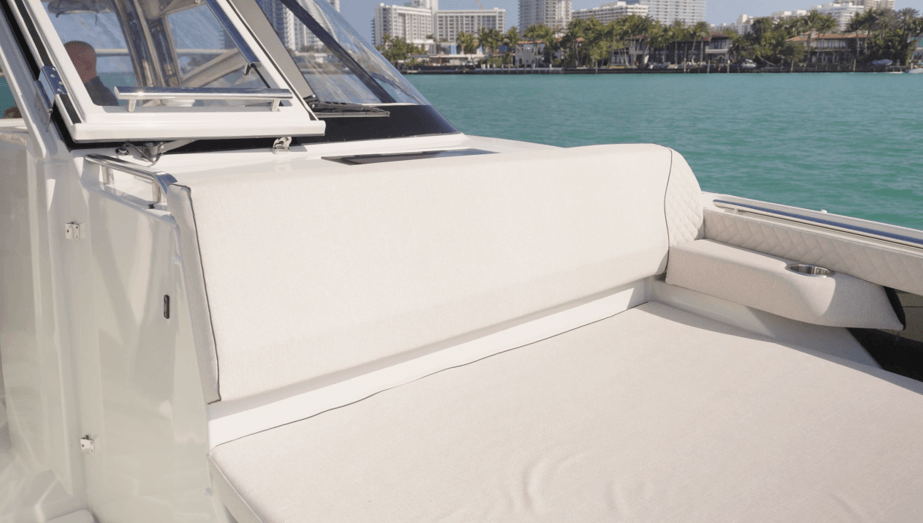
A sun lounger positioned to stay out of the wind, with an L-shaped backrest for elevated comfort, underneath storage, and two cup holders. This area is served by the boat's premium JL Audio sound system (noted as an option on this boat).
Outdoor Galley (Starboard)
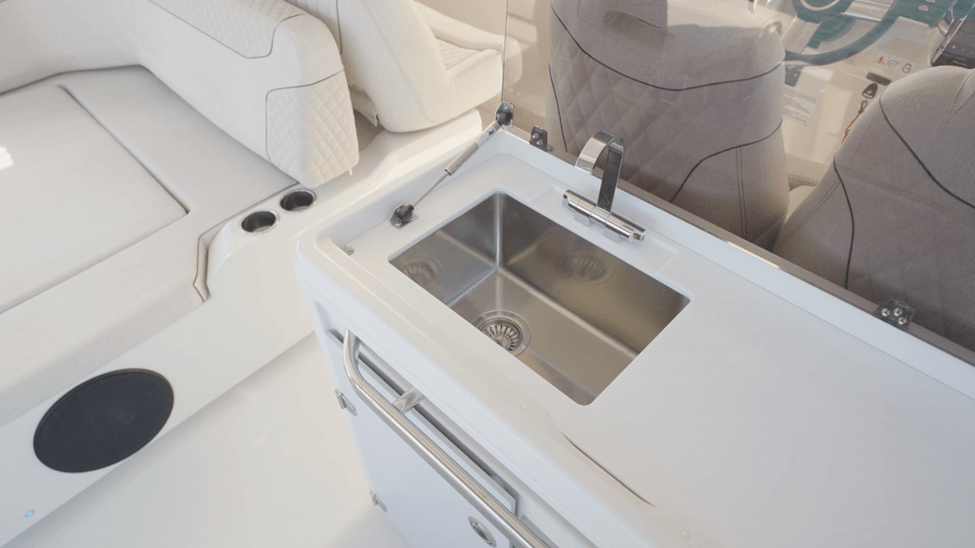
Substantial countertop space with two refrigerators underneath and additional storage — described by Captain Tripp as "a fantastic area to prepare drinks and refreshments for all of your guests."
Cooking configuration: The countertop lifts to reveal a sink and prep station; an electric Kenyon grill is positioned on the outboard side. An additional refrigerator is located forward, under the helm seat.
Outboard Lounging Areas (Port & Starboard)
Long cushioned areas positioned outboard on both sides. Captain Tripp anticipated skepticism about their placement but pushed back on it directly: "This may look a little bit out of place, but I would say no. Come up here and lay down, and you'll find that it's very comfortable. You have a good view of everything around you, and you can still engage with everyone else on the boat. Perfect place for a nap during the midday."
Bow Access
Reached by stepping through the windshield (closeable for weather protection). Captain Tripp noted a minor step-up at this transition, offset by grab rails Yacht included at this location: "This is a good safety aspect because you can never have enough grab rails on a boat. And as people are moving fore and aft this is an important spot for grab rails."
Bow Seating
Because the catamaran's beam carries far forward, the bow offers substantial lounging space — rated by Captain Tripp to comfortably fit four, even six adults. Features include a large comfortable backrest, cup holders, padded combing running the perimeter, and a grab handle. The JL Audio system continues to the bow with an additional large subwoofer below deck and further cup holders.
Cabin Access
Entry is midship via a sliding companionway door, with four steps down. The two cabins mirror each other on port and starboard. A substantial grab rail is positioned just forward of the steps.
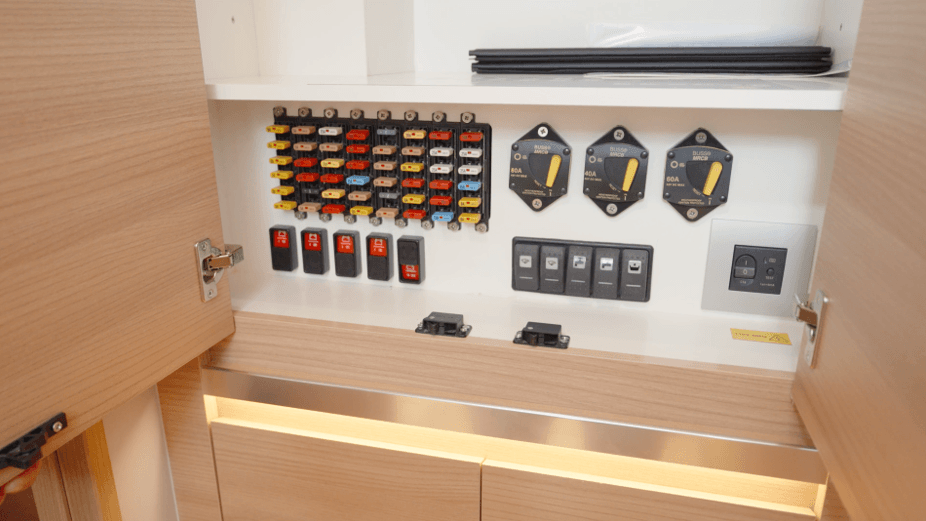
Entry foyer: A closet and underneath storage on the port side; electrical panels located on the starboard side at this same entry point.
Cabin (Each Side)
Captain Tripp's assessment: suitable for a couple for a weekend "or maybe even longer." Features include:
- Air conditioning
- Natural lighting via a large hull side window
- An overhead hatch for additional natural light or ventilation at anchor
- A couple of storage cupboards
- Underneath-bed storage suited to larger items such as a suitcase
Noted suggested improvement: Captain Tripp: "If I could make any changes in the stateroom, I'd move the AC vent from the head of the bed about halfway or more down the inboard bulkhead."
Head (Each Cabin)
Described as spacious and well-furnished, with a porcelain toilet and a vanity featuring a vessel sink with storage underneath. The hull side window contributes to a sense of openness — Captain Tripp: "It gives that sense of space so you don't feel boxed in." The shower offers ample overhead room and elbow space.
Layout Advantage — Two-Cabin, Two-Head Configuration
Captain Tripp highlighted this as a pleasant surprise: "One thing that pleasantly surprised me about the layout of this boat is it's a two-cabin, two-head boat. This could be a fantastic advantage because let's say you're a couple running the boat. You can invite another couple on board, and they have their own space, their own bathroom. You're not worried about interrupting someone else's space or inconveniencing someone. Everyone has their own privacy, own place for their toiletries. That's something you don't often see in a boat of this size."
Closing Assessment
Captain Tripp's summary: "The design and layout of this boat will be fantastic for entertaining large groups of people, and the cabins would lend themselves well for two couples spending weekends aboard."
A companion performance and operational video is referenced, covering the Yacht 41's specially designed powerboat hull.
Performance Test Video Transcript
Overview
Captain Tripp's introductory framing: "Yacht is a fairly new brand for the Catana Group, but the Catana Group is not young by any means. They've been manufacturing catamaran boats for nearly 40 years." This review covers the boat's mechanical aspects and handling characteristics.
Power
Test boat powered by twin Mercury 600s. Also optionable with twin 300 or twin 400 Mercurys.
Specifications (Test Boat)
- Length overall: 41 feet
- Beam: 14 feet, 7 inches
- Draft: 3 feet, 7 inches
- Test weight: 25,350 pounds, with 80% of the 449-gallon fuel capacity aboard and three passengers
Performance Numbers
- Top speed: 43.9 mph at 5,900 RPM
- Best cruise: 26 mph at 4,000 RPM, achieving 0.6 miles per gallon
- Range at best cruise: approximately 259 miles, with a 10% fuel reserve
- Hole shot 0–10 mph: 3.5 seconds
- 0–20 mph: 6.5 seconds
- 0–30 mph: 10.5 seconds
Handling
Captain Tripp noted that Yacht specifically emphasized the boat's handling characteristics to him ahead of testing, and offered his own assessment after running it: "I've been running the boat a bit as we've been getting our test numbers, and I think they have something going here. It really handles very well."
On plane: "She doesn't feel underpowered in the slightest. Granted, we did get the boat up to 41-ish miles an hour. I think that's plenty fast. I have no need to run the boat that fast in most use cases."
Hard-over turn (to port): Captain Tripp noted the boat stayed planted and leaned somewhat like a monohull, which he characterized as a positive trait: "You really stay comfortable and planted in your seat. You're not being slung out to the outboard side of the boat." He also noted minimal speed loss through the turn: "The boat doesn't lose a lot of speed, almost none, when you come into a hard over turn. That's an impressive thing."
Comfort while underway: "I can sit back comfortably, enjoy a conversation with my guests... All the guests that are sitting back behind me, they're going to be protected as well by the windshield. So everyone's going to be comfortable on board."
Noise: "Everything's quiet. Those engines purr like kittens. It's really a delightful experience to be running this boat."
Catamaran-Specific Ride Characteristics
Captain Tripp explained the air-cushion effect between the hulls: "In between the hulls, there's an air cushion that is formed as the air is forced between the hulls, and that provides a little bit of lift. So as you come down from a wave, if you're in a sea, that's going to help lift the boat so it doesn't slam as hard, which really I think it would be very tough to get this boat to slam. If the seas were that rough enough to get this boat to slam, you're probably not going to be out there."
Multi-directional sea testing: Captain Tripp ran the boat with seas on the bow, beam, and astern, reporting: "The boat performed wonderfully throughout all of those. I didn't feel like I was losing control. The back end never wanted to slide around. The nose never wanted to dive."
"Sneezing" test (bow spray-back): Captain Tripp specifically attempted to induce this phenomenon (where trapped air rushing from the bow blows water back onto the boat) in head and following seas: "That didn't happen. We still have a clean windshield, so I was really impressed to see that."
Long-Duration Comfort Assessment
Captain Tripp's stated evaluation criteria: "Being a captain, one of the things that I think about is how comfortable will I be underway? Let's say I'm doing a six-hour crossing, just a long day on the water. Am I going to be comfortable? Do I have good visibility? Can I run the boat safely? And I think the answer to all those questions is yes."
Standing vs. seated helm position: The bolster folds down for a seated position while retaining good visibility over the dash and bow. Standing position (used during aggressive maneuvering/sport mode testing) provides roughly 360-degree visibility.
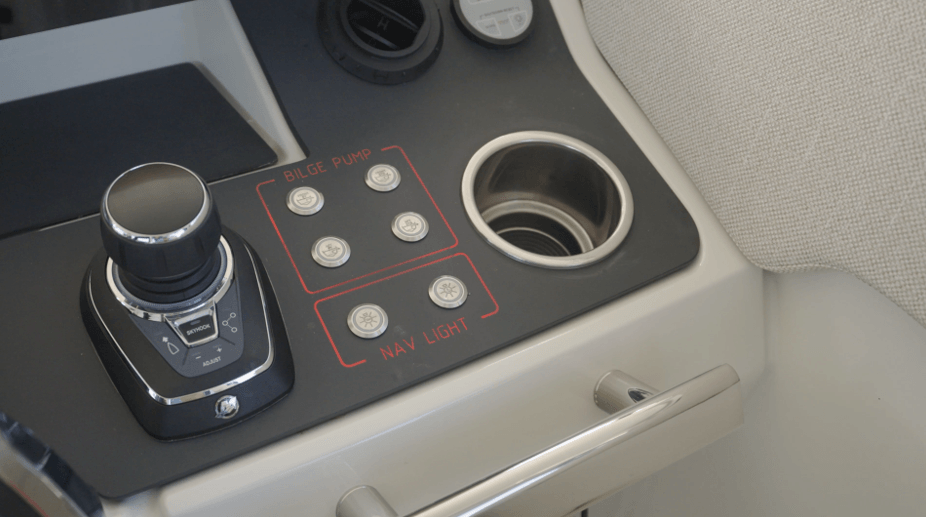
Helm equipment: Twin Simrad screens, easily accessible binnacle, joystick and Skyhook docking controls within easy reach, and frequently used push buttons positioned conveniently.
Zipwake system: Run on auto for the entirety of testing. Captain Tripp's assessment: "I have zero complaints. It handles the boat wonderfully."
Passenger Seating (Opposite Helm, Port Side)
Two bucket seats, described by Captain Tripp as "a very comfortable place for some passengers to ride along with the captain or the operator." Features include footrests and bolsters for an elevated seating position, a grab handle, cup holders, individual air conditioning vents, and a small glove box suited to wallets, phones, and sunglasses.
Mechanical Space — Starboard
Accessed via a hatch and ladder; described as "fairly easy to access."
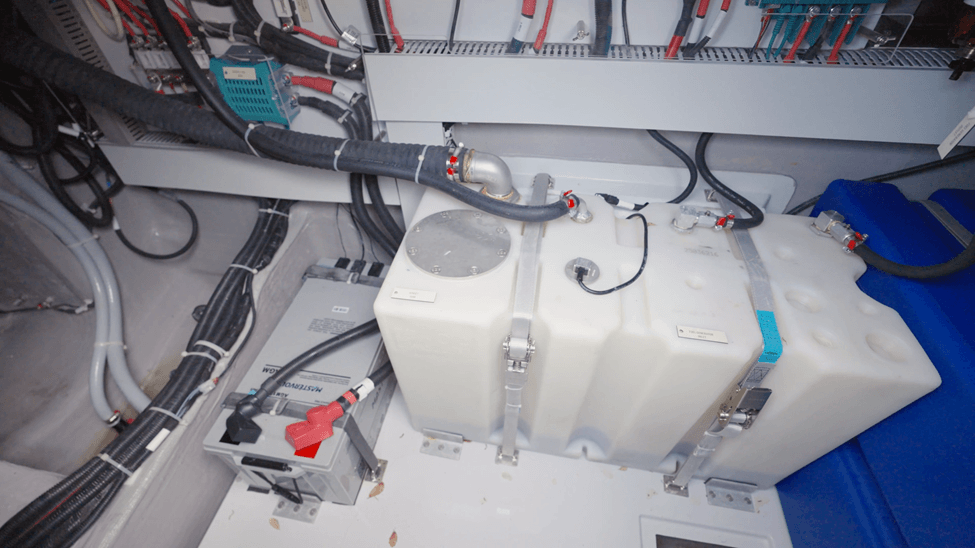
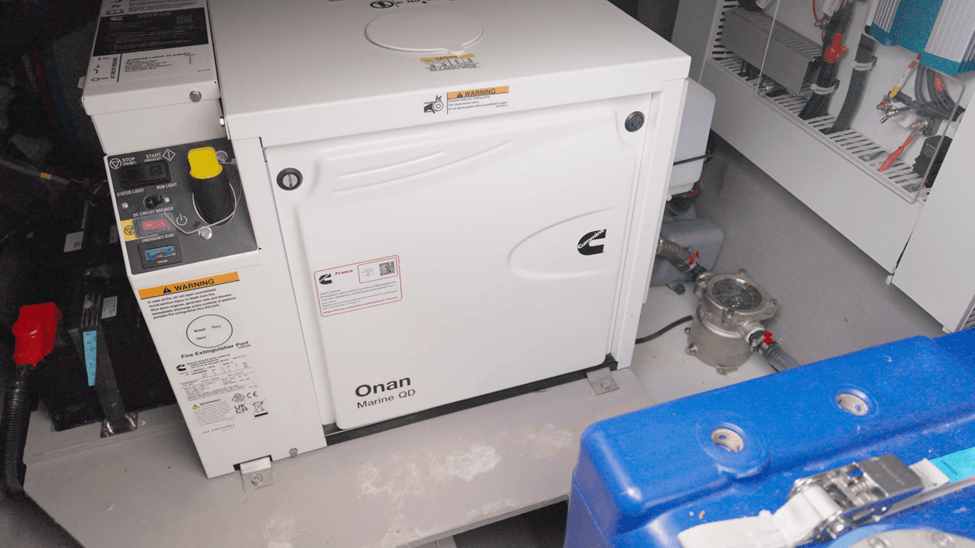
- Generator fuel tank: Diesel, kept as a separate tank from the main engines' fuel supply. (Generator itself is located on the port side.) Captain Tripp's stated preference: "Having a diesel generator on board is a little bit superior and preferred over a gas generator."
- Freshwater tank
- House battery, positioned below
- Start battery, located toward the transom
- Electrical components, described as run in looms, neat, and labeled for ease of service
Mechanical Space — Port
A mirror image of the starboard side, differing in that it houses the generator and the hot water heater.
Electrical Panel Access (Cabin, Starboard Side)
Primary electrical switches and breakers are accessed behind a cabinet in the cabin. Captain Tripp highlighted a specific labeling detail: "What I like that Yacht did is they included a printed placard just on top of this shelf that correlates with all of the electrical components down below. So every time you come in here to access something, you know where it is, and you can find it quickly. That's important."
AC breaker access is located just beneath this same panel.
Anchor Locker
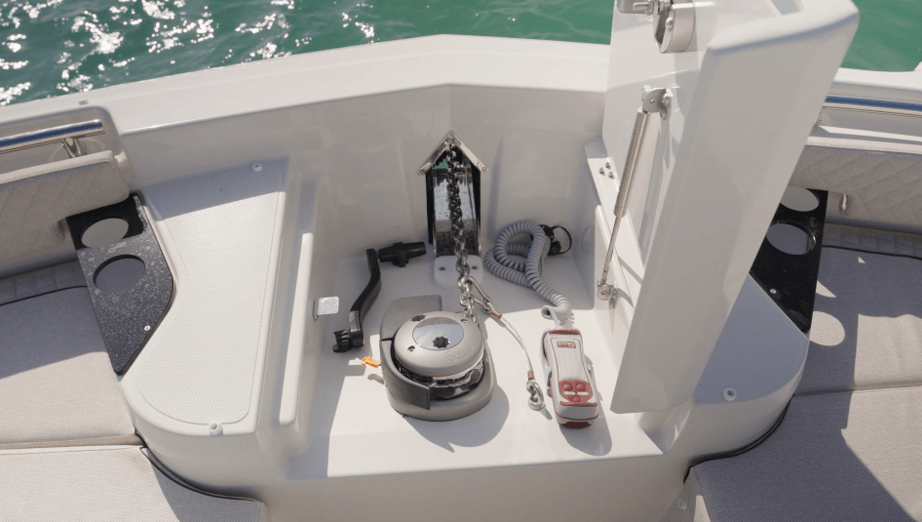
Positioned at the bow, with no cushion to lift or step over for access. Includes a quick electric windlass, remote-controllable from either the bow or the helm. Anchor rode access is described as "a little bit tricky," reachable through hatches on either port or starboard, located just beneath the cushions.
Closing
Captain Tripp referenced a companion features video covering the boat's layout for entertaining large groups of guests.